
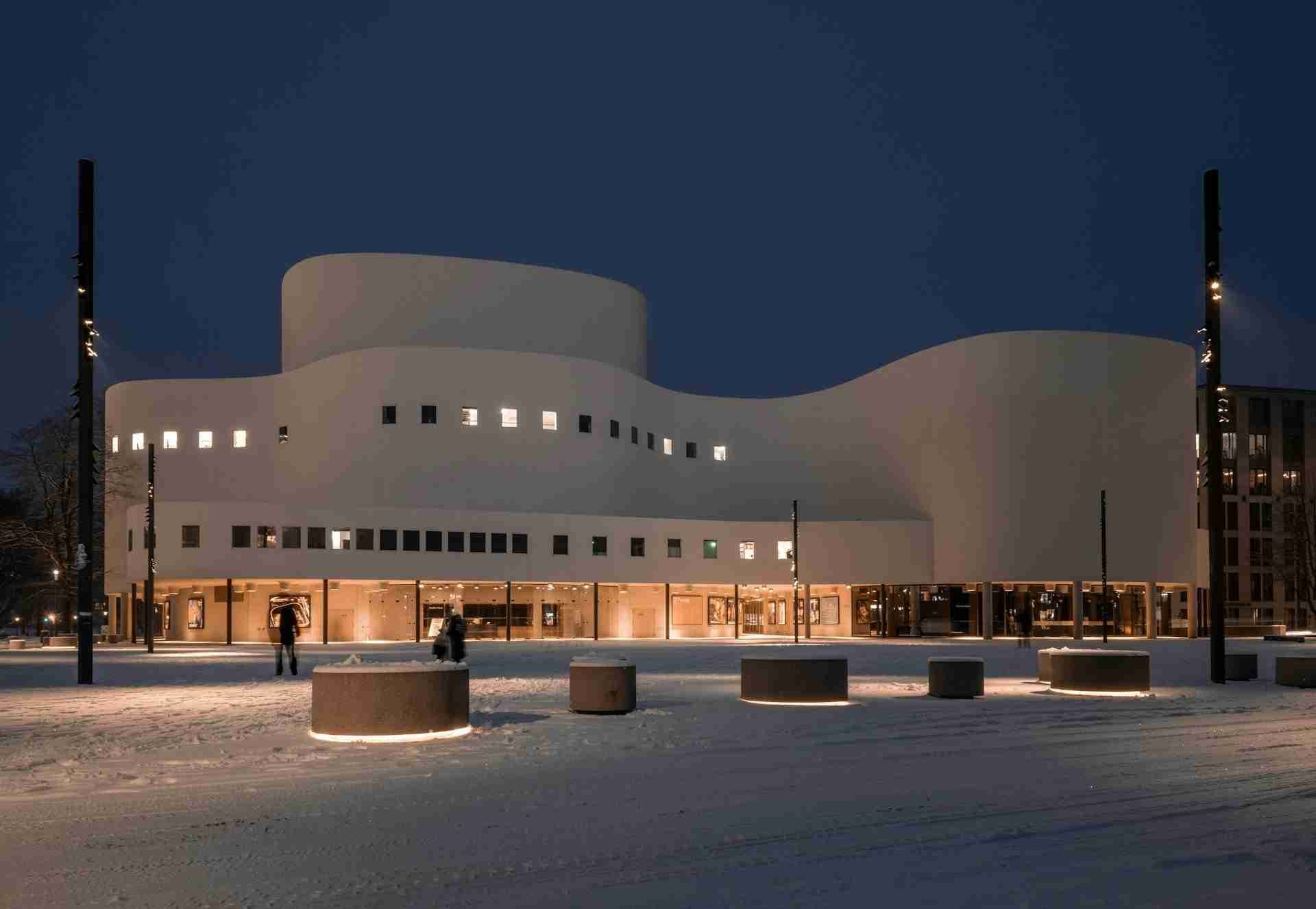
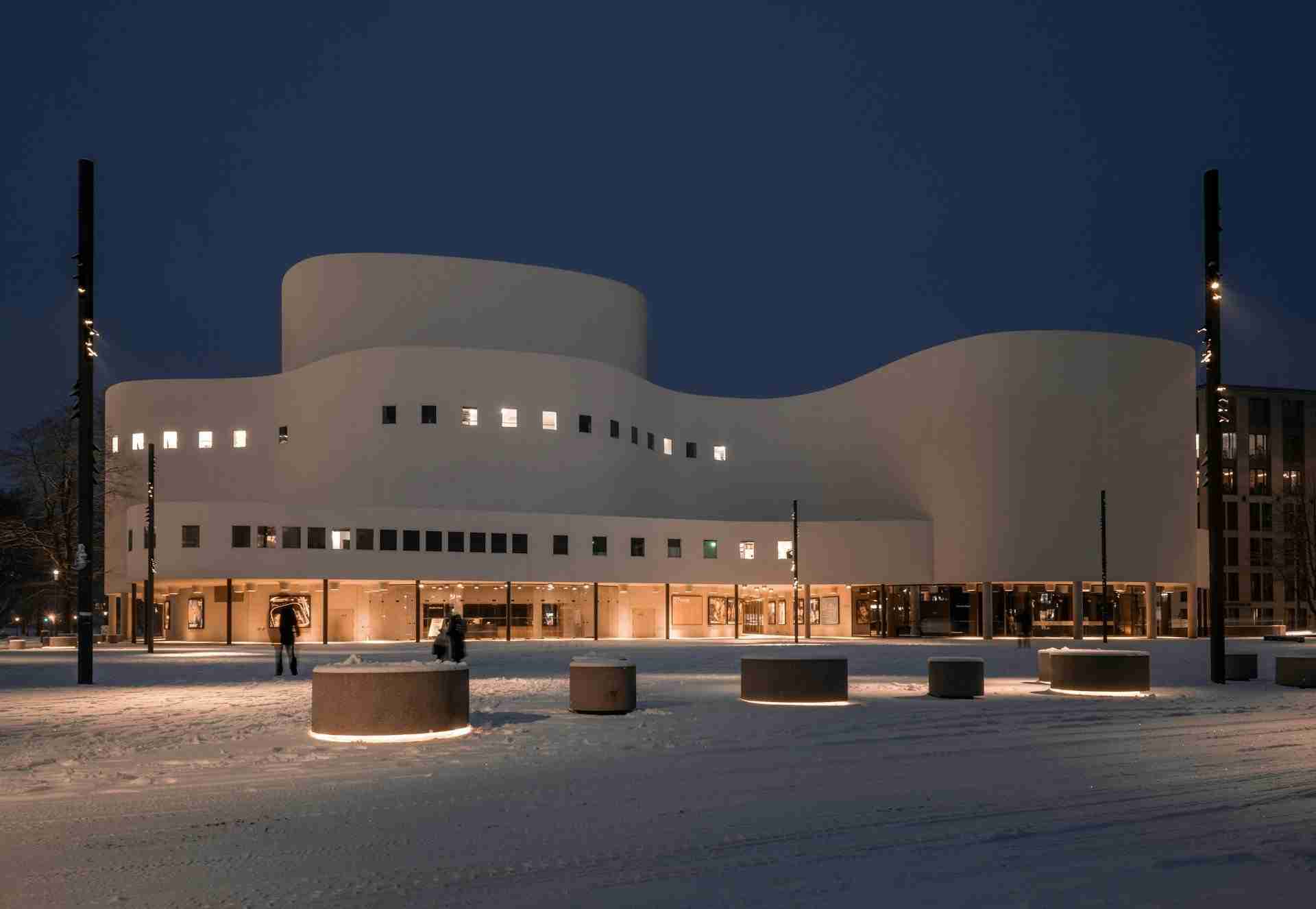
In the heart of Düsseldorf's city center stands one of Germany's most iconic examples of post-war modernist architecture: the Schauspielhaus Düsseldorf, or Düsseldorf Theater, located at Gustaf-Gründgens-Platz. Designed by Bernhard Pfau and completed in 1970, this theater is a bold statement in sculptural concrete—its sweeping white facade, rounded corners, and rhythmic wave-like roofline create a dynamic and futuristic presence in contrast with the more angular, glass-fronted buildings that surround it. For photographers interested in architecture, minimalism, and mid-century design language, this site is an exceptional location for abstract compositions, perspective studies, and moody urban storytelling.
Best Photography Opportunities
• Curved Facade and Sculptural Forms
: The signature element of the Düsseldorf Theater is its flowing white concrete shell. From the plaza, you can capture the gentle rise and fall of its exterior curves, which catch light and shadow beautifully throughout the day. Use a wide-angle lens to exaggerate its scale, or a tilt-shift to maintain straight lines while emphasizing form. Low-angle compositions enhance its monumentality, especially when framed against the open sky.
• Textural Close-Ups of Concrete and Glass
: The theater's interplay between raw concrete and inset glass creates a playground of surfaces for close-up detail shots. Focus on the texture of the whitewashed concrete under angled light, or frame tight compositions around the building's window recesses. These details shine under diffused light—early morning, overcast conditions, or golden hour sidelight can add soft gradients across the curves and clean shadows at the edges.
• Reflections from Surrounding Architecture
: The plaza surrounding the theater includes sleek glass buildings and a water feature, offering opportunities to capture the structure's curves reflected in mirrored surfaces. Shooting from the Kö-Bogen complex, for instance, you can frame dramatic juxtapositions between the theater's soft geometry and the angular facades across the square. These compositions are particularly effective at twilight, when warm interior lights add another layer to the contrast.
• Human Scale and Minimalist Scenes
: The theater's expansive white facade becomes a near-blank canvas for minimalist urban photography. Use people walking across the plaza to emphasize scale or add narrative tension within clean compositions. Long shadows at sunrise or sunset allow for abstract silhouettes and cinematic framing. The curvature of the building can also frame figures naturally as they move along its edge.
• Nighttime and Blue Hour Light
: After dark, the Schauspielhaus transforms again. Interior lighting glows through the curved glass segments, creating warm highlights beneath the soft white concrete. Long exposures during blue hour emphasize the contrast between the cool ambient light and the warm artificial glow, especially when framed with light trails from passing trams or vehicles. A tripod and low ISO are essential here to capture sharp architectural lines and control dynamic range.
Best Time to Visit
Düsseldorf Theater offers strong photographic potential year-round, but the best light falls during early morning and late afternoon, when the low sun carves clean shadows across the building's rounded surfaces. Golden hour enhances the off-white color of the facade and brings out the tonal variation in the concrete, particularly on clear days when light rakes across the edges.
Overcast days are especially effective for architectural minimalism and close-up texture studies, eliminating harsh contrast and allowing fine detail in the surface to emerge. If you're aiming to incorporate crowds or human scale, midday brings the most activity to the surrounding plaza.
Evenings and twilight provide excellent conditions for long exposures, reflections, and capturing the warm internal glow of the theater against a deepening blue sky. Seasonal variations are minimal in terms of light quality, but winter brings longer blue hour windows and fewer visitors, giving you more uninterrupted access to frame the building from multiple angles.
How to Get There
Düsseldorf Theater is located at Gustaf-Gründgens-Platz, directly adjacent to the Kö-Bogen complex and near Hofgarten park in central Düsseldorf. It is easily accessible by public transit: take the U-Bahn to Schadowstraße or Heinrich-Heine-Allee, both of which are within a 5-minute walk. The theater is prominently visible from the plaza and surrounded by pedestrian-friendly areas ideal for shooting.
If arriving by car, underground parking is available at Kö-Bogen or in nearby garages along Berliner Allee and Schadowstraße. The site is open to the public at all times, and photography of the exterior is unrestricted. The theater often hosts public performances, so check schedules in advance if you wish to capture it during lit events or when the forecourt is especially active.
Tripods are fine for exterior use, especially in the open plaza, but be courteous during busy hours and avoid obstructing walkways.
Exploring the Surrounding Area
The area around Gustaf-Gründgens-Platz is a rich blend of old and new urban form. To the west lies the Hofgarten, Düsseldorf's oldest public park, offering calm, green backdrops and symmetrical paths for nature and architectural contrasts. To the south, the Königsallee (Kö) is one of Europe's most photogenic shopping streets—lined with plane trees, a central canal, and bridges that make for elegant compositions, especially in early light or when lit for holidays.
Directly opposite the theater is Kö-Bogen, a sleek contemporary building by Daniel Libeskind, its curved glass and planted terraces creating sharp visual contrasts with the older white concrete of the Schauspielhaus. This area is perfect for urban geometry and modern architectural studies.
Nearby Photography Locations
: Located directly behind the theater, this innovative building features Europe's largest green facade, with vertical hedges climbing its sharply angled exterior. The blend of natural texture and geometry makes it ideal for wide compositions and architectural abstractions. Morning or late afternoon light adds depth and dimension to the green surfaces.
: This historic park provides calm contrast to the urban surroundings, with reflective ponds, tree-lined walkways, and Baroque-style sculptures. Perfect for softer compositions and seasonal color—particularly during spring blossom or autumn foliage. The changing light through tree canopies creates strong mood for handheld street and landscape work.
: Düsseldorf's iconic boulevard features bridges, a canal, and historic facades. Especially photogenic in the early morning or blue hour, when reflections in the water mirror streetlights and surrounding architecture. The play of architecture with natural elements makes it a prime location for elegant, linear compositions.
: Just a few steps away, this 1950s high-rise exemplifies International Style architecture. Its clean verticality and steel-glass facade offer striking symmetry and a contrasting backdrop to the organic forms of the theater. Ideal for abstract architectural studies or telephoto compression shots that play with rhythm and repetition.
: North of the Altstadt, this domed concert hall has an impressive interior and a distinct exterior profile. Its setting near the Rhine adds opportunities for water-based compositions and riverside urban scenes. In the evening, the dome's lighting makes it a colorful subject that contrasts well with its darker surroundings.
The Düsseldorf Theater is more than a performance venue—it's a sculptural expression of post-war optimism and modernist ambition. For architectural photographers and visual storytellers, its bold curves, rich textures, and ever-changing light make it a rare subject that rewards slow exploration and careful framing in every season.
Comments
Loading comments…