
Sprawling across the northeastern quarter of Munich, the Englischer Garten is one of Europe's largest urban parks—a dynamic green space that blends classical architecture, winding streams, open meadows, and forested paths into a rich photographic environment. Conceived in the late 18th century as a public landscape garden in the English style, its deliberately naturalistic layout conceals careful design: lines of sight, framing structures, and layered plantings guide the eye as much as any urban master plan. Whether capturing golden-hour cyclists beneath leafy canopies or architectural silhouettes across the Eisbach River, photographers will find in this park a subject that rewards both casual exploration and methodical composition.
Best Photography Opportunities
• Monopteros at sunrise and sunset
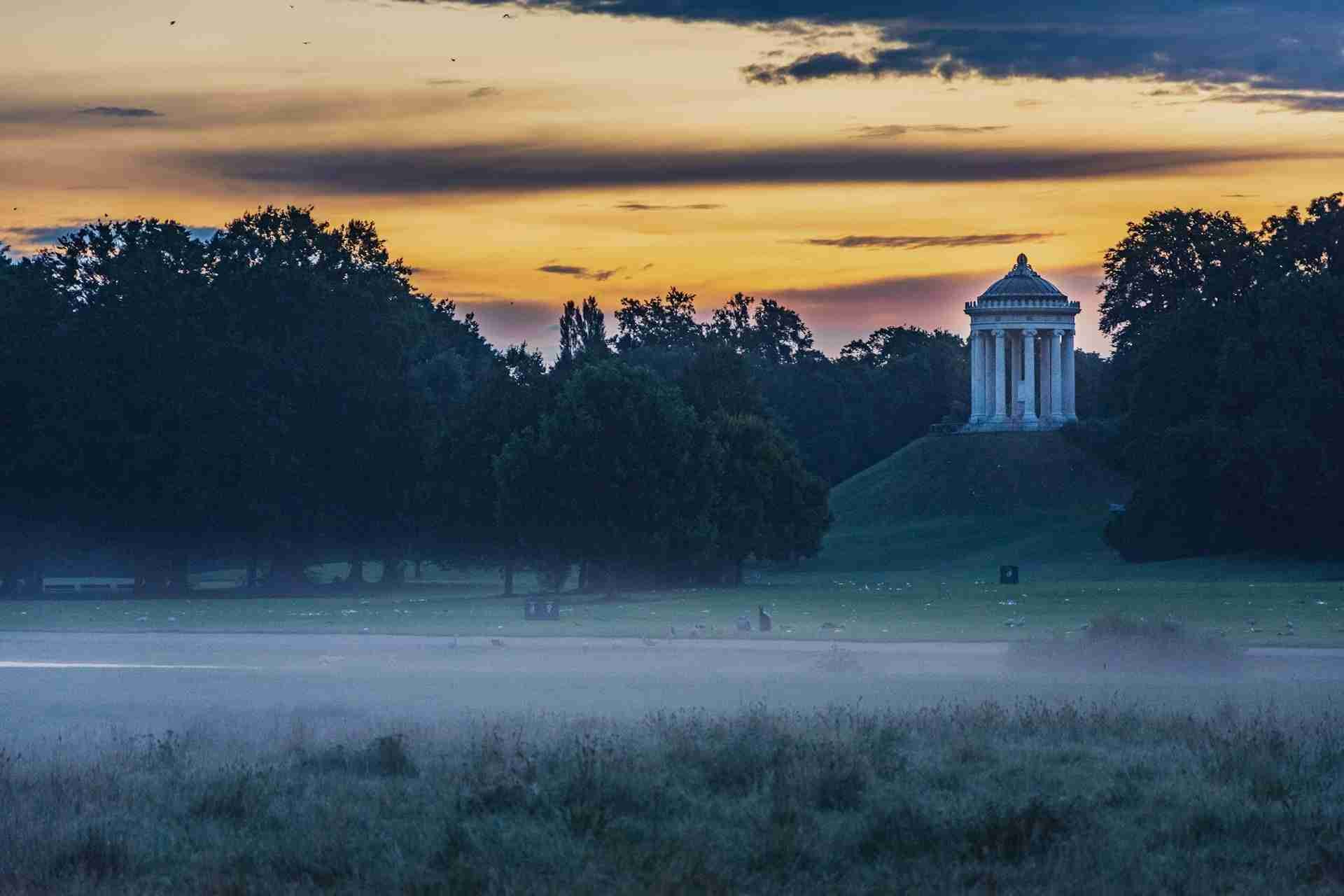
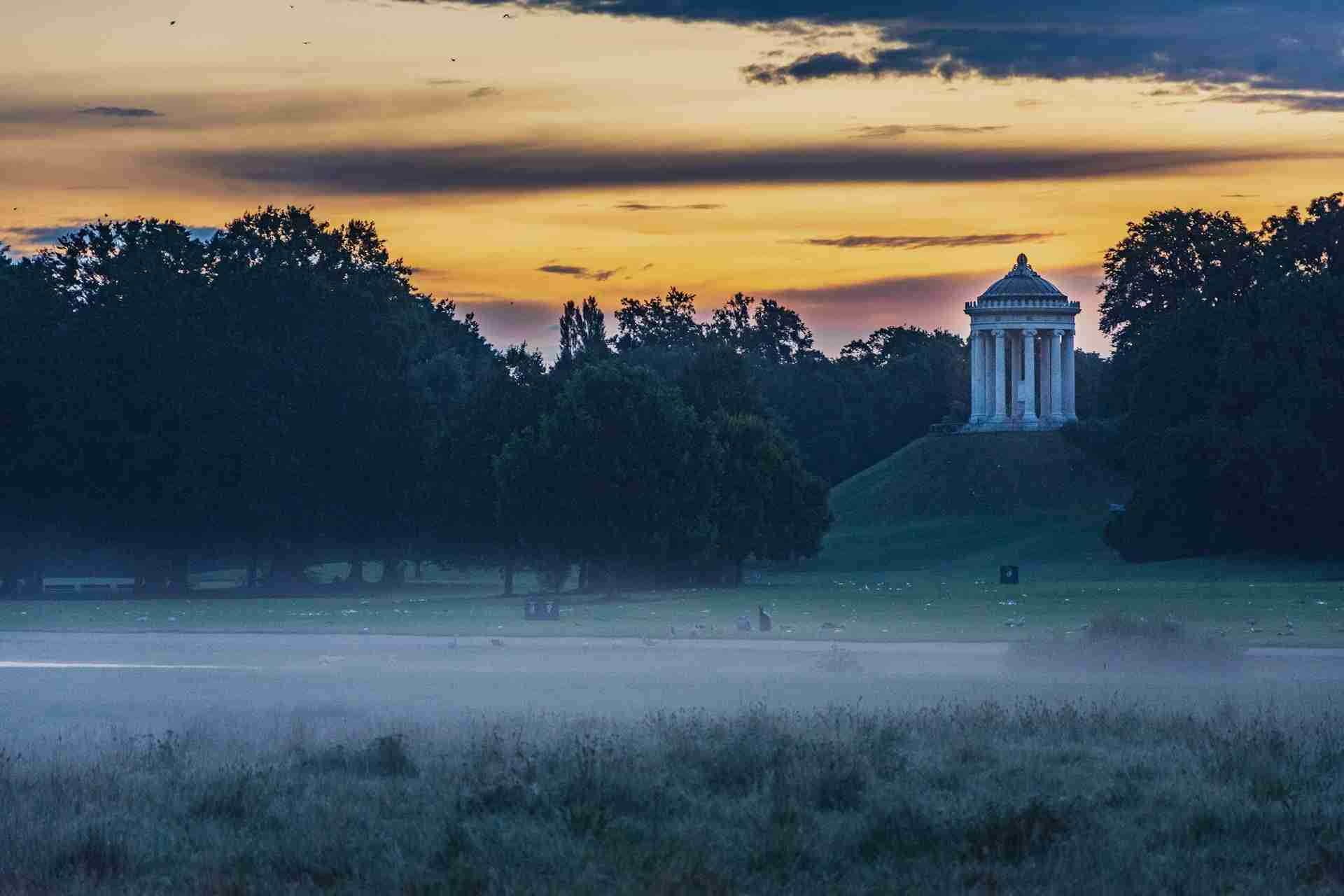
The Monopteros is a circular, Greek-inspired temple perched atop a low hill in the southern section of the park. It offers elegant columns and symmetrical form, positioned above a wide meadow that gently slopes toward the skyline. Sunrise brings directional light from the east that filters through surrounding trees, illuminating the structure from the side and casting long shadows across the grass. Sunset is equally compelling, as the temple becomes silhouetted against the glowing sky. A wide-angle lens allows for full context, including leading paths or human figures in the foreground, while a standard lens helps frame more balanced architectural studies.
• Eisbach surfers beneath the Prinzregentenstraße bridge
One of the most distinctive features in the Englischer Garten is the standing wave on the Eisbach River. Here, skilled local surfers ride a perpetual break created by water pressure and flow under the bridge. This location offers rare action photography in a park setting. Use a fast shutter speed to freeze the spray and dynamic movement, or a slower exposure to blur the motion of the wave and create separation between subject and environment. Early morning offers clean light and fewer spectators, while afternoon sun can produce dramatic backlight through the spray.
• Japanese Teahouse and seasonal garden reflections
On a small island in the southern portion of the park, the Japanese Teahouse and its garden provide quiet symmetry, stylized design, and seasonal beauty. In spring, cherry blossoms offer pink framing elements; in autumn, fiery maples enrich the scene with warm color. Calm days allow for reflection shots in the pond surrounding the teahouse. Mid-range focal lengths work best here to preserve perspective, while wide apertures help isolate details such as branches or architectural motifs. This is a location best visited in early morning before foot traffic and wind disrupt the scene.
• Autumn color along the Schwabinger Bach
As the leaves turn in late September through October, the Schwabinger Bach becomes a painterly corridor of gold and rust tones. The narrow stream winds beneath bridges, through groves, and along wooded trails, creating rich layering for composition. Use reflections in slow-moving water to introduce symmetry and texture. Overcast conditions work especially well here, softening shadows and enhancing saturation. Low vantage points along the bank help create immersive, three-dimensional depth when shooting with a wide-angle lens.
• Open meadows and candid human interaction
Throughout the year, the Englischer Garten is filled with informal activity—cyclists, picnickers, musicians, and dog walkers fill the space with rhythm and movement. These open areas are ideal for candid street-style photography or motion studies with longer lenses. Golden hour offers warm, even light and exaggerated shadows stretching across the lawns. Isolated trees or small groups of people can be framed for scale against the vast grass fields. A fast prime lens is especially useful for environmental portraiture or observational work at a distance.
Best Time to Visit
The Englischer Garten provides rich photographic variety across all seasons, with each period offering distinct light, color, and subject matter. Spring is defined by fresh growth and blooming trees—especially cherry blossoms near the Japanese garden and delicate greens throughout the park. Morning light during April and May is cool and even, ideal for both architectural and landscape scenes.
Summer brings long days, intense contrast, and high levels of activity. Mornings before 9:00 a.m. are best for capturing quiet reflections, while evenings around sunset allow for atmospheric crowd scenes with strong light directionality. High noon tends to flatten textures unless you are working with dense foliage or shaded interiors.
Autumn is perhaps the most photographically rewarding season in the Englischer Garten. From late September to early November, the park transitions into a full palette of color. Trees lining the streams, open fields, and gardens become layered in warm tones. Early morning light during this time creates side-lit paths and glows through thinning canopies. Windless days offer mirror-like reflections in the lakes and streams.
Winter introduces minimalism. Snowfall transforms the meadows into blank canvases, while bare trees and architectural elements become more visually prominent. Soft twilight or light fog can enhance this sparse mood, especially around the Monopteros or Chinesischer Turm. Tripods and long exposures become more essential during this season due to reduced daylight and slower shutter speeds.
How to Get There
The Englischer Garten is easily accessible from central Munich and is served by multiple public transport routes. The southern entrance, near the Eisbach wave, is located next to the Haus der Kunst and is reachable by foot from the Lehel U-Bahn station (U4/U5). This area gives quick access to the Monopteros, Japanese garden, and the most photogenic bridges.
The northern sections of the park are quieter and more expansive. For access to the middle and upper areas, use the Universität or Giselastraße U-Bahn stations (U3/U6). The park is open at all hours and free to enter, making it well-suited to early morning and blue hour sessions.
Cyclists can traverse the entire park via designated bike paths, which are also useful for scouting or transporting gear. For photographers with tripods or heavier setups, the southern and central zones offer more access points, benches, and amenities, including cafés and public restrooms.
Recommended Photography Gear
The diversity of environments in the Englischer Garten requires a flexible but lightweight kit. A wide-angle zoom (such as 16–35mm) is ideal for landscape scenes, interior forest shots, and architectural structures like the Monopteros. A mid-range zoom (24–70mm) is useful for general compositions, lifestyle shots, and tighter views of water features or garden spaces.
For isolating subjects such as surfers, individuals in meadows, or distant skyline features, a telephoto lens (70–200mm) adds necessary reach and compression. A fast prime lens (35mm or 50mm) is helpful in lower light situations or when a shallow depth of field is needed to separate a subject from a busy background.
A portable tripod is recommended for long exposure work at sunrise, sunset, or in dimly lit wooded areas. A circular polarizer helps enhance reflections in streams and deepen sky tones on clear days. A 3- to 6-stop neutral density filter is useful for controlling shutter speed near moving water, particularly around the Eisbach or Schwabinger Bach.
Weather in Munich can shift quickly, especially in spring and autumn. A weather-sealed camera bag, lens cloths, and light rain protection are essential. Extra batteries and a microfiber towel are helpful in cold or damp conditions. For early morning or blue hour work, a small flashlight or headlamp aids in safe navigation through the darker paths.
Nearby Photography Locations
Just south of the Englischer Garten, this classical garden offers symmetry, fountains, and elegant arcades. It's ideal for architectural framing, early morning reflections, and quiet moments before the city wakes.
• Isar Riverbanks
East of the park, the Isar provides wide vistas, pebble beaches, and modern bridges. These locations are well-suited to landscape work, especially during sunset when warm light falls across the water.
Located at the end of Ludwigstraße, this triumphal arch offers strong lines, historic detail, and street-level perspective. Blue hour compositions are especially striking here when paired with long exposure to capture traffic flow.
This elevated green space to the southeast of the park gives panoramic views of Munich's eastern quarters and the Isar. Early morning is best for capturing layered cityscapes and glowing light on rooftops.
• Chinesischer Turm and Beer Garden
This wooden pagoda-style tower is best photographed at dawn, before the beer garden crowds arrive. Use low light and rising fog for mood, or focus on the repeating forms and vertical rhythm of the tower itself.
The Englischer Garten is not just a city park—it's a visual atlas of seasonal light, cultural rhythms, and spatial variation. Whether photographing the curve of a frozen stream, a columned pavilion catching morning glow, or a figure crossing a sunlit bridge, the garden offers an ongoing invitation to see and re-see its familiar beauty with fresh perspective and evolving light.
Comments
Loading comments…