
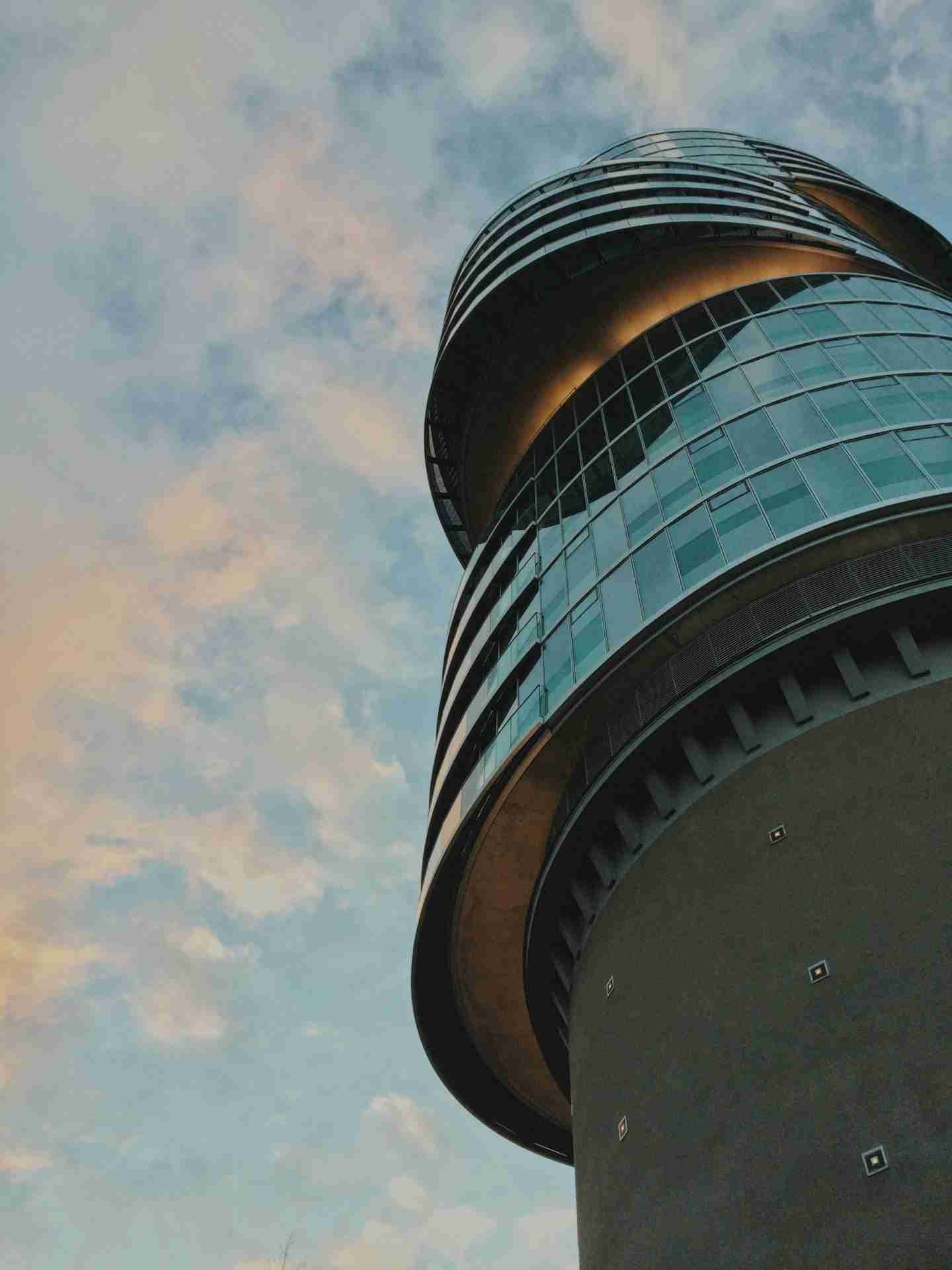
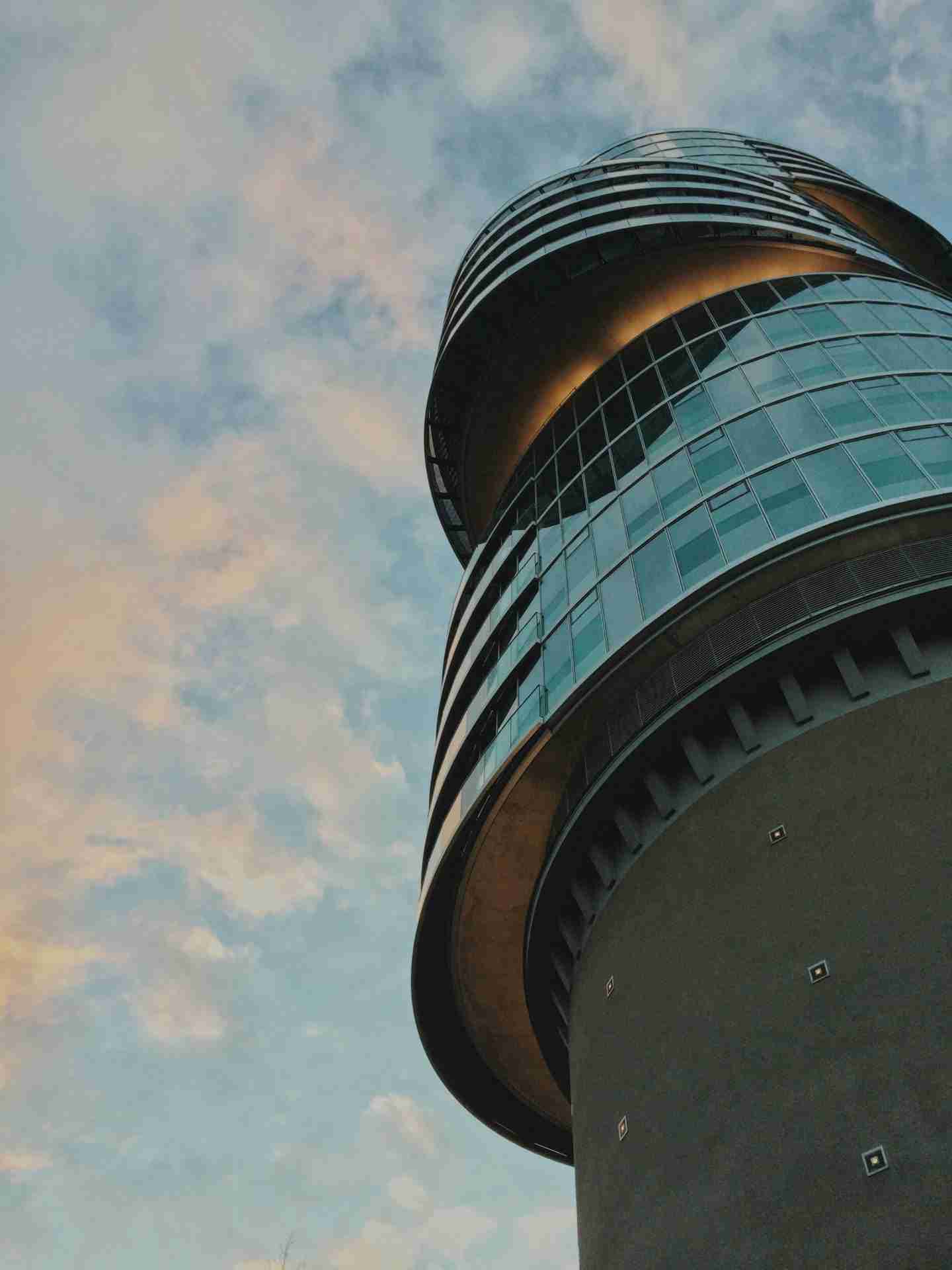
Towering above the industrial heart of Bochum, the Exzenterhaus stands out with its dramatic cantilevered floors and spiral form rising from a World War II era bunker. This remarkable structure blends the city's historical foundations with bold modern architecture, creating a striking contrast that immediately draws the eye. For photographers, the building offers an unusual subject that shifts depending on your angle, time of day, and focal length. Its twisting silhouette and cylindrical shape reflect light in different ways throughout the day, making it as rewarding for minimalist compositions as it is for abstract architectural studies. Framed by Bochum's urban sprawl, this is a subject that feels both sculptural and deeply rooted in place.
Best Photography Opportunities
Low Angle Architectural Studies
One of the most effective ways to photograph the Exzenterhaus is from ground level, using a wide lens to exaggerate the building's spiral and lean. Standing close to the base and angling upward lets you fill the frame with geometric movement, capturing the tension between the rigid concrete of the old bunker and the sleek curves of the modern addition. Early morning or late afternoon light helps create strong shadows that define the shape more clearly, but overcast days can work equally well by softening the contrast and letting the structure's form take center stage. This setup is ideal for photographers interested in architectural abstraction and strong vertical compositions. Even minor shifts in your position can completely change how the curves interact with the sky.
Symmetry and Reflection
The building's curved design allows for creative symmetry when photographed from straight on, especially with the central vertical line aligned within the frame. Look for opportunities to include reflections, either in nearby glass facades or in puddles following rain. These mirrored versions add depth and double the graphic impact of the structure. When shot with a longer focal length, you can compress elements around the building to make it feel more tightly woven into its urban environment. Pedestrians, trams, or vehicles passing through the foreground also help establish a sense of movement and scale that makes your frame more dynamic.
Twilight and Night Photography
Exzenterhaus transforms after sunset when interior lighting begins to glow from its wraparound windows. Twilight provides a narrow window where there is still ambient light in the sky to silhouette the building while capturing the warm interior tones that hint at activity inside. Using a tripod, you can shoot longer exposures that enhance the reflections on the glass and smooth out motion in passing traffic. Night photography here emphasizes contrast between old and new. The heavy concrete base fades into shadow while the upper floors float above the skyline, fully lit and futuristic. These conditions give your compositions a cinematic tone.
Tight Abstracts of Design Details
Zooming in on sections of the building reveals a fascinating mix of materials and structural intersections. You'll find repeating horizontal lines, glass curves, and the clean vertical drop of the support core that anchors the spiral design. These details lend themselves to minimalist compositions that work especially well in black and white. Look for areas where shadow cuts across the curve or where light reflects sharply along an edge. These tighter shots allow you to focus on form and repetition without distraction, and they often feel more timeless than wide angles.
Environmental Context and City Views
While the Exzenterhaus is a striking subject on its own, it's also valuable to place it in context. From surrounding streets and rooftops, you can compose scenes that show how the structure towers over nearby buildings and roads. These environmental frames are especially effective in the early morning when the city is still waking up or during late afternoon when shadows are long. Using a moderate zoom lets you include passing trains, tram lines, or urban textures like streetlights and intersections. This perspective helps tell the larger story of how a modern tower rises from historical roots.
Best Time to Visit
Exzenterhaus can be photographed all year, and every season offers something different. Spring and autumn bring balanced light and often dramatic skies, making these seasons ideal for capturing a wider range of moods. In spring, the air tends to be crisp and clear which helps define the lines of the building, while autumn adds softer light and deeper shadows that emphasize shape and depth. These are also the most comfortable months for walking and scouting.
Summer delivers the longest golden hours and strong contrasts during the day. This is a great time for photographers who want bold shadows and strong color, especially for symmetry shots. The late sunsets also allow more time to explore changing light across the structure. Winter strips away distractions like tree cover and fills the sky with soft light that can simplify backgrounds and bring clarity to architectural forms. On snowy or foggy days, the Exzenterhaus becomes even more surreal with the spiral rising into a softened cityscape.
Time of day matters just as much as season. Early mornings are often quiet with gentle side light, while late afternoons bring out highlights across the curves and windows. Overcast days are excellent for tight compositions and detail studies where you want soft contrast. Twilight is one of the most rewarding times to shoot this building because the upper levels glow from within while the sky still holds a gradient of deepening color. Planning your shoot around these transitions will give you the most flexibility in how the building appears.
How to Get There
Exzenterhaus is located just south of Bochum Hauptbahnhof, the city's central train station. It is less than a five minute walk from the station exit onto Universitätsstraße. The tower rises prominently at the corner of Universitätsstraße and Oskar-Hoffmann-Straße, making it easy to spot as soon as you leave the station area. Multiple sidewalks and open intersections offer clear views from a range of angles without needing to cross major roads.
Bochum is well connected by regional trains, and the short walking distance from the station makes this one of the most accessible architectural photo subjects in the Ruhr area. If you are arriving by car, parking garages are available in the city center within walking distance, but availability may be limited during weekday hours. Cyclists will find dedicated bike lanes throughout the area and plenty of open space near the site for locking up gear. All photography is done from public areas and sidewalks, as the building itself is privately owned and access to the upper levels is restricted. There are no fees or permit requirements to photograph the exterior.
Recommended Photography Gear
Photographing Exzenterhaus benefits from a thoughtful mix of lenses and support gear tailored to architectural and urban photography. A wide angle lens such as a 16 to 35 millimeter is essential for capturing the full structure from close distances and exaggerating the tower's twist when shooting upward. If you enjoy working with precise lines and formal geometry, a tilt shift lens is highly recommended for correcting vertical distortion and achieving clean compositions when shooting from across the street or from slightly elevated positions.
A 24 to 70 millimeter zoom is perfect for general shooting around the building and offers flexibility for switching between street context and architectural details. It's especially useful for mid range shots where you want to frame the building against the skyline or isolate sections of its curve. A 70 to 200 millimeter lens adds even more creative control, allowing you to compress space, highlight repeating elements, or pull background details into the frame.
A tripod is essential for working at twilight or at night when longer exposures are needed to capture interior lighting and movement in traffic. Use a remote shutter release or self timer to keep images sharp. A polarizing filter can help cut glare off the building's glass surfaces, particularly in late afternoon when the sun reflects off the upper floors. Neutral density filters are less useful here than in nature settings but may have value if you want to experiment with long exposures during brighter conditions.
Nearby Photography Locations
Bochum Hauptbahnhof
Just a few minutes from the tower, the city's central station offers clean lines, strong light, and human movement that contrasts well with the more static compositions of Exzenterhaus. The glass and metal interior is ideal for abstract studies or wider urban storytelling frames.
A repurposed industrial venue west of the city center, this site combines historic steelwork with modern renovations. It offers spacious grounds, open air structures, and strong graphic elements that work in both wide and detail focused shots.
This adjacent green space near Jahrhunderthalle includes walking paths, rusted industrial elements, and long sightlines that provide a quiet place to shoot industrial textures or open space with layered light. It's ideal for balancing architectural work with more natural surroundings.
Home to VfL Bochum, this stadium provides strong shapes and large repeating structures. The exterior is often overlooked but works well for photographers who enjoy minimalist form and hard lines. It also pairs nicely with crowd activity on match days.
The German Mining Museum features one of the most recognizable structures in Bochum, with a towering green headframe visible from across the city. The museum plaza and surrounding area include mining equipment and structured displays that create visual contrast with modern subjects like Exzenterhaus.
Exzenterhaus is one of the most unique modern buildings in the Ruhr area, and it rewards both spontaneous exploration and carefully planned shoots. Whether you're drawn to its bold silhouette, its interplay of old and new, or the way it responds to light throughout the day, this structure is a must visit for photographers seeking a creative architectural challenge in an urban setting.
Comments
Loading comments…