
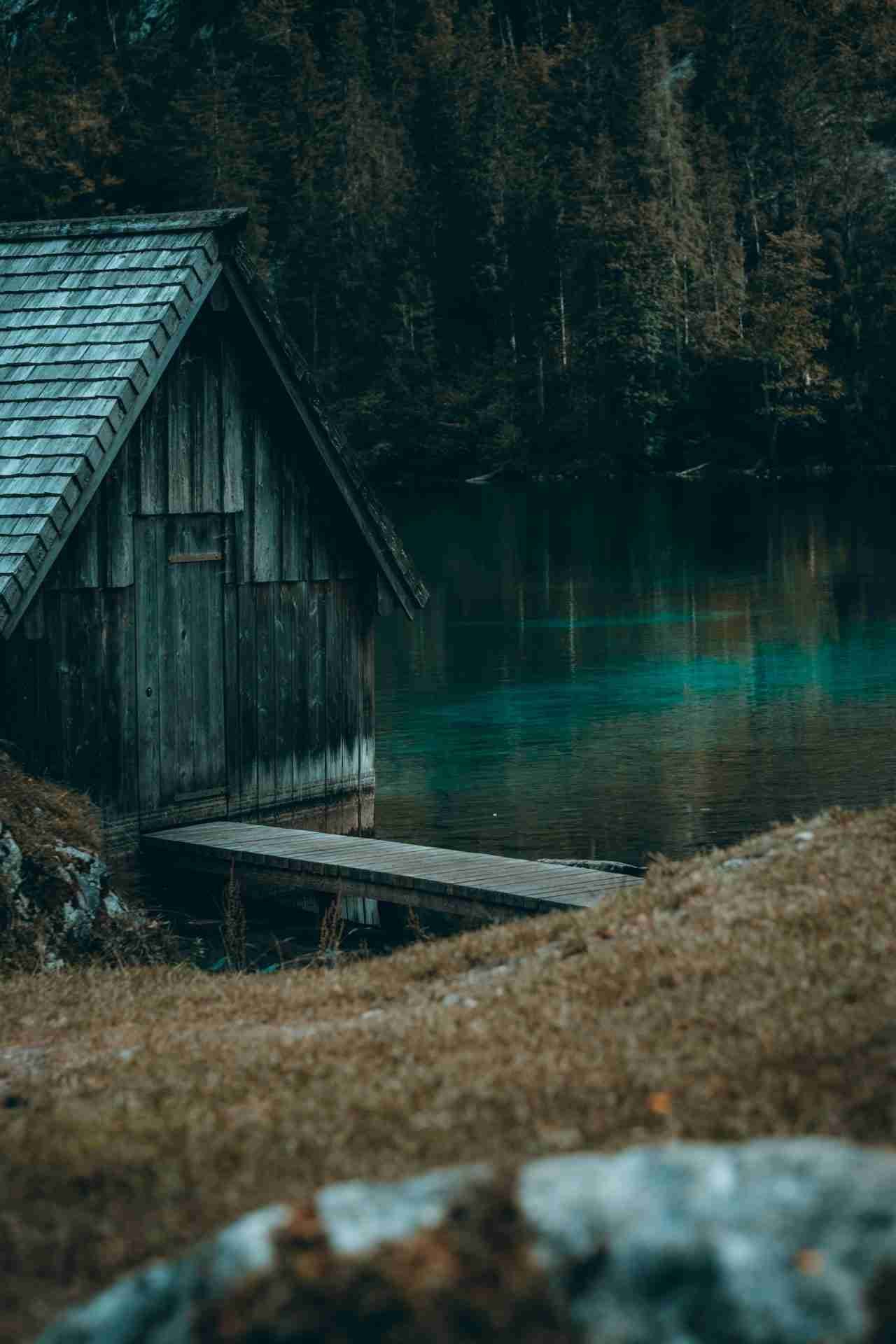
Fischerhütte am Obersee feels like one of those places that almost looks unreal the first time you see it. After the short walk from Königssee, the landscape suddenly opens up to this calm alpine lake with steep mountains rising straight up around it. Sitting along the western edge of the lake is this small wooden boathouse, simple and weathered, tucked right against the water. It's not a dramatic subject on its own, but that's exactly why it works so well. The still water, the symmetry, and the scale of the mountains make it one of those spots where you can slow down and really enjoy working different compositions without rushing.
Best Photography Opportunities
• Lakeside Composition
This location works best when you keep things simple. The weathered wood, angled roof, and small dock give you just enough detail without making the frame feel busy. Because it sits right on the edge of the lake, you can use the water as a clean background instead of filling the frame with too much scenery. Depending on your angle, you can either center the hut or push it off to one side and let the water carry the rest of the composition. Small adjustments in where you stand make a big difference here. It's one of those subjects where less really does more.
• Water Color and Reflections
The water around the boathouse has a really nice blue green tone, especially in softer light. Instead of chasing a perfect mirror reflection, it's worth paying attention to the subtle reflections and color transitions near the shoreline. The hut and trees often reflect gently across the surface, which adds depth without making the image feel too polished. This softer reflection style actually suits the mood of the location really well. When the water is calm, you can get a clean look, but even slight movement can still produce something interesting. It's a good place to slow down and watch how the water changes.
• Leading Lines
The small dock next to the boathouse is an easy compositional tool to work with. It creates a natural line that leads the viewer toward the hut and then out across the lake. Shooting from a slightly lower angle helps emphasize that line and gives the frame more structure. It also helps connect the foreground to the subject in a way that feels natural. Even though it's a simple element, it can completely change how the image flows. It's worth trying a few variations with how much of the dock you include.
• Forest Backdrop
Across the water, the dense forest creates a dark and consistent background. This helps the lighter tones of the water and the texture of the wood stand out more clearly. On overcast days, this background looks especially clean because the light stays soft and even. Keeping your composition slightly tighter can turn the forest into a simple backdrop rather than a detailed scene. That makes it easier to keep the focus on the boathouse. It's subtle, but it makes a big difference in keeping the image clean.
• Detail Shots of Wood and Shoreline
This is a great spot for more intimate compositions if you don't want to shoot wide the whole time. The wood grain, edges of the dock, and the way the structure meets the water all offer smaller details worth focusing on. A longer lens helps simplify the scene and isolate those elements. These types of images can feel more personal and a bit different from the typical wide landscape shot. It's a good way to add variety without needing to move far. Sometimes the best shots here are the ones you almost overlook at first.
Best Time to Visit
Early morning is the best time if you want calm water and fewer people around. The lake is usually still, and the whole area feels quieter, which fits this location perfectly. The softer light also helps bring out the tones in the wood and water without harsh contrast.
Later in the day can still work, especially if the light stays soft or slightly diffused by clouds. Bright midday light can be a bit less forgiving, especially on the water, but it's still workable if you focus on tighter compositions.
Summer and early autumn are the easiest times to visit, with reliable access and good conditions. Autumn can be especially nice when the forest across the lake starts to shift in color. Spring also works well, with fresh greens and a bit more water movement in the area.
How to Get There
To reach Fischerhütte am Obersee, you start at Königssee in Berchtesgaden National Park. From there, you take a ferry across the lake to Salet. The boat ride is the most straightforward way to access Obersee, and there is a fee, so it's worth checking schedules ahead of time. It is an easy walk along a well maintained path to reach Obersee. The boathouse sits on the western side of the lake, which is the side you arrive at, so it's easy to find without needing to walk far. The path is straightforward and manageable with camera gear. Since this is a protected area, it's important to stay on marked trails and respect local guidelines.
Recommended Photography Gear
A 24 to 70 millimeter lens works really well here and covers most situations. It gives you flexibility for both wider compositions and slightly tighter frames without switching lenses.
A 70 to 200 millimeter lens is useful if you want to isolate details or simplify the background. It's especially helpful for tighter shots of the hut and shoreline.
A tripod can be useful in lower light, but you can comfortably shoot handheld in most conditions. A polarizing filter can help with glare, but be careful since it can also reduce reflections that might improve your image.
Nearby Photography Locations
This small church sits along the shoreline of Königssee and is one of the most recognizable scenes in the area. The white walls and red domes stand out against the dark mountains behind it. Early morning is a great time to photograph it when the water is calm and reflections are cleaner.
Röthbach Waterfall is one of the tallest waterfalls in Germany and can be seen from the far end of Obersee. From a distance, it drops down a steep rock face and adds a sense of scale to the landscape. A telephoto lens helps bring it closer and makes it stand out more clearly.
The main lake itself offers a completely different feel compared to Obersee. The long, narrow shape of the lake and the surrounding cliffs create strong leading lines and reflections. The electric boats and changing light throughout the day give you plenty to work with.
Hintersee is a smaller alpine lake surrounded by forest and mountains. It has a quieter, more intimate feel with still water, rocks, and trees that work well for detailed compositions. It's a nice contrast to the larger scale of Königssee and Obersee.
This gorge features rushing water, narrow walkways, and steep rock walls. It's a great spot for photographing motion and texture, especially with longer exposures. The environment feels completely different from the open lake scenes nearby.
Comments
Loading comments…