

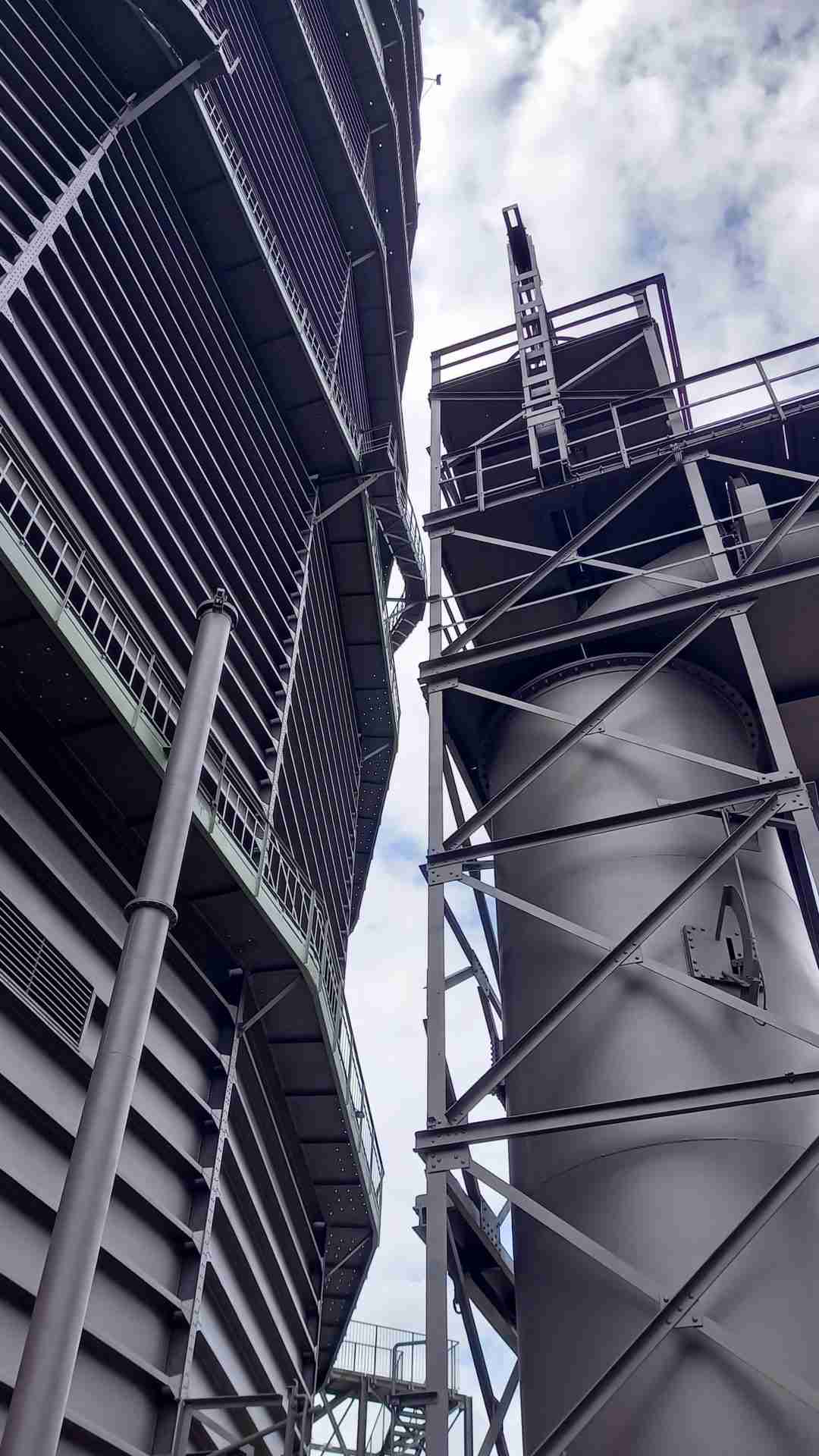
Gasometer Oberhausen stands as one of the most striking remnants of Germany's industrial past, rising above the Ruhr region with a presence that is hard to miss. Originally built as a gas storage facility, the structure has been transformed into a vast exhibition space while still retaining its raw, industrial character. From the outside, it appears as a massive cylindrical tower, but stepping inside reveals an interior that feels almost unreal in its scale. The height, the dark steel walls, and the sense of vertical space immediately set it apart from typical photography locations. The surrounding area has been redeveloped into a mix of cultural and commercial spaces, but the Gasometer itself still carries a strong connection to its industrial origins. Inside, exhibitions often make use of the full height of the structure, with large installations suspended or projected into the space. There is also a rooftop viewing platform that offers wide views across Oberhausen and the wider Ruhr area. It is a location that combines history, architecture, and modern exhibition design in a way that feels both grounded and visually dramatic.
Best Photography Opportunities
• Exterior Scale And Industrial Form
From the outside, the Gasometer immediately stands out due to its sheer size and simple cylindrical shape. The clean structure makes it easy to build compositions that focus on scale without unnecessary distractions. Shooting from ground level while angling slightly upward helps emphasize height and gives the structure more presence in the frame. Including people, cars, or nearby elements can help communicate just how large it is. The surrounding open space allows you to step back and experiment with different distances and focal lengths. This is one of the most accessible and rewarding ways to photograph the location without needing entry.
• Framing With Surrounding Architecture
The area around the Gasometer includes walkways, railings, and nearby buildings that can be used to frame the structure. By positioning yourself along paths or using foreground elements, you can add depth and guide the viewer's eye toward the tower. This approach helps avoid flat compositions and makes the image feel more layered. Changing your position slightly can alter how much of the surrounding environment you include. It is especially useful when you want to create a more contextual image rather than isolating the structure completely. This works well in both wide and mid range compositions.
• Reflections And Water Features Nearby
Certain areas around the Gasometer include water features that can be used to introduce reflections into your compositions. When conditions are calm, these reflections can help balance the frame and add symmetry. Shooting lower to the ground can strengthen this effect and bring more attention to the reflected shape. Even when the water is not perfectly still, it can add texture and movement that contrasts with the solid structure. This approach adds variety without needing to change location. It is worth exploring the area to find the best angles.
• Rooftop City Views From Above
The rooftop viewing platform offers a completely different perspective compared to shooting from the ground. From here, you can capture wide views across Oberhausen and the surrounding Ruhr region. The height allows for clear sightlines and layered compositions that include industrial and urban elements. Light plays an important role, with softer conditions in the morning or late afternoon producing more depth. Including parts of the structure in your frame can help anchor the scene.
• Interior Scale And Exhibition Space
Inside the Gasometer, the massive vertical space creates opportunities that are difficult to replicate elsewhere. Shooting upward from the ground level helps emphasize the height and creates a strong sense of scale. Exhibitions often introduce large installations that interact with the space, adding another layer to your compositions. Including people in the frame helps provide reference and balance. Light inside can be uneven, so exposure adjustments are often needed.
Best Time to Visit
Because much of the photography here can be done from the outside, timing plays a bigger role than you might expect. Early morning is one of the best times to visit if you want softer light and fewer people around the area. The lower sun angle helps bring out subtle texture on the surface of the structure and adds depth to your images. Late afternoon and early evening are also strong options, with warmer tones giving the structure a slightly different look.
Midday light can feel flat against the large surface of the Gasometer, making it harder to create contrast. Overcast conditions can actually work well, as they reduce harsh shadows and allow the form of the structure to stand out more clearly. If you plan to go up to the rooftop, consider how daylight hours will affect your timing, especially in winter when light fades earlier.
How to Get There
Gasometer Oberhausen is located in Oberhausen in Germany's Ruhr region and is easy to reach by both car and public transport. There are parking facilities nearby, particularly around the CentrO area, which is within walking distance. If you are arriving by train, Oberhausen Central Station is the main hub, with bus or tram connections that take you close to the site.
The exterior of the Gasometer and surrounding grounds are freely accessible, making it easy to explore and photograph without any cost. Entry fees are only required if you want to access the interior exhibitions or the rooftop viewing platform. Once inside, movement between levels is straightforward, but tripods and larger equipment may be restricted, so it is best to travel light and check current guidelines in advance.
Recommended Photography Gear
A standard zoom lens in the range of 24 to 70mm works well for most situations here, especially when shooting the exterior from different distances. A wider lens can help emphasize the scale of the structure, particularly when working close to the base. A longer lens can be useful for compressing elements or isolating details on the surface.
A tripod can be helpful for more controlled compositions, especially in lower light, though it may not be allowed inside. A polarizing filter can help manage reflections if you are working around water features. Since much of the shooting can be done outdoors, having a flexible and lightweight setup will make it easier to move around and explore different angles.
Nearby Photography Locations
• CentrO Oberhausen
CentrO Oberhausen offers modern architecture, open spaces, and reflective surfaces that work well for urban photography. The layout provides a variety of angles within a compact area, making it easy to explore without travelling far. It is a useful contrast to the industrial look of the Gasometer.
OLGA Park combines open green space with remnants of its industrial past, creating a mix of natural and structural elements. It is a versatile location where you can shift between wider landscape style compositions and more focused detail work. The layout gives you room to experiment with different approaches.
• Slinky Springs to Fame Bridge
This pedestrian bridge features a distinctive coiled design that creates strong visual lines and movement within the frame. It works well for both wide shots and more abstract compositions depending on your angle. The structure stands out clearly, making it a strong subject on its own.
• Landschaftspark Duisburg Nord
Landschaftspark Duisburg Nord is a large industrial heritage site with towering structures, walkways, and open spaces. It offers a wide range of photography opportunities, from detailed textures to expansive views. The scale and variety make it worth setting aside time to explore properly.
• Tiger and Turtle Magic Mountain
Tiger and Turtle Magic Mountain is a walkable sculpture that resembles a roller coaster and provides unique shapes against the sky. It is particularly effective for silhouette work and simple, graphic compositions. The elevated position also offers views across the surrounding area.
Comments
Loading comments…