
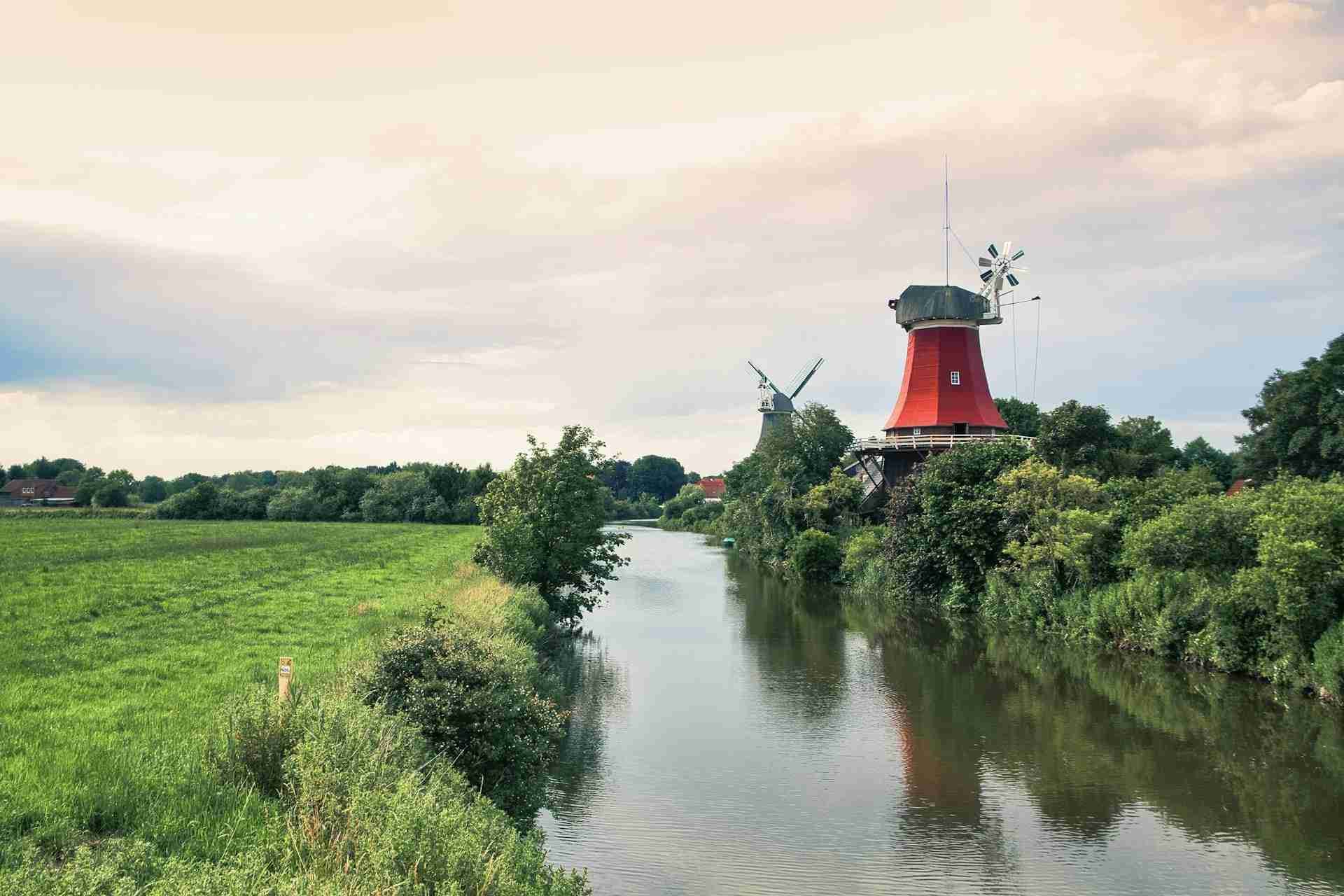
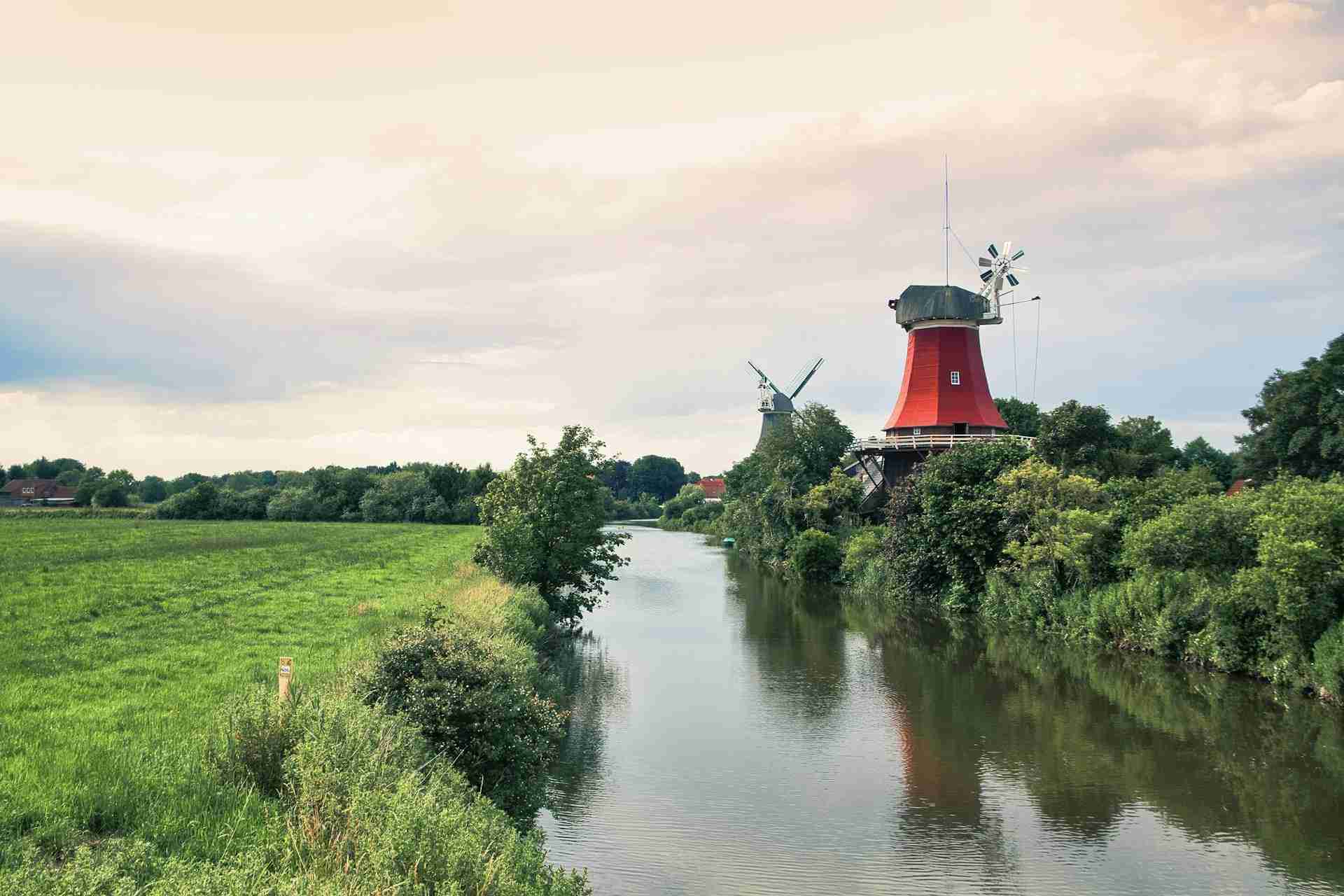
Rising above the rooftops of the fishing village of Greetsiel, the twin windmills known locally as the Greetsieler Zwillingsmühlen offer a timeless and carefully preserved piece of Lower Saxony's rural heritage. Painted in deep red and green and crowned with traditional sails, the two structures sit just a short distance apart at the eastern edge of town, where the flat fields meet canals and cobbled paths. Photographers are drawn here not only by the symmetry and strong vertical forms of the windmills, but also by the village's rich textures and soft northern light. Together, the windmills and their surroundings form a scene that feels both grounded in tradition and open to creative interpretation. Whether you are composing a sweeping landscape or isolating small architectural details, this location rewards patient exploration.
Best Photography Opportunities
Wide Field Compositions With Both Windmills
The most popular views are from the canal path or nearby bridge looking west, where both windmills appear side by side across an open field. This position creates a strong sense of scale and symmetry that works well with wide focal lengths. Including the field or path in the foreground adds depth and gently guides the eye into the scene. Early morning light often falls across the structures from the side, creating soft shadows and bringing out texture in the brickwork and sails. If clouds are moving through the sky, this angle also works well for long exposures that stretch the sky behind the stationary towers.
Reflections Along the Canal
Walking the canal that runs beside the windmills offers several chances to frame the structures with soft water reflections, especially in the early morning when the surface is still. Shooting from a low angle near the bank helps align the reflection with the base of the windmills, creating a full mirrored effect that balances the composition. Overcast days are also productive for reflection work, as the subdued light prevents highlights from overpowering the water. Including passing boats, ducks, or seasonal foliage along the water's edge can introduce subtle points of interest that add life to the scene.
Close Architectural Details
Each windmill has its own character, and getting close reveals differences in color, window arrangement, and exterior texture. The red mill to the north is especially photogenic with its deeper tones and contrasting shutters. Using a medium focal length to isolate a single section of wall, a doorway, or the overlapping sail mechanism helps focus the viewer's attention on form and materials. These tighter compositions work best in side light when the surfaces catch shadows and fine details are more visible. They also lend themselves to black and white conversions if you want to emphasize structure over color.
Seasonal Context in the Surrounding Fields
In spring and summer, the fields around the windmills fill with bright greens, wildflowers, and low crops that introduce seasonal color to wider compositions. Including these natural elements in the foreground enhances the story of place and ties the historic structures to the land around them. In autumn, soft browns and golds take over, and fog is more common in the early morning, which can simplify the background and help the windmills stand out. These conditions make the windmills appear even more isolated, perfect for quiet, atmospheric images.
Village Scenes With Framed Windmill Views
From within Greetsiel itself, the windmills can often be spotted over the rooftops or at the end of narrow cobbled streets. Framing them between buildings, behind trees, or through archways adds visual layering and context to your images. These kinds of compositions feel more narrative and work well for storytelling, especially when paired with street scenes or portraits of daily life. Light filtering through alleyways and hitting the sails from behind creates natural points of contrast that anchor the frame. These images often require patience, as timing and angle are key to capturing balance between structure and setting.
Best Time to Visit
The Greetsiel Twin Windmills can be photographed year round, with seasonal shifts offering fresh visual interest throughout the calendar. Spring brings new color to the fields, soft skies, and moderate temperatures that make long shoots more comfortable. Wildflowers and fresh green growth provide lively foregrounds that work well with low angles and wide frames. Summer delivers clearer skies and longer daylight hours, especially in the early morning and late evening, when golden light touches the sails and the tops of the nearby buildings. The extra light also helps when working with tighter compositions or reflections that need more illumination.
Autumn brings changing colors and more atmospheric conditions. Early fog can hang in the low fields and soften the background, allowing the windmills to appear more defined. The golden hour is often longer and lower, wrapping the structures in warm light and casting deeper shadows across the village. Winter visits are quieter and offer the starkest contrasts, with bare trees, frosted ground, and open skies giving your compositions a more minimalist tone. If snow is present, the scene becomes one of high contrast and texture, perfect for black and white interpretations.
Morning is the most productive time of day, especially if you want calm reflections, side light across the towers, or fog layered behind the structures. Late afternoon also works well for backlit compositions and long shadows across the fields or rooftops. Midday can be used effectively when skies are overcast, helping preserve subtle texture and color. Because the site is open and spacious, almost any light condition can be used creatively with the right framing.
How to Get There
The Greetsiel Twin Windmills are located on the eastern edge of Greetsiel, a well-known fishing village in the Krummhörn municipality of Lower Saxony. The village is accessible by car from nearby towns such as Norden or Emden, with well-signed roads leading into the center. Parking is available near the harbor, and from there it is a short five to ten minute walk to the windmills. The most direct access is along Mühlenstraße, which leads straight to the southern windmill and connects to footpaths that circle the area.
Greetsiel is also a popular stop along the North Sea Cycle Route, and the entire area is bike friendly with flat terrain and clear signage. The windmills themselves are on public grounds and can be approached from multiple sides without restriction. While the interiors may be open seasonally for tours, all photography of the exterior structures can be done freely and without fees. The area is open year round and can be visited at all times of day, allowing for flexibility in planning your shoot.
Recommended Photography Gear
This location benefits from a flexible setup that allows you to move between wide landscapes, architectural studies, and street-level compositions. A 24 to 70 millimeter lens is a strong starting point for capturing the windmills in context, offering both reach and width for general shooting around the village and canal. For expansive field views or close working conditions in tight streets, a 16 to 35 millimeter lens gives you more room to frame both windmills together or include more sky and foreground elements. This range is especially useful in spring and autumn when the fields provide strong color and texture.
A 70 to 200 millimeter lens is helpful for isolating a single windmill, compressing layers of the village, or pulling background details into your frame. This is particularly effective when shooting reflections or trying to highlight the sails against distant clouds or rooftops. A tripod is recommended for low light conditions, long exposures at the canal, or golden hour work when shutter speeds drop. A polarizing filter can help control reflections on water and windows and will boost contrast in partly cloudy skies. Neutral density filters are optional but useful for those interested in experimenting with longer exposures around the canal or during fast moving clouds.
Footing around the site is level and mostly paved, though grassy areas near the fields may get muddy in spring or after rain. Comfortable walking shoes and a weather resistant bag will make long sessions easier. A microfiber cloth is useful for clearing lenses after foggy or misty mornings. This is a location that supports a deliberate but mobile shooting style, and planning for both wide scenes and smaller moments will give you the most satisfying results.
Nearby Photography Locations
Just a short walk from the windmills, the harbor is filled with traditional fishing boats, brick warehouses, and slow-moving water that reflects warm morning and evening light. It's a great location for detail work, maritime texture, and quiet street scenes that feel timeless and grounded in local life.
The red and yellow striped lighthouse just outside Pilsum stands out sharply against the flat fields and wide open sky. This compact structure is perfect for minimalist compositions and long exposure work, especially around sunset when the sky lights up behind the dike. The location pairs well with Greetsiel for a full day of rural and coastal photography.
Germany's tallest lighthouse is a short drive from Greetsiel and offers a completely different visual experience. Its lattice structure and industrial form contrast well with the traditional brick windmills and provide a clean, vertical anchor in an otherwise flat landscape. It works best in side light or with dramatic skies.
Located to the south, this quiet stretch of protected marshland includes tidal channels, birdlife, and wide views across the water. It's a strong complement to architectural subjects and offers chances for long exposures and wildlife photography in soft coastal light.
Pewsum Village Center
This nearby village offers smaller streets, brick facades, and a slower rhythm that is well suited for those interested in rural documentary photography. Its compact layout and gentle pace allow you to build detailed, character-rich images that contrast well with the bold shapes of the windmills.
The Greetsiel Twin Windmills are more than a historical curiosity. They offer photographers a rare blend of vertical form, human scale, and seasonal change that encourages both patience and creativity. Whether you are composing long fields under rolling clouds or isolating the quiet curve of a sail, this site supports a deep and thoughtful photographic experience in one of Germany's most visually inviting coastal regions.
Comments
Loading comments…