
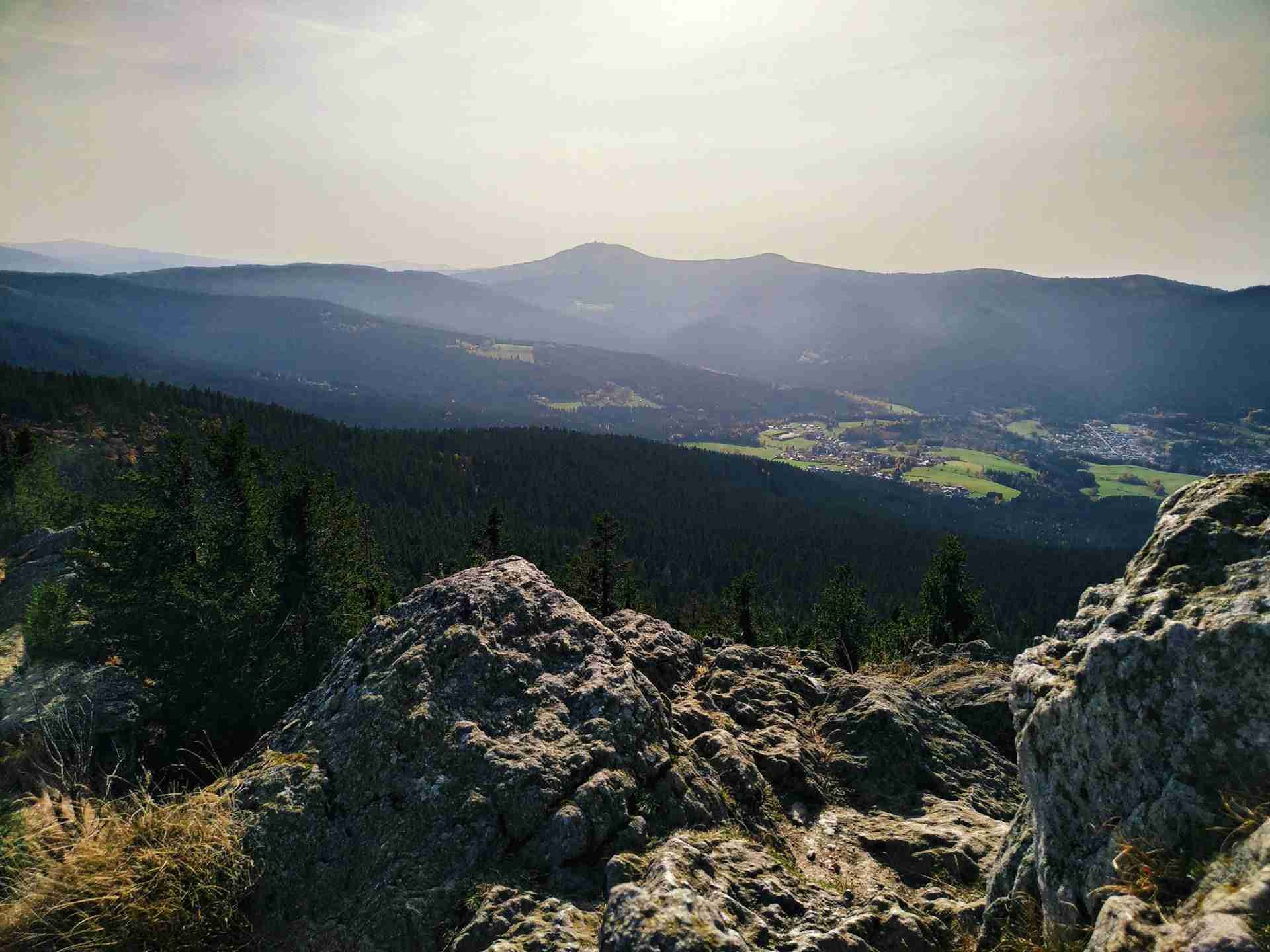
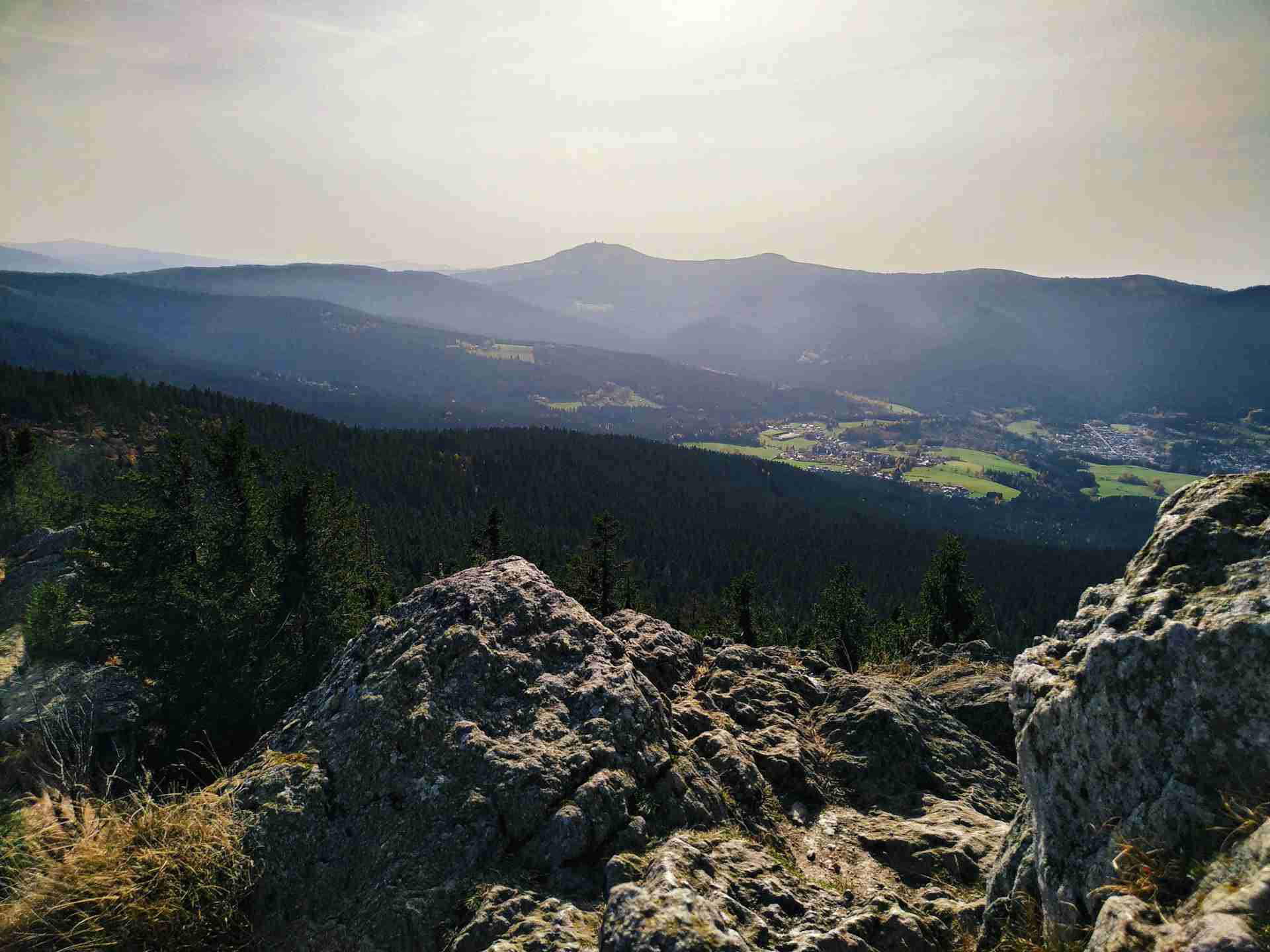
Rising at the edge of the Bavarian Forest near the Czech border, Großer Osser is a distinctive granite summit that draws landscape photographers with its jagged rock formations, panoramic views, and shifting light across two countries. Known as the "Matterhorn of the Bavarian Forest" due to its sharp profile, the mountain's summit delivers bold, high-contrast compositions in every direction. Weathered rock outcrops form natural foregrounds while views stretch far across the forested lowlands, punctuated by small towns and winding valleys. The exposed granite, sparse trees, and layered hills make this a versatile location in all seasons, ideal for both golden hour color and mist-filled morning atmosphere. Whether approached via the German side from Lohberg or from the Czech Republic's Šumava region, Großer Osser rewards those willing to carry a kit uphill for clean light and rugged structure.
Best Photography Opportunities
• The granite summit blocks at sunrise
are the defining feature of this location. These massive stone slabs create leading lines and strong shapes that catch first light from the east. The rough texture of the granite becomes especially pronounced under low-angle light, casting crisp shadows that shift with each passing minute. Photographers can work with wide compositions using the rocks as foreground, or frame tighter abstracts with patterns in the lichen-covered surfaces. Sunrise often brings mist to the valleys below, adding layers and mood to the backdrop.
• Views east into the Czech Šumava range
reveal subtle layers of forest ridges fading into the distance. These are best captured with a telephoto lens to compress perspective and bring out tonal transitions in the overlapping terrain. When clouds hover just above the hills, the light slips through in narrow shafts, making for dynamic, shifting contrast. This scene is most effective in the first hour after sunrise or during late afternoon with angled sidelight. Weather conditions change quickly here, so return visits yield different results even from the same vantage point.
• The natural frame of the border cross and shelter
adds a human element to an otherwise wild summit. A wooden summit cross and small shelter stand slightly below the highest outcrop, and they work well as midground subjects under dramatic skies. Including these in the frame provides scale and cultural context while still emphasizing the mountain's raw setting. In winter, snow accumulates here early and lingers, offering clean contrast between structure and landscape. Side lighting from either direction brings out detail in the wood grain and surrounding terrain.
• Rock details and close-up studies
are excellent for midday or flat light conditions. Großer Osser's summit rocks are covered in weathered patterns, lichen patches, and fissures that lend themselves to texture-based compositions. A macro or short telephoto lens allows for tight framing that eliminates the horizon and focuses entirely on surface detail. These shots work well in monochrome or subdued color palettes, especially in overcast weather when the color shifts are more subtle and controlled.
• Night photography and astrophotography
are increasingly popular here thanks to low light pollution in the region. On clear nights, the Milky Way can be seen stretching above the summit rocks, and long exposures work especially well when framed against the cross or the dramatic ridge lines. A wide-angle lens and sturdy tripod are essential, and the summit is best reached before sunset to allow for setup while some light remains. Because the summit is exposed and often windy, careful planning is required to ensure stability during longer shots.
Best Time to Visit
Großer Osser is photographable year-round, but different seasons offer distinct visual themes. Autumn is particularly rich with warm tones in the lower forest and atmospheric mist in the valleys, while the summit itself remains mostly bare, providing contrast between color and rock. Sunrise and sunset times during this season align well with hiking conditions, and the air tends to be clear.
Winter brings a stark, minimalist look with snow outlining the granite and covering the slopes below. The rock retains its texture while the surrounding landscape becomes softer and more abstract. Photographers should be prepared for icy conditions and cold wind at the summit. Spring offers fresh greens in the lower areas and patchy snow melt on the peak, while summer introduces longer days and stronger directional light during sunrise and sunset.
Clear days work best for distant views, but partial cloud cover adds dimension and drama to compositions throughout the day. Early morning is ideal for mist in the valleys, while late afternoon provides warm light on the western flanks of the summit.
How to Get There
The most direct access to Großer Osser is from the town of Lohberg on the German side. From there, the Osser hiking trail leads up through forest and open rock sections, taking approximately two to two and a half hours on foot. The route is steep in sections but well marked, with occasional resting benches along the way. There is no vehicular access near the summit, so all gear must be carried by hand or in a pack.
Parking is available in Lohberg near the trailhead, and access is free of charge. In winter, some roads may be closed or require snow tires. An alternative route comes from the Czech side via Hamry or Černé jezero, with similarly timed ascents. Border crossing is open and legal for hikers at this location.
The final approach to the summit involves scrambling across uneven rock, so stable footwear is essential. Photographers should arrive early or allow enough time to reach the top before golden hour begins. There are no services or shelters aside from the small structure near the cross, so water, food, and warm clothing should be packed accordingly.
Recommended Photography Gear
A wide-angle lens in the 14 to 30 millimeter range is essential for capturing the full scope of the granite summit, the surrounding forest, and expansive skies. A mid-range zoom adds flexibility for framing midground details such as the summit cross or layering ridges in the distance. For compressed landscapes and valley shots, a 70 to 200 millimeter lens is highly useful.
A tripod is necessary for low light work and long exposures, particularly during twilight or astrophotography. Wind is common on the summit, so a weighted center column or stabilizing method is strongly recommended. A remote shutter release will minimize vibration and make it easier to manage bracketing or time-lapse intervals.
Filters are also helpful here: a circular polarizer brings out contrast in the sky and cuts glare from sunlit rocks, while a graduated neutral density filter can manage bright skies during sunrise and sunset. In winter or spring, lens wipes and moisture protection are necessary to deal with frost and condensation. A camera bag with rain resistance and support straps will make the ascent more comfortable and secure for gear.
Nearby Photography Locations
, just west of Großer Osser, offers a similar rocky summit but with a more intimate scale. The short ridge walk between the two peaks allows for mid-distance compositions and a chance to capture Großer Osser from a unique perspective. Light moves quickly across the saddle between them, making this an excellent sequence location.
• Arbersee
, a small lake at the foot of the Großer Arber massif, provides tranquil reflection shots and forest detail. Morning is best for still water and low-angle light on the tree line. The lake is accessible year-round and pairs well with a trip to Großer Osser.
, the highest peak in the Bavarian Forest, offers wide summit views and strong alpine light during sunrise and sunset. Its accessible summit and extensive trails make it a good choice for high elevation photography with less effort than Osser's steeper route.
• Bodenmais village and the Rißloch waterfalls
offer varied forest compositions and flowing water scenes within a shaded gorge. This area is particularly photogenic in spring and autumn, when water levels are higher and the forest shows strong seasonal color.
, across the border in the Czech Republic, is one of the most dramatic glacial lakes in the Šumava region. Steep slopes rise from its edges, and mist often hovers over the surface in the morning. It is best accessed from the Czech trail network and combines well with a cross-border hike from Osser.
Großer Osser offers a clean balance between rugged natural form and expansive landscape photography. Its mix of accessible summit rock, shifting mountain weather, and open sky makes it a versatile and rewarding destination for photographers willing to plan ahead and stay flexible. Whether shooting light across the valleys or waiting for stars over the granite peak, this border mountain remains one of Bavaria's strongest highland subjects.
Comments
Loading comments…