
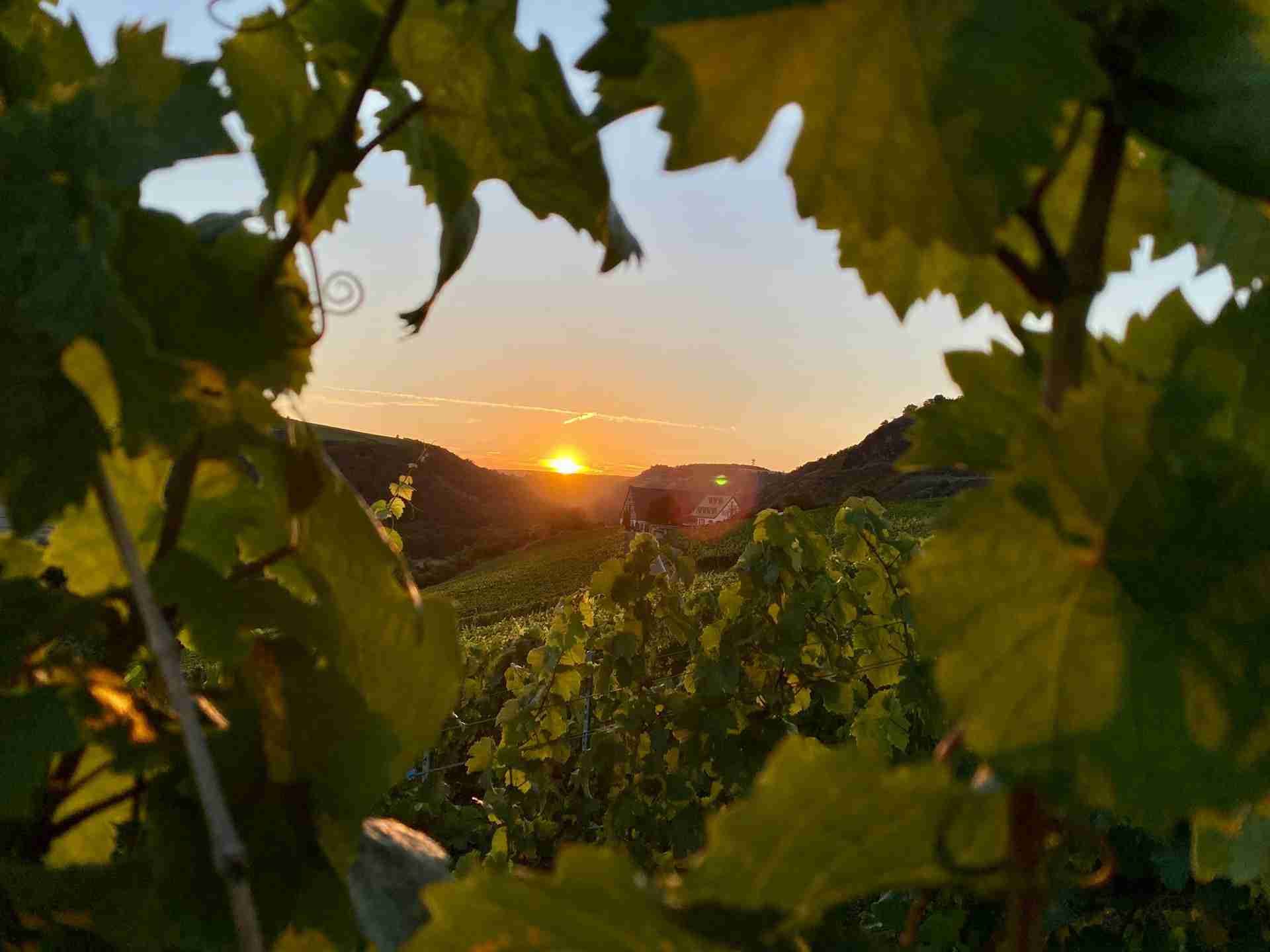
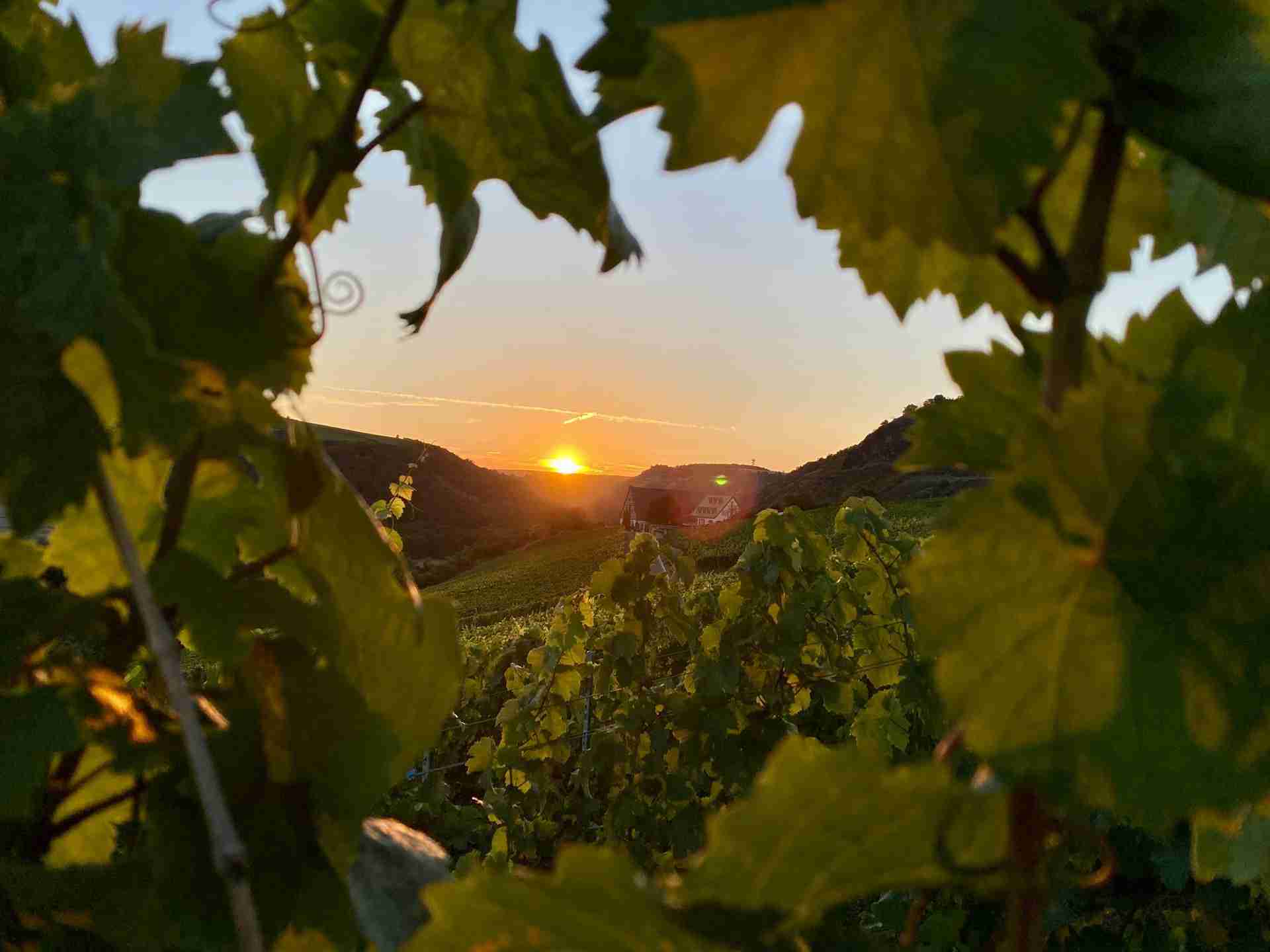
Perched on the upper banks of the Nahe River in the Rhineland-Palatinate, Gut Hermannsberg is a historic wine estate surrounded by steep, terraced vineyards and dramatic basalt cliffs. Formerly a royal Prussian viticultural domain, this winery combines classic estate architecture with expansive vine-covered slopes, all under changing skies that shift with the valley's microclimate. The visual rhythm of the vines, the textured stonework of the buildings, and the winding vineyard paths offer a deeply layered subject for landscape and architectural photographers. The light here moves quickly, sweeping across the hills and casting angular shadows on the winery's old walls. Whether you're shooting wide views toward the Rotenfels or capturing close studies of vineyard rows at golden hour, the setting rewards slow, deliberate photography and careful observation of light.
Best Photography Opportunities
• Elevated Vistas Across the Nahe Valley
From the higher slopes above the estate, you'll find sweeping views that include the winery buildings, vine rows, and the Nahe River beyond. These compositions are strongest at sunrise or late afternoon when warm side lighting accentuates the textures of the land and highlights the clean geometry of the terraces. A wide-angle lens works well here to include sky, slope, and structure, especially when framed from the edges of vineyard trails. Look for subtle changes in terrain, as the undulating hills help lead the viewer's eye through the frame. Mist rising from the river in early morning can add softness and depth to distant layers.
• Architectural Studies of the Estate Buildings
The winery's sandstone and slate structures provide excellent subjects for architectural photography, particularly in soft light or during overcast conditions. The estate courtyard offers balanced, symmetrical perspectives, with archways, windows, and the textured façade playing off each other in precise arrangements. Use a 50 millimeter or short telephoto lens to flatten perspective and isolate repeated forms. Low-angle compositions during golden hour help enhance the warmth of the stone and add dimension without deep shadows. Details such as carved lettering or weathered shutters add texture-focused opportunities.
• Vineyard Rows and Receding Lines
The structured lines of the vines create a strong visual language of repetition and rhythm. Shooting straight down a row from low to the ground creates a tunnel effect that draws the viewer inward. These compositions work best with mid-range focal lengths, allowing the foreground leaves and soil textures to balance against converging lines. In summer and early fall, the fullness of the vines adds depth and color, while in winter, the bare stalks provide stark, minimalist compositions. Slight fog or overcast skies help reduce contrast and let form take center stage.
• Details of the Winemaking Process
If photographing during harvest or on a guided visit, you may be able to capture elements of the production process. Close-ups of grape clusters, pruning tools, fermentation tanks, or oak barrels all offer texture-rich compositions. These images work best with a fast 35 or 50 millimeter prime for low-light interiors or macro lenses for vineyard details. Focus carefully on the point of interest and use a wide aperture to isolate subjects from the busy environment. Natural window light in barrel rooms or cellars often adds beautiful tonal gradients and a warm glow.
• Seasonal Color and Landscape Texture
Gut Hermannsberg's vineyards are deeply seasonal, with each phase offering its own photographic strengths. In spring, the fresh green of new growth adds vibrancy to the slopes, while summer brings dense canopy and layered patterns in the vines. Autumn introduces golds and reds that contrast with the estate's stonework and dark soil. Winter, though quieter, reveals the structure beneath the vines and enhances the geometry of the terraces. These seasonal shifts are well-captured in repeating visits or portfolio series that show the land's changing character over time.
Best Time to Visit
The vineyard landscape at Gut Hermannsberg changes constantly, but early autumn—from mid-September through October—is arguably the most photogenic season. The vines begin to change color, the light becomes warmer and lower throughout the day, and the harvest activity adds energy and access to new subjects. Early mornings often bring mist along the river, especially in cooler weather, creating layered compositions with depth and atmosphere.
Spring (April to May) offers soft greens and blooming wildflowers, with fewer visitors and milder conditions. Summer delivers strong sun and sharp contrasts, so it's best to photograph in the early morning or late evening to avoid harsh midday shadows. Winter is quieter and colder, but snow or frost can bring out striking contrasts in the vineyard lines and highlight the structure of the land.
The golden hours are particularly long and soft here due to the open valley and the surrounding hills. Sunrise light often touches the eastern-facing slopes first, while sunset offers backlight and warm tones across the buildings and vineyard rows. Overcast days are excellent for architectural detail and soft textures, especially when photographing in the estate courtyard or cellars.
How to Get There
Gut Hermannsberg is located just outside the town of Niederhausen, along the Nahe Wine Route in Rhineland-Palatinate. The closest larger town is Bad Kreuznach, about a 20-minute drive away. From Frankfurt, the estate can be reached by car in under two hours via the A60 and B41 routes.
Public transportation is available to nearby towns, but reaching the estate itself is easiest by car. There is a small visitor parking lot on-site, and access is straightforward via K58, a well-paved country road. The estate is open for tastings and tours, which often include access to parts of the vineyard and cellar that are not otherwise open to the public.
There are no fees for photographing the exterior grounds, but interior access may require booking a tour. Tripods are allowed outdoors and are usually fine inside if you're part of a tour and ask for permission. Wear durable shoes, especially if walking up vineyard slopes or exploring nearby trails, as the terrain can be uneven in places. Early arrivals are recommended for the best light and quietest atmosphere.
Recommended Photography Gear
A wide-angle lens between 16 and 35 millimeters is essential for landscape overviews and architectural scenes with strong foreground elements. A mid-range zoom, such as a 24 to 70 millimeter, provides versatility for moving between interior and exterior subjects, especially when light is changing quickly. A short telephoto, like a 70 to 200 millimeter, is helpful for compressing vineyard rows, isolating architectural details, and working with distant hills.
A tripod is highly recommended for golden hour landscapes and bracketed exposures in high-contrast settings. A circular polarizer helps reduce glare on windows and deepen the greens in vineyard foliage. In autumn, a graduated ND filter can be helpful for balancing bright skies with shaded slopes. Bring a microfiber cloth to keep lenses clean, particularly when working early in the morning when condensation can be an issue.
If photographing indoors, a fast prime such as a 35 millimeter f/1.8 or f/1.4 offers excellent control in dimly lit cellars or tasting rooms. A lightweight backpack with water storage and quick-access compartments makes it easier to move across vineyard paths. Spare batteries and cards are essential, especially if you're shooting from pre-dawn to sunset.
Nearby Photography Locations
Just across the Nahe River, this massive rock face is the highest cliff north of the Alps and provides a powerful geological counterpoint to the soft lines of the vineyards. Early morning or late day light rakes across its face, revealing cracks, color variation, and dramatic shadow play.
• Niederhausen Reservoir
A short walk from the estate, this reservoir offers peaceful water reflections of the surrounding hills and vineyards. It's ideal for sunrise photography, especially when fog rises from the surface and backlights the shoreline trees.
Perched above the valley near Kirn, this historic castle ruins complex offers elevated views of the Nahe region, castle walls overgrown with moss, and surrounding forest scenes. Late afternoon provides excellent side light across the ruins.
• Weinberge Bad Münster am Stein
Just downstream, this section of vineyards includes steep slopes, sharp switchbacks, and scenic overlooks of the river bend and surrounding countryside. The red cliffs and exposed rock add texture and variety to wider compositions.
• Ebernburg Castle and Village
This medieval fortress and adjoining village offer classic half-timbered architecture, stone alleys, and views toward the Nahe Valley. A strong location for blue hour photography, especially when lights come on beneath the castle walls.
Gut Hermannsberg offers a rare mix of agricultural order, architectural detail, and natural drama, all within a compact, walkable landscape. For photographers seeking balance between structure and scenery, it remains one of the most rewarding and accessible locations in Germany's wine country.
Comments
Loading comments…