
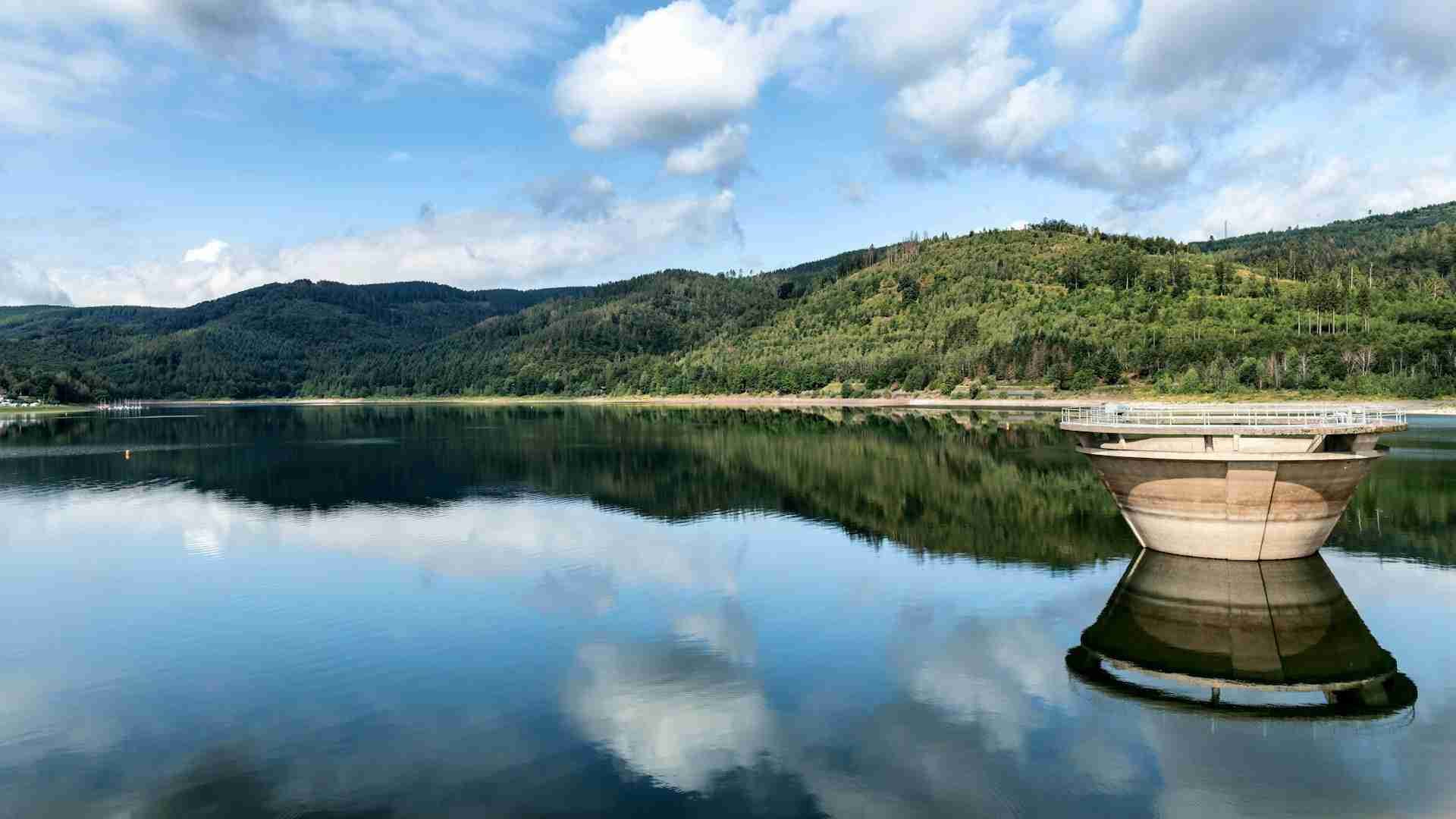
Set in the wooded hills of the Harz region, Innerstestausee offers a wide, reflective surface surrounded by dense forest, curving shoreline, and a changing sky that often defines the scene more than any landmark. This artificial reservoir near Langelsheim may lack the drama of alpine lakes, but for photographers it provides subtle, shifting opportunities that reward timing, weather awareness, and a focus on composition rather than spectacle. The reservoir curves gently through the valley, forming clean lines and mirrored edges that invite reflection-based work, minimalist studies, and quiet long exposures. In all seasons, Innerstestausee offers a tranquil palette of water, light, and shadow.
Best Photography Opportunities
Morning Reflections in Still Water
Early morning is the most reliable time to find calm water at Innerstestausee. When the surface is undisturbed, the lake reflects the surrounding hills, treetops, and sky with remarkable clarity. The curves of the shoreline become compositional anchors, leading the viewer's eye through the frame. Use a wide-angle lens for broad symmetry or a telephoto lens to compress trees and reflections into layered textures. Overcast mornings with soft light reduce glare and allow for more nuanced tonal control. For more dramatic shots, aim for misty conditions when the line between water and air becomes subtle and abstract.
Autumn Color on the Western Shore
In late October and early November, the forested slopes around the lake turn to deep red, gold, and orange. The western shore, in particular, offers an excellent vantage point for framing the contrast between autumn trees and water. Shoot with the sun behind you in the morning to enhance saturation and create crisp detail in the foliage. A polarizing filter can help control reflections and boost color contrast, especially in strong light. Move along the gravel paths to find clean breaks in the trees and use natural openings to layer foreground, midground, and background elements.
Minimalist Compositions in Winter Light
In colder months, the water level often drops and snow may collect on the embankments, reducing the scene to a more minimal, graphic layout. Tree branches become bare, and the lake surface becomes starker and more reflective. Use longer lenses to isolate shapes, such as lone trees on a hill or the edge of ice breaking on water. Black and white conversions work well here, especially in overcast conditions where color is limited but form remains strong. Look for clean lines and open negative space, especially along the eastern side of the lake where the slope is more open.
Long Exposures from the Northern Dam Wall
From the dam at the northern end of the reservoir, you can look southward down the length of the lake with a symmetrical view that is ideal for long exposure photography. Use an ND filter to smooth out the water surface and soften any passing clouds. A tripod is essential for stability, and low ISO will help preserve highlight detail. This location is especially effective in the evening as the sun begins to fall behind the ridgeline. Look for repeating textures along the edge of the water, such as ripples, rocks, or grass breaking through the surface.
Storm Light and Reflected Sky
Because the reservoir sits in a shallow valley, incoming storms often bring heavy clouds that roll low over the hills and reflect strongly in the water. These conditions are ideal for moody, dynamic landscape photography. Position yourself near one of the small inlets on the southern end of the lake, where the water narrows and picks up strong reflection. Use a wide-angle lens to capture the depth of the cloud formations. Adjust your exposure to hold sky detail and let the land go slightly darker for a more dramatic mood. These scenes change quickly, so be prepared to work handheld if necessary.
Best Time to Visit
Innerstestausee is photographable year-round, with each season offering its own visual rhythm. Autumn is the most colorful and perhaps the richest season for tonal contrast and clean air. Peak foliage typically occurs in late October, though some color remains into early November. Spring offers softer greens and more water movement as snow melts in the surrounding hills. Winter simplifies the landscape and can produce strong black and white material, especially after snowfall or during overcast weather.
Summer can be lush and still, but the midday light is often harsh. Early morning and late afternoon are the best times for photography regardless of season. Wind often increases during midday, disturbing the water and making reflections less usable. Sunrise offers the highest chance for calm conditions and mist, while golden hour before sunset gives warmth to the hills and soft shadows along the shoreline. Visiting just after rain can also enhance color and increase contrast in the forested sections of the shore.
How to Get There
Innerstestausee is located just outside Langelsheim, in the Lower Saxony region of northern Germany. It is easily accessible by car from nearby towns such as Goslar and Clausthal-Zellerfeld. The reservoir is bordered by Bundesstraße B82, with several small parking areas and trailheads providing entry points to the lake's perimeter paths. The most popular access point is from the north, where a small car park sits near the dam. From here, gravel trails follow both sides of the reservoir, allowing photographers to explore the shoreline on foot.
Public transportation options include regional buses that connect Langelsheim with Goslar, though access from the bus stop to the lake requires a short walk. There are no entry fees, and the area is open throughout the year. Facilities are minimal, so bring any food, water, or supplies you may need. The trails are generally well maintained, but footwear with good grip is recommended, especially in wet or icy conditions. Mobile signal is available around most of the lake, though it may be patchy on the southern shore.
Recommended Photography Gear
A wide-angle lens between 16 and 35 millimeters is ideal for capturing expansive views of the lake and sky. A standard zoom such as 24 to 70 millimeters provides flexibility for shoreline details and framing the curve of the reservoir. A telephoto lens from 70 to 200 millimeters is useful for compressing hills, isolating tree lines, and capturing moody atmospheric changes.
A tripod is essential for long exposures and shooting in low light. A six-stop or ten-stop neutral density filter will help extend shutter speed to soften water or capture cloud movement. A circular polarizer is helpful for reducing glare on the water and deepening sky tones during midday shooting. In autumn and winter, weather protection for both gear and clothing is recommended. The area can be damp and exposed to wind, so pack extra lens cloths and dress in layers to stay comfortable.
Nearby Photography Locations
Just a short drive to the northeast, the UNESCO-listed town of Goslar offers narrow cobbled streets, timber-framed buildings, and moody alleys ideal for architectural and street photography. The rooftops are particularly photogenic at blue hour, and the surrounding walls and gates add texture to any walk.
Located southeast of Innerstestausee, this larger reservoir offers broader landscapes, dramatic dam architecture, and more open water. The surrounding hills create long reflections, and the entire area is excellent for minimalist water photography, especially in winter and early spring.
A quiet village tucked into a forested valley, Lautenthal offers stone bridges, narrow streets, and calm river scenes that contrast nicely with the larger scale of Innerstestausee. Use a short telephoto lens to pick out details and street corners in soft morning light.
To the south and west, the Harz Mountains provide a wide variety of forest, moorland, and highland views. The network of trails includes both dense woods and open ridgelines, ideal for wide-angle work in shifting weather. Fog and mist are common in the higher elevations, especially in early morning.
Granetal Valley
Just east of the reservoir, the Granetal valley winds through forested slopes and quiet farmland. It is especially beautiful in spring when soft greens begin to return and in autumn when the light takes on a golden cast. The curves of the valley work well for mid-range compositions and pastoral studies.
Innerstestausee rewards those who shoot with patience and attention to subtle shifts in tone, weather, and reflection. It is not a landscape of drama, but of balance. For photographers who enjoy quiet symmetry, layered compositions, and the long study of light across water, this Harz reservoir offers an understated canvas that continues to change, even when the surface appears still.
Comments
Loading comments…