
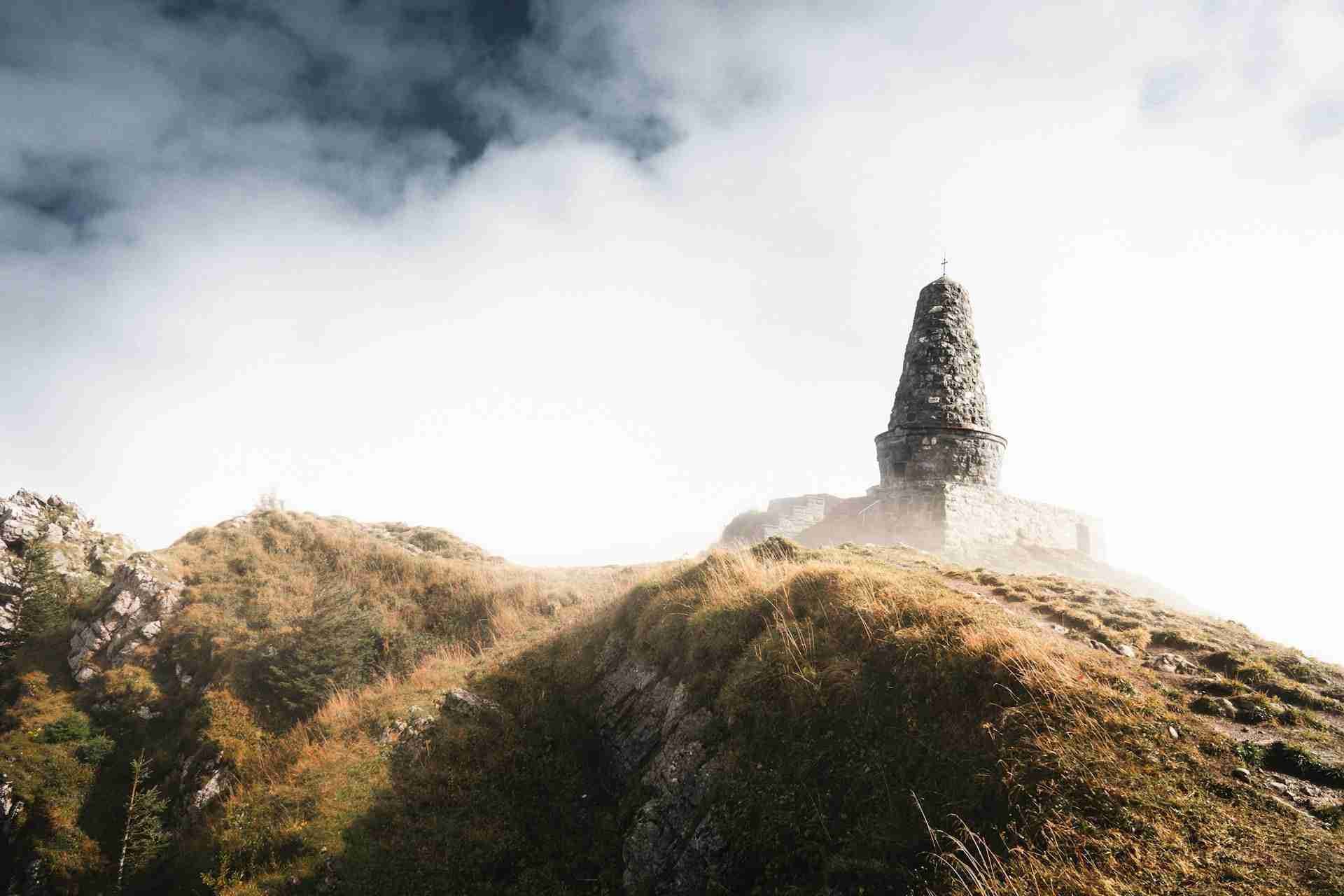
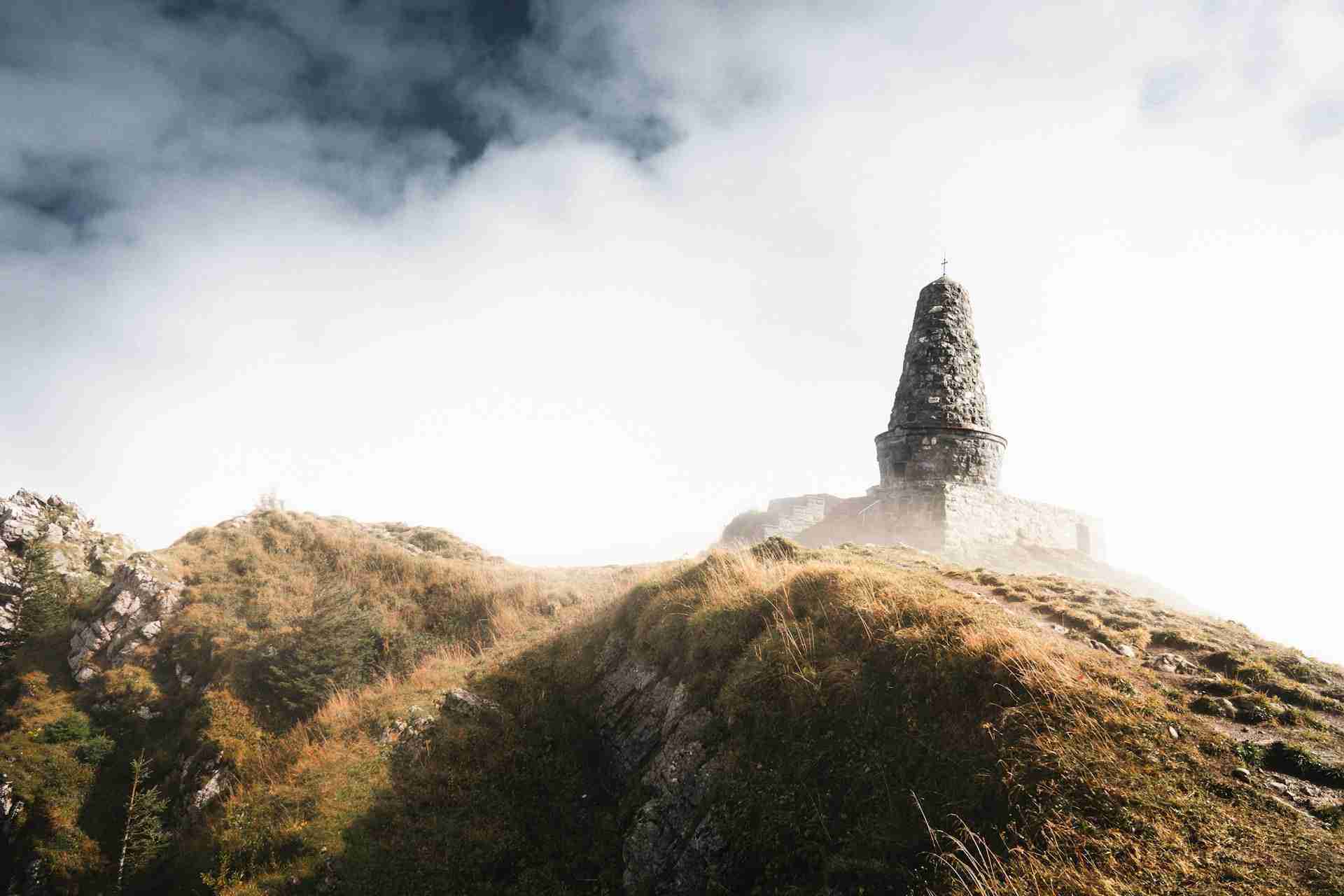
The Jägerdenkmal stands near the summit of Grünten, a prominent peak in Bavaria's Allgäu Alps, known for its panoramic views and access to shifting alpine light. This stone war memorial was built in honor of the Royal Bavarian mountain troops and is set on a dramatic rise near the mountain's highest point. With its arched form, exposed ridge location, and backdrop of layered mountain ranges, it makes a strong subject for photographers who enjoy building compositions from contrast, atmosphere, and elevation. The surrounding summit landscape is open and sparse, with grass, rock, and wind-shaped clouds offering minimal elements that support rather than compete with the structure itself. Photographers who take the time to study the light and approach the subject from different angles will find the monument both expressive and grounded.
Best Photography Opportunities
• Framing the Monument Against the Sky
From slightly below, you can position the Jägerdenkmal so that it rises cleanly into the sky, surrounded by negative space and sharp mountain air. This view emphasizes the arch and the exposed nature of the summit ridge. Use a wide or standard lens and step back to give the scene room to breathe. Early morning or late afternoon works best for this composition, when shadows on the stone add texture and the sky holds more tonal variation. Including a patch of grass or stone in the lower frame helps connect the structure to the landscape.
• Long Lens Views with Mountain Backdrop
Move off to the side or slightly below the summit trail to shoot the monument with distant ridges and snow lines behind it. A 70–200mm lens lets you compress the layers and place the Jägerdenkmal clearly against the landscape. This angle works best in early morning when side light highlights the monument while the background mountains stay in cooler tones. Clouds and shifting fog sometimes roll through below the peak, adding depth and atmosphere to the background. Use a polarizer to manage glare and adjust contrast in the sky and rock.
• Wide Landscapes with Foreground Texture
The summit area around the Jägerdenkmal is open and windswept, with broken stone and grass underfoot. These elements can be used as strong foreground in a wide-angle composition that includes the monument as part of the overall landscape. Shoot low to the ground to bring out surface detail and let the shape of the structure stand out against the sky. Golden hour is ideal for this shot, especially when the side light casts long shadows and warms the color of the stone. Try bracketing exposures if the sky is bright and the ground holds deep contrast.
• Close Detail and Weathered Stone
The monument's surface holds fine texture in its stonework, inscriptions, and construction joints. These elements make strong detail shots that work well in soft light. A standard or short telephoto lens will help you isolate portions of the structure, especially if you frame with the sky or a neutral background. Overcast conditions are ideal here, allowing the tonal shifts in the rock to come through without sharp contrast. These detail images also serve as strong secondary frames that pair well with wider landscape shots in a full set.
• Atmospheric Conditions with Cloud Movement
Due to its elevation, the Grünten summit is often touched by low cloud, fast weather shifts, and early fog. These conditions are ideal for long exposures or soft, mood-driven landscape work. Use an ND filter to capture movement in the sky behind the monument, or focus on the interaction between light and mist as it moves across the stone. These shots work best with a tripod and slower, deliberate framing. A lightweight setup is helpful, as wind and changing conditions can make it difficult to stay in one spot for long.
Best Time to Visit
The Jägerdenkmal can be photographed from late spring through early autumn, depending on snow conditions and trail access. The clearest light and strongest visibility typically occur in early summer, when skies are stable and the air is dry. Morning light comes from the east and hits the monument directly, while evening light casts from behind and silhouettes the structure against the Alps to the south.
If you want to shoot in fog or low cloud, aim for early morning during transitional weather days when the mountain is above the valley fog. Autumn brings lower sun angles and often clearer skies, which are excellent for contrast and shadow along the ridge. Midday is the least productive time due to overhead light and harsh contrast, though it can still work for clean detail images of the stonework.
Winter access is limited and requires proper gear and preparation. Snow changes the character of the monument and removes most foreground texture, replacing it with soft tonal fields that support minimalist compositions.
How to Get There
Grünten is located near the town of Rettenberg in southern Bavaria. The most common approach to the summit is from the Alpe Kammeregg trailhead or via the Burgberg route. Both are moderately steep hikes that take two to three hours depending on pace and trail conditions. From the summit cross, it is a short walk eastward to reach the Jägerdenkmal, which stands slightly above the main path and is visible as you approach.
There is no entrance fee to access the site, and the trails are open seasonally depending on snow and maintenance. Parking is available at several marked trailheads near Burgberg and Kranzegg. These hikes require proper footwear and reasonable fitness. For photographers carrying heavier gear, a backpack with balanced support is essential. Weather can change quickly at altitude, so bring layers and check local conditions before making the climb.
Recommended Photography Gear
A wide-angle lens in the 16 to 35 millimeter range will allow you to capture the monument in context with the surrounding ridges and sky. Pair this with a 24–70mm lens for medium views, trail compositions, and flexible work around the summit. A 70–200mm lens is useful for isolating the monument against distant peaks or pulling in background layers to create visual depth.
A lightweight tripod is strongly recommended for long exposure work and slow, deliberate compositions. A circular polarizer is helpful for managing sky contrast and cutting haze in distant mountains. Bring a 6-stop ND filter if you want to work with cloud movement or longer exposures during daylight. A weather-resistant backpack, hiking poles, and extra water are practical essentials given the elevation and distance from shelter.
Nearby Photography Locations
• Grünten Summit Cross
Just west of the Jägerdenkmal, the summit cross sits at the true high point of the mountain. It offers clear 360-degree views and is perfect for sunrise or sunset light. Use a wide lens to capture hikers on the ridge or build clean silhouettes against the evening sky.
• Alpe Obere Schwandalpe Trail
This trail winds below the summit and gives access to views back toward the monument from a lower angle. It is ideal for layered compositions with green slopes, forest patches, and wide sky. Early morning light hits this trail side-on, creating strong shadow relief.
Located near Sonthofen, this narrow gorge offers a completely different environment. Steep rock walls, waterfalls, and fast water make it ideal for long exposure work and detail photography. The low light and enclosed space provide a strong contrast to the openness of the summit.
• Rottachsee Lake
A short drive from the mountain, this lake offers reflective water surfaces, soft light, and panoramic views of the Allgäu Alps in the background. Early morning is best for calm conditions and cloud reflections. Bring a longer lens to compress the mountains into the scene.
North of Oberstdorf, this accessible summit gives you high alpine views without the hike. It is excellent for scouting higher vantage points, and the nearby ridgelines offer clean shapes for long-lens mountain compositions, especially in late afternoon.
Grünten is not the tallest peak in the region, but its views, structure, and sense of space make it a strong choice for photographers who want to combine alpine scenery with architectural presence. The Jägerdenkmal itself is both a subject and a reference point, standing as a quiet anchor in a wide and shifting landscape. With clear air, clean lines, and time to work the light, it gives you everything you need to build images that hold their shape and meaning long after the hike is over.
Comments
Loading comments…