
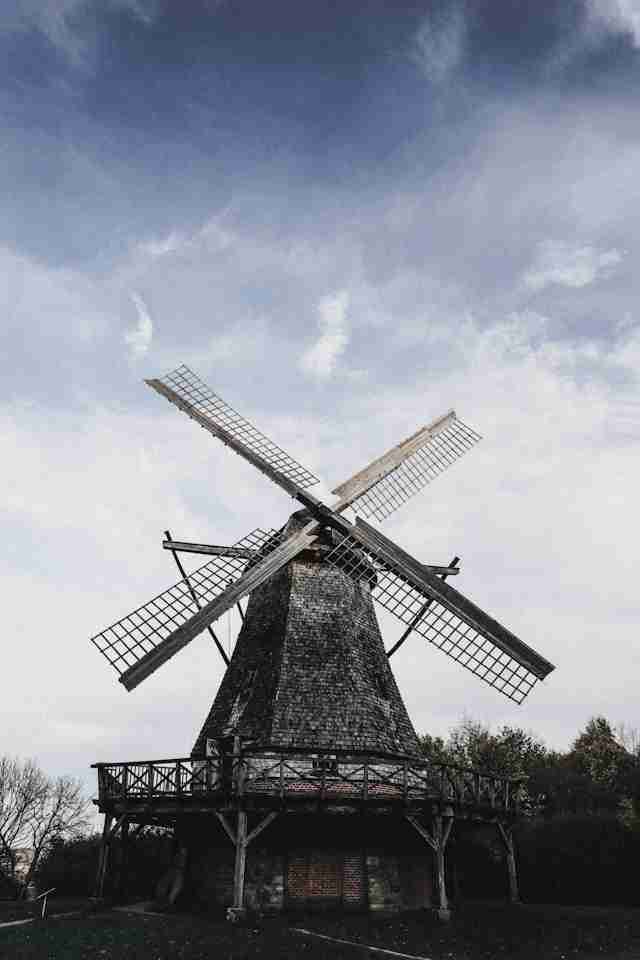
Set within the pastoral grounds of the Detmold Open Air Museum, the Kappenwindmühle offers photographers a rare chance to work with historic architecture, mechanical form, and rural landscape all in one frame. This Dutch-style cap windmill stands on a small rise surrounded by meadows and timber-frame farmhouses, making it a focal point of both cultural history and visual interest. With its weathered wood, moving blades, and period-accurate setting, the mill provides not just a subject but a story. Whether you are drawn to mechanical detail, environmental portraiture, or broad landscape context, the Kappenwindmühle offers a dynamic subject that shifts with the light, the sky, and the seasons.
Best Photography Opportunities
Golden Hour on the South Face of the Mill
The Kappenwindmühle catches the best light in the late afternoon when the sun slides low in the western sky. The soft golden light grazes the wood and highlights the texture of the cap, sails, and tower. Shooting from the low field to the south gives a clear angle of the entire structure with open sky and gentle slopes. The play of light and shadow creates a sense of depth that works beautifully for both wide shots and medium focal lengths. On clear days, silhouettes against the setting sun can also be striking, particularly if the blades are stationary and form geometric patterns against the glow.
Mechanical Detail and Texture Close Ups
The windmill is restored to working condition, and its inner structure offers many small studies in texture and form. Wooden gears, thick ropes, and iron bolts catch the light from narrow windows, creating dramatic contrast between bright highlights and deep shadow. A tripod allows you to shoot at slower shutter speeds inside without losing detail. Outside, weathered surfaces display years of exposure to wind and rain, perfect for detail shots that emphasize age and craftsmanship. Close-up work benefits from side lighting that enhances texture and shadow, so late afternoon and early morning are best for these studies.
Environmental Portraits with Traditional Structures
Because the mill is part of a living museum, it is surrounded by barns, fences, and period farmhouses that add layers of story to any composition. Staff and reenactors often appear in traditional clothing during festivals, which can bring a human element to your photography. These scenes invite environmental portraiture that connects people with the space and structure around them. Overcast conditions help to balance tones and reduce harsh shadows on faces and buildings. Even without people in frame, using the mill as part of a larger composition with other buildings gives a strong sense of continuity and time.
Cloud Movement and Time-Based Composition
The elevated position of the mill against the sky makes it an excellent subject for long exposure photography. Using a tripod and a neutral density filter, you can extend exposure times to capture cloud movement behind the structure. This adds a sense of dynamism and contrast between the solid wood of the mill and the shifting air above it. The technique works well in both color and black and white. A slightly overcast sky with varied cloud density provides the most interesting motion patterns. If there is enough wind, you can also experiment with partial blur in the blades while keeping the base sharp for added energy.
Framing with Seasonal Context
Every season offers a distinct mood and palette at the Kappenwindmühle. In spring, wildflowers spread through the grass around the hill, adding natural foreground elements. Summer brings vibrant greens that contrast with the pale wood and gray cap of the structure. Autumn softens the light and adds warmth to the surrounding trees and meadows, producing layered compositions filled with tone variation. Winter simplifies everything. The mill's form stands stark against muted colors or snow, giving it a sculptural quality. The changing light and vegetation throughout the year make the location worth revisiting for entirely new results each season.
Best Time to Visit
The Detmold Open Air Museum is open from spring through autumn, and that period offers the most flexibility for photographers. The months from April through October provide consistent access and a variety of lighting conditions that complement both wide and detail shots. Early morning brings soft light and calm air that is ideal for general landscapes, while late afternoon provides directional light that emphasizes the mill's texture. Summer evenings are particularly photogenic, as the low sun aligns with the south face of the mill and paints the scene in warm tones.
Spring is excellent for fresh contrast between new vegetation and weathered wood. The light remains soft for most of the day, and the landscape shows bright greens and scattered flowers. Summer adds deep color saturation, more defined shadows, and frequent cloud movement that enhances sky compositions. Autumn is the most balanced season for tone and texture, offering cooler air, lower sun angles, and warm colors in nearby foliage. The combination of long shadows and earthy hues creates strong visual depth and natural harmony with the wooden structure.
Winter photography is more challenging since the museum closes for the season, but during special events or granted access, the setting can be extraordinary. The snow and muted landscape simplify the scene and shift the focus entirely to the mill's geometry. Short daylight hours and strong contrast between sun and shade make it a setting suited for experienced photographers who can work quickly with exposure balance. Regardless of season, overcast skies are a valuable ally, reducing glare and maintaining a wide tonal range for wood texture, grass, and machinery details.
How to Get There
The Kappenwindmühle stands within the Detmold Open Air Museum in North Rhine-Westphalia, Germany. The museum, known locally as the LWL Freilichtmuseum Detmold, lies just outside the center of Detmold and is easy to reach by public transport or car. From the Detmold train station, buses and taxis run directly to the museum entrance. For drivers, the museum provides a large parking area near the main gate. Once inside, visitors follow a network of paved and gravel paths that lead past historic farm buildings to the mill itself.
The walk to the Kappenwindmühle is comfortable and takes about ten minutes from the entrance. Signposts throughout the museum make it simple to find, even for first-time visitors. Photography is allowed throughout the grounds for personal use, and tripods are generally permitted. Drone use is not allowed due to safety regulations within the museum area. No separate photography fee is charged beyond the general admission ticket, which grants access to all exhibits. Visitors should plan for several hours if they want to explore both the mill and other surrounding structures.
Recommended Photography Gear
A flexible lens setup is key for photographing the Kappenwindmühle. A wide-angle lens in the 16 to 35 millimeter range captures the full structure from close proximity and allows the inclusion of surrounding landscape and sky. For medium-range framing, a 24 to 70 millimeter zoom works well, providing enough versatility to handle both midrange and partial detail shots. A telephoto lens, ideally between 70 and 200 millimeters, can help isolate the blades or specific portions of the mill and compress background elements such as nearby trees or clouds.
A tripod is essential, especially if you plan to shoot in low light or use long exposures to show motion in the clouds. Bring a neutral density filter for time-based work, particularly in bright conditions when you want slower shutter speeds. A circular polarizer will help control reflections on glass or metal surfaces and enhance contrast in the sky. Inside the mill, light levels can be quite low, so a fast lens with a wide aperture is helpful for handheld shooting. Image stabilization is also useful when tripods are difficult to position.
Comfortable shoes are important since you will walk on uneven ground throughout the museum. Weather conditions can change quickly, so bring a rain cover for your camera and a waterproof jacket. A lens cloth or small towel will help manage condensation or mist, especially during early morning sessions. The museum's rural layout encourages exploration, so a lightweight backpack that balances gear well is preferable to bulky shoulder bags. Extra batteries are useful, as you may spend much of the day alternating between indoor and outdoor settings.
Nearby Photography Locations
Rising dramatically from the forest about half an hour from Detmold, the Externsteine formations are some of Germany's most striking geological features. Their vertical lines and weathered surfaces respond beautifully to both sunrise and sunset light. Reflections on the nearby pond allow for mirror compositions, and the surrounding forest paths offer calm woodland settings that complement the rugged stone.
This massive statue of Arminius overlooks the Teutoburg Forest and provides wide panoramic views. The climb to the base is short, and several nearby clearings offer great spots for long lens work and layered forest compositions. Early morning fog often settles below the monument, creating soft gradients of tone that photograph well.
In the heart of Detmold, narrow streets lined with timber-frame houses provide strong architectural patterns and a sense of continuity with the windmill's design. Early morning is the best time to shoot here, as the light filters gently between the buildings and the streets remain quiet. The mix of lines, angles, and small details offers endless compositional options.
Just south of Detmold, this center for birds of prey offers opportunities for both action and portrait photography. The demonstration areas have open backgrounds, and the handlers' work with the birds provides engaging natural interactions to capture. It is a rewarding stop for photographers who enjoy both wildlife and cultural experiences in one setting.
The nearby Teutoburg Forest provides long, shaded paths that work beautifully for forest compositions. The interplay of light through tall trunks and the shifting mist during early morning create natural patterns of line and shadow. The forest changes character quickly throughout the day, making it worth multiple visits under different lighting conditions.
The Kappenwindmühle in the Detmold Open Air Museum stands as a perfect blend of human craft and natural setting. Its form catches the light in endlessly interesting ways, from bright summer afternoons to the quiet grays of autumn. Whether you focus on its structure, the machinery inside, or the broader landscape surrounding it, the mill offers an endless range of subjects. It remains one of the most photographically rewarding heritage sites in Germany for those who appreciate patience, texture, and subtle changes in light.
Comments
Loading comments…