
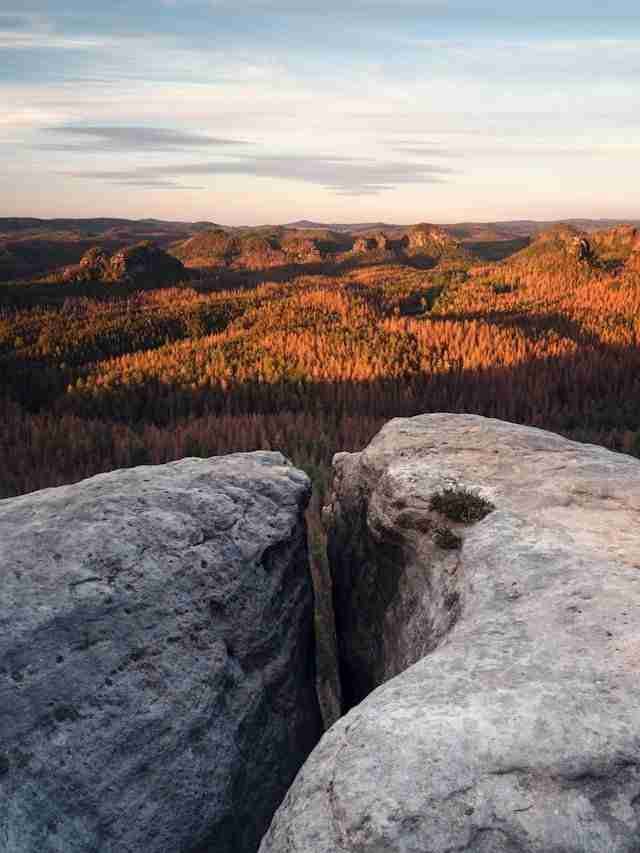
Kleiner Winterberg, nestled in the heart of Saxon Switzerland National Park near Bad Schandau, is one of the region's most rewarding photography summits. Although not the highest peak in the Elbe Sandstone Mountains, it offers some of the most expansive and layered views in the park. Rising above a sea of pine forest, the summit gives you front-row access to iconic sandstone formations like the Schrammsteine Ridge, the Falkenstein rock tower, and distant peaks that fade into haze.
What makes Kleiner Winterberg particularly compelling is the way it interacts with light and atmosphere. At dawn, the valleys below often fill with mist, creating the kind of dreamlike separation between light, form, and shadow that landscape photographers chase for years. The hike to the summit is moderately challenging but straightforward, and the effort is paid back tenfold when you're standing above the clouds watching golden light pour into the canyons below.
Best Photography Opportunities
• Sunrise Over the Schrammsteine Ridge
This is the shot most photographers make the journey for. From the summit of Kleiner Winterberg, the serrated ridge of the Schrammsteine stretches diagonally across the frame, catching the first light of morning. The play of sun and shadow on the rock spires, combined with layered mist in the forested valleys below, creates exceptional depth and atmosphere. Use a wide or mid-range lens to compose the full ridge, or a telephoto to compress the layers and isolate dramatic rock faces catching the light.
• Panoramic Views Across Saxon Switzerland
With clear skies, you'll have a sweeping 180-degree view of the Elbe Sandstone range, including Falkenstein, Großer Winterberg, and beyond. Golden hour and post-sunrise light paint the formations with soft side-light, bringing out their striations and contours. Wide-angle compositions work well to show scale, especially when including foreground rocks or gnarled pines that frame the view and lead the eye into the distance.
• Fog-Filled Valleys and Atmospheric Layers
One of the most visually captivating aspects of Kleiner Winterberg is how often the lower forest fills with fog at sunrise, while the higher summits remain clear. This layering effect is ideal for minimalist compositions and long-lens studies. As the sun rises, fog burns off in patterns that create ever-changing moods and foreground silhouettes—perfect for time-lapse work or returning to the same composition several times within the hour.
• Foreground Rock Formations and Pine Textures
The summit area is dotted with natural boulders and twisted pine trees that make for strong foreground elements. These can be used to anchor wide compositions or to create more intimate environmental scenes. Moss, lichen, and cracked sandstone add texture and color that responds beautifully to diffused morning light or gentle backlighting.
• Evening Return Through the Forest Trail
If you're photographing in the early morning and returning in late afternoon, don't pack up your gear too soon. The trail back down winds through dense forest with occasional views across small ravines and sandstone walls. Side light filtering through the trees or catching on rock faces offers smaller-scale woodland compositions rich in texture, mood, and depth.
Best Time to Visit
Kleiner Winterberg is best visited for sunrise, when the light is low and directional and the valleys below are most likely to be filled with fog. Spring and autumn are particularly productive seasons—spring brings fresh foliage and often damp, mist-prone mornings, while autumn adds warm tones and frequent inversion conditions. Summer provides extended golden hour but often has clearer, less atmospheric conditions. In winter, the trail can be icy or snow-covered, but the bare trees and clear skies can make for stark, high-contrast imagery.
Weather is a key element here. Clear, cool mornings after a damp night often produce the foggy conditions that separate the rock formations so beautifully. Arriving well before sunrise is essential for setting up and scouting compositions in the half-light. Weekdays and off-season months offer the most solitude, which is especially valuable at the summit where space for tripods can be limited.
How to Get There
Kleiner Winterberg is located in Saxon Switzerland National Park, near Bad Schandau. From Bad Schandau, drive or take public transport to the Schrammsteinbaude or Beuthenfall area, where trailheads for the Schrammsteine and Kleiner Winterberg routes begin. The most scenic route is via the Schrammsteine Ridge and Breite Kluft trail, which offers impressive views on the way up.
The hike is approximately 6 to 8 kilometers round-trip, depending on the exact route, with moderate elevation gain and several sections of stairs, metal ladders, and narrow rocky paths. Good hiking boots, a headlamp for pre-dawn starts, and a packed breakfast are recommended. Allow at least an hour for the ascent, more if you plan to stop for compositions along the way.
There are no facilities on the summit, so bring everything you need for your session, including water and extra batteries. The trail is well-marked but can be slippery after rain or in winter conditions.
Recommended Gear and Shooting Tips
A wide-angle lens (16–35mm) is your go-to for capturing the dramatic landscapes from the summit, particularly at sunrise when the entire ridge line and fog-filled valleys come alive. A 24–70mm lens offers flexibility if you want to incorporate more foreground or shoot tighter mountain formations. A 70–200mm lens is essential for compressing distance, isolating sunlit peaks, or capturing minimalist scenes within the mist.
A sturdy tripod is critical for long exposures, low-light pre-sunrise compositions, and for maximizing sharpness at narrow apertures. A circular polarizer helps control atmospheric haze and deepen contrast in mid-morning shots, especially after the sun is fully above the horizon. ND filters can be useful for long exposures, especially if you're capturing fast-moving fog or clouds at golden hour.
Bring lens cloths and weather protection—conditions can change rapidly, and the summit is exposed to wind, damp, and cold, particularly in spring and autumn. Shoot in RAW to recover subtle highlights in misty conditions and preserve the full tonal range of dawn and dusk light.
Arrive early to secure your spot and scout your composition in the half-hour before sunrise. The scene evolves quickly, so it's wise to pre-visualize and commit to a few frames rather than constantly shifting setups during the peak light window.
Nearby Photography Locations
Just before reaching Kleiner Winterberg, the ridge offers knife-edge rock formations and dizzying views over Saxon Switzerland. Excellent for golden hour side-lighting and layered compositions with strong foreground textures.
• Falkenstein Rock Tower
A free-standing sandstone pinnacle seen clearly from the summit, ideal for telephoto studies and layering exercises. Visible throughout the hike, it's a strong visual anchor in many compositions.
Slightly off the main path, this lesser-known viewpoint offers a quieter alternative with views back toward the Schrammsteine. A great spot for soft morning or evening light across the ridges.
A massive sandstone arch reachable via a nearby trail system, especially photogenic in foggy or overcast weather. Its scale and shape offer excellent compositional possibilities, particularly with hikers or trees for scale.
• Elbe River Viewpoints from Bad Schandau
Down in the valley, these riverbank scenes contrast beautifully with the highland views—great for dusk reflections, ferry traffic, and moody low-light shots along the water.
Kleiner Winterberg is not just a summit—it's a theater of light and silence where stone and mist trade places as the day begins. For photographers seeking solitude, layered landscapes, and the subtle poetry of light on rock, few places in Saxony offer such a complete and evolving canvas.
Comments
Loading comments…