
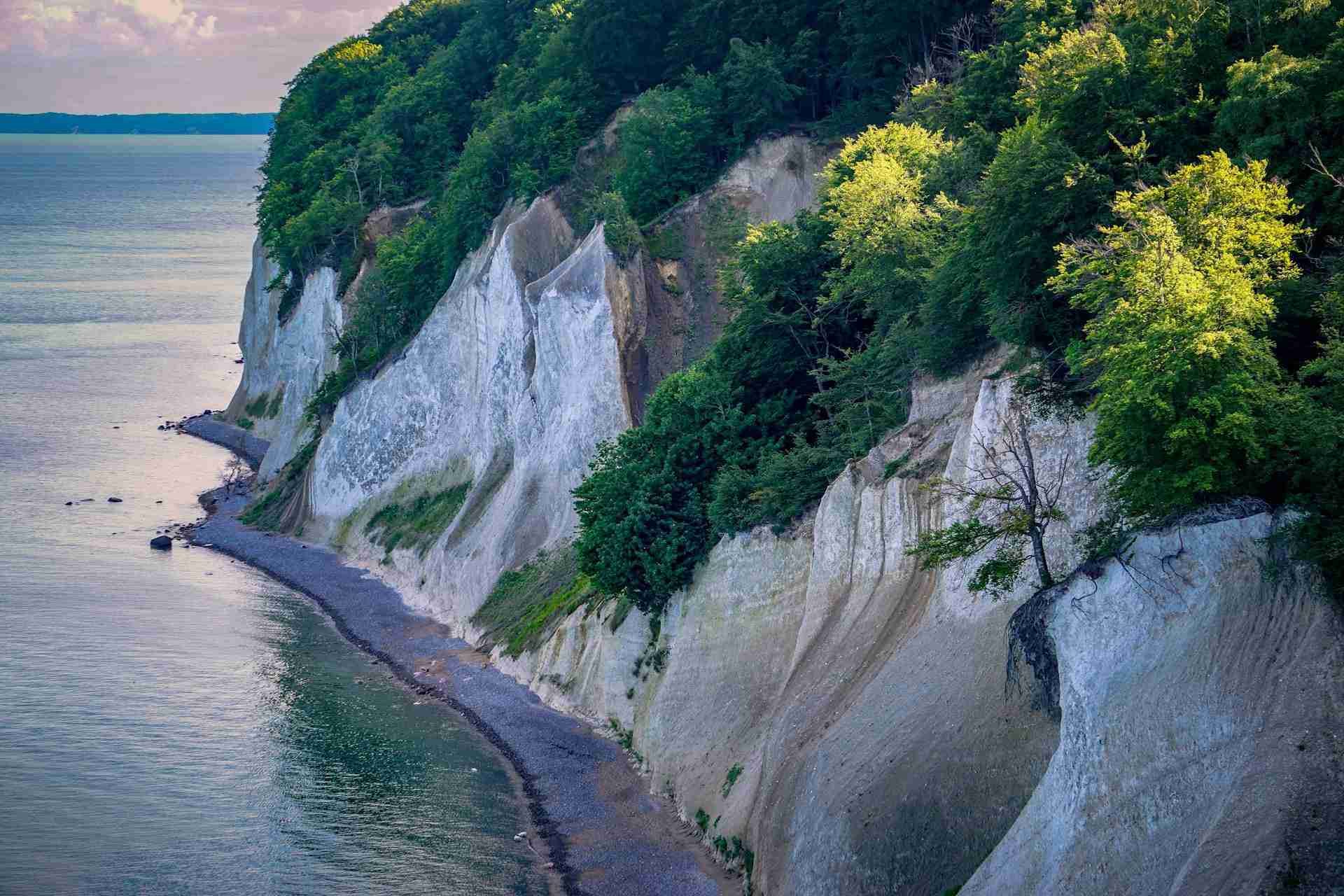
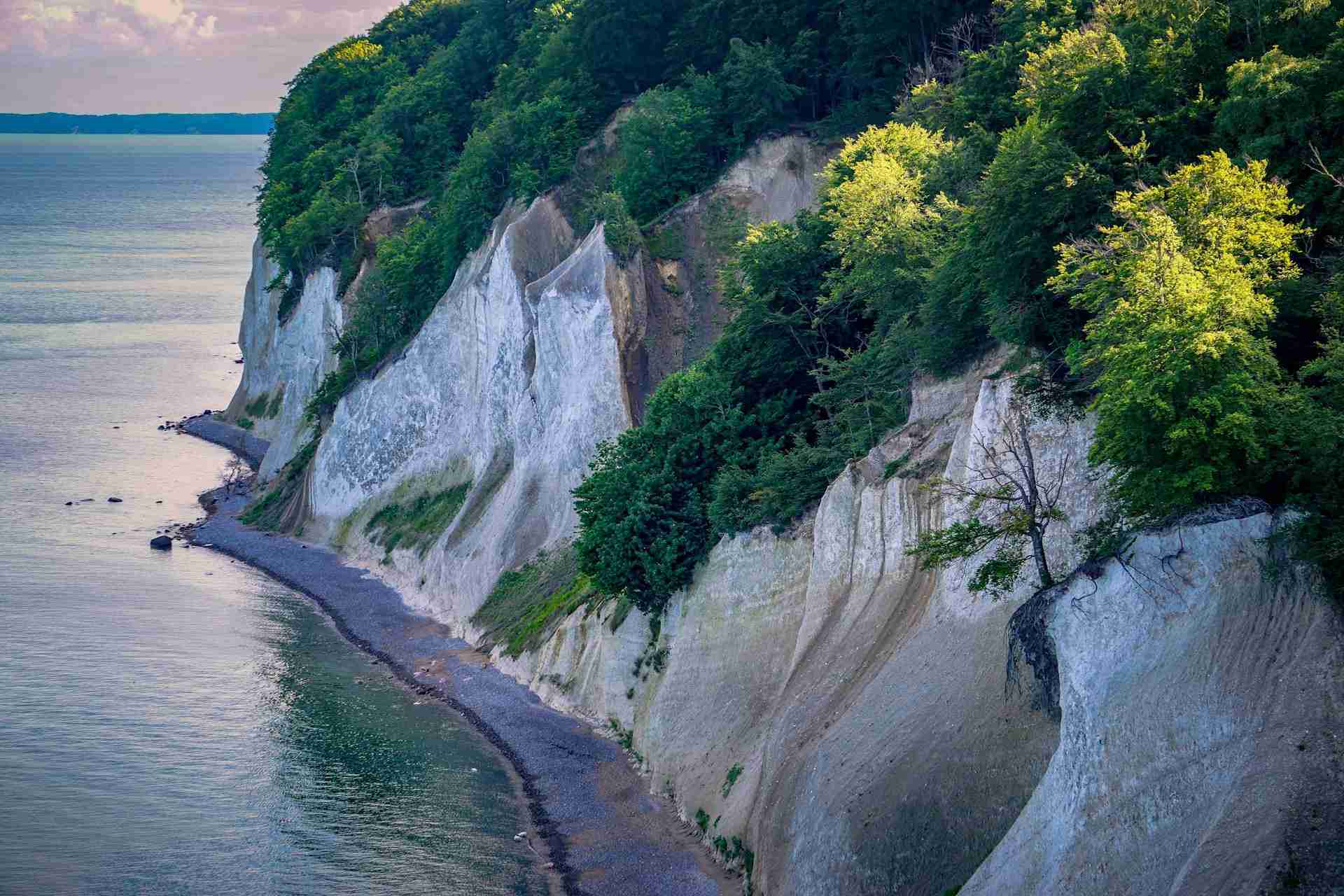
The Ernst‑Moritz‑Arndt‑Sicht ovlerlook sits atop the Königsstuhl Cliffs of Jasmund National Park, looking out over the Baltic Sea. Surrounded by ancient beech forest, this viewpoint offers one of the region's most dramatic combinations of white cliff edges, deep forest greens, and glittering coastal light. It's a perfect spot for landscape photographers seeking unforgettable views of rugged coastline, changing sea atmospheres, and the dance of light across sky and forest.
Best Photography Opportunities
• Sunrise over the chalk cliffs
The earliest hours of the day bring out the most dramatic light at Ernst‑Moritz‑Arndt‑Sicht. As the sun rises over the Baltic Sea, the white chalk cliffs reflect soft, golden light. From the edge of the viewpoint, you can frame stunning panoramas that include the glowing sea, tall cliff edges, and distant forest lines. A wide-angle lens will allow you to capture the full scene, while a telephoto lens helps isolate details such as sunlight glancing off the waves or highlighting crevices in the chalk walls. Mist often rolls in from the sea, adding a soft atmosphere that enhances depth and mood.
• Golden-hour forest and cliff edge compositions
Late in the afternoon, the low sun casts warm tones across both the cliffs and the ancient beech forest surrounding the viewpoint. This is the time to photograph the soft interplay between light filtering through tree canopies and the long shadows stretching across the forest floor. Try capturing the cliff edges with tree branches framing the scene, or shoot along the walking paths where the contrast between sunlit foliage and shadowed trunks is strongest. These warm, rich tones are perfect for both wide landscape shots and more intimate, close-up studies of the forest.
• Cliff-top silhouette against the sea
As the sun dips lower in the sky, the silhouettes of tree trunks and cliff edges become more defined against the glowing sky. Position yourself a few steps back from the cliff edge and shoot toward the sea, using the lines of the cliffs or tree trunks as strong dark shapes. The sky may shift through hues of blue, pink, and orange, providing a colorful background for simple, powerful compositions. Experiment with different exposures to capture either deep contrast or subtle shadow detail.
• Long‑exposure seascapes from the cliff base
If you're up for a bit of a climb, a trail from near the viewpoint leads down toward the base of the cliffs. From this lower perspective, the scale of the chalk formations becomes even more impressive. Use a tripod and a neutral density filter to take long exposures that smooth the surface of the sea and emphasize the towering white cliffs. This location is especially effective when clouds move slowly across the sky, adding texture and mood to the upper part of your frame.
• Forest detail studies and bark textures
Surrounding the viewpoint is one of Europe's oldest beech forests, filled with ancient trees and rich textures. Use a macro lens or a short telephoto to explore small details: moss on tree trunks, clusters of leaves, or twisted roots. Early morning light filtering through the canopy often creates soft highlights and shadows, perfect for delicate close-up shots. These photos can complement the larger landscape images, telling a more complete story of the park's environment.
Best Time to Visit
Ernst‑Moritz‑Arndt‑Sicht offers beautiful photography potential throughout the year, but certain seasons and times of day provide especially rich opportunities. Spring brings fresh greenery to the forest and misty mornings by the coast. The combination of pale chalk cliffs, new green leaves, and fog rolling in from the sea creates a dreamlike setting that's ideal for soft, moody landscape images.
Summer offers long days and vivid color, especially when sunlight reflects off the sea and illuminates the bright foliage. While this is also the busiest time of year, early mornings and late evenings are quieter and provide the best light. These times offer more contrast and warmth, helping bring out texture in both the cliffs and forest.
Autumn transforms the beech forest into a blaze of golden and orange tones. Clear skies and lower humidity mean crisper air and better visibility, which is excellent for shooting wide vistas. Fallen leaves add color to the trails and foreground, and the golden-hour light becomes more intense.
Winter is quieter, especially after light snowfall. The white cliffs take on new character when paired with frosty trees or soft snow on the ground. While access may be a bit more difficult due to ice, the low winter sun creates long shadows and a peaceful mood. Photographers willing to brave the cold are often rewarded with quiet trails and untouched views.
Regardless of the season, sunrise and sunset are the most dramatic times to photograph. Bring layers, as weather near the coast can change quickly. Cloudy days also have their charm, softening the contrast and allowing for more even exposures.
How to Get There
Ernst‑Moritz‑Arndt‑Sicht is located in Jasmund National Park on the island of Rügen in northeastern Germany. The most common starting points are the town of Sassnitz or the Nationalpark-Zentrum Königsstuhl. From Sassnitz, you can drive or take a bus toward Hagen or the park entrance. There are several parking areas along the route, most of which require a small day fee.
Once parked, follow well-marked forest trails to the viewpoint. The hike from Hagen or Königsstuhl is about 2 to 3 kilometers through beautiful beech forest, and the path is generally easy to follow, although some sections have moderate inclines or exposed roots. Expect the walk to take about 45 minutes to an hour at a leisurely pace.
Public transportation to Sassnitz is available via regional trains from larger cities like Stralsund. From there, local buses or taxis can take you closer to the trailhead. Plan ahead, especially if traveling outside of summer, as transport schedules may be limited.
There are no entry fees for the viewpoint itself, and access is open year-round. The trails are natural and unpaved, so sturdy walking shoes are a must. In wet or icy conditions, bring hiking poles for added stability.
Recommended Gear for Ernst‑Moritz‑Arndt‑Sicht Photography
To get the most out of your visit, bring a wide-angle lens (such as 16–35mm) for capturing expansive cliff and sea views. A mid-range zoom lens (24–70mm) is ideal for forest scenes and more tightly framed cliff compositions. For long-distance shots of detail on the cliffs or boats on the water, a telephoto lens (70–200mm or more) is very useful.
A tripod is essential, particularly for sunrise, sunset, and long-exposure seascapes. A neutral density filter will help you achieve smooth water effects in daylight, while a polarizer enhances sky contrast and removes glare from wet surfaces and leaves. A remote shutter release helps avoid camera shake during long exposures.
Pack spare batteries and memory cards, especially if you're planning to stay for the day. Lens cloths will come in handy in the humid coastal air. A weather-sealed camera bag or a rain cover will help protect your gear from sudden changes in weather. If you're interested in night photography, a headlamp with a red light setting is helpful for maintaining night vision while setting up shots.
Bring layered clothing, snacks, and water, particularly if you plan to hike in or spend several hours at the location. The forest can be cool even on warmer days, and there are limited services directly along the trail. Good preparation ensures that you can focus entirely on the photography experience.
Nearby Photography Locations
• Königsstuhl viewpoint
Just a short hike north along the cliff path, this viewpoint offers one of the most famous chalk cliff scenes in Germany. From here, you can capture dramatic cliff walls descending into the sea, with excellent sunrise light and foreground options.
• Stubbenkammer cliff base
Accessible via a descending path near Königsstuhl, the cliff base provides the chance to photograph the chalk formations from below. The contrast between sea, cliff, and sky is especially powerful during high tide or in stormy conditions.
• Hagen forest trails
These less-traveled forest paths lead through dense beech woods and offer soft lighting, mossy roots, and calm surroundings. Ideal for forest interior shots and textural details.
• Sassnitz harbor
Located just outside the park, this coastal harbor offers a different view of the Baltic landscape, with colorful boats, piers, and distant views of the chalk cliffs from sea level.
• Viktoria-Sicht
Another nearby cliff viewpoint, this one offers slightly different angles and views of the coast compared to Ernst‑Moritz‑Arndt‑Sicht. It's often less crowded and particularly beautiful at sunset.
Comments
Loading comments…