
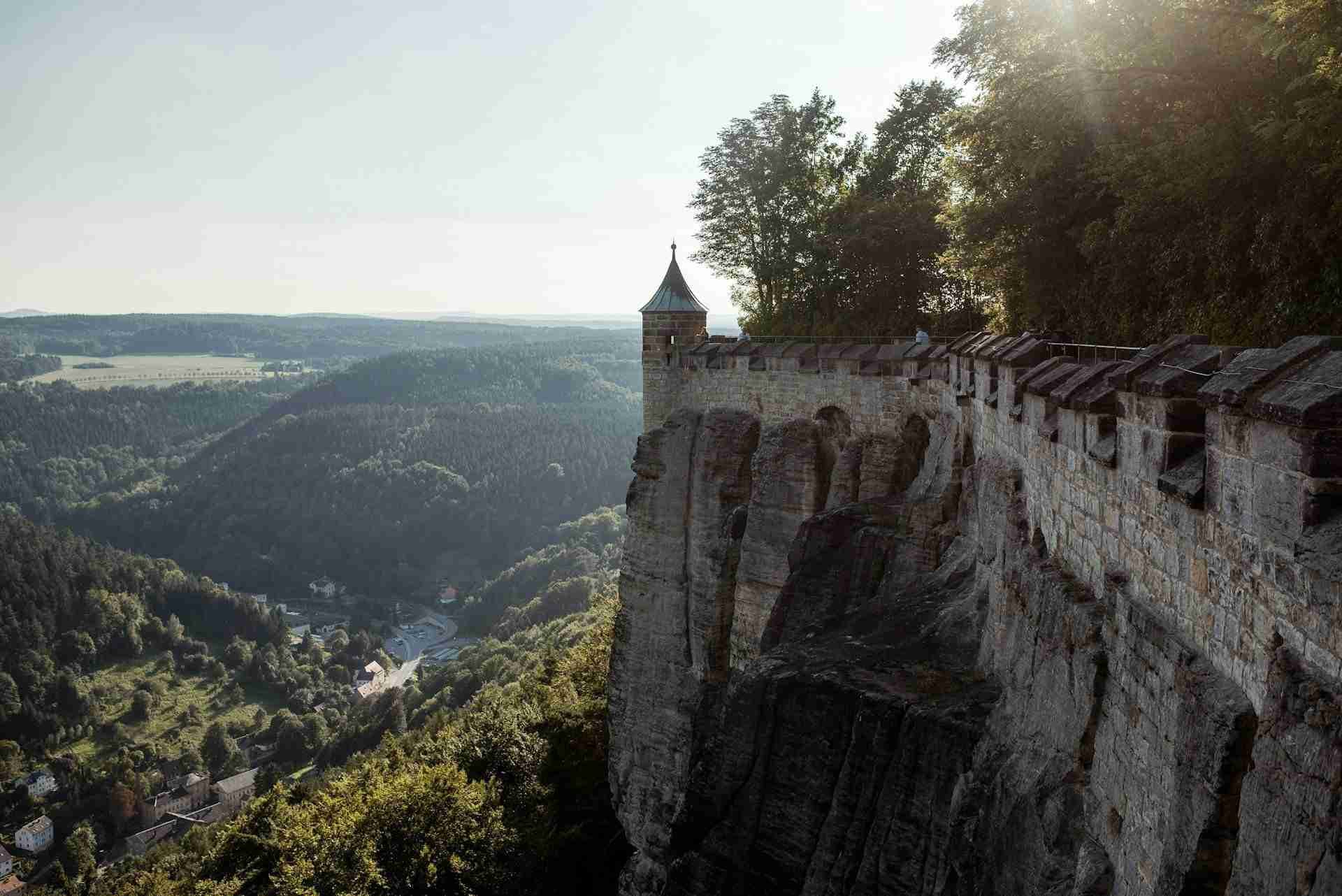
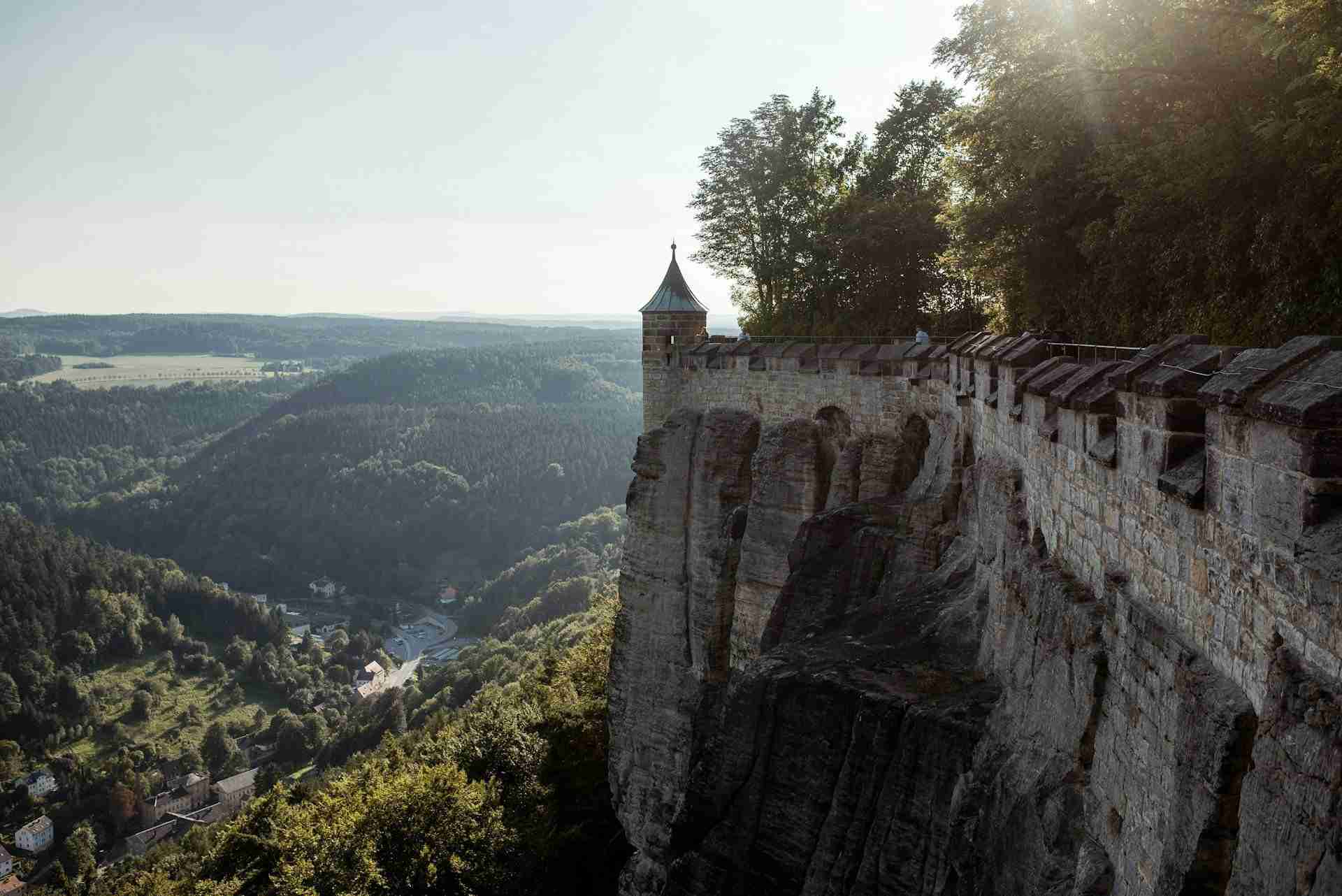
Towering above the Elbe River in Saxon Switzerland, Königstein Fortress is one of Europe's largest hilltop fortifications and a commanding presence in both history and landscape. With its stone walls perched nearly 250 meters above the river valley and surrounded by forested ridgelines, the site offers photographers a rare combination of military architecture, panoramic views, and natural grandeur. Originally constructed in the 13th century and expanded over centuries, the fortress complex spans multiple buildings, tunnels, and viewpoints—each with distinct compositional opportunities.
Whether you're capturing the linear strength of its ramparts or looking outward across the Elbe Sandstone Mountains, Königstein rewards photographers who can balance strong geometry with shifting light. The fortress is also particularly compelling when weather rolls through the valley below, creating atmosphere and scale that few urban landmarks can match.
Best Photography Opportunities
• Panoramic Views Over the Elbe Valley
The fortress walls provide a near-continuous series of elevated viewpoints looking out over the Elbe River, Rathen, and the distant plateaus of Saxon Switzerland. Wide-angle compositions work well here, especially at sunrise or late afternoon when low sun illuminates the landscape's texture and layers. Use the curvature of the wall or a section of parapet in the foreground to anchor the composition and give viewers a sense of scale. In misty conditions, the river valley below often fills with fog, creating a layered scene of cliffs and clouds with the fortress standing clear above it all.
• Geometric Lines of the Ramparts
The massive sandstone walls and bastions form long, linear elements perfect for architectural photography. Shoot at oblique angles to create depth and use converging lines to draw the eye into the frame. Early morning or golden hour side lighting enhances the texture of the stone and brings out the warm tones of the sandstone. Black-and-white conversions work well here too, particularly when emphasizing contrast and form.
• Interior Courtyards and Historic Buildings
Within the fortress walls are various structures including the Old Barracks, garrisons, and the deep well shaft building—all of which offer more intimate compositions. Look for shadow patterns cast by doorways, iron fixtures, and stone columns. These details are especially effective on overcast days, when diffused light softens the contrast and allows for subtle tonal gradations. Wide shots of the courtyard can capture the scale of the inner compound, especially when framed from above or through arched openings.
• Dramatic Weather and Fog in the Valley
Some of the most atmospheric photographs of Königstein Fortress come when the weather is unsettled. Low clouds and fog rolling through the Elbe valley offer soft, moody backdrops, and sudden breaks in the clouds can highlight portions of the landscape with dramatic shafts of light. Long lenses help isolate these illuminated areas and compress distant mountain ridges into stacked silhouettes. Be prepared to wait—shifting weather often brings multiple lighting scenarios within a short time.
• Evening Blue Hour and Fortress Lights
During special events or in the darker seasons, portions of the fortress are illuminated in the evening. Shooting during blue hour allows you to balance the warm glow of artificial light with the cool tones of the sky. Long exposures from the wall edges or exterior trails can capture light trails from passing boats or reflections on the Elbe, if visibility allows. A tripod is essential for this work, and pre-scouting your composition during daylight helps streamline setup as the light fades.
Best Time to Visit
Königstein Fortress can be photographed year-round, but certain times offer more rewarding conditions depending on the style of imagery you're after. For landscape-focused work, early spring and autumn are ideal. Spring brings lush green hills and high contrast between forest and stone, while autumn offers rich color and frequent fog in the valley below. Sunrise and early morning tend to deliver the most dramatic light and the fewest crowds, especially on weekdays.
Winter is quieter and excellent for minimalist compositions. If snow covers the fortress or the surrounding ridges, the geometry of the structure becomes even more pronounced against the white backdrop. Fog and cloud inversions are more common during cold months and can transform the view entirely. Summer brings longer daylight hours and extended golden hour shooting times, though the midday light can be harsh, especially on exposed stone.
Because the fortress is elevated, it often sits above the morning fog layer, making for incredible early light if you're positioned on the walls before or as the site opens. Overcast days are ideal for architectural details and interior shots, softening the shadows and preserving fine texture in stone and wood surfaces.
How to Get There
Königstein Fortress is located in Saxon Switzerland, approximately 40 kilometers southeast of Dresden. From Dresden, take the S-Bahn (S1) to Königstein station. From there, it's either a short taxi ride or a 30-minute uphill walk to the fortress entrance. Buses also run seasonally from the station to the site.
For those arriving by car, ample parking is available in the lower Königstein town area, with shuttle buses transporting visitors up to the entrance, or you can walk the scenic access path on foot. The fortress is open year-round, though hours vary by season. A small entrance fee applies, and access to the full range of ramparts, buildings, and viewpoints is included.
Tripods are permitted, but avoid peak midday hours when visitor numbers rise. The site is large and takes several hours to explore thoroughly—bring weather protection, water, and backup batteries, especially if planning to shoot during changing weather.
Recommended Gear and Shooting Tips
A 24–70mm lens is your most versatile tool for Königstein, allowing you to balance architecture and landscape in one setup. A wide-angle lens (16–35mm) helps exaggerate the scale of walls and courtyards and is essential when working in tighter interior spaces or shooting from the wall edges. A 70–200mm telephoto allows you to compress layers of distant mountains, isolate details on the river, or frame distant views of the Bastei Bridge.
A tripod is recommended for early morning and blue hour shots, especially if you're working with low ISO and long shutter speeds. A polarizing filter helps reduce haze and enhances contrast on the stone walls and surrounding forest. Consider a 3- or 6-stop ND filter if you're planning long exposures to smooth passing clouds or water from high vantage points.
Because much of the site is exposed, bring a rain cover for your gear and dress for wind, particularly in shoulder seasons. Scout compositions along the wall early—many of the best views require timing the light just as it moves across the valley floor. Don't forget to explore interior staircases, tunnels, and galleries; these spaces offer their own visual rhythm and are often overlooked.
Nearby Photography Locations
• Bastei Bridge
Just a short drive or train ride away, this sandstone bridge set within the cliffs is one of Germany's most iconic landscape views. Ideal for sunrise photography with mist in the valley and sweeping views over the Elbe River.
A moss-covered canyon near Bastei filled with twisting staircases, narrow stone corridors, and atmospheric light. Perfect for moody woodland work and vertical compositions that emphasize depth and shadow.
• Rathen Village and Elbe Promenade
A picturesque riverside town with half-timbered buildings, ferry crossings, and reflective water. Excellent at dawn for mirror-like river shots and strong symmetry between riverbanks.
Another of the region's striking table-top mountains, offering views across the national park and a photogenic free-standing rock column. Best in golden light, especially when low sun grazes the rock face.
This flat-topped peak across from Königstein offers reciprocal views of the fortress itself, along with expansive panoramic potential. A strong location for sunset or layered silhouette work at the close of day.
Königstein Fortress is a masterclass in visual weight and elevation—a place where stone meets sky, and history towers above the shifting mist. Whether you're composing against the fortress walls or letting the Elbe valley unfold beneath your lens, it's a location that rewards time, patience, and a sharp eye for form and weather.
Comments
Loading comments…