
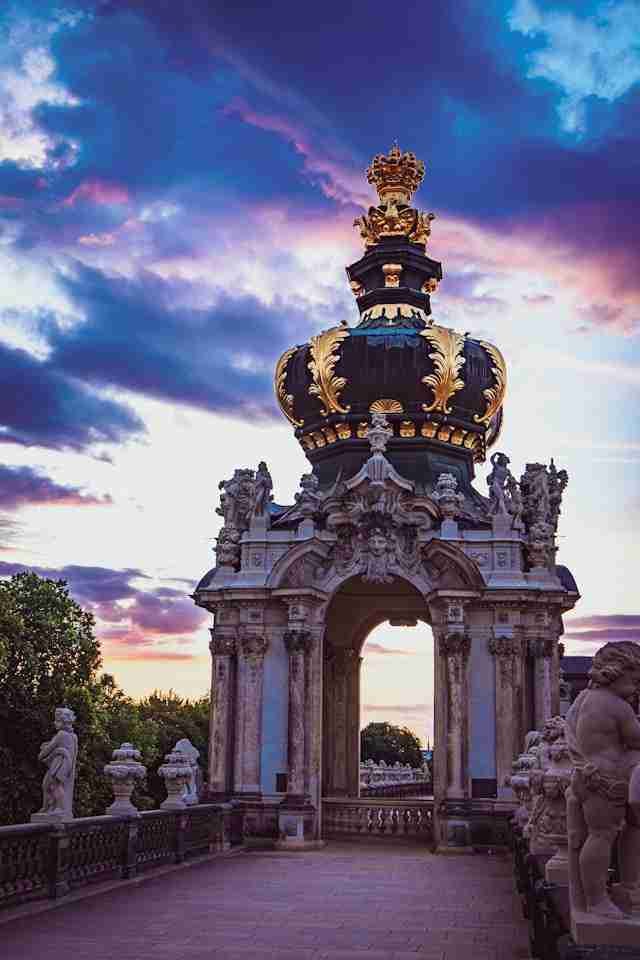
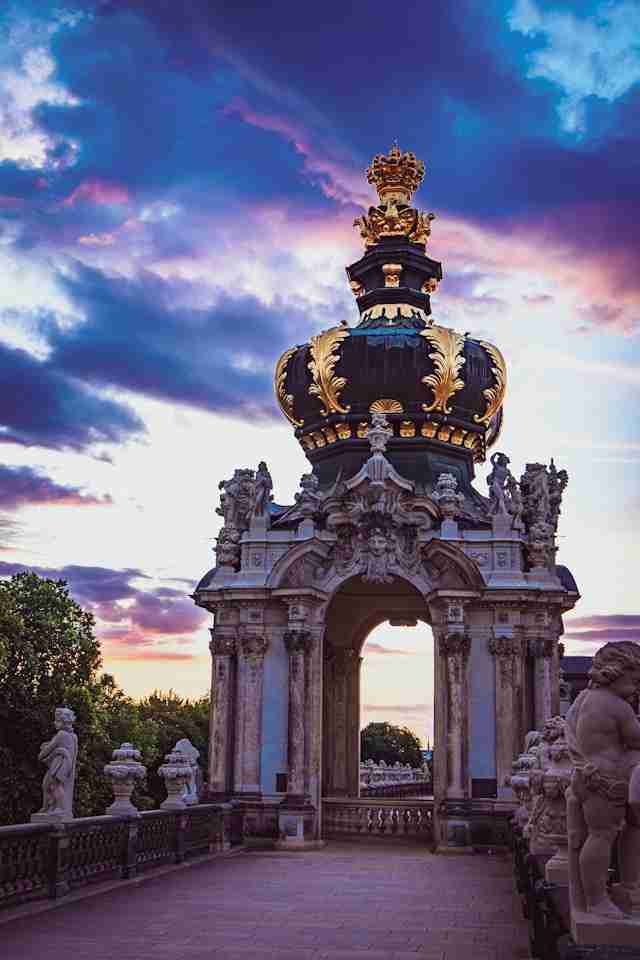
Kronentor at the Dresden Zwinger: Photographing Baroque Splendor and Detail
The Kronentor, or Crown Gate, is one of the most eye-catching landmarks in Dresden's Zwinger Palace complex. With its tall arch, intricate decoration, and a golden crown perched on top, it draws the attention of anyone passing through this historic part of the city. Built in the baroque style, the gate is covered in detailed sculptures, decorative columns, and stone carvings that make it an exciting subject for photographers. Positioned at the edge of the Zwinger, it connects large courtyards and walkways, offering many different angles to explore with your camera. Whether you're interested in wide scenes, close-up textures, or dramatic light, the Kronentor provides plenty of creative opportunities.
Best Photography Opportunities
• Frontal Symmetry from the Outer Courtyard
: From the open courtyard east of the Zwinger, you can capture the full frontal view of the Kronentor with its perfect balance and striking form. This angle emphasizes its symmetry and classical proportions. Shoot during golden hour to bring out the warm tones in the stone and create long shadows that add depth. Including the surrounding colonnades and archways gives context and scale, especially if you step back and use a wide lens. Be patient with timing—waiting for a lull in visitors can help create a cleaner shot. A centered composition here reinforces the formal structure of the baroque design and sets the stage for a series of more dynamic angles.
• Golden Crown Close-Up
: Use a telephoto lens to get a tight composition of the golden crown that tops the gate. This detail shines against both clear skies and moody clouds, making it a strong subject no matter the weather. By framing the crown slightly off-center, you can add a bit of visual tension and avoid a static look. Try different angles from within the courtyard or from the side to see how light hits the gold leaf at various times of day. Shooting on a cloudy day also helps retain subtle texture in the gold, giving your shot a more painterly effect.
• Archway Framing with Visitor Movement
: Stand inside the arch and use the gate itself as a frame to look into the Zwinger or out toward the surrounding plaza. This perspective emphasizes the gate's architectural depth while allowing you to capture life moving through the scene. Set a slower shutter speed to blur figures as they pass through, giving your photo a feeling of time and motion. You can also shoot from ground level to include the stone textures beneath your feet, adding another layer of visual interest. This kind of composition often works well in series, one frame capturing a single figure in motion, another showing a couple, and a third with the arch empty to convey stillness.
• Detail Studies of Sculptural Work
: The base and columns of the Kronentor are filled with fine carvings, cherubs, shields, scrolls, and floral motifs. These are ideal for close-up shots that isolate craftsmanship and texture. Use a macro or mid-range lens to highlight how the sculpted figures interact with light and shadow. This style of image can give your set a more intimate feel, especially when paired with wider shots. Early morning or overcast days work best for avoiding harsh contrast in the stone surfaces. Focus on one detail per image, like the face of a cherub or the swirl of a scroll, for a clean, focused composition.
• Seasonal and Atmospheric Context Shots
: Each season brings its own unique atmosphere to the Kronentor. In winter, a dusting of snow emphasizes the structure's silhouette and adds quiet drama. Spring and summer introduce colorful blossoms and greenery, offering a soft contrast to the stone. Autumn fills the frame with golden foliage that complements the crown's warm tone. These seasonal changes are ideal for wider compositions that include the surrounding courtyards or nearby pavilions. Blue hour and foggy conditions work well too, giving the gate a cinematic or even mysterious feel while soft light enhances its carved detail.
Best Time to Visit
The Kronentor offers great photographic potential in all seasons, but the timing of your visit can dramatically shape the mood and lighting of your images. Early morning remains the top choice for most photographers; it's when you'll have the softest light, quietest surroundings, and best chances to shoot the gate without crowds. The low sun at this hour also adds dimension to the gate's carvings and textures.
Golden hour in the late afternoon brings out the rich yellow tones in the stone and intensifies the shine of the gilded crown. The long shadows during this time add structure and depth to wide compositions. If you're after atmospheric shots, blue hour is also rewarding; the ambient city lights create a gentle glow that highlights the gate's structure without overpowering it.
In spring, you'll find fresh greenery and flowering plants nearby, which help soften the hard lines of the architecture. Summer offers lively scenes with people in the courtyards and stronger light to bring out texture. Autumn is excellent for its golden foliage, especially when paired with the crown's warm tones. Winter snow transforms the scene into a minimalist contrast of white and sandstone, with fewer visitors and a quiet, almost solemn mood.
Cloudy or slightly misty days are perfect for capturing the sculptural detail without harsh contrast. Don't avoid bad weather, light drizzle or fog can add a cinematic atmosphere that feels both timeless and unique.
How to Get There
The Kronentor is located within the Zwinger Palace complex in central Dresden, just west of the Theaterplatz and close to the Semperoper and Dresden Castle. The easiest way to reach it is by foot from the Altstadt (Old Town), which is within walking distance of many major hotels and transit stops. The nearest tram stops are Postplatz and Theaterplatz, both served by multiple lines.
There is no entrance fee to access the outer courtyards of the Zwinger, where the Kronentor is located, and the area is open to the public throughout the day. The gate is accessible from both inside the Zwinger and from the pedestrian walkway along Sophienstraße. Expect some crowds during midday and weekends, but the space is large enough to allow for uninterrupted photography with a little patience.
Recommended Gear for Capturing Baroque Detail and Structure
A wide-angle lens (16–35mm) is essential for capturing the full scope of the Kronentor within the Zwinger complex, particularly for framing the arch and crown with nearby pavilions. If you're planning to focus on the crown or detailed sculptural work from a distance, a telephoto lens (70–200mm) provides the reach you need while compressing background elements for cleaner compositions.
A mid-range zoom lens (24–70mm) gives flexibility when moving between wider scenes and closer framing, ideal for handheld shooting while exploring the site. For fine architectural detail—like cherubs, floral motifs, or stone carvings—consider bringing a macro lens or a lens capable of close focusing to capture textures and age marks in the stone.
A sturdy tripod is highly useful for long exposures at dawn, dusk, or during overcast conditions, and it enables consistent framing when you're waiting for people to clear your composition. Use a circular polarizer to reduce reflections on the stone and deepen sky colors. A neutral density filter can also help extend shutter speeds if you're interested in creating motion blur with moving crowds or softening light during bright conditions.
Weather in Dresden can shift quickly, so be prepared with a lens cloth and basic rain protection for your gear. A lightweight, weather-resistant backpack will help you stay organized as you explore both the Kronentor and the surrounding courtyards. Wear comfortable footwear for the cobblestone areas, and don't forget a remote shutter release if you're planning long exposures or nighttime shooting.
Nearby Photography Locations
: Just across the courtyard, this grand opera house with a richly ornamented façade is striking both day and night. Reflections in puddles or wide shots with foreground framing add depth and contrast to its elegant curves.
: The inner areas of the Zwinger feature symmetrical galleries, fountains, and balustrades—ideal for structured compositions and architectural symmetry. These courtyards are especially photogenic in early light or after rain when stone surfaces shine.
: A few steps away, this complex offers dramatic towers, textured stonework, and inner courtyards with rich visual storytelling. Ideal for transitioning from the baroque to the renaissance and capturing contrast.
: This elevated promenade along the Elbe River gives panoramic views of the Dresden skyline, especially at sunrise or sunset. The combination of historic domes and the river makes for classic postcard-style imagery.
: A short walk into the old town reveals this massive porcelain mural depicting Saxon rulers. Its intricate design and street-side location make it a great spot for capturing cultural history within a compact frame.
Comments
Loading comments…