
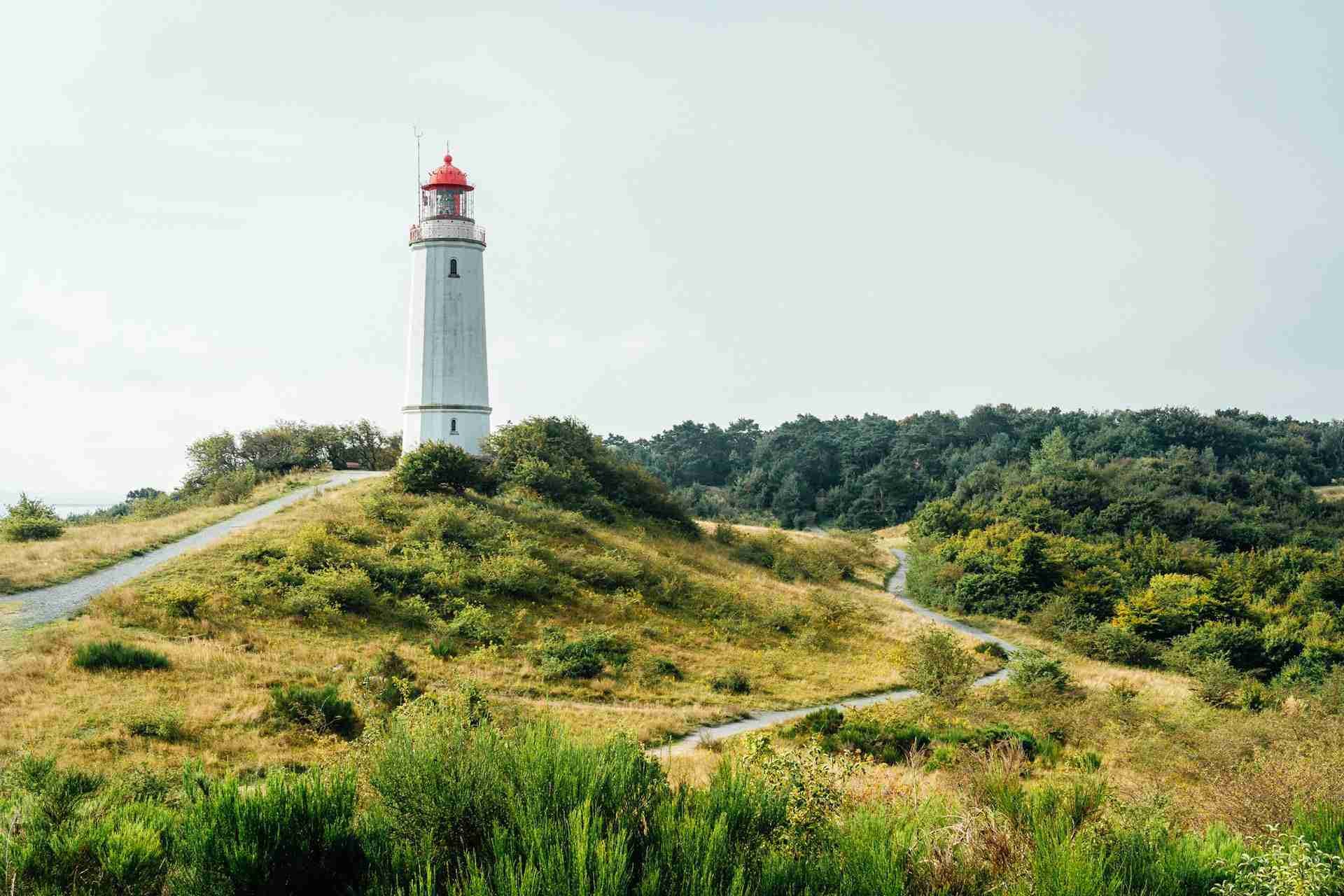
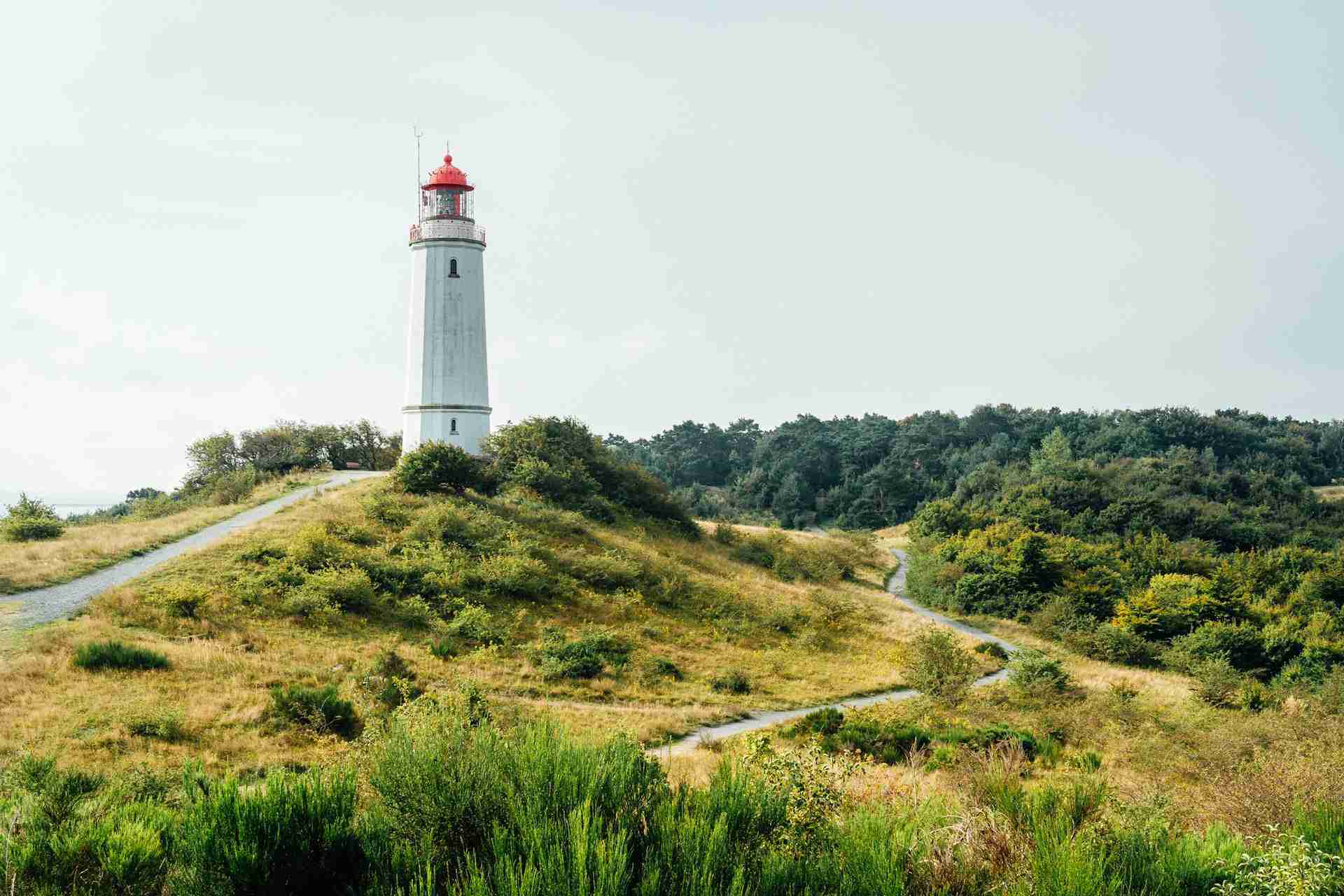
Leuchtturm Dornbusch rises from a high bluff on the northern end of Hiddensee, a car-free island off Germany's Baltic coast. Built in 1888 and still functioning today, this historic lighthouse overlooks the sea from a grassy ridge, surrounded by heathland, chalk cliffs, and wide views of both land and water. The lighthouse's whitewashed tower is a clean vertical form in a setting of soft lines and open sky, making it a striking subject in all seasons. Photographers are drawn here not just for the structure itself but for the layered scenery that unfolds in every direction. On calm days, the light feels endless; on stormy ones, the sea turns grey and restless beneath fast-moving skies. Whether shot in isolation or as part of a larger coastal scene, Leuchtturm Dornbusch offers timeless compositions shaped by light, weather, and the quiet rhythm of island life.
Best Photography Opportunities
• Leuchtturm Dornbusch in Golden Hour Light
The white tower reflects soft side light beautifully, particularly in the early morning or late afternoon when the sun sits low above the horizon. The surrounding hill catches warm tones as the grasses shift from green to gold, and the tower casts a long, elegant shadow down the slope. Shooting at an angle allows you to include both the lighthouse and the Baltic Sea in one frame, with layered elements that build depth and context. Golden hour also brings out the red accents on the tower's dome and railing, giving color contrast to a largely muted coastal palette. Photographers looking for balance between structure and landscape will find this time of day especially productive.
• Elevated Compositions with the Sea in the Background
From several spots along the footpaths that loop around the hill, you can frame the lighthouse against a backdrop of sea and sky. These elevated perspectives are ideal for wide-angle lenses, particularly when clouds fill the upper third of the frame or when low fog hugs the coastline. Including parts of the trail or nearby vegetation in the foreground creates natural leading lines and adds a sense of place. This location works well for both still photography and time-lapse sequences, especially as shifting weather brings changes to light and cloud cover throughout the day.
• Minimalist Shots in Overcast Conditions
When the sky turns grey and visibility softens, the lighthouse becomes a quiet subject in an almost monochrome environment. These conditions work well for minimalist compositions that emphasize shape, scale, and tone. The clean lines of the tower contrast against the diffuse light, while the muted landscape allows for subtle textural details to take center stage. Longer lenses help isolate the lighthouse from surrounding trees or grassland, giving you the ability to simplify the frame and work with a more graphic approach.
• Foreground Interest with Heathland Flora
The open hilltop is often covered with low grasses and wildflowers, particularly in spring and early summer. Shooting low to the ground with a wide aperture lets you blur foreground blooms while keeping the lighthouse sharp in the background. This technique adds color and depth to your compositions without overpowering the subject. It's also a great way to incorporate seasonal changes into your portfolio, as the textures and colors of the landscape shift throughout the year. Working with focus stacking can help preserve detail across the frame if you prefer everything in focus.
• Night Photography and Long Exposures
While the area is remote and has limited light pollution, night photography around the lighthouse requires planning and respect for local regulations. On clear nights, the lighthouse beam itself can be used as a focal point within a star-filled sky. Long exposures work well here to capture star trails or soft movement in the clouds, with the tower anchoring the composition. A stable tripod and wide aperture lens will give you the flexibility to shoot both static and motion-filled night scenes. Make sure to scout your location during daylight and check for weather changes before staying late into the evening.
Best Time to Visit
Each season brings a different look to Leuchtturm Dornbusch, and the time of year you visit will shape your approach. Spring brings new life to the heathland, with flowers beginning to bloom and the landscape still fresh from winter. Mornings are especially beautiful during this season, with soft mist often lifting off the hills and adding depth to wide compositions. Summer offers longer daylight hours and more color in the sky at both sunrise and sunset, though the island becomes busier with visitors and access points may be more crowded. Autumn transforms the grasses and shrubs into rich browns and rust tones, providing excellent contrast against the white tower and moody Baltic skies. Winter, while quieter and more stark, offers the chance to capture snow-dusted scenes and low-angle light throughout the short days. Wind is a frequent factor regardless of season, so come prepared with weather-resistant gear and steady supports for your equipment. For the best light, plan for sunrise or early evening, especially if you want to balance sky, tower, and landscape in the same frame.
How to Get There
Leuchtturm Dornbusch is located on the island of Hiddensee, which is accessible only by ferry from the mainland towns of Schaprode, Stralsund, or Wiek on the island of Rügen. Once on Hiddensee, the island's car-free status means that travel is either by foot, bicycle, or horse-drawn carriage. The lighthouse sits in the northern part of the island, just above the village of Kloster. From Kloster, it's a scenic uphill walk of about 30 minutes to reach the base of the lighthouse, following marked trails that wind through open fields and pine groves. For photographers, this means planning to carry all essential gear in a backpack or bike bag. The path is well maintained but has some elevation, so supportive shoes are recommended. There is no fee to walk the trails or view the lighthouse from outside, though entrance to the tower itself is limited to specific times and typically requires a ticket. Tripods are allowed, but extra caution is advised during crowded periods or in high wind. Morning and evening visits require attention to ferry schedules, as most return routes operate only during daylight hours.
Recommended Photography Gear
Given the remote location, changing weather, and walking access, it is essential to pack efficiently and intentionally. A wide-angle lens, such as a 16 to 35 millimeter, is your best tool for capturing full views of the lighthouse within its expansive landscape. Pair that with a mid-range zoom like a 24 to 70 millimeter for detailed work and tighter compositions. Long focal lengths are useful for compressing the scene or isolating the lighthouse from a distance, particularly when working with layered hills or coastal backgrounds. A sturdy tripod is necessary for early morning, late evening, or long exposure shots, and it should be compact enough to carry comfortably on foot. Circular polarizers will help with sky contrast and managing glare off the water when shooting toward the sea. Neutral density filters are useful for smoothing cloud movement or capturing soft motion in the grasslands. Be sure to bring extra batteries, as colder temperatures and longer exposures can drain power quickly. A weather-resistant bag or camera cover is highly recommended, since wind and coastal moisture are common even on dry days. For night photography or early morning setup, a headlamp with a red light mode will help you move safely without disturbing other visitors or your own night vision.
Nearby Photography Locations
• Steilküste Kloster (Kloster Cliffs)
Just south of the lighthouse, these steep chalk cliffs provide sweeping views of the Baltic Sea and are especially impressive at sunrise or during overcast conditions. The contrast between the pale cliffs and the dark sea creates strong black-and-white potential, while the winding paths through the woods offer intimate scenes of moss-covered trunks and filtered light. It's a short hike from the lighthouse, making it easy to combine into a single session.
To the west, the beach near Vitte offers a completely different photographic setting with open sand, tall grass-covered dunes, and wide views of the sea. During the late afternoon, the light falls across the dunes at an angle, highlighting texture and form. On clear days, this area offers vivid sunset opportunities, and it's also a good place for minimalist compositions using shoreline patterns.
• Inselblick Panorama Viewpoint
This high point provides a view back toward Leuchtturm Dornbusch, with the sea and surrounding island landscape in the distance. It is an excellent place for drone photography or sweeping wide shots that include both manmade and natural elements. Sunrise and early morning fog are particularly rewarding from this vantage point.
• Neuendorf Fishing Village
On the southern end of the island, Neuendorf presents quiet harbor scenes, small boats, and traditional houses that are ideal for documentary or detail-focused work. The textures of ropes, nets, and painted wood make this location perfect for close-up photography. The light here tends to be soft in the morning, with still waters that reflect boats and shoreline elements.
• Swedish Grave near Kloster
This small, historic site lies in the wooded area near Kloster and features a monument surrounded by pines and quiet footpaths. It is not a grand location, but its simplicity and light-filtered canopy make it excellent for more introspective landscape photography. Visit during the early morning or late afternoon when the sun breaks through the trees.
The walk to Leuchtturm Dornbusch may require some effort, but every step brings you closer to a location that feels both open and timeless. The combination of clean architecture, natural setting, and shifting light creates a space where you can take your time, frame deliberately, and return with images that feel honest and lasting. Whether you're chasing color at the edge of the day or isolating lines in mist and cloud, the lighthouse and its surroundings will meet you where your creativity leads.
Comments
Loading comments…