
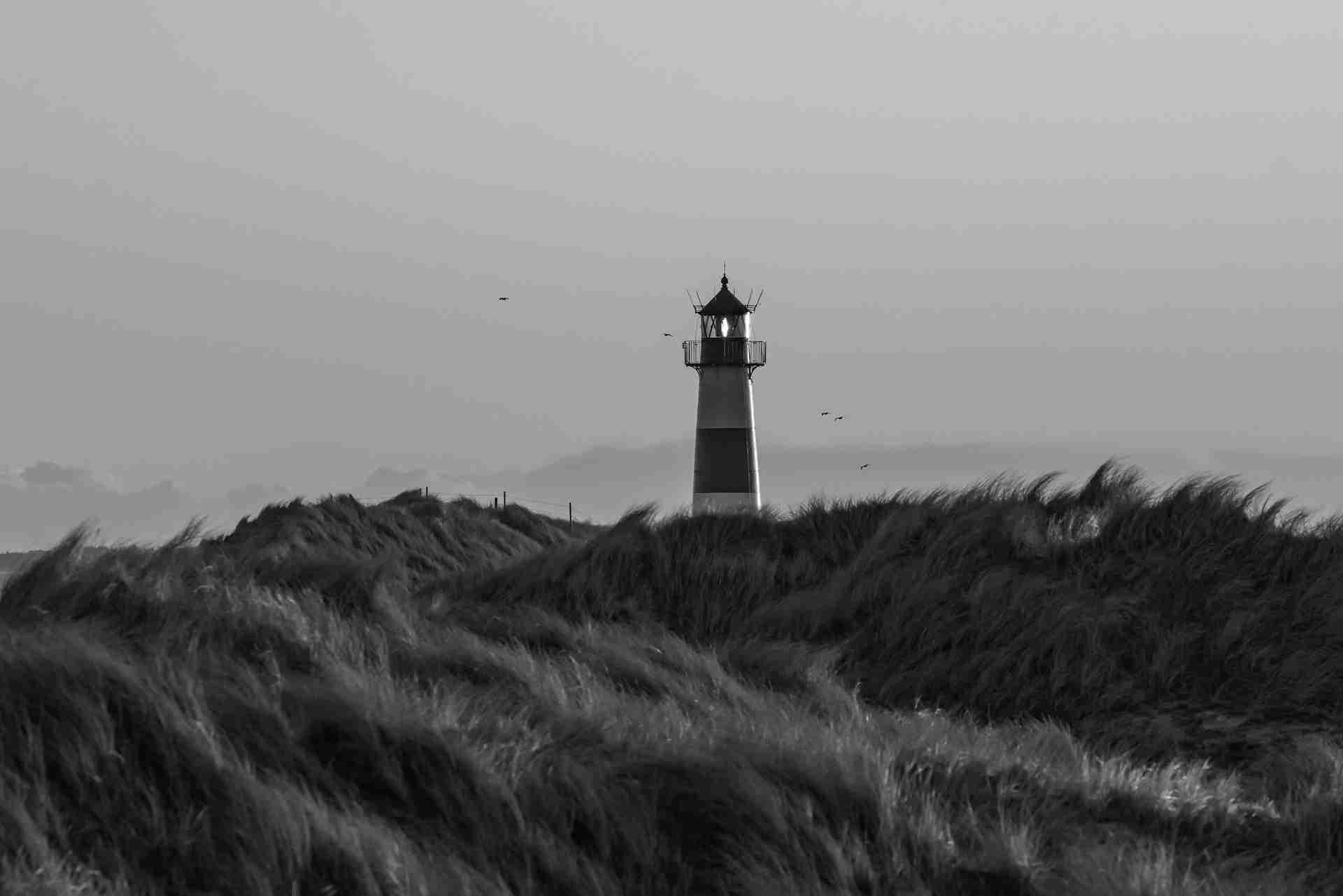
Rising quietly from the windswept dunes near the northern tip of Sylt, the Leuchtturm List-Ost feels more like a memory than a landmark. It sits alone in a stark and shifting landscape, surrounded by soft grasses, exposed sand, and the constant hum of the North Sea. Photographers who make the effort to reach this remote corner of Germany are rewarded with a subject that feels timeless, shaped by light and weather more than anything manmade. There's a stripped-down simplicity to the scene, which lends itself equally well to both clean minimalism and dynamic compositions that use the curves of the dunes and sky to lead the eye.
Best Photography Opportunities
• Sunrise from the Eastern Dune Trail
– The approach from the east offers a perfect setup for capturing the lighthouse with the rising sun. This is where the light hits first, bathing the landscape in soft gold while casting long shadows across the dune grasses. If you position yourself along one of the sandy footpaths leading toward the lighthouse, you can use these paths to build depth and structure into your frame. The low angle of the morning sun also helps define the red-and-white stripes of the tower, giving them richness and separation from the surrounding tones. Bring a tripod for longer exposures as the light transitions quickly during the morning hour.
• Using the Dunes for Layered Compositions
– The gently sloping dunes around List-Ost offer natural layers that build visual interest. Whether you shoot from a high point looking down or position yourself low to the sand, the changing elevation allows you to control how much of the lighthouse is revealed or hidden. Grasses, footprints, and old fencing posts can all be used to anchor the foreground and tell a more complete story. This technique works particularly well in mid-morning when shadows soften but still give shape to the terrain. Focus stacking may help if you want sharp detail from the foreground right through to the lighthouse.
• Capturing Wind and Weather
– Weather changes fast on Sylt, and the lighthouse looks completely different under shifting skies. Overcast days flatten the landscape into muted tones that suit monochrome treatments, especially if clouds hang low and obscure the horizon. Rain and wind don't make for easy shooting, but they do add movement and texture to both sky and sea. Use a long lens to compress the distance between the lighthouse and the ocean beyond, or switch to wide-angle and embrace the sense of space. If you're lucky, fast-moving storm fronts can bring dramatic skies while still giving you breaks of usable light.
• Aerial Views by Drone
– Drones are permitted in the area with standard restrictions and offer a rewarding way to showcase the isolation of Leuchtturm List-Ost. From above, the lighthouse stands out as a single element amid the open dunes and curling coastline. Wide shots work well here to show the lighthouse's position in the larger landscape, while lower, more focused flyovers allow for detail shots without obstructions. Mornings tend to be calmer in terms of wind, which helps with stability and clarity. Always check wind conditions and avoid flying during bird nesting season, as the area supports several protected species.
• Night Photography and Starscapes
– Light pollution is low in this northern part of Sylt, and on a clear night, the stars stand out crisply over the lighthouse. Long exposures can bring out star trails with the lighthouse as a fixed point, or capture the Milky Way in late summer and early autumn. Framing can be a challenge in the dark due to the lack of built infrastructure, so scouting during daylight is essential. A fast wide-angle lens and sturdy tripod are must-haves here, and the soft sand may require wider leg spacing or platform feet to keep gear stable. Even when conditions aren't perfect, the sense of openness gives night photography here a peaceful rhythm.
Best Time to Visit
Spring through early autumn offers the best combination of light, color, and access. May and June bring brighter greens to the dune grasses, and the sun rises early enough to give you long golden hours with very few people around. July and August can be windier, but this often adds movement to the landscape, especially when photographing long grasses or clouds. Autumn offers deeper color tones and more dramatic skies, with the added benefit of quieter trails. Winter can bring striking contrasts and soft, snow-dusted dunes, though access is more limited and the light window is short. Morning light tends to be softer and more directional from the eastern approach, while late afternoon offers warmer tones coming in from the west, although the lighthouse becomes more of a silhouette depending on your position.
How to Get There
Leuchtturm List-Ost is located near the town of List on the northern end of Sylt and is accessible only on foot or by bicycle. From List Harbor, follow the marked trails north toward the Ellenbogen peninsula. After about 1.5 kilometers, signs point east toward the dunes, where the lighthouse comes into view as you near the coast. The area is part of a protected dune system, so cars are not allowed beyond the designated parking lots at the edge of List. Public buses run regularly from Westerland and other parts of the island to List. There is no entry fee to access the lighthouse itself, but parking at nearby lots may require a fee, especially during peak summer months. It's a relatively flat walk, though sand and wind can make it feel longer, so sturdy footwear is recommended.
Recommended Photography Gear
A wide-angle lens in the 16-35mm range is ideal for capturing the expansive dune environment and working with foreground elements, while a mid-range zoom around 24-70mm offers flexibility for tighter compositions and subject isolation. For detail shots or distant compression, a 70-200mm or longer telephoto is highly effective, especially if you want to separate the lighthouse from the sea or sky. A lightweight but stable tripod is essential for both sunrise and night shooting, though sand-friendly feet or a ground cloth can help prevent your gear from sinking. Circular polarizers are useful for controlling sky contrast, especially when shooting mid-day. Drone operators should bring ND filters and prop guards if flying in breezy conditions, and always carry spare batteries—cold sea winds tend to shorten flight times. Weather protection for your gear is a smart addition, as wind-blown sand and moisture can creep into even well-sealed equipment.
Nearby Photography Locations
– Just beyond the lighthouse, the Ellenbogen is a long, sweeping spit of land where the sea encroaches from both sides. It's a great place for wide panoramic shots and minimalist compositions that use the road, fencing, and natural curves of the land. At sunset, the light rakes across the dunes and water in a way that emphasizes texture and form, particularly with a longer lens.
– South of List, near the village of Kampen, the cliffs offer a striking vertical contrast to the flatter dune regions. The warm tones of the eroded clay face catch late-day sunlight beautifully, while the view west over the open sea makes for excellent sunset photography. Waves crashing below and seabirds in flight add motion to longer exposures.
• Morsum Kliff
– Located toward the southeastern end of Sylt, this location offers something completely different: layered earth formations in a range of tones, from deep red to chalky white. The site is best shot in early morning or late afternoon to bring out the geological patterns in raking light. It's also less trafficked, making it ideal for slower, more detailed work.
– The island's main town offers an urban contrast with clean boardwalk lines, beach chairs arranged in patterns, and people interacting with the sea. Long exposures here at sunset can blur the movement of waves and create a sense of calm that contrasts with the busier scenes inland. The skyline of the town can also be used as a compositional anchor.
– Inland from Kampen, this low-lying area offers rich heathland colors, especially in late summer when the purple heather blooms. It's excellent for macro work, abstract compositions, or layered wide shots that use the changing elevation to play with focus and light. Early morning fog often settles in this area, adding a layer of mood before sunrise.
While the lighthouse at List-Ost may draw you in initially, it's the quiet rhythm of the surrounding landscape that encourages you to linger. The light here is never quite the same twice, and the simple forms of the dunes, sky, and sea offer a chance to experiment and refine your approach. Whether you're working with natural lines, chasing changing weather, or waiting for the perfect alignment of stars and structure, this corner of Sylt invites patience and rewards careful observation.
Comments
Loading comments…