

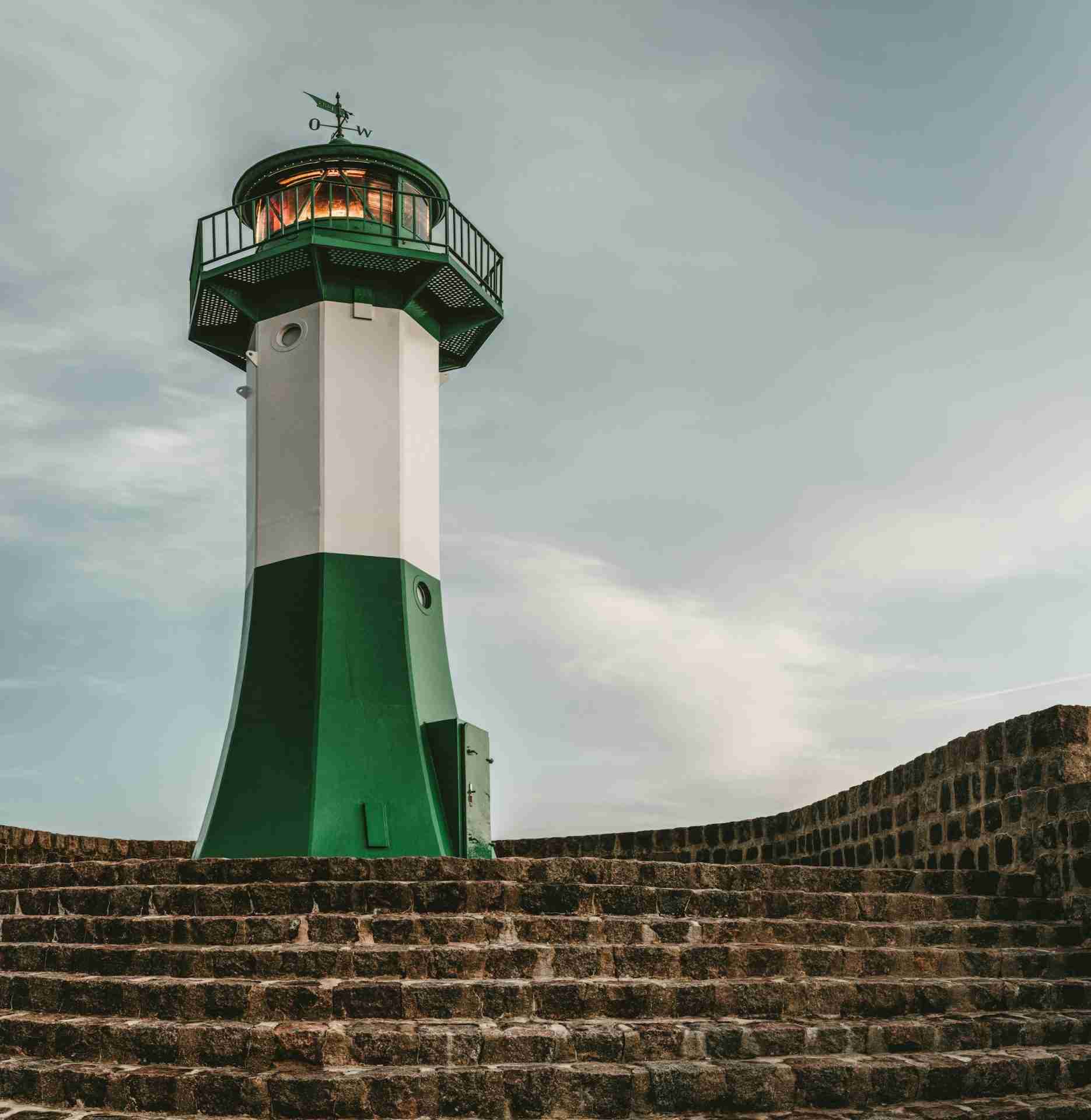
Molenfeuer Sassnitz marks the outer end of the harbor pier in the seaside town of Sassnitz on Germany's Baltic coast. The small green and white lighthouse stands at the end of a long breakwater that stretches into the sea from the harbor. Although the structure itself is modest in size, its position at the tip of the pier makes it a strong focal point within the surrounding coastal scene. The long walk along the breakwater, the movement of waves against the rocks, and the harbor cliffs rising nearby all give photographers several ways to frame the lighthouse within the wider landscape. With the open Baltic Sea ahead and the town of Sassnitz behind, the location offers a mix of maritime atmosphere and clean coastal compositions.
Best Photography Opportunities
• The Lighthouse at the End of the Breakwater
The most recognizable composition shows the green lighthouse standing at the far end of the long pier. Walking along the breakwater allows photographers to place the lighthouse directly at the vanishing point of the path. The rocks lining the pier and the repeating pattern of the walkway naturally guide the viewer's eye toward the structure. Shooting from a slightly lower angle can emphasize the lighthouse against the open sky. This simple composition works well because the straight pier provides strong leading lines toward the subject.
• Long Pier Leading Lines
The breakwater itself is one of the most important visual elements at this location. The straight path stretching across the water creates a natural line that draws attention toward the lighthouse. Photographers can use the rocks and concrete edges of the pier to frame the walkway as it narrows into the distance. When waves move along the sides of the breakwater they add motion and texture to the scene. These compositions often work well with wider lenses that emphasize the length of the pier.
• View Toward Sassnitz Harbor
Turning around at the lighthouse reveals a different perspective looking back toward the harbor and town. From this position the pier leads directly toward the shoreline with buildings and harbor structures visible in the distance. Including the lighthouse in the foreground while the harbor appears behind it creates a layered composition that connects the structure with the town it serves. Boats moving through the harbor can also add activity to the scene. This view shows how the lighthouse fits within the broader maritime setting.
• Waves Along the Breakwater Rocks
The rocks lining the pier often interact with the waves of the Baltic Sea, especially when winds move across the water. Photographers can capture the movement of water as it breaks against the stones along the edge of the breakwater. Fast shutter speeds freeze the splash of waves while slower shutter speeds can smooth the motion of the water. Including the lighthouse or pier within the frame helps anchor these compositions. These scenes are particularly dramatic when the sea is slightly rough.
• Evening Light on the Baltic Sea
The open water around the breakwater makes the location appealing during the late afternoon and evening. As the sun lowers, light spreads across the sea and often reflects off the water surrounding the pier. Photographers standing along the breakwater can frame the lighthouse with changing sky colors and shifting light across the Baltic. When clouds move through the sky they add additional depth to the background. The combination of sea, sky, and lighthouse creates a clean coastal composition.
Best Time to Visit
Late afternoon and sunset are often the most rewarding times to photograph Molenfeuer Sassnitz. During these hours the sun lowers across the Baltic Sea and produces softer light across the pier and surrounding water. The lower angle of the sun can highlight the textures of the rocks along the breakwater and create subtle reflections across the water.
Morning visits can also be appealing, especially for photographers who want quieter conditions before the harbor becomes busier. Calm weather produces smoother water and clearer reflections, while windy days can create dramatic waves around the rocks. Autumn and spring often bring interesting cloud patterns that add character to the sky above the sea.
How to Get There
Molenfeuer Sassnitz is located at the harbor in the town of Sassnitz on the island of Rügen in northern Germany. The lighthouse sits at the end of a long breakwater that extends from the harbor into the Baltic Sea.
Visitors can reach Sassnitz by car or train from other parts of the island and mainland Germany. The harbor area is accessible on foot from the town center, and several walking paths lead toward the pier. Parking areas are available near the harbor where visitors can begin the walk along the breakwater.
The walk to the lighthouse involves crossing the entire length of the pier. Access to the pier is generally free, but weather conditions such as strong winds or waves may occasionally limit access for safety reasons.
Recommended Photography Gear
A wide lens works particularly well at this location because the long pier creates strong leading lines toward the lighthouse. Wide compositions can emphasize the length of the breakwater and the surrounding sea. A moderate zoom lens can also help isolate the lighthouse against the sky or capture details of waves along the rocks.
A tripod can be helpful when photographing during sunset or low light conditions. It also allows photographers to experiment with longer exposures that smooth the movement of the water along the breakwater. Because the pier is exposed to wind and sea spray, bringing a lens cloth and weather protection for camera equipment can make shooting more comfortable.
Nearby Photography Locations
The harbor itself provides a variety of maritime photography subjects including fishing boats, ferries, and dock structures. Photographers can capture scenes of boats arriving and departing while the town rises above the waterfront. Early morning often brings calmer water and softer light across the harbor.
• Sassnitz Old Town
The historic streets of Sassnitz climb the hillside above the harbor and contain colorful buildings and small coastal viewpoints. Photographers can capture the layered townscape with the Baltic Sea visible between the rooftops. Walking through the streets reveals small vantage points overlooking the harbor below.
Located just north of Sassnitz, Jasmund National Park is famous for its dramatic white chalk cliffs along the Baltic coast. These cliffs rise sharply above the sea and provide sweeping views of the surrounding coastline. The landscape offers some of the most striking coastal photography opportunities in northern Germany.
The Königsstuhl viewpoint sits within Jasmund National Park and overlooks one of the tallest chalk cliffs on the island of Rügen. From this elevated platform photographers can capture wide views across the Baltic Sea and the surrounding forested cliffs. The contrast between white chalk rock and blue water creates strong visual compositions.
Located farther south along the coast, Binz Pier extends into the Baltic Sea and is one of the most recognizable landmarks on the island of Rügen. The long wooden pier with its pavilion structure creates strong lines across the water. Photographers often capture sunrise or sunset scenes where the pier stretches toward the horizon.
Comments
Loading comments…