
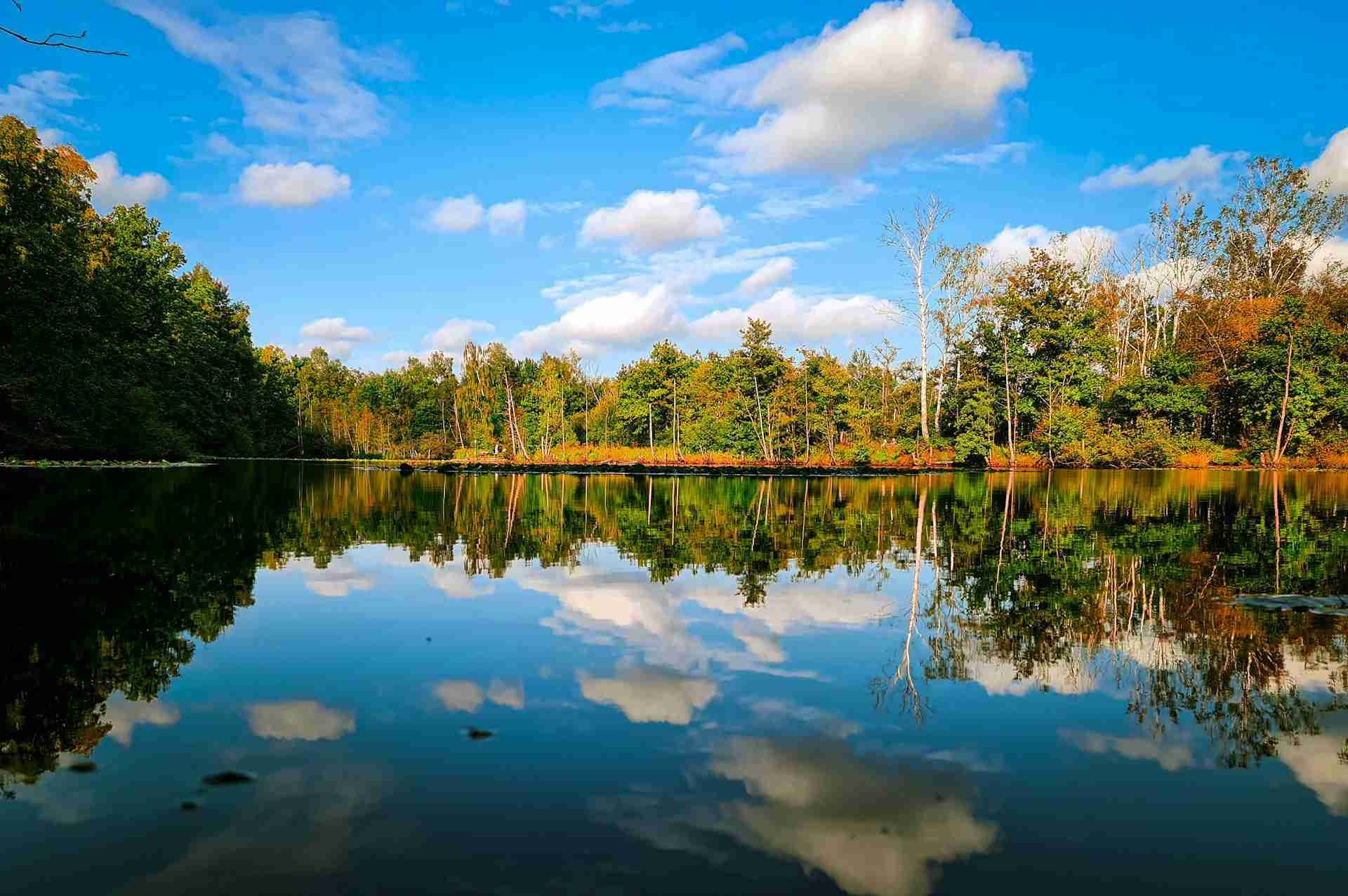
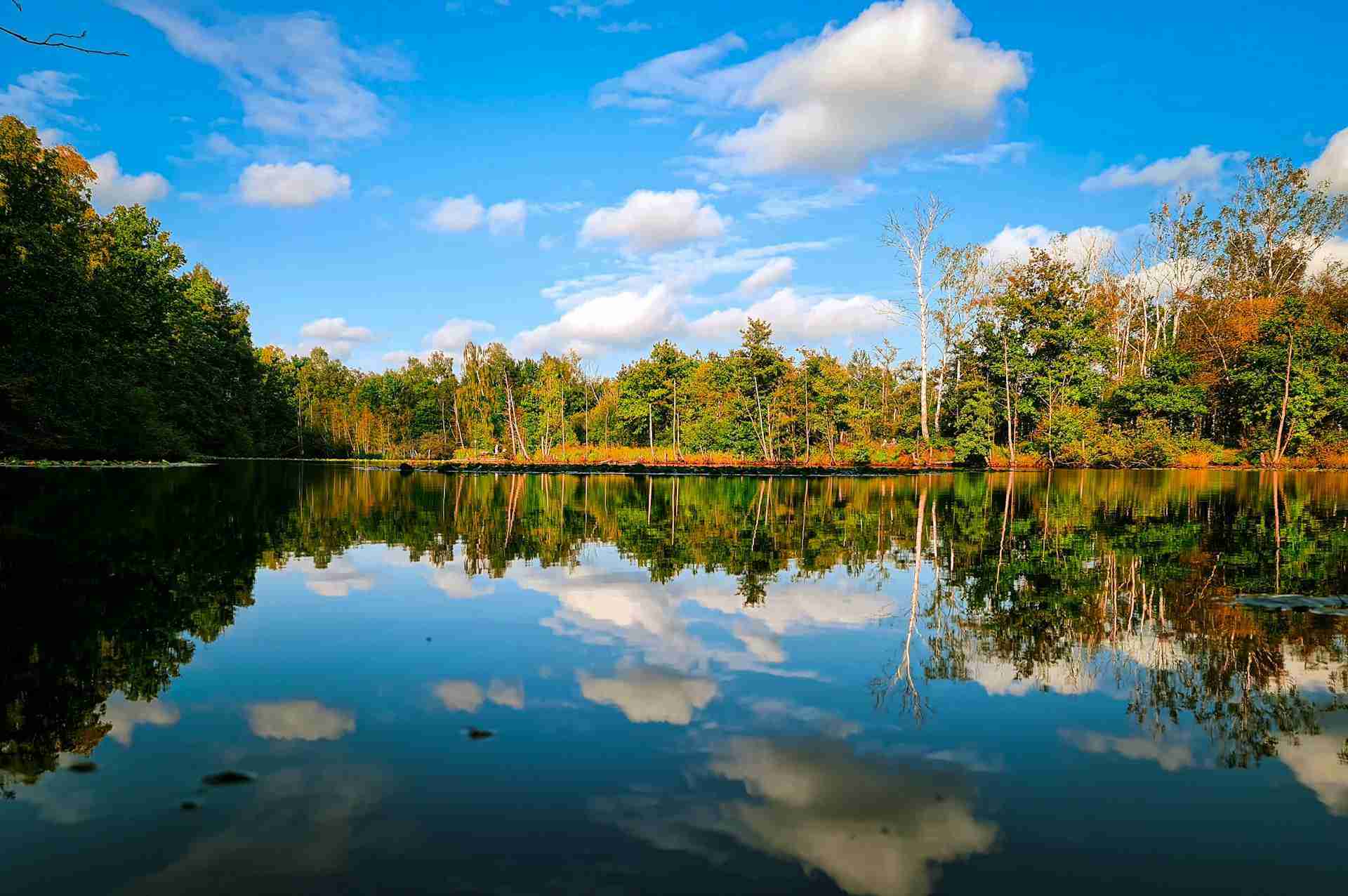
Nestled in the northern outskirts of Hamburg, Germany, the Naturschutzgebiet Raakmoor offers a tranquil retreat for photographers drawn to quiet, layered landscapes, soft light, and seasonal transformation. This protected wetland reserve features a patchwork of peat bogs, open meadows, forested paths, and reed-lined ponds. It is ideal for photographers interested in capturing nature in its more subtle forms. Raakmoor does not rely on dramatic topography or sweeping vistas. Its photographic value lies in the way morning mist clings to open water, how reflected trees shift with the wind, and how birds, deer, and insects briefly emerge in light that passes low through the canopy. It is a place for patient work, where branches, footprints, and reflections build quiet, timeless frames.
Best Photography Opportunities
• Foggy Mornings Over the Moorland Ponds
One of the most rewarding times to photograph Raakmoor is during the early morning hours when the landscape is blanketed in fog. The shallow ponds and wetland pools retain warmth from the previous day, which often triggers mist that softens the background and smooths reflections on the water's surface. These conditions are ideal for minimalist compositions, especially with long lenses that compress the soft layers of reeds, trees, and distant forest. Focus on the silhouettes of trees breaking through the mist or the vertical lines of reeds piercing the fog. Using a neutral-toned color profile or monochrome treatment will emphasize mood and simplify the frame.
• Backlit Forest Trails in Low Sunlight
Raakmoor contains a network of dirt and gravel trails that weave through patches of birch, oak, and pine. In the early morning or late afternoon, sunlight filters through the trees at an angle that creates long, directional shadows across the trails. These lighting conditions are perfect for photographing contrast between warm highlights and cool-toned shadows. Use a standard zoom lens to frame compositions with depth, and position yourself to catch light shafts falling through openings in the canopy. In autumn, fallen leaves add texture and warmth to the forest floor, creating vibrant foreground interest.
• Birdlife on the Water and in Flight
The wetland areas of Raakmoor attract a variety of bird species, including herons, ducks, grebes, and smaller songbirds that move through the reeds and perch in low tree branches. Photographers interested in bird behavior will find excellent opportunities along the quieter sections of the reserve's ponds and channels. A telephoto lens in the 300 to 600 millimeter range is essential for isolating subjects without disturbing them. Early morning is most productive, when birds are active and soft light creates catchlights in their eyes. Calm water can double the impact of a scene by capturing mirrored reflections of birds as they feed, perch, or take flight.
• Macro Photography in the Open Meadow Zones
In spring and summer, Raakmoor's open meadows come alive with insect activity and flowering plant life. Dragonflies, bees, butterflies, and spiders are commonly found along pond edges and meadow margins. Early morning is the best time for macro work, when dew clings to grasses and insects remain motionless in the cold. Bring a macro lens and work with wide apertures to isolate subjects, or use focus stacking to keep delicate features crisp across the frame. Wind can be a challenge, so stabilize your camera and keep exposures short enough to freeze movement.
• Seasonal Changes in Color and Mood
One of the most compelling aspects of Raakmoor is how dramatically it changes throughout the year. In spring, new leaves and soft greens cover the forest and meadows, creating pastel color palettes and gentle transitions in tone. Summer brings more vibrant light and greater contrast between sunlit clearings and shaded trails. Autumn turns the forest into deep oranges and browns, especially around the edges of ponds and along narrow paths. Winter transforms the reserve into a simplified landscape where bare branches, frost, and low sun create graphic, high-contrast compositions.
Best Time to Visit
The most productive photography sessions at Raakmoor take place early in the morning throughout the year. Soft light, fewer people, and increased wildlife activity all favor dawn shooting. Spring and autumn offer the richest variety of visual material. Between March and May, new growth, early bloom, and high water levels provide ideal subjects for both macro and wide-angle work. Trees begin to fill in while forest trails remain open and easy to navigate.
In autumn, from late September through November, fog becomes more common, especially after cold nights. These conditions are perfect for photographing layered trees and reeds in diffused light. Fallen leaves add depth and color to forest paths, and shafts of light often filter through thinning canopies. This is the best time of year for capturing transitions in both color and structure.
Summer is most useful for early morning macro photography and for capturing bird activity in the meadows. Arriving before sunrise gives you time to prepare before the light becomes too harsh. Overcast days during summer are excellent for detail work and insect photography, especially in the open fields. Wildlife is less visible during the heat of the day, but you may still find movement near shaded water.
Winter is the quietest season, both in terms of foot traffic and visible wildlife. After light snow or hard frost, the landscape becomes more graphic and minimal, especially in monochrome. Frosted branches, frozen puddles, and bare reeds provide structure and texture for quiet compositions. These conditions are best used for studies in form and light, especially during early morning hours.
How to Get There
Naturschutzgebiet Raakmoor is located in the Langenhorn district in northern Hamburg. It is easily accessible by public transportation. The most direct route is to take the U1 subway line to Langenhorn Markt station. From there, it is a ten to fifteen minute walk to the reserve, with access points along Foorthkamp or Tangstedter Landstrasse. The paths are well marked and flat, and access is open year-round.
If arriving by car, street parking is available near the main entrances, although it may be limited on weekends. The reserve has no gates, admission fees, or time restrictions. Trails are natural and unpaved, and they can become muddy or flooded after heavy rain. Waterproof footwear is strongly recommended. Tripods are allowed, and there are no restrictions on photography, though visitors should remain on marked trails to protect the habitat.
Recommended Photography Gear
Raakmoor supports a wide range of photographic subjects, so a flexible kit will help you make the most of your time. A wide-angle lens in the 16 to 35 millimeter range is useful for capturing forest scenes, ponds, and layered landscapes. Use this focal length for early morning fog scenes and for compositions that benefit from leading lines or foreground interest. A standard zoom, such as a 24 to 70 millimeter lens, will help you work with tighter framing and light transitions along trails and forest edges.
For wildlife and bird photography, a telephoto lens in the 300 to 600 millimeter range is essential. Stabilization is important, whether built into the lens or supported by a monopod or tripod. Birds and deer move quickly and often appear in low light. Fast shutter speeds and high ISO performance are key. Consider bringing a gimbal head if you plan to work from one spot for extended periods.
Macro photography is productive in the meadows and along pond margins. A 90 to 105 millimeter macro lens will give you enough working distance without sacrificing detail. Use a reflector or small diffuser to soften harsh sunlight and reveal detail in insects or plants. A kneeling pad, ground mat, or right-angle viewfinder will make it easier to shoot at low angles for extended periods.
A sturdy tripod is recommended for long exposures, low light, and focus stacking. A circular polarizer is useful for reducing glare on wet surfaces and boosting contrast in reflected skies. A remote release or timer reduces vibration when shooting long exposures in low light or windy conditions. Weather protection for your gear is essential. Bring lens cloths, a blower, and a waterproof backpack cover to manage moisture. Neutral clothing and quiet footwear will help you approach birds and deer without startling them.
Nearby Photography Locations
Just a short ride from Raakmoor, Ohlsdorf is the largest park cemetery in the world. Its winding paths, mature trees, and historic monuments offer opportunities for moody, layered compositions in all seasons. Foggy mornings and golden light through tall trees add atmosphere to both detail and wide-angle shots.
This small lock along the Alster River is a peaceful place to photograph reflections, slow-moving water, and seasonal changes in vegetation. Early morning is best for stillness and soft light, with occasional birdlife adding motion to the scene.
A short drive south of Raakmoor, Bramfelder See is a tree-lined lake ideal for golden hour photography. Its quiet walking paths and frequent bird activity make it a useful location for landscape, reflection, or telephoto wildlife work.
Smaller and more secluded than Raakmoor, this nearby nature reserve offers similar wetland scenery and attracts bird species in spring and autumn. The moor's structure and vegetation are ideal for early morning mist shots and abstract compositions with reeds and water.
Located a short distance west, this forested area offers denser woodland and deeper trails that photograph well in directional light. Autumn color and bare winter trees work well for compositions using natural lines and long shadows along the ground.
Raakmoor rewards photographers who are willing to slow down and work with the subtle rhythms of the landscape. There are no towering peaks or dramatic rivers here. Instead, you will find beauty in the quiet geometry of reeds, the glow of backlit branches, and the mirror of still water at first light. It is a place to return to often and to photograph differently each time.
Comments
Loading comments…