
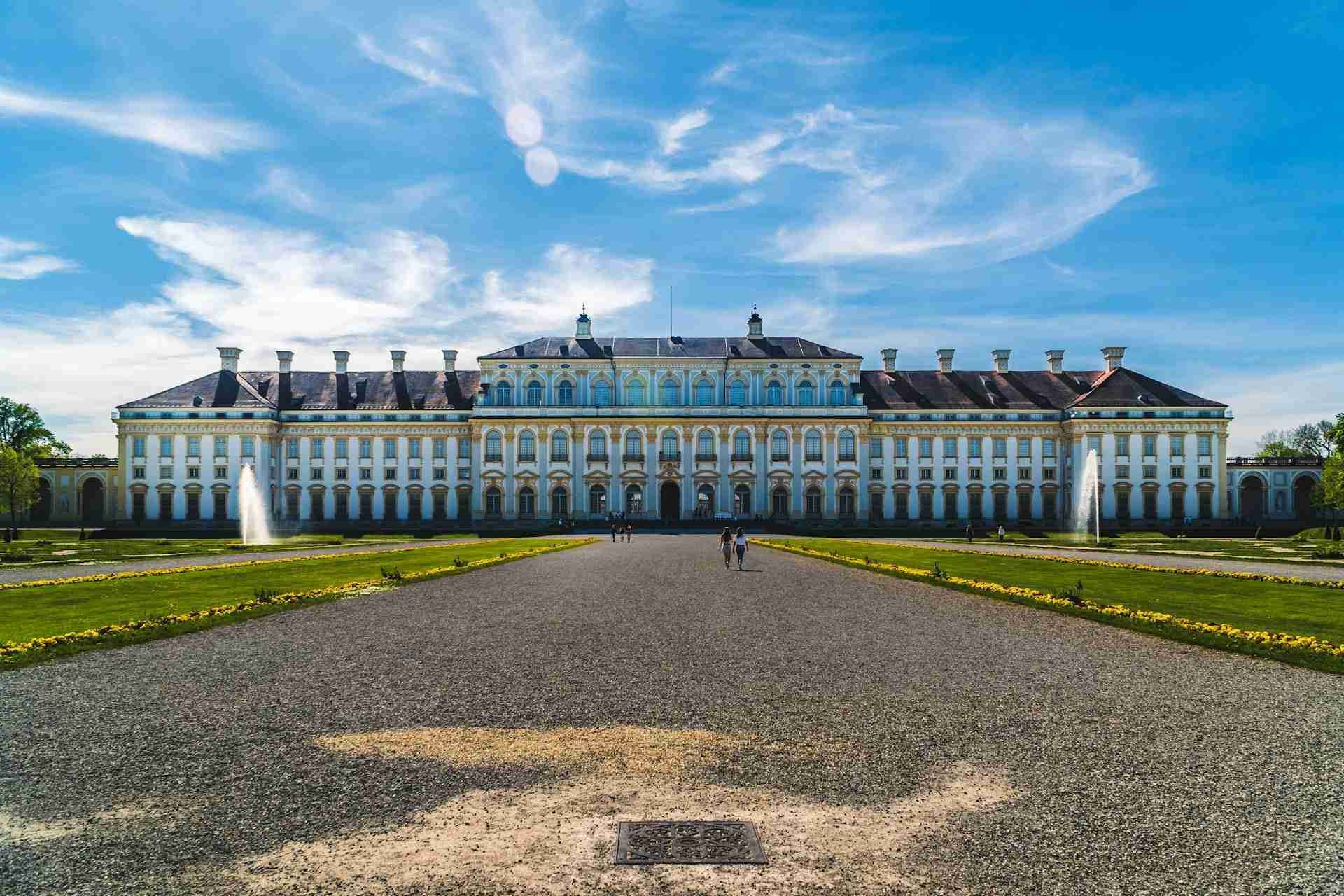
Neues Schloss Schleißheim is one of Bavaria's lesser-known architectural gems, located just north of Munich in the quiet town of Oberschleißheim. Built as a baroque palace for Elector Max Emanuel in the early 18th century, the structure stretches over 300 meters in length, fronted by a massive canal, formal gardens and long lines of perfectly trimmed hedges. Its symmetrical layout, reflection-friendly water features and open sightlines make it a rewarding location for architectural and landscape photography alike. The palace's size and proportions invite wide, balanced compositions, while its surrounding grounds allow room to isolate detail, frame with foliage or shoot clean mirrored images of baroque design reflected in still water.
Best Photography Opportunities
• Full Façade Reflections Across the Canal
The central reflecting canal is the main feature for symmetrical wide shots of Neues Schloss Schleißheim. On still mornings or late in the evening, the water mirrors the palace's facade and softens the entire scene. This composition works best when centered directly in front of the palace, using a wide-angle lens to include both the water and sky. Arrive early before wind or visitors disturb the surface. Use a tripod to balance vertical lines and avoid distortion, and consider bracketing exposures to retain sky detail during sunrise or sunset. A circular polarizer can help manage glare but should be used carefully to avoid killing the reflection entirely.
• Golden Hour Light on the Palace Wings
Both ends of the palace stretch wide, giving you options to work with sidelight depending on the time of day. Morning light hits the eastern wing with a warm, clean glow, while late afternoon sun washes across the western side. These lower angles enhance the baroque stonework and emphasize texture in the columns and windows. Shoot from the gravel paths flanking the gardens to include both the building and surrounding green space. A mid-range zoom lens allows you to frame tightly without flattening the perspective, especially if you want to work with leading lines from the balustrades or fountains.
• Detail Studies of Sculptures and Fountains
The grounds of the Neues Schloss are filled with stone statues, decorative fountains and smaller design elements that reward close-up work. Use a telephoto or prime lens with a wide aperture to isolate a sculpture against a blurred backdrop of trees or palace walls. These shots work well in soft overcast light, which maintains texture and prevents hard shadows. Look for repetition and alignment in the stonework, and take your time finding angles where figures appear silhouetted or dramatically side-lit. This type of image provides a strong counterpoint to wide symmetry and offers variation within a single shoot.
• Tree-Lined Garden Alleys and Framing Elements
The symmetrical gardens behind the palace are lined with tall hedges and trees that form straight green tunnels through the landscape. These alleys create strong leading lines and work well for one-point perspective shots, especially in spring and summer when the foliage is full. You can use these paths to frame the palace from a distance, or shoot through the trees to isolate sections of the structure. Low angles and long lenses help compress the lines and give your shot a sense of depth. These compositions benefit from early or late light, when shadows give more shape to the scene.
• Winter Snow and Empty Grounds
During light snow in winter, Neues Schloss Schleißheim transforms into a quiet, clean space where shapes and lines stand out more clearly. The grounds are often empty during cold mornings, which makes it easier to shoot long exposures or wide frames without people in the scene. Snow also softens the background and highlights the warm tones of the stonework. Use a polarizer to control sky brightness and be careful with exposure to avoid losing highlight detail. The fountains and statues take on a more sculptural feel when dusted with snow, and the canal reflections can become more graphic and high contrast.
Best Time to Visit
The most photogenic times to visit Neues Schloss Schleißheim are spring, early summer and autumn. In spring, the gardens begin to bloom and the hedges are neatly trimmed, offering crisp structure and clean lines in every direction. Mornings during this season tend to be cooler and still, making reflections more reliable and light more diffused. Early summer brings longer days and strong golden hour light, particularly in the early morning or just before sunset.
Autumn is another excellent time, especially in late October when the trees along the canals and garden alleys start to change color. The golden and orange tones in the leaves pair well with the warm stone of the palace and offer more variety in both wide and close compositions. Winter can also be rewarding, especially after a light snow or frost, but access may be limited depending on weather and garden maintenance. Avoid mid-day sun in summer if you want balanced exposures, as contrast becomes harsh and crowds are more common.
Sunrise and sunset are ideal for symmetry and long shadows, especially when working with the canal or tree-lined paths. Morning visits often provide better conditions for reflections, while evening light adds warmth and stronger side lighting for architectural texture. Overcast days are useful for detail work, as they reduce glare and keep stone and sculpture colors even.
How to Get There
Neues Schloss Schleißheim is located in Oberschleißheim, about 13 kilometers north of Munich's city center. By public transport, take the S-Bahn (S1 line) from Munich toward Freising or the airport and exit at Oberschleißheim station. From there, it is a 15-minute walk to the palace grounds. Buses also run directly to Max-Emanuel-Platz, located just in front of the complex.
If arriving by car, parking is available in a designated lot near the main entrance, just off Mittenheimer Straße. The palace complex includes three main sections: Altes Schloss (Old Palace), Neues Schloss (New Palace), and Lustheim Palace, all connected by garden paths and walkways. There is no entrance fee to access the gardens or outdoor areas where most photography takes place, but indoor access to the palace requires a ticket and has restrictions on photography.
Tripods and large camera gear are allowed on the grounds, but should be used respectfully to avoid blocking paths or disturbing other visitors. Drones are not permitted without written permission, and the palace area is a no-fly zone under general drone regulations. Check local signage and park notices for any temporary restrictions.
Recommended Photography Gear
Neues Schloss Schleißheim is best photographed with a kit that supports symmetry, controlled perspective and long exposures. A wide-angle lens in the 16 to 35 millimeter range is ideal for canal reflections, full facade shots and large garden compositions. A mid-range zoom, such as a 24 to 70 millimeter, gives you the flexibility to move from wide to mid-tight without switching lenses. A telephoto lens is useful for isolating garden details, sculptures and architectural elements, especially when shooting from across the canal or down long garden paths.
Bring a tripod for sunrise and sunset sessions, or for working with slower shutter speeds to smooth water reflections. A polarizing filter helps reduce glare on the canal and deepens sky contrast, especially when working with wide compositions. Neutral density filters are optional but useful if you want to shoot long exposures in daylight, particularly when capturing still water or moving clouds.
Comfortable shoes are recommended if you plan to walk the full garden grounds and photograph from different angles. A lens cloth or cleaning kit is useful in winter when fog or condensation can collect on your gear. There is little cover from the elements, so a rain sleeve or protective bag is a smart addition in wet weather. For architectural accuracy, a bubble level or in-camera grid can help maintain clean verticals in your frames.
Nearby Photography Locations
Located within the same complex, this smaller hunting lodge sits at the far end of the canal and offers a more intimate setting with circular gardens and ornate rooflines. It is best photographed in early morning light from across the water, with trees framing the structure.
The original palace building has a more modest footprint but strong historic character. Its position at the southern end of the complex allows for simpler, less crowded compositions and works well for architectural studies in soft light.
About 25 minutes away by car or S-Bahn, this grand baroque palace in western Munich features a large reflecting pond, long tree alleys and formal gardens. It offers similar compositional opportunities with more variety in sculpture and seasonal planting.
A short drive north of Oberschleißheim, Dachau Palace sits on a hill with wide views over the countryside. The gardens are more open, and the light in late afternoon adds texture to the terraced walkways and low stone walls.
For a contrast in style, the Olympic Park's sweeping architecture, hills and water features provide a modern counterpoint to the baroque style of Schleißheim. Sunrise and blue hour offer good light and clean reflections in the small lakes and pools.
Neues Schloss Schleißheim is a space built around control, balance and light. Its symmetry invites order in your compositions, while the soft tones of the landscape and stone give room for subtle changes in mood and weather to shape each shot. Whether you are building a set of wide, formal images or exploring the smaller corners of the gardens and paths, this palace delivers photographs that feel timeless and precisely arranged.
Comments
Loading comments…