
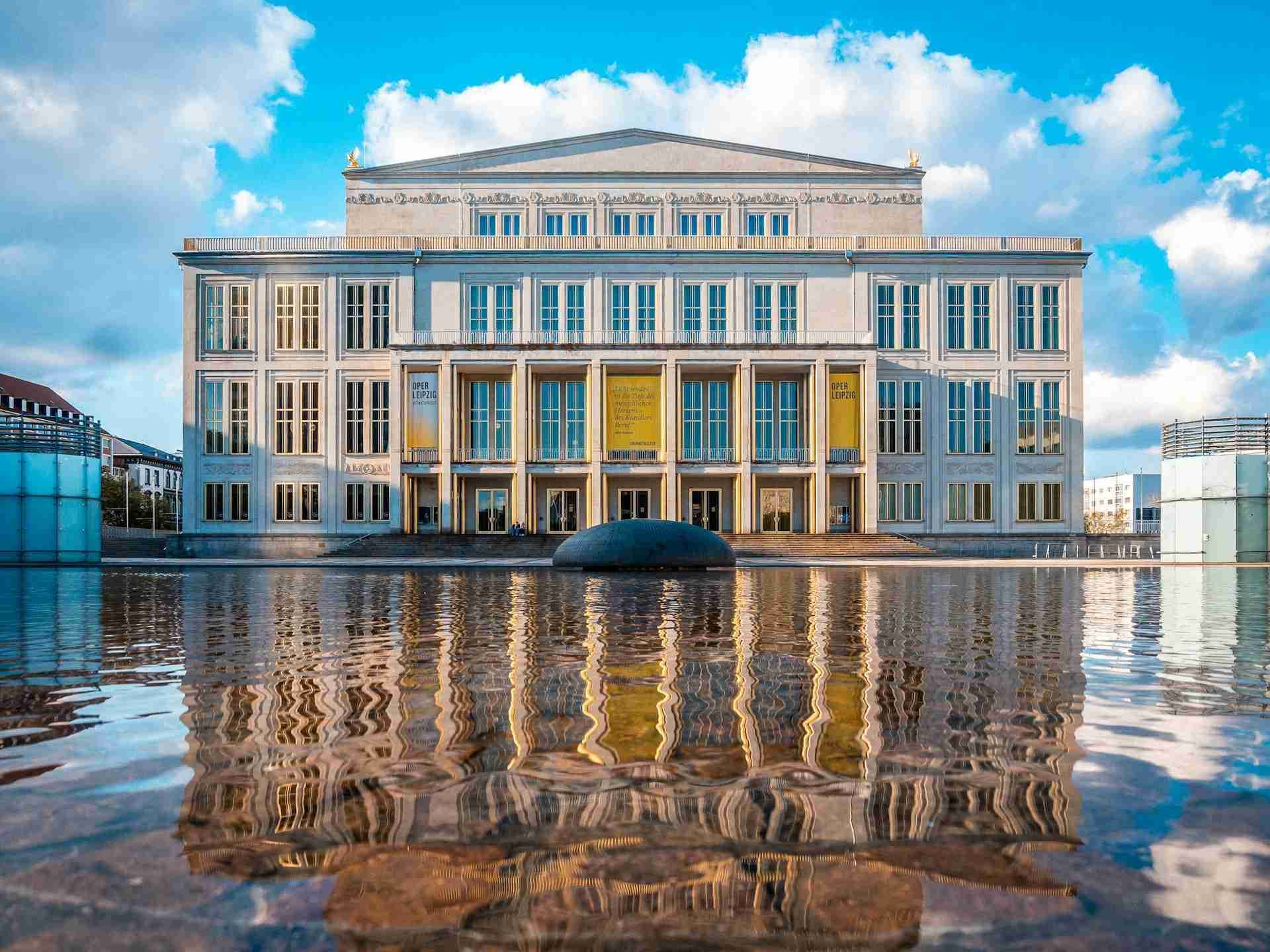
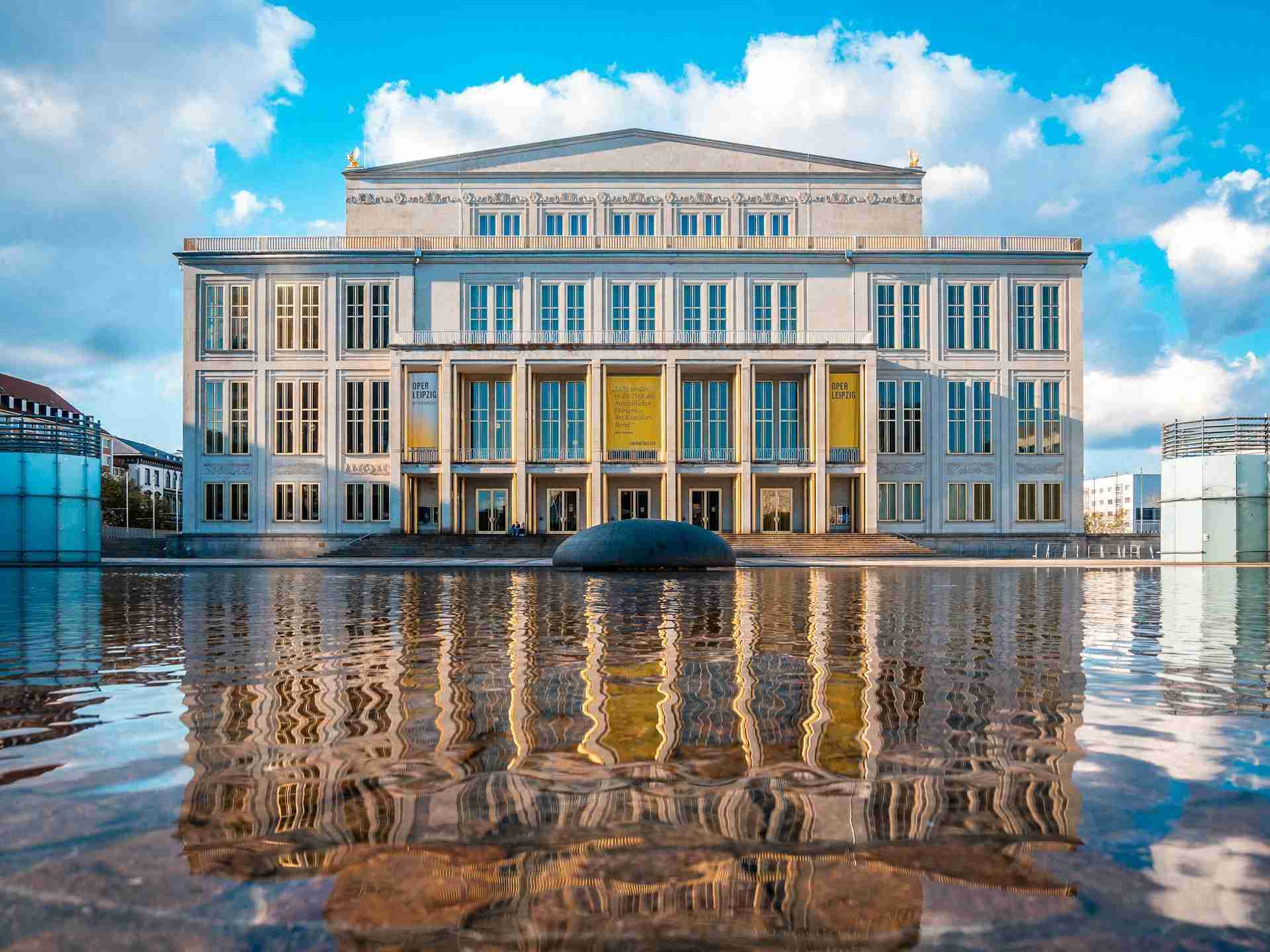
Oper Leipzig is not just a modern opera house; it is a photographic focal point in the historic and ever-changing urban fabric of Leipzig. Situated on Augustusplatz, one of the largest city squares in Germany, this opera house combines understated modernist architecture with a dynamic public setting that constantly shifts in light, activity, and tone. Its sleek, symmetrical structure, framed in pale stone and glass, reflects both postwar ambition and cultural purpose, making it a standout subject for photographers who seek balance, rhythm, and context in their compositions.
While many opera houses rely on ornate ornamentation, Oper Leipzig's strength lies in its geometry and openness. The structure acts as a neutral canvas, responding to golden hour light, reflections from nearby water features, and the movement of people and trams. It is surrounded by complementary structures like the Gewandhaus and Leipzig University's Paulinum, all of which form a cinematic urban environment filled with photographic opportunities. This is not a place you rush through. Instead, it rewards observation, timing, and a willingness to move.
Best Photography Opportunities
• Front elevation during golden hour
The western-facing front of the opera house catches the sun as it begins to set, casting a soft glow across the pale facade and drawing shadows across the large stone plaza. During this time, you can photograph the full symmetry of the structure without needing dramatic clouds or deep contrast. A wide-angle lens captures the central columns, tall windows, and minimalist detailing with clarity. Framing the building against the fading sky works especially well with a tripod and a small aperture for crisp focus throughout.
• Reflections from the water feature in Augustusplatz
Just in front of the opera house, shallow pools and the Augustusplatz fountain offer clean mirror-like reflections when the wind is calm. These elements create strong foregrounds and allow for symmetrical compositions that double the structure and the sky. Reflections are best in blue hour, when the windows begin to glow from within and the sky shifts to deep blue. Position your camera low to maximize the reflective surface and include the surrounding plaza lights for added depth.
• Facade textures and angular staircases
While the building appears minimalist from a distance, closer inspection reveals texture in the stone panels, subtle relief work, and strong vertical lines. The staircases flanking the main entrance add rhythm and movement, especially when photographed in angled sidelight. Use a 50mm or 85mm lens to compress the composition and pick out patterns in the repeating shapes. Cloudy days or soft evening light help to prevent harsh contrast.
• Street-level activity and surrounding architecture
From the opposite side of Augustusplatz, you can incorporate Oper Leipzig into wider urban scenes that include trams, cyclists, and pedestrians. The Gewandhaus and Leipzig University buildings provide visual contrast, and long exposures can turn moving people and traffic into a blur of motion. Shoot during late afternoon or early evening for balanced light, and consider including tram lines or signage to frame the structure with environmental detail.
• Blue hour compositions with city light
As daylight fades, Oper Leipzig transforms. Its tall windows glow with warm light from within, and streetlamps cast golden tones across the plaza. This is the best time for long exposures that balance ambient light with artificial sources. From the corners of Augustusplatz, you can frame the entire opera house within its setting, adding reflections and skyline silhouettes for context. A sturdy tripod, remote release, and careful metering are essential here.
Best Time to Visit
The best months for photographing Oper Leipzig are April through October, when daylight is extended and the water features in Augustusplatz are fully active. From mid-spring to early fall, sunset aligns well with the western facade, providing soft, flattering light in the evening. These conditions help emphasize the building's clean lines and subtle textures.
Golden hour begins around 90 minutes before sunset, and blue hour follows shortly after, offering two distinct windows of light. Weekday evenings are ideal if you want to avoid crowds while still capturing urban activity. Blue hour is especially productive from late spring through early autumn, when the contrast between artificial light and deep sky color lasts longer.
Winter has its own appeal, particularly after rain or light snowfall. The low sun angles create shadows that stretch across the plaza and bring added depth to surface textures. Overcast days can work well for clean, diffused light, while stormy skies provide drama and mood. Early morning visits are useful if you want the square nearly empty, though the building's front receives no direct light until later in the day.
How to Get There
Oper Leipzig is centrally located and well connected. From Leipzig Hauptbahnhof, it is an easy ten-minute walk south to Augustusplatz. Tram lines 4, 7, 10, 11, 12, and 15 all stop directly at the square, making public transit the simplest way to arrive with gear in hand.
For those driving, several parking garages serve the area, including Parkhaus Augustusplatz located directly beneath the square. Once above ground, the plaza is flat and open, ideal for setting up tripods or moving freely between compositions. There are no fees for photographing in the square, and you are welcome to use a tripod as long as you are not blocking public walkways or transit stops. The exterior of the opera house is accessible around the clock.
Interior photography is only permitted during public performances or with special permission, so most photographers will focus on the building's exterior form and its interaction with the urban environment.
Recommended Photography Gear
Bring a wide-angle lens like a 16–35mm or 24mm prime for full-building compositions that include plaza elements, fountains, and reflections. A 24–70mm zoom is ideal for flexibility, particularly if you want to capture staircases or people against the building without distortion. A longer lens in the 70–200mm range helps isolate textures, windows, or features on nearby buildings.
A tripod is strongly recommended for shooting in low light, during golden hour, or when using slower shutter speeds to blur movement. A circular polarizer can help reduce glare on the stone and improve reflections from the water. In wet conditions, a microfiber cloth and lens hood will help manage droplets and protect against flare.
You can carry a full kit comfortably thanks to the flat layout of the square. A lightweight backpack and good walking shoes are all you need to explore the area thoroughly.
Nearby Photography Locations
offers a crisp architectural counterpoint to the opera house. Its glass and steel facade reflects evening light and movement in the square. From certain angles, both buildings can be framed in a single shot for an engaging contrast.
, including the Paulinum and lecture halls, feature sharp glass architecture with vertical and triangular forms. Early morning light creates strong shapes, and their design pairs well with long exposures or minimalistic urban shots.
, the city's tallest building, provides vertical mass to wide-angle compositions. It reflects the color of the sky and lights up during blue hour, especially when framed beside lower buildings for scale.
is a short walk away and is excellent for indoor and low-light photography. The mix of classic and modern design in its atriums and glass hallways provides a clean, structured environment for handheld or tripod work.
, located at the southern edge of Augustusplatz, creates a foreground element rich with motion and texture. Combine this fountain with light trails from trams and the lit windows of Oper Leipzig for complex, layered compositions.
Photographing Oper Leipzig is less about finding one perfect view and more about using light, weather, and the pulse of the city to draw out its shape and tone. With careful attention to angle and timing, this quiet modern structure opens up to reveal surprising depth, especially when framed within the rhythms of urban life around it.
Comments
Loading comments…