
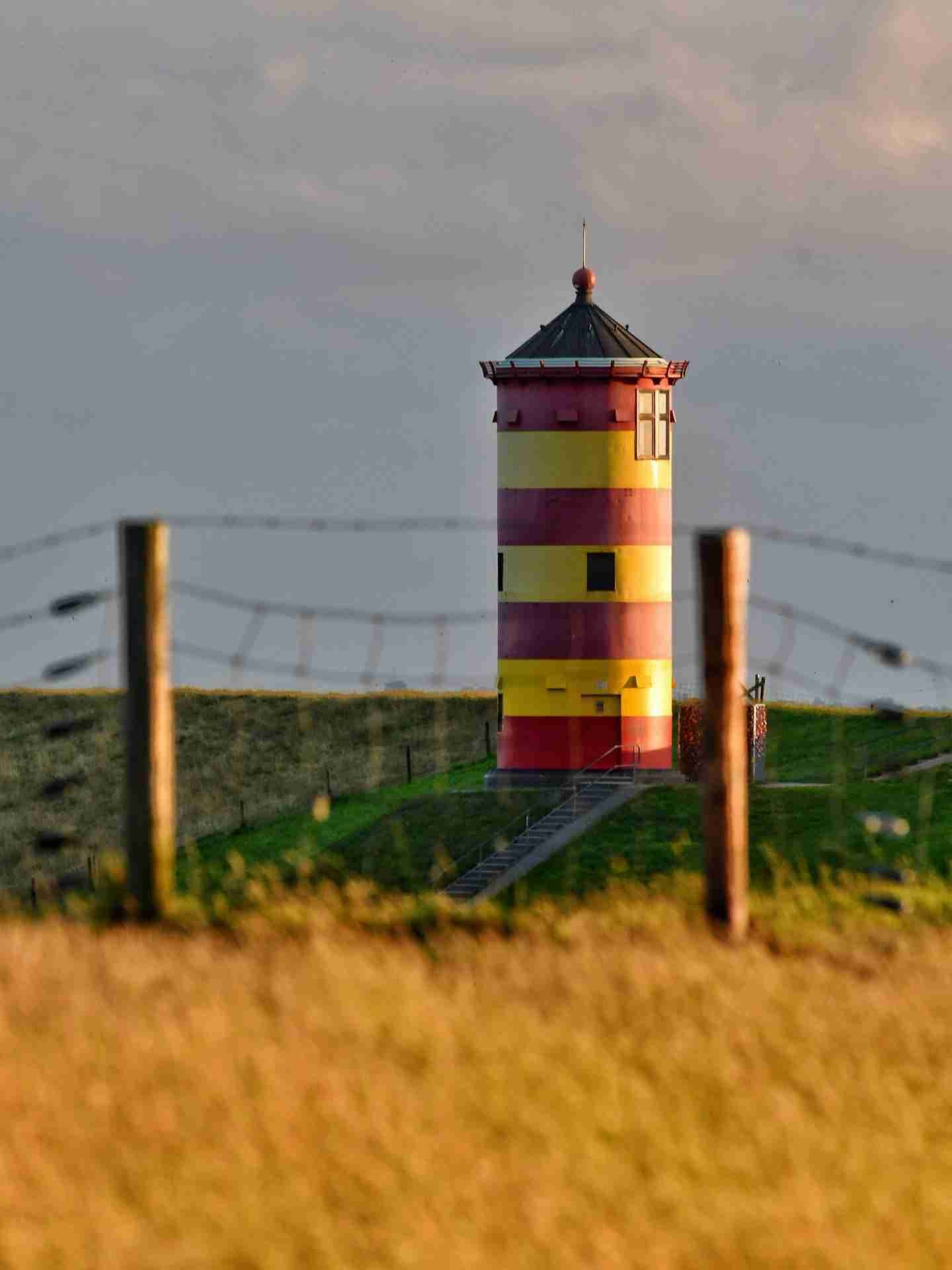
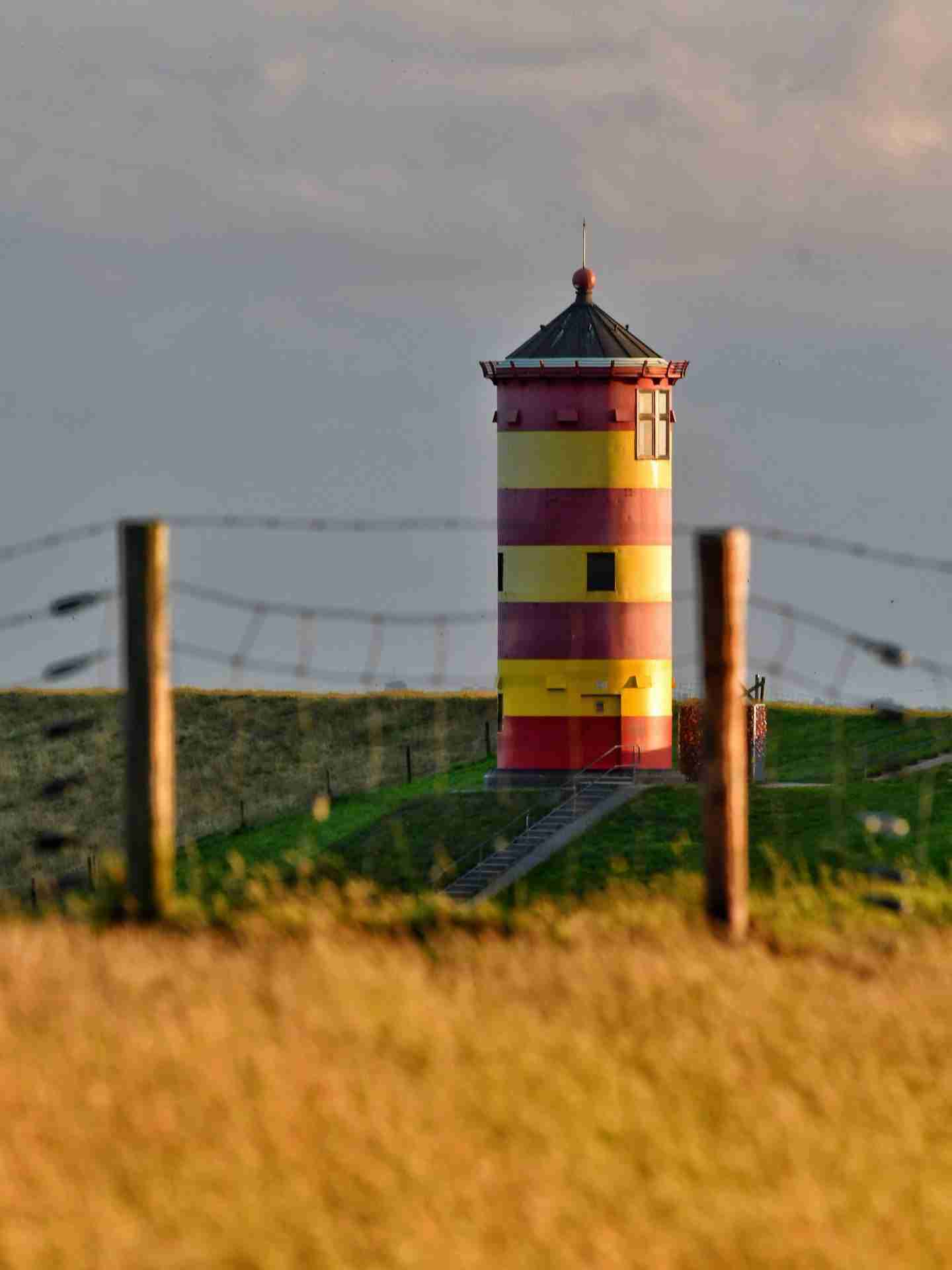
Perched on a quiet grassy dike near the village of Pilsum, the Pilsumer Leuchtturm is one of Germany's most instantly recognizable lighthouses. With its vivid red and yellow stripes and compact cylindrical form, it creates a bold focal point in an otherwise open and minimal landscape. The simplicity of the surroundings makes the lighthouse an ideal subject for clean compositions that emphasize color, contrast, and spatial relationships. Photographers drawn to strong geometry and coastal light will find it a rewarding location in all seasons. Its solitary placement allows for full control over background, framing, and mood with almost no visual clutter.
Best Photography Opportunities
Full Landscape Views Across the Dike
From a distance, the lighthouse appears as a small but powerful form set against an expansive sky. Shooting wide across the surrounding dike lets you highlight the contrast between the bold red and yellow tower and the flat, soft textures of grass and clouds. Foreground elements such as footpaths or grazing sheep can help build leading lines and depth. This type of composition is especially effective during golden hour when the color temperature enriches the tones in both the structure and landscape. The dike's gentle curve also allows for variety in angles without needing to move far.
Minimalist Compositions With Clean Color
The open setting and solid color blocks of the lighthouse make it perfect for minimalist imagery. Framing the tower tightly against the sky or isolating it in a wider field allows you to explore negative space and symmetry without distractions. Overcast days are especially useful for this type of work because the soft light enhances the saturation of the paint while flattening background contrast. These frames often work well in square or vertical formats and can be approached with either wide or telephoto lenses. Minimalist compositions here depend more on timing and subtle changes in light than on complexity in the scene.
Silhouette Work During Sunset
Although the lighthouse is inland facing, the flat terrain and open skies allow for beautiful backlit scenes during sunset. Positioning the lighthouse against a glowing sky and stopping down your aperture slightly can create distinct silhouettes with crisp edges. The low position of the sun in late summer and autumn works well for building compositions that combine long shadows, glowing skies, and foreground texture. Using a person walking or biking along the path as a scale reference can bring motion and narrative to the frame. A tripod can be helpful here when working with slower shutter speeds during the final light of day.
Close Detail and Texture Studies
The tower's metal cladding features visible seams, rivets, and surface imperfections that make for compelling close-ups. With a midrange or short telephoto lens, you can frame sections of red and yellow paint to focus purely on color and shape. These images work well in both color and black and white depending on how you handle contrast and texture. Side light in the morning or late afternoon will bring out subtle variations in the surface and shadow along the curves. These studies are best when composed deliberately and can stand alone as graphic images or be part of a larger visual series.
Human Element and Scale Framing
The relatively small size of the lighthouse makes it easy to exaggerate scale by including people, bikes, or animals in the frame. A person walking the dike or standing near the structure helps contextualize its size and brings life into the image. These kinds of frames also allow for storytelling and can blend landscape photography with documentary or portraiture. Positioning your subject carefully to avoid overlapping strong verticals or distracting edges will help maintain clean lines. These images tend to work best when the light is soft and when the background sky has some texture to anchor the scene.
Best Time to Visit
The Pilsumer Leuchtturm can be photographed in any season, and each time of year brings its own advantages. Spring is one of the most visually balanced times to visit, with fresh grass, clear skies, and moderate light that holds throughout the day. The wind is typically lower in spring compared to autumn, making long exposures more manageable. Summer provides long shooting windows and warm evening light that helps bring out the richness of the lighthouse's colors. The site may see more foot traffic during midday, but early mornings and late evenings remain quiet and productive for photographers.
Autumn shifts the mood of the location with golden grasses, longer shadows, and lower sun angles that stretch across the dike. This time of year is ideal for warm backlight and deeper contrast between the painted tower and the sky. Winter brings the fewest visitors and the strongest light, especially when snow or frost creates a neutral palette that lets the colors of the lighthouse stand out even more. Conditions can be windy and cold, but the clarity and quiet of winter often produce the cleanest images. Even on overcast days, the soft light works well with the minimal surroundings, letting the shape and color of the lighthouse remain the focus.
Sunset is typically the best time of day to visit. The low position of the sun allows for backlit silhouettes, golden highlights, and a full range of light transitions across the dike. Twilight and early blue hour sessions also work well for capturing the last tones of the sky behind the structure. The location's flat horizon and open sky give you a wide canvas to work with no matter what the weather is doing.
How to Get There
The Pilsumer Leuchtturm is located just outside the village of Pilsum in the Krummhörn region of Lower Saxony. The nearest large town is Greetsiel, which is well signposted and easy to navigate by car. From the center of Pilsum, follow signs toward the dike, where a small road leads to a designated parking area a short walk from the lighthouse. The walking path is flat, paved, and accessible, making it easy to carry gear or stay mobile between shots. The area is also popular with cyclists and can be reached via the North Sea Cycle Route which passes nearby.
There are no entrance fees to visit the lighthouse or photograph from the dike. While the interior of the tower is not open to the public, the structure is fully visible and approachable from all sides via public footpaths. The site is accessible year round and is open at all hours, making it suitable for both sunrise and sunset shoots. The wind can be strong at times, so planning your visit with weather in mind will help you prepare for comfort and shooting stability.
Recommended Photography Gear
The minimal nature of the site makes it easy to pack light while still capturing a full range of images. A 24 to 70 millimeter lens covers most compositions comfortably, from wide shots of the dike to midrange environmental portraits. This lens range allows you to move between scenes quickly without swapping gear, which is helpful if the weather shifts or light changes fast. For more dramatic landscape shots or minimal compositions with lots of negative space, a 16 to 35 millimeter lens provides the width to work with big skies and layered foregrounds.
A 70 to 200 millimeter telephoto lens is valuable for isolating details, compressing the scene, or working from a distance when you want to flatten the perspective. It also works well for capturing wildlife, distant walkers, or abstract studies of the painted tower. If you plan to shoot in soft light or around sunset, bring a tripod for stability and longer exposures. A polarizing filter can help control glare and improve contrast in the sky. Neutral density filters are useful for longer shutter speeds when you want to smooth cloud motion or create a more meditative frame.
Since the site is exposed and wind can be a factor, a weighted tripod or hook for your bag can help with stability. A microfiber cloth is useful for removing salt spray or light mist from the lens. You won't need hiking boots, but comfortable shoes with good grip will make the walk along the dike more enjoyable. A weather resistant bag and rain cover are also recommended if you plan to shoot through changing conditions. The gear requirements here are simple but deliberate, with an emphasis on mobility and creative flexibility.
Nearby Photography Locations
Just a few kilometers from the lighthouse, Greetsiel offers one of the most picturesque fishing harbors in northern Germany. The mix of old brick houses, traditional boats, and canal reflections creates a completely different mood from the clean dike landscapes. Early morning light across the water produces soft tones, while late afternoon brings out warm highlights on the buildings and decks.
These two historic windmills stand at the edge of town and are best photographed from across the fields or alongside the small canal that runs nearby. The scene changes dramatically with the light and works well in both color and black and white. They offer strong vertical elements and pair nicely with rural textures like grass, fences, and distant clouds.
South of Pilsum, this protected area provides quiet marshland views, gentle tidal movement, and broad skies filled with migrating birds. The calm water and muted tones make it a great place for long exposures or layered compositions with soft transitions. Sunrise here can be especially beautiful as light filters across the wetland terrain.
Germany's tallest lighthouse offers a bold industrial form against the otherwise horizontal landscape of the coast. Its red and white steel structure is best captured from a distance with a long lens. Morning or side light helps separate the structure from the background and define its unique latticework frame.
Emden Harbor District
Located further east, Emden offers a complete change of pace with its mix of maritime infrastructure, shipyards, and canals. It's a useful stop for photographers interested in contrasting industrial subjects with the natural and historical elements found closer to Pilsum. Reflections, rust textures, and layered boat scenes are all available here.
Pilsumer Leuchtturm proves that size is not a requirement for photographic impact. With its bold color, simple form, and wide open setting, it provides the kind of clean visual story that rewards slow observation and thoughtful composition. Whether you are building a portfolio of minimalist coastal work or just chasing golden light along the dike, this lighthouse delivers something unique every time you visit.
Comments
Loading comments…