
![Steel and Silence: Photographing Ruhrtalbrücke in Mülheim, Germany Spanning the broad sweep of the Ruhr River valley, the Ruhrtalbrücke near […]](https://storage.googleapis.com/pixeo-blog.firebasestorage.app/article-images/wp-import/featured-131661.jpg)
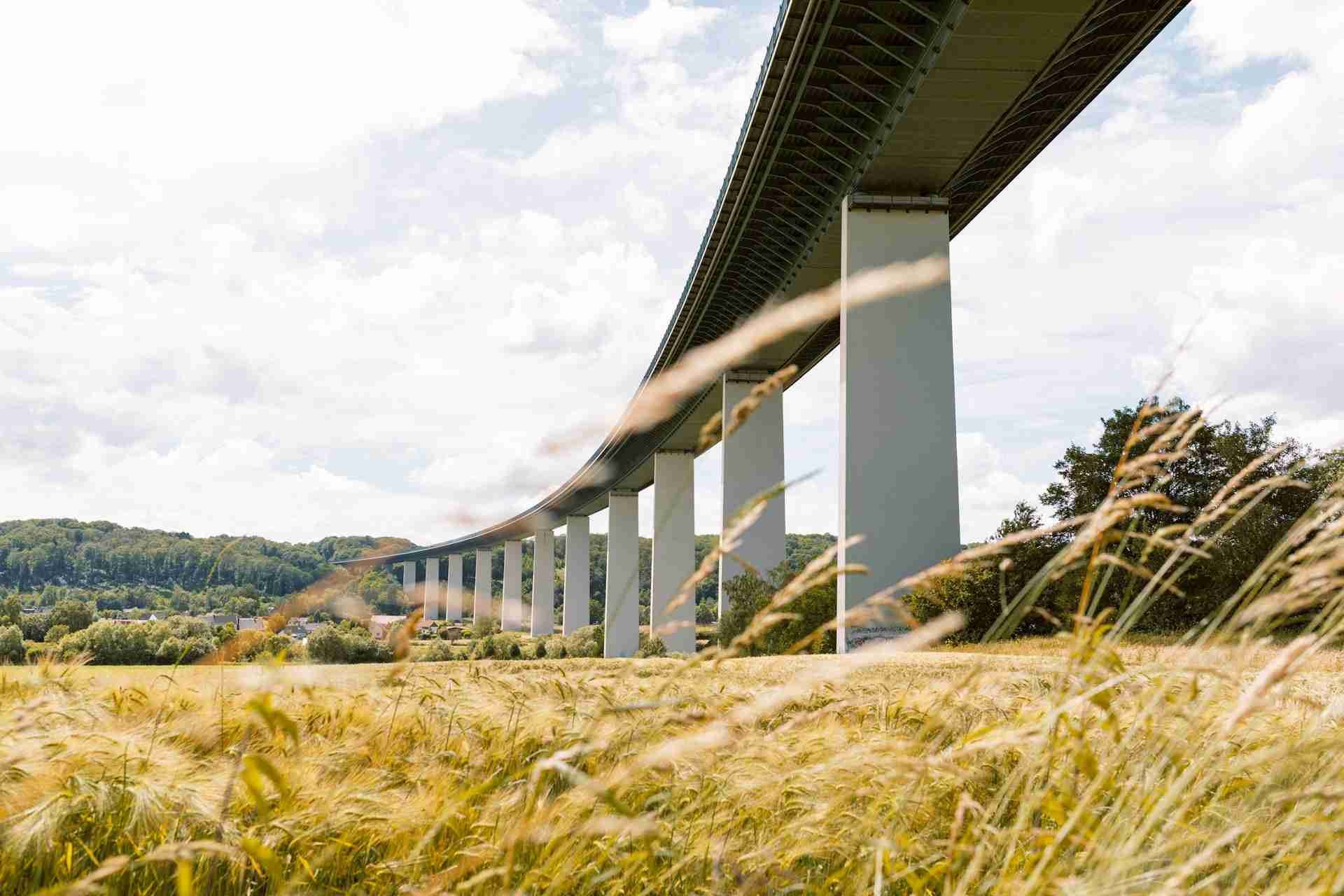
Spanning the broad sweep of the Ruhr River valley, the Ruhrtalbrücke near Mülheim, Germany, is a striking example of mid-20th-century German engineering that merges functional design with dramatic scale. Built in the 1960s as part of the A52 autobahn, this steel and concrete bridge stretches nearly two kilometers and towers above the river, connecting the industrial centers of the Ruhrgebiet while offering photographers a compelling blend of modernist infrastructure and natural scenery. Its imposing structure, graceful curvature, and rhythmic support columns provide a range of geometric and environmental compositions, particularly when viewed from the surrounding parkland, riverbanks, or elevated footpaths.
While the bridge itself is a conduit for constant motion, the environment around it remains serene—making it a unique setting where dynamic human movement intersects with quiet landscapes. Whether you're drawn to long-exposure traffic trails, structural abstraction, or expansive valley vistas, Ruhrtalbrücke offers a range of perspectives that reveal the tension and harmony between engineering and environment.
Best Photography Opportunities
• Wide-Angle Views from the Riverbanks
One of the most compelling compositions comes from photographing the bridge as it stretches across the Ruhr River. From the southern bank, particularly near the Styrum district, a wide-angle lens (16–35mm) allows you to capture the full arch of the bridge and its reflection in the water below. The repeating piers and the curve of the deck lead the eye naturally from one side of the frame to the other. During early morning or late evening, the light casts long, soft shadows on the water and across the concrete supports, adding depth and atmosphere to your shot.
• Structural Geometry and Minimalist Studies
Close-up views from directly beneath the bridge showcase its massive concrete piers, underdeck beams, and the contrast between smooth steel surfaces and weathered textures. Use a telephoto lens (70–200mm) to isolate architectural elements and compress the lines of the structure into abstract patterns. These compositions work especially well in overcast or side-lit conditions, when even light enhances surface detail without high contrast. Monochrome processing can amplify the minimalist quality of these images and draw attention to texture and form.
• Long Exposure Traffic Trails from Overpasses
Access to higher ground or pedestrian overpasses nearby allows for long-exposure shots of autobahn traffic streaking across the bridge. At night, the headlights and taillights of cars form luminous ribbons that trace the movement of time across the steel span. Shoot with a tripod at f/8–f/11 for maximum sharpness, and experiment with shutter speeds ranging from 10 to 30 seconds to create different light effects. These scenes become particularly striking when juxtaposed with the stillness of the valley below.
• Bridge and Landscape Context from Elevated Trails
Various hiking and biking trails around the Ruhraue and Uhlenhorst areas provide panoramic views of the bridge set within the larger Ruhr valley. These elevated positions are ideal for environmental compositions that place the structure in its full ecological and urban context. In autumn, the surrounding woodlands glow with amber and russet hues, offering natural contrast against the cool gray and blue tones of the bridge. Use a 24–70mm lens to frame the entire span with layers of trees, sky, and water, or move in closer for tighter environmental portraits.
• Atmospheric Mornings and Seasonal Fog
The Ruhr River often gives rise to mist and low-lying fog in the early morning hours, especially in spring and autumn. This atmospheric layer softens the hard lines of the bridge and allows for moodier, more ethereal compositions. Position yourself downstream or upstream to shoot through the fog as it wraps around the piers. A fast prime lens (50mm or 85mm) wide open captures dreamy bokeh in the foreground vegetation while maintaining sharpness on the bridge. These conditions are ideal for creating poetic images that contrast industrial form with natural mystery.
Best Time to Visit
Photographing Ruhrtalbrücke is most rewarding during the transitional hours of the day—sunrise and sunset—when light skims across the structure, casting long shadows and bringing out the subtle tones of steel and concrete. Morning light from the east illuminates the western face of the bridge, particularly effective if you're shooting from the Mülheim side. In the evening, golden hour hues light up the span from the opposite direction, ideal for compositions that include the river and its banks.
Autumn offers the most vibrant landscape context, as the surrounding trees explode in color and contrast sharply with the subdued palette of the bridge. Winter provides stark compositions and can highlight architectural details without distraction, especially when snow dusts the upper surfaces or fog fills the valley. Spring and summer bring lush greenery and longer shooting windows, ideal for twilight long exposures or photographing under shifting weather conditions.
Weekday mornings tend to be quiet along the river trails and surrounding parks, allowing for unhurried setup and minimal foot traffic. Evening sessions require more patience with traffic and light timing but yield dramatic results when skies cooperate.
How to Get There
Ruhrtalbrücke is located west of central Mülheim an der Ruhr and forms part of the A52 autobahn. While direct pedestrian access to the bridge is not permitted, there are numerous vantage points and trails nearby that offer excellent perspectives for photography.
From the city center, follow signs toward the Broich or Styrum districts, where you'll find access to river paths and parks that flank the bridge's approaches. Parking is available near the Ruhraue park or in nearby residential streets, and dedicated bike paths connect the area to the larger RuhrtalRadweg cycling route.
Public transit options include regional trains to Mülheim Hauptbahnhof, followed by a short tram or bus ride toward the river. Once in the area, the bridge is visible from many walking trails, including those that run through the Uhlenhorst forest and along the riverbank near Raffelbergpark.
There is no fee to access the surrounding parkland or riverwalks, and photography is unrestricted. Bring appropriate footwear if you're planning to explore trails during damp or muddy seasons.
Recommended Photography Gear
To cover the full visual range of Ruhrtalbrücke, pack a versatile kit suited for both sweeping landscapes and abstract structural studies. A wide-angle lens (16–35mm) is essential for capturing the entire span of the bridge within its riverine setting, particularly from the lower trails and embankments. A mid-range zoom (24–70mm) allows for balanced framing of bridge and landscape elements, especially when working with foreground trees, clouds, or human figures for scale.
A telephoto lens (70–200mm) is highly effective for isolating details such as repeating piers, deck understructure, or traffic movement across the upper lanes. For long exposures at dusk or dawn, a sturdy tripod is essential, especially when shooting in uneven terrain along the riverbanks. Bring ND filters to control exposure during daylight long-exposure work, and a circular polarizer to manage reflections on the river or enhance sky detail.
In misty or foggy conditions, a fast 50mm or 85mm prime delivers excellent contrast and clarity while allowing for low-light flexibility. Waterproof gear protection is advised in wetter seasons, and a lens cloth is useful for dealing with humidity or spray near the water.
Nearby Photography Locations
Located just north of the bridge, this park blends manicured grounds with wooded trails and offers elevated viewpoints through the trees toward the Ruhrtalbrücke. In spring, the blossoms here provide a colorful foreground for wide compositions, while in winter, bare branches frame the bridge with graphic minimalism.
• Schloss Broich and MüGa Park
South of the bridge and close to central Mülheim, this historic fortress and its adjacent park provide both medieval textures and expansive green spaces. The castle's stonework contrasts beautifully with the bridge's industrial form in composite frames shot from the southwest trails.
• RuhrtalRadweg Cycling Path
This long-distance path parallels the Ruhr and offers continuous visual access to the bridge and surrounding river landscapes. Cyclists and walkers add life and scale to compositions, and the gently curving path works as a natural leading line in your photographs.
• Uhlenhorst Forest
A dense forest west of the bridge with trails that wind through old growth and open clearings, Uhlenhorst provides moody, quiet compositions—particularly during early morning mist or late autumn light. The forest can also be used as a shaded foreground when shooting from elevated clearings toward the bridge.
East of the city center, this unique tower offers a high vantage point and a functional camera obscura installation that provides an educational and artistic experience. From the upper decks, you can also photograph the city and sections of the river, including distant views of Ruhrtalbrücke under the right conditions.
Whether you're chasing light trails across its span, studying the elegant rhythm of its support columns, or framing its massive silhouette within the valley fog, Ruhrtalbrücke offers a rare opportunity to photograph modern infrastructure with poetic potential. It's a place where engineering becomes landscape—and where every visit reveals a new angle, a different sky, and another line to follow.
Comments
Loading comments…