
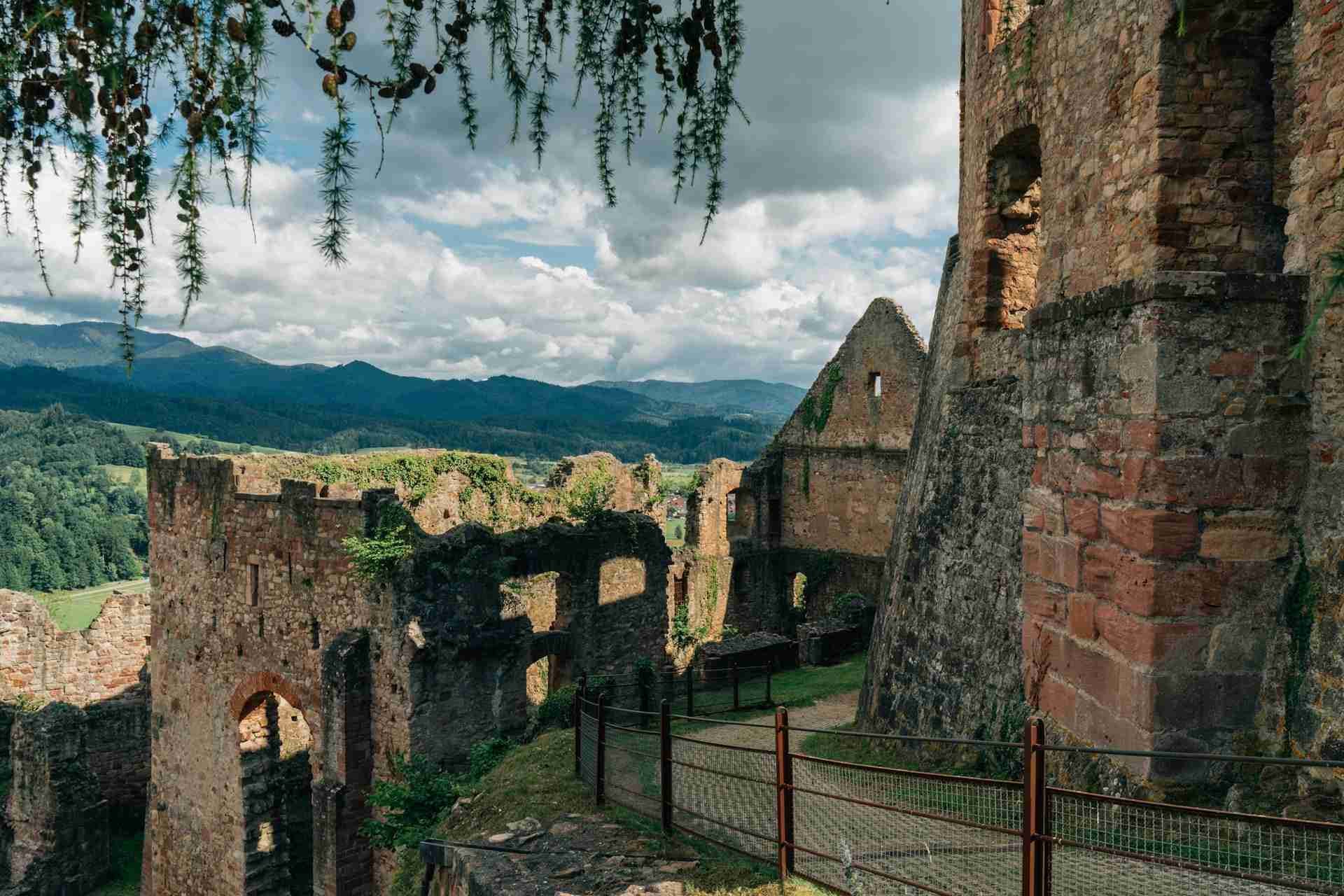
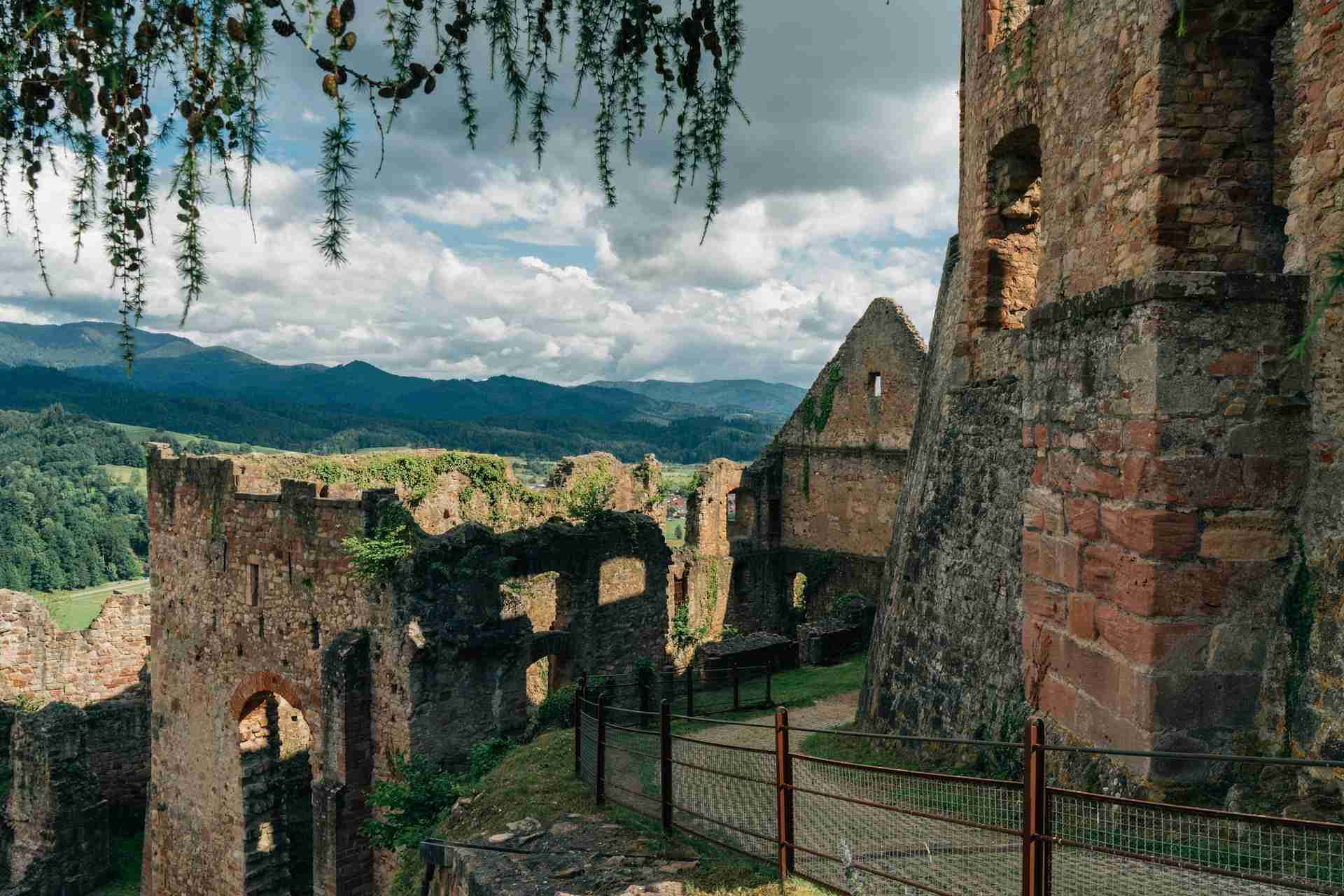
Set on a hilltop above the town of Emmendingen in southwestern Germany, Ruine Hochburg is one of the largest and most photographically rewarding castle ruins in the Baden-Württemberg region. With its multi-tiered stone structures, surviving arches, and panoramic views of the Black Forest foothills, it offers a diverse range of subjects that lend themselves well to both architectural and landscape work. The combination of open sky, weathered walls, and layered terrain allows photographers to shift seamlessly between wide scenic views and tight structural compositions. The elevated setting also provides long golden hour opportunities as light moves across the valley floor and into the old fortress grounds. Whether you're interested in soft sunrise tones, moody shadows within the ruins, or strong late-day contrasts on ancient stone, Ruine Hochburg provides space and structure to build a varied and compelling shoot.
Best Photography Opportunities
• Elevated Views from the South Bastion
The southernmost point of the fortress sits high above the surrounding countryside and offers sweeping views of the Rhine Valley, the Vosges mountains to the west, and the rising slopes of the Black Forest to the east. This is one of the best spots for wide-angle compositions at sunrise or sunset, when light grazes the stone and creates deep texture across the outer walls. Including a portion of the battlements in the foreground adds visual depth and guides the viewer through the frame. A tripod is useful here for long exposures, particularly in early light or under shifting clouds. Low fog in the valley below often adds another layer of interest on cooler mornings.
• Archways and Interior Passageways
Scattered throughout the central complex are vaulted stone doorways, narrow halls, and collapsed chambers that catch directional light beautifully. These interior spaces are best explored with a midrange zoom or fast prime lens to capture the play of light and shadow as it shifts through the day. Look for repeating patterns in the stonework or moments where sunlight passes through multiple archways at once. On cloudy days, the diffused light helps preserve detail in darker corners without blowing out the sky if shooting outward. These scenes are especially effective in monochrome for photographers focused on line and contrast.
• Textural Studies of Weathered Stone
Centuries of erosion and partial reconstruction have created surfaces that are visually rich without feeling overly polished. A 50mm or longer focal length helps isolate details like lichen-covered stones, mortar lines, or tool marks in the surviving walls. These smaller compositions benefit from soft, even light, making early morning or overcast conditions ideal. Shooting handheld gives you the freedom to move easily along walls and ramps, where shadows fall at different angles. These shots pair well with wider overviews to build a more complete narrative of the space.
• Silhouettes and Sky during Golden Hour
In the late afternoon, the sun drops behind the higher ridges to the west, casting long shadows across the open areas within the ruins. This creates strong contrast between the stone structure and the sky, which can be used for silhouette work or color-drenched compositions during golden hour. Composing upward through doorways or collapsed walls allows the sky to become the background, simplifying the frame and emphasizing shape over texture. A small aperture helps produce sunstars if shooting directly into the sun. Bracketed exposures or post-processing blending are helpful in managing the wide dynamic range.
• Foreground Layers and Leading Lines from the Outer Grounds
The castle is surrounded by grassy slopes, crumbling outer walls, and remnants of defensive structures that lead the eye naturally toward the center of the ruin. Shooting from these lower elevations with a wide-angle lens allows you to use paths, stone foundations, or tree roots as strong foreground elements. These scenes are best captured in early morning or late afternoon light when side illumination casts long shadows across the terrain. Including both natural and manmade elements enhances the sense of age and context. Framing from below also minimizes distraction from modern structures or visitors on the upper levels.
Best Time to Visit
Ruine Hochburg can be photographed year-round, but the most favorable conditions typically occur from April through October. Spring offers clean light, emerging foliage around the perimeter, and cool air that often produces valley fog during sunrise. Summer evenings stretch long, allowing golden hour light to move slowly through the ruins and across the landscape. In autumn, the surrounding trees shift to deep oranges and reds, which contrast well with the grey stone and help separate layers in both wide and midrange frames.
Sunrise is ideal for atmospheric conditions, particularly when mist rises from the valley and catches low light from the east. Sunset works well for directional warmth and color behind the structure, especially from the western walls or exterior slopes. Midday light can be harsh, but overcast skies provide clean, neutral tones that benefit both structural detail and textural close-ups. The ruins are relatively open to the sky, so cloud cover makes a noticeable difference in mood. Snow is rare but can add contrast in winter, though trail access may be limited depending on conditions.
How to Get There
Ruine Hochburg is located approximately 3 kilometers northeast of the town center of Emmendingen in Baden-Württemberg, Germany. From Freiburg, the drive takes about 30 minutes. Follow signs to Emmendingen and then continue toward the village of Windenreute, where the road to the ruins is marked with clear signage. Parking is available in a small lot at the base of the hill, with a well-maintained footpath leading uphill to the fortress in under 15 minutes.
There is no entrance fee, and the site is open year-round with no gates or barriers. The terrain is uneven in places, particularly on the upper platforms, so sturdy footwear is recommended. Tripods are allowed, and the site is generally uncrowded during early morning and late afternoon hours. Drone use is possible outside the structure but should follow local regulations and avoid flying near residential areas. Basic amenities are located in Emmendingen, so bring water and any needed supplies with you to the site.
Recommended Photography Gear
For maximum versatility at Ruine Hochburg, bring a mix of lenses that can cover wide architectural views and focused detail work. A wide-angle lens between 14 and 24 millimeters is essential for capturing expansive views from within the structure and incorporating foreground elements like grass or stone. A midrange zoom such as a 24 to 70 millimeter lens is useful for shooting archways, layering walls, and controlling background depth. A short telephoto in the 70 to 200 millimeter range will help isolate lines in the stonework or compress distant hills behind the ruins.
A sturdy tripod is recommended for low light situations and long exposure sky work, especially near sunrise or sunset. A circular polarizer helps manage glare on sunlit stone and enhances the blue of the sky on clear days. A small reflector or LED panel can be useful for adding fill in darker interior corners if working with portrait subjects. Weather protection for your gear is advised in wet seasons, as mossy surfaces often create humidity and mist. A lightweight bag and good walking shoes will make it easier to explore the full site, including its outer walls and lower slopes.
Nearby Photography Locations
The old town area of Emmendingen features timber-framed buildings, narrow streets, and small plazas that photograph well in soft morning or evening light. Look for clean architectural lines, especially near the historic Marktplatz and the Church of Saint Boniface. Early morning visits offer quiet streets and long shadows across cobblestone alleys.
Just west of Emmendingen, the rolling vineyards of the Kaiserstuhl hills offer sweeping curves, terraces, and seasonal variation from spring through harvest. These landscapes are best shot at golden hour with long lenses to compress the rows of vines. In autumn, the color in the leaves provides layered texture beneath a soft sky.
A small but picturesque hilltop castle near Vogtsburg, this site offers views over the Rhine Valley and surrounding villages. The structure is partially restored and surrounded by vineyards, making it ideal for wide landscapes and compressed architectural shots. Sunset light from the west adds warmth to the castle walls and nearby terraces.
About 30 minutes south, the old city of Freiburg provides a contrasting urban shoot with its Gothic cathedral, Bächle water channels, and detailed stone architecture. The area is best explored on foot with a midrange lens and an eye for strong light and shadow in the narrow streets. Morning light along the cathedral square creates strong contrast on the stone.
A scenic drive east of Emmendingen, this route leads to a series of viewpoints, hiking paths, and dense forest compositions ideal for drone work or woodland photography. Stop at locations like Hornisgrinde or Mummelsee for open views and layered ridgelines. The road is accessible most of the year and offers dramatic cloud formations and shifting weather conditions.
Ruine Hochburg stands out not because of pristine restoration, but because of the way light, space, and structure come together in a landscape that still feels raw and open. Its exposed platforms and fractured walls offer countless vantage points without ever feeling crowded or overly curated. Whether you're chasing first light, architectural shadows, or a quiet moment above the valley, this ruin gives photographers the freedom to explore and the structure to compose something lasting.
Comments
Loading comments…