
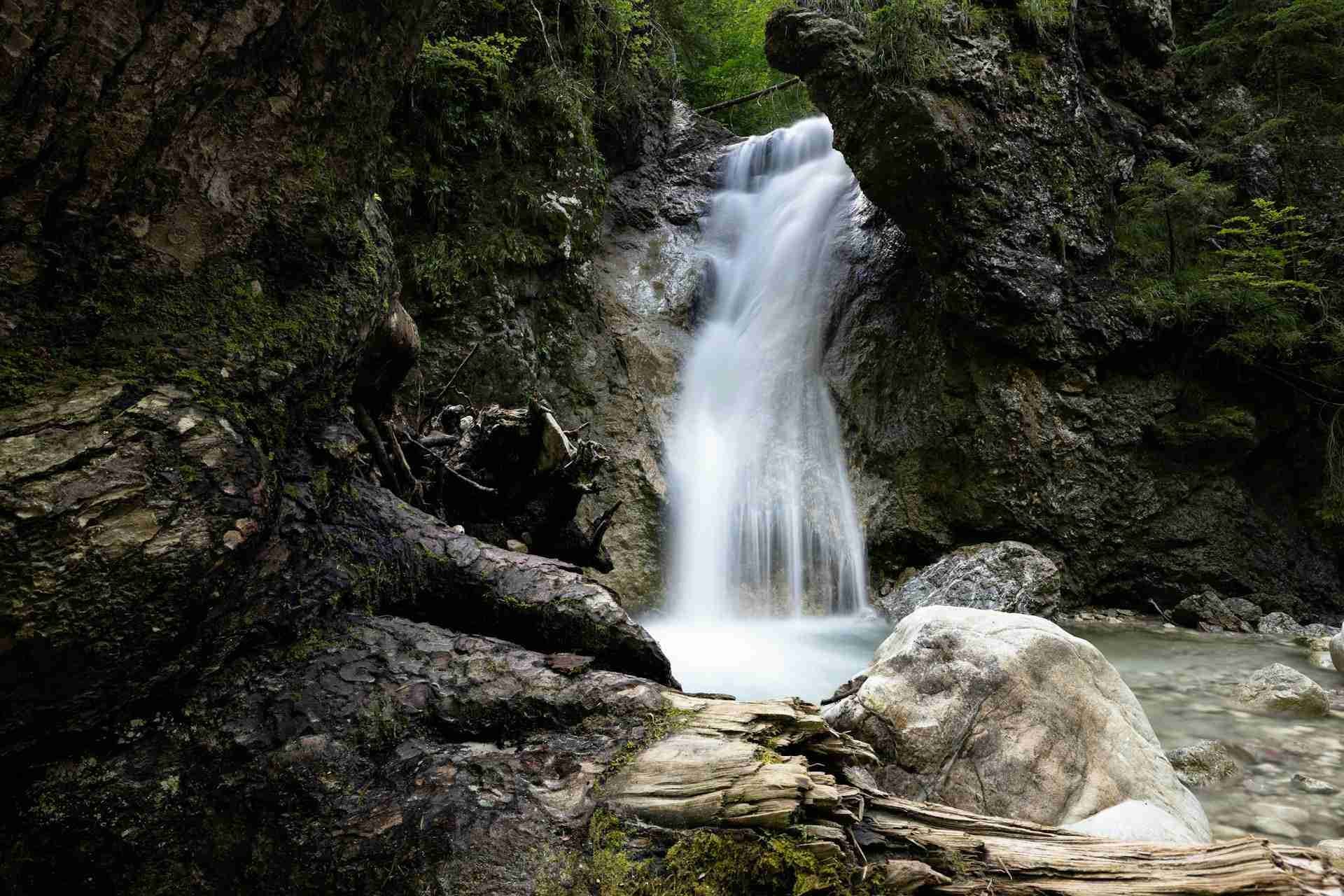
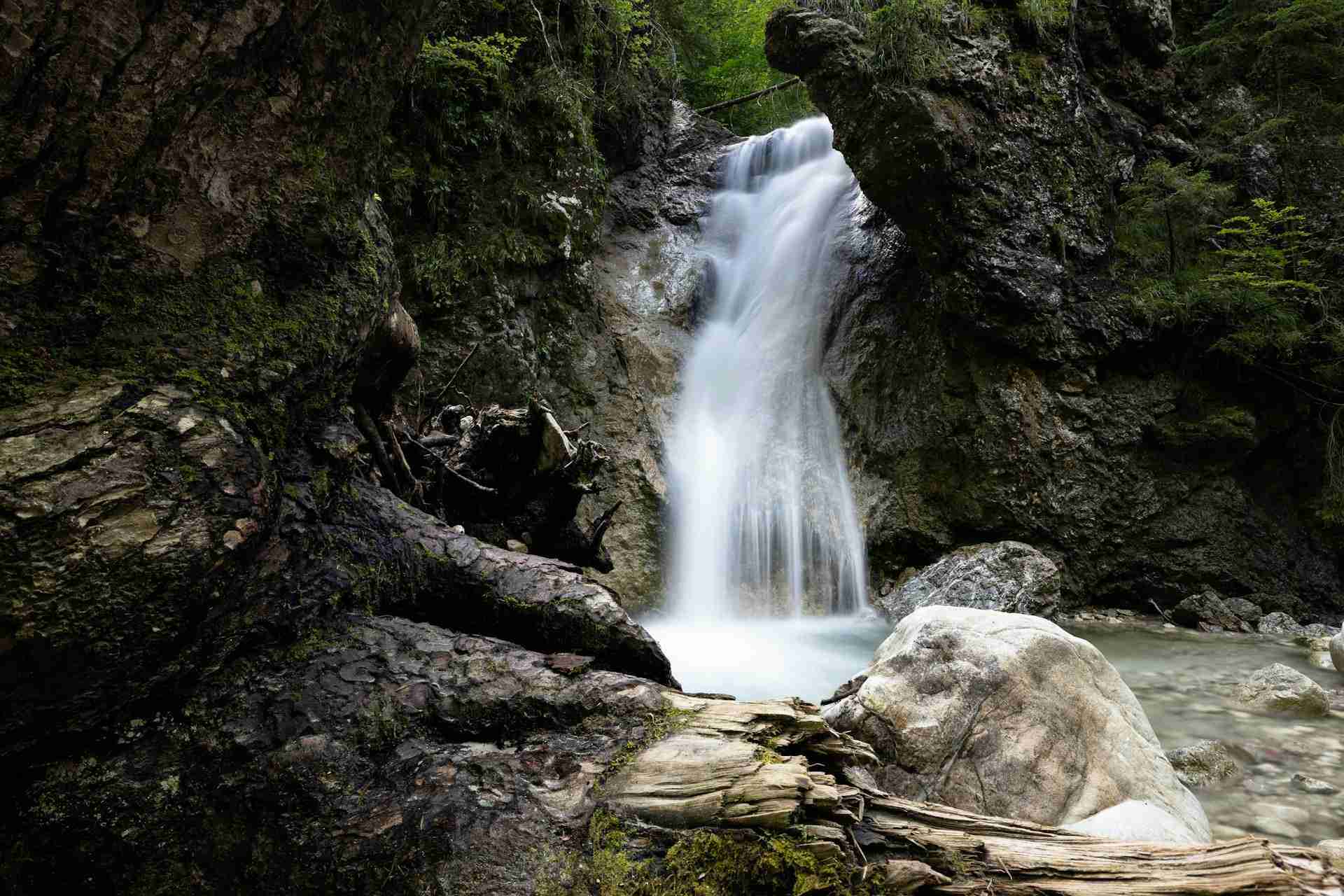
Tucked into a quiet stretch of the Ammergau Alps near Unterammergau, Schleifmühlklamm is a narrow gorge shaped by centuries of flowing water and human labor. Once the site of whetstone mills, this steep ravine now invites photographers to follow its twisting trail through moss-covered rock, tumbling cascades, and footbridges that hang just above the rushing stream. The gorge is intimate in scale but rich in variation, with soft forest light filtering through the canopy and pockets of movement and stillness at every bend. For those looking to photograph dynamic water scenes, natural texture, and woodland mood, Schleifmühlklamm delivers both challenge and reward within a short walk.
Best Photography Opportunities
• Stepped Waterfalls Near the Trailhead
Just beyond the entrance, the gorge begins with a series of stepped waterfalls that are close enough to the path for stable tripod placement. These falls are perfect for long exposure work, with fast-moving water tumbling over dark, algae-lined stone. A sturdy tripod and ND filter allow for shutter speeds long enough to soften the motion while retaining the contrast of jagged rock. Framing is tight here, so a wide-angle lens is essential. This scene works best under overcast skies or in early morning when the light is diffuse and even across the scene.
• Bridge Viewpoints Over Cascades
Several small footbridges cross the gorge, offering top-down perspectives of the stream as it winds through the stone. From these bridges, you can shoot directly into the falls or use the curving stream to lead the eye through the frame. A mid-range zoom lens offers the flexibility to go wide for environmental shots or tighter for abstract studies of water and texture. Shooting just after rain adds volume to the flow and darkens the rock, creating a stronger sense of contrast. Use a polarizer to reduce glare on wet surfaces and enhance the green tones of surrounding moss.
• Moss-Covered Stone and Stream Interplay
The gorge's sides are draped in bright green moss, ferns, and ivy that create soft counterpoints to the angular rock. Shooting at stream level allows you to combine these textures in layered compositions where still and moving elements play off each other. Look for small pools or quiet eddies where leaves float or light pools in corners of the rock. These compositions benefit from overcast skies and careful manual focus to preserve detail throughout. A 24–70mm lens works well here, letting you shift from wide environmental frames to tighter texture studies without changing lenses in damp conditions.
• Wooden Footpaths Framed by Forest
As the gorge rises, sections of wooden planks run parallel to the stream, framed by rising stone and leaning trees. These paths can be used as leading lines in the composition, particularly when they recede into soft light or curve with the rock walls. Photographing these sections during early morning or late afternoon lets the angled light filter through the trees and pick out texture in the wood and stone. Including a person in the frame provides scale and draws attention to the narrowness of the gorge. Tripod placement can be difficult here, so stabilize your camera with a wall or railing if needed.
• Upper Gorge Pools and Water Threads
At the higher reaches of the trail, the stream narrows and descends in more delicate threads rather than full cascades. These smaller falls and pools offer an opportunity for minimal, detail-rich compositions. Using a longer lens, you can isolate rivulets, reflections, and lichen-covered stone. Shooting with a small aperture ensures sharpness across the shallow depth, while an ND filter helps retain the motion blur of the water without overexposing brighter highlights. These scenes are strongest under diffuse light or soft shadow, which preserves subtle tonal transitions across the water and rock.
Best Time to Visit
Schleifmühlklamm is at its best from late spring through early autumn. In May and June, the surrounding forest is fully green and water levels are typically high from snowmelt, creating strong flow and vibrant color. Early mornings in spring offer quiet paths, clean light, and a higher chance of mist or moisture in the air that enhances texture and contrast. The moss and stone appear especially vivid after overnight rain or cloud cover.
Summer brings steady light and more foot traffic, but the forest canopy provides natural shade throughout the day. Even in midday, the gorge remains photographable thanks to the soft, filtered light. Shooting after rainfall adds depth and movement, but be cautious on slippery paths.
Autumn changes the color palette dramatically. The gorge becomes rich with gold and rust-colored leaves, many of which settle in the stream or on moss-covered rocks. These conditions make for beautiful long exposure work, with blurred water contrasting against warm-toned debris and stone. Late October often delivers the best color, but weather becomes more changeable, so flexibility is essential.
Winter reduces access and alters the scene. Snow or ice can block paths and obscure footing, but in milder conditions, the frozen edges of the stream create graphic compositions. Water flow is lower, but texture and contrast remain strong. If visiting in winter, check local trail conditions before arrival.
How to Get There
Schleifmühlklamm is located near the town of Unterammergau in Bavaria, Germany. The trailhead begins at the southern end of Pürschlingstraße, where a small parking area and signposted entrance mark the start of the walk. The gorge path is clearly marked and follows the stream closely for most of its course, with several footbridges and handrails in steep sections. The trail is approximately 1.5 kilometers long and climbs steadily but gently toward the Schleifmühle ruins and the base of Pürschling.
There is no fee to enter the gorge, but parking may be limited during weekends and holidays. Arrive early in the morning to ensure space and avoid crowds. Sturdy hiking shoes with good grip are essential, as the path is frequently wet and uneven. The gorge is not suitable for tripods with large footprints in narrow sections, so plan gear accordingly. There are no restrooms or services along the path, but Unterammergau is just a few minutes away by car or foot.
Recommended Photography Gear
To photograph Schleifmühlklamm effectively, a lightweight and weather-resistant setup is ideal. A full-frame camera body paired with a 16–35mm wide-angle lens allows you to capture tight interiors, cascading water, and the forest canopy. A 24–70mm lens offers additional flexibility for switching between broad views and mid-range details. A compact 70–200mm telephoto can help isolate distant water patterns or compress layers of moss and stone.
A tripod with extendable legs and rubber feet is important for long exposures near the water, but consider a lightweight travel version to avoid bulk in tight areas. Bring a polarizing filter to reduce glare and enhance color in wet scenes. A 3-stop or 6-stop ND filter allows for water blurring in shaded areas without overexposing highlights.
Waterproof boots, a microfiber cloth, and a weather-sealed camera bag are essential. The spray from the stream, especially in spring, will fog or wet your gear if you're shooting close. Use a lens hood to help shield your front element from mist. A remote shutter release or timer helps maintain stability during longer exposures in narrow, elevated positions.
Nearby Photography Locations
A calm, reflective alpine lake just north of Unterammergau. It is especially photogenic at sunrise when the sky colors reflect off the water and light fog drifts across the surface.
One of King Ludwig II's palaces, Linderhof offers formal gardens, statues, and dramatic mountain backdrops. The symmetry and baroque details work beautifully in early morning or evening light.
From the top of the gorge, trails lead toward Pürschling and its panoramic views across the Ammergau Alps. These higher elevations are excellent for wide landscape compositions at sunset or in clear weather.
Located a short drive away, this large Benedictine monastery features detailed facades, domes, and well-tended grounds. It is ideal for architectural photography, especially under changing light.
Located in nearby Farchant, these tall and narrow falls cascade down a forested slope and are perfect for long exposure work. They offer a slightly wilder feel compared to the controlled flow of Schleifmühlklamm.
Schleifmühlklamm is a study in contrast and rhythm. Its narrowness demands focus, its textures reward close observation, and its light shifts by the minute. This is not a place of broad alpine views but of details carved by water and time, perfect for photographers who appreciate subtle movement and the quiet beauty of stone and stream.
Comments
Loading comments…