
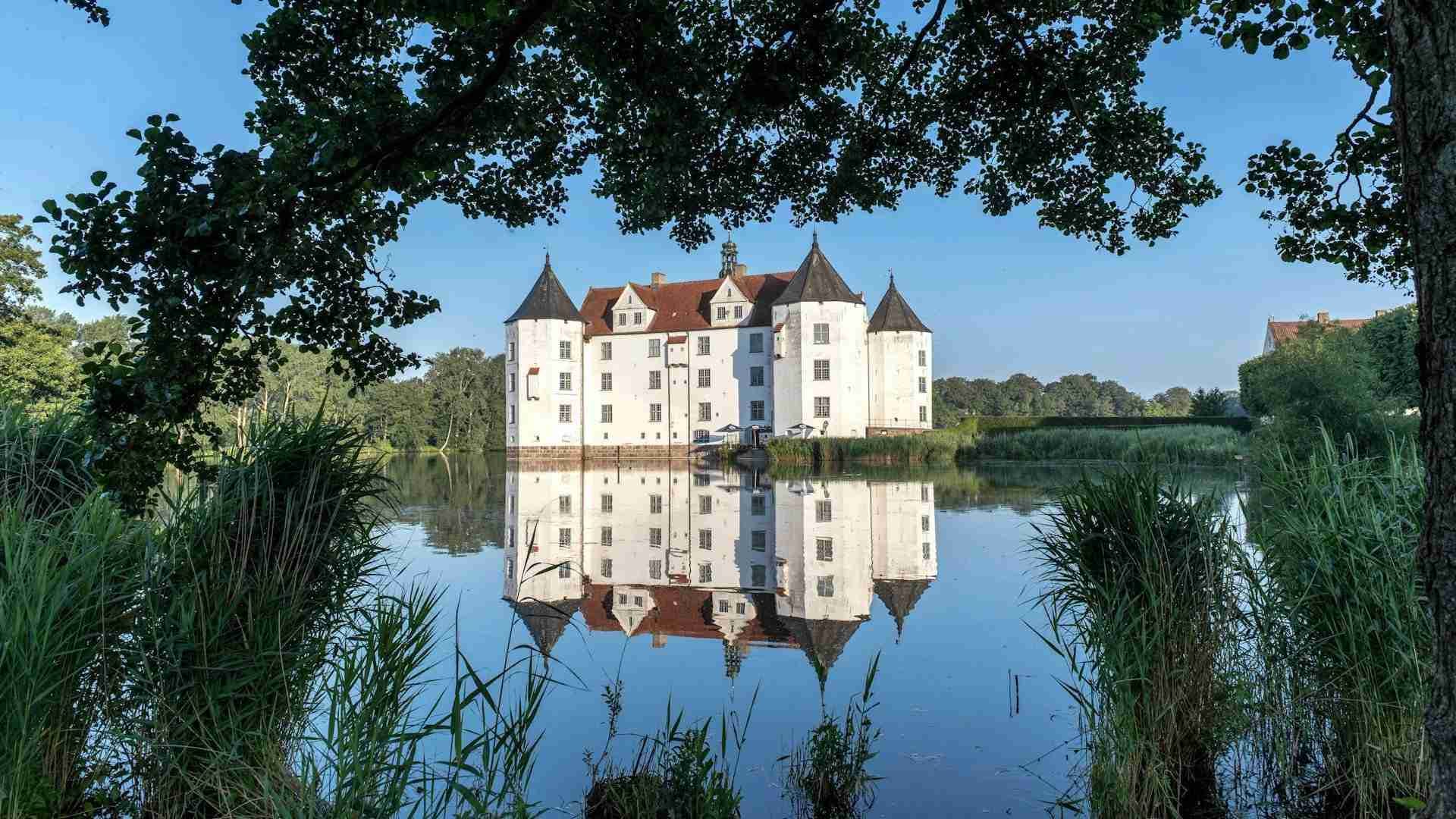
Set upon the still waters of a serene moat in Schleswig-Holstein, Schloss Glücksburg
stands as one of Germany's most iconic Renaissance water castles. Its pristine white façade, symmetrical gables, and mirrored reflection have drawn artists and photographers for centuries. Built in the 16th century as a ducal residence, this moated castle now serves as both a museum and an enduring symbol of northern German architecture. With its formal gardens, glassy water, and seasonal light, Glücksburg offers photographers a diverse and atmospheric setting—equally suited to grand wide-angle compositions and subtle studies in symmetry, color, and time.
Best Photography Opportunities
• Main Castle Reflection from Across the Moat
: The defining shot of Schloss Glücksburg is from the opposite bank of the moat, where its pristine white walls and elegant turrets reflect cleanly on calm water. This symmetrical scene is best captured early in the morning when the wind is still and the light is soft. Use a wide or standard lens to capture the entirety of the structure with reflection, and position yourself low to the waterline for a painterly effect. Misty mornings or soft overcast skies enhance the mood without sacrificing detail.
• Architectural Symmetry and Renaissance Detail
: The castle's quadrangular layout, steep gables, and octagonal corner towers make it an ideal subject for formal composition. Frame these features using centered or diagonal perspectives to highlight balance and proportion. A mid-range zoom or 50mm prime lens will allow you to frame specific elevations while retaining background context, such as the tree line or clouds reflected in the moat. The whitewashed exterior can glow warmly at golden hour, especially in late autumn when surrounding trees add complementary color.
• Courtyard and Inner Details
: Once inside, the inner courtyard offers angles that are less commonly seen—arched doorways, stepped gables, and interior galleries. These spaces are ideal for exploring line, rhythm, and shadow play, especially during mid-morning when sunlight cuts across the inner walls. Use a 24–70mm lens to frame both structural detail and larger architectural context. Pay attention to repeating windows and the aged textures of stone and timber beams.
• Formal Gardens and Seasonal Plantings
: The manicured gardens surrounding the castle provide excellent foreground interest, particularly in spring and summer. Framing the castle through blooming hedges or arching branches softens the formality of the structure and introduces natural contrast. In autumn, fallen leaves add rich texture to paths and lawns. Look for reflections not just in the moat, but in water droplets on petals, or curved branches framing the towers.
• Twilight and Blue Hour Photography
: The castle is softly lit in the evening, with warm spotlights casting a glow on the façade and subtle illumination along the moat's edge. During blue hour, the balance of ambient light and artificial glow makes for striking long exposures, especially when the water is calm. Use a tripod and low ISO for clean, noise-free images. Bracketing exposures can help manage dynamic range, particularly in areas where the lights hit stone directly.
Best Time to Visit
Schloss Glücksburg is photogenic in all seasons, but certain months offer more dramatic variation and control over light. Spring and early summer bring vivid green foliage and flowering borders, ideal for layering in natural elements and photographing with vibrant colors. Morning sessions in May and June benefit from early sunrise light and still water, which together create near-perfect reflection conditions.
Autumn brings the most atmospheric change. The castle's bright façade contrasts beautifully with orange and russet foliage. Morning mist rising off the moat and long evening shadows add a storybook quality to compositions. This season also sees fewer crowds, making it easier to set up tripods and wait for the right light.
Winter offers a minimalist palette of snow, bare branches, and low-angled sun. When the moat partially freezes or reflects a frost-laced sky, the visual quiet enhances the structure's stately presence. Blue hour in winter lasts longer and can be used to great effect with architectural lighting, especially during the holidays when decorative lights are added.
Summer afternoons are bright and busy—better suited to detail work or tighter compositions that crop out visitors. For more control over shadow and contrast, overcast days allow you to shoot longer without harsh highlights. Regardless of season, mornings and late afternoons remain the most favorable times for light, tone, and tranquility.
How to Get There
Schloss Glücksburg is located in the town of Glücksburg on the Flensburg Fjord in northern Germany, not far from the Danish border. The castle is easily accessible by car, with well-marked routes from Flensburg (about 10 kilometers away) and ample parking available in designated lots near the entrance. From there, it's a short walk through the town and gardens to reach the castle grounds.
For public transit users, regional buses run regularly from Flensburg to Glücksburg, with stops just a few minutes from the castle. Bicycles are a popular option in the warmer months, with dedicated paths connecting surrounding towns along the coast.
The castle grounds are open to the public year-round, and the interior museum can be visited with a ticket during standard hours. Most of the best exterior photo locations, including the moat perimeter, are accessible without entry. There are benches, walkways, and low walls that serve as ideal platforms for tripod use, and restroom and café facilities are available on-site or in the town center.
Recommended Gear and Shooting Tips
Photographing Schloss Glücksburg benefits from a gear setup that balances flexibility with control. A wide-angle lens (16–35mm) is essential for capturing the full breadth of the castle and its reflection, especially when working from close to the water. A standard zoom (24–70mm) provides the range needed for courtyard and architectural detail work. For texture studies or compressed landscape scenes involving trees and distant elements, a short telephoto (70–200mm) is recommended.
A tripod is essential for low-light or blue hour shooting, and particularly useful when bracketing exposures around sunrise and sunset. Polarizing filters help deepen sky contrast and reduce glare on the moat, but should be used sparingly to avoid uneven reflection when working wide. Neutral density filters are helpful for long exposure work, especially when softening ripple movement on breezier days.
Weather in northern Germany can shift quickly, so bring lens cloths and weather protection, particularly for winter and autumn shoots. Comfortable walking shoes are also essential, as you'll be moving around the perimeter and through uneven garden paths. If you're planning to photograph during sunrise or twilight hours, scout your vantage points ahead of time, as light changes quickly and composition space can be limited near the best reflections.
Nearby Photography Locations
: Just a short drive northwest, the historic harbor of Flensburg offers maritime scenes, wooden piers, and colorful townhouses along cobbled streets. It's especially photogenic in early evening light and around the shipyards where old schooners dock.
: Located on the Baltic coast just northeast of Glücksburg, this nature reserve features beaches, cliffs, and sweeping views of the Flensburg Fjord. It's ideal for landscape and seascape photographers looking for sunrise skies and layered horizons.
• Glücksburg Beach and Promenade
: Just a few minutes' walk from the castle, the town's small beachfront offers a tranquil location for sunrise water photography, with docks, boats, and tree-lined shores that catch the morning light.
• Ostseeheilbad Damp and Viking Museum Haithabu
: A bit farther afield but well worth the drive, these sites offer dramatic coastline compositions and historic reconstructions that complement the architectural photography of Schloss Glücksburg.
• Schloss Gottorf in Schleswig
: A baroque-era castle with expansive grounds and museums, Schloss Gottorf makes an excellent pairing with Glücksburg for photographers interested in castle architecture and formal gardens across historical periods.
Schloss Glücksburg is a study in serenity, symmetry, and light. Whether reflected perfectly in its own moat or silhouetted against a changing sky, it offers photographers a timeless, contemplative canvas—where the interplay of water, stone, and shadow continues to enchant through every season and frame. Let me know when you're ready for the next destination, and I'll keep everything consistent with this format.
Comments
Loading comments…