
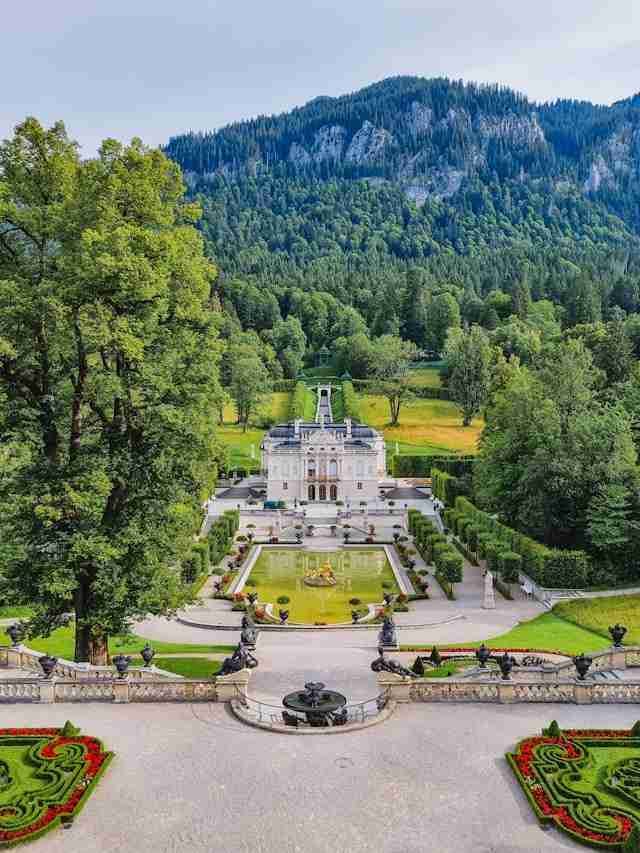
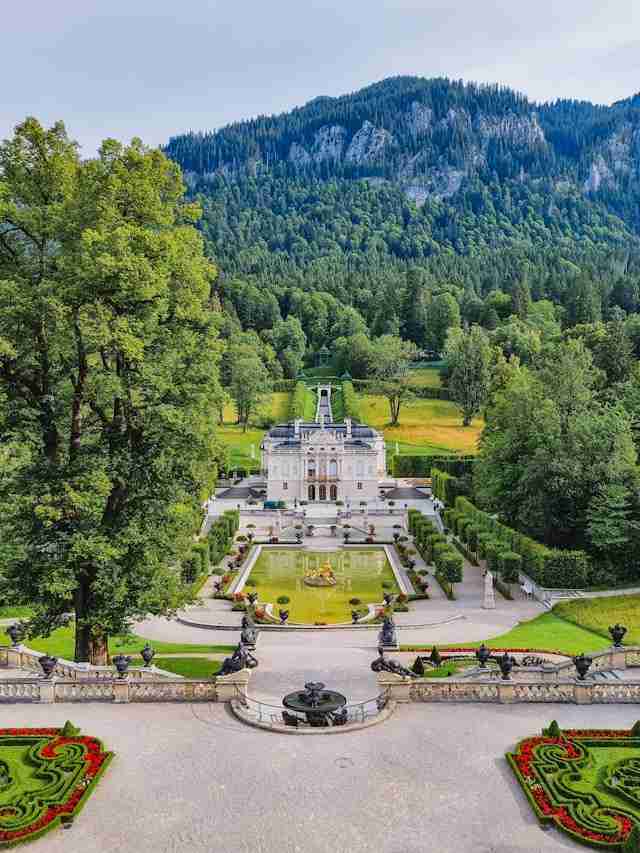
Schloss Linderhof is the most intimate of King Ludwig II's Bavarian palaces, yet its photographic appeal is anything but modest. Tucked into a quiet valley near Ettal and backed by the Ammergau Alps, this ornate estate combines French Rococo extravagance with meticulously maintained gardens, terraced paths, and reflective pools. While its interiors are closed to photography, the grounds are a dream for landscape, architectural, and detail work. Gold statuary glows against deep green forest, fountains rise in symmetry, and light slips across manicured hedges and mirrored surfaces. Whether you're shooting under soft morning clouds or during the golden fall, Linderhof delivers rich visual variety in a surprisingly compact setting.
Best Photography Opportunities
• Front Fountain and Palace Reflection
The central axis of the garden features a long, narrow pool ending at the front steps of the palace. On calm mornings, this pool offers perfect reflections of the façade, complete with its gilded ornamentation and sculptural figures. To best capture this symmetry, use a wide-angle lens and shoot low from the edge of the pool. A tripod is helpful for maintaining alignment and allowing slower shutter speeds in lower light. Early morning is best, before the breeze or foot traffic disrupts the water. Slight cloud cover helps to avoid harsh contrast on the building's white stone.
• The Cascading Terraces Behind the Palace
Behind the palace, a series of terraces and steps rise up the slope toward the Neptune Fountain. From the upper levels, you can shoot back down toward the palace with the surrounding forest and mountains in frame. This viewpoint is strongest during golden hour when the soft light warms the stone and creates shadow layers across the steps. A mid-range zoom lens allows you to adjust framing between wide garden scenes and tighter architectural details. Including human figures or statuary on the steps can help convey scale and symmetry.
• Statues and Garden Details in Soft Light
Linderhof's gardens are filled with sculpted figures, urns, and balustrades that respond beautifully to diffuse light. Overcast skies or shaded conditions let you work with the subtle texture and patina on the gold and stone surfaces. Look for opportunities to frame these elements against hedge lines, distant fountains, or the forest beyond. A prime lens around 50mm gives you shallow depth of field for detail shots, especially when isolating one figure or decorative feature. These compositions are especially rewarding in the quiet early hours before the grounds fill with visitors.
• Long Perspectives Along Garden Paths
The symmetrical layout of Linderhof's park creates strong visual lines and layered depth along its central paths. Shooting with a longer focal length flattens these lines and emphasizes the repetition of trees, urns, or benches. These scenes benefit from soft side light or slight haze, which adds atmosphere without overpowering detail. Compose with attention to balance and spacing, using the vanishing point to draw the viewer through the image. Autumn color adds warmth and contrast to these formal compositions, especially under a soft sky.
• Framing with Foreground Ornamentation
Many of Linderhof's most interesting compositions come from framing larger structures through arches, statues, or gates. Using a wide lens and a low position, you can place foreground objects out of focus while highlighting the palace or landscape beyond. These layered shots require careful metering and focus control, but they create a sense of depth and setting that goes beyond straightforward architecture photography. Try shooting during different times of day to experiment with light and shadow across the foreground elements.
Best Time to Visit
Spring and autumn are the most rewarding seasons to photograph Schloss Linderhof. In late April and May, the gardens are at their freshest, with bright greens and blooming flowers adding contrast to the palace's clean lines. Mornings offer soft light, quieter paths, and calm water for reflections. The surrounding mountains still carry snow in spring, which adds texture to distant backgrounds.
Autumn brings rich earth tones to the forested backdrop and warm light that enhances the stone and gold detailing. Early October is especially good for morning mist, long shadows, and textured skies. This is also when sunlight enters at a lower angle, giving definition to the fountain sculptures and terraces.
Summer offers long shooting hours and the full grandeur of the gardens in bloom. However, light can be harsh by midday and the palace grounds attract more visitors. Shoot early or late in the day to avoid strong shadows and foot traffic in your compositions.
Winter transforms Linderhof into a more minimalist scene. The gardens are subdued, but the symmetry of the layout and the structure of the trees remain powerful. Snow adds clarity and softness, and the mountains become a dominant visual element. Some parts of the grounds may be closed in heavy snow, so check access ahead of time.
How to Get There
Schloss Linderhof is located in the Graswang Valley near Ettal, Germany. The most common approach is by car, with parking available in a large lot just a short walk from the palace entrance. If arriving from Garmisch-Partenkirchen, plan for a 45-minute drive through scenic mountain roads. From Munich, the journey takes roughly two hours.
Public transport is also possible via train to Oberammergau, followed by a connecting bus to the Linderhof stop. The palace grounds are open year-round, though hours vary by season. Entrance to the park is free, but interior access to the palace requires a ticket and does not allow photography. Tripods are permitted in the garden areas but should be used with care during busy periods. Early morning is the best time for both light and space to work.
Recommended Photography Gear
To make the most of a photography session at Linderhof, bring a flexible lens kit that includes wide, mid-range, and moderate telephoto coverage. A 16–35mm lens is ideal for capturing the palace, fountains, and tight garden perspectives with foreground interest. A 24–70mm is perfect for walking the grounds and capturing both environmental context and closer architectural details. A 70–200mm lens allows you to compress the garden's long paths and isolate statues or building fragments against soft backgrounds.
A tripod is recommended for sunrise or blue hour work, as well as for careful compositions involving reflection or symmetry. A polarizing filter helps manage reflections on water and deepens sky tones, particularly useful when shooting in strong sunlight. Consider a neutral density filter for smoothing fountain motion or slowing down shutter speed in high contrast scenes.
Pack a lens cloth, as mist from the fountains can carry across the gardens, especially on windy days. A lightweight camera bag makes walking the full grounds easier, and waterproof footwear is useful in the spring or after rain. There's no need for hiking gear, but comfort and mobility will improve your ability to move between points efficiently.
Nearby Photography Locations
Known for its painted buildings and woodcarving traditions, Oberammergau is full of charming facades, narrow lanes, and mountain backdrops. It is especially photogenic in soft morning or evening light.
A short drive from Linderhof, this large Baroque monastery offers ornate interiors, dramatic domes, and expansive grounds. It's a strong option for architectural and detail photography.
Located across the Austrian border, this alpine lake delivers clear water, dramatic peaks, and early morning mist that pairs well with wide landscape compositions. It's ideal for sunrise sessions.
A narrow woodland gorge with waterfalls and rock formations, Schleifmühlklamm is excellent for long exposures and moody natural compositions. It contrasts nicely with the formality of Linderhof.
• Zugspitze and Eibsee
Germany's highest peak and the lake below it offer panoramic mountain views and alpine reflections. These are full-day photography destinations that pair well with an extended visit in the region.
Schloss Linderhof is a study in planned perfection, yet it remains deeply responsive to light and season. Its curves and corners change character with each hour of the day. For photographers, it's not just a palace to document, but a setting to interpret—through reflections, shadow, structure, and scene.
Comments
Loading comments…