
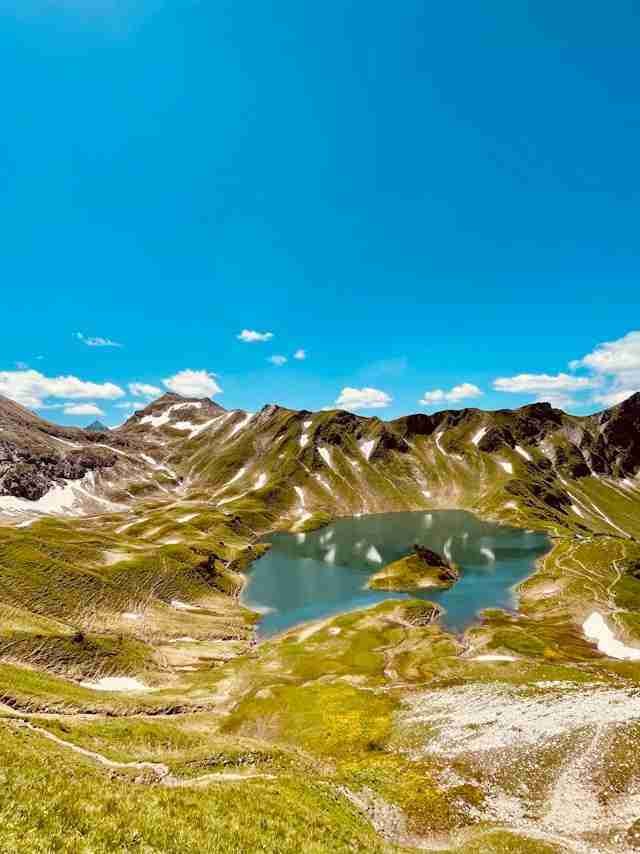
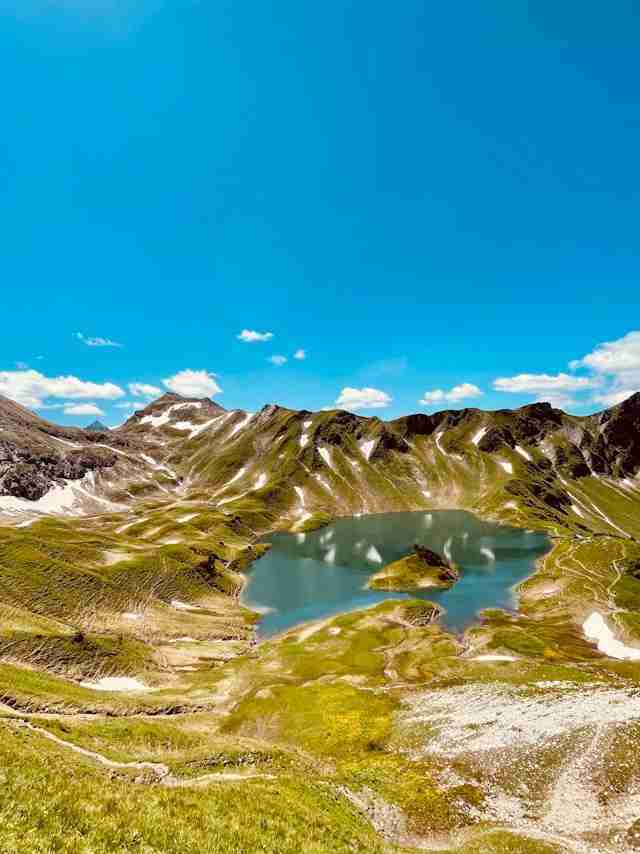
Schrecksee is a high-altitude alpine lake tucked away in the Allgäu Alps, surrounded by rugged peaks and rolling green pastures. Sitting at an elevation of about 1,813 meters, it might be one of the most beautiful mountain lakes in Germany. Its small island, positioned almost perfectly in the center of the water, creates a focal point that sets it apart from most alpine lakes. The lake's reflective surface mirrors the surrounding mountains on calm days, while in early or late season, lingering snow patches add contrast to the lush slopes. Schrecksee is accessible only by a long and steep hike, which means it retains a quiet, remote atmosphere that feels untouched. For photographers willing to make the journey, it offers compositions that range from broad landscapes to delicate detail shots of alpine flora.
Best Photography Opportunities
• Island-Centered Wide View
: From elevated points along the hiking trail as you approach the lake, you can capture a full view of Schrecksee with its island framed by the surrounding peaks. A wide-angle lens works best here to include both the lake and the dramatic ridgelines in a single shot. Early morning light adds softness to the water's reflection, while late afternoon creates warm highlights on the slopes. On calm days, the mirror-like quality of the lake is especially striking, making for symmetrical compositions. Including a section of the trail or foreground flowers can add depth and lead the viewer's eye toward the water.
• Reflections from the Shoreline
: Getting down to the water's edge opens up opportunities for clean, symmetrical images with the mountains mirrored in the lake. A mid-range zoom allows you to adjust framing to either focus on the island or include more of the surrounding peaks. Overcast conditions create even lighting for a pure reflection, while clear skies can produce vivid blues and greens. Positioning the horizon line slightly off-center keeps the composition dynamic while still taking advantage of the reflection's symmetry. Early morning is best for calm water before any wind disturbs the surface.
• Detail Photography of Alpine Flora
: In summer, the meadows around Schrecksee burst with wildflowers, providing colorful foregrounds against the backdrop of the lake. A macro lens or telephoto zoom can isolate individual blossoms with the blurred water behind them. Side lighting brings out textures in the petals and stems, while soft overcast light allows for rich color without harsh contrast. Flowers such as alpine gentians and buttercups are common here, adding blues and yellows to your frame. Combining these close-up shots with wider landscapes creates a well-rounded series from the location.
• High Vantage Points from Surrounding Slopes
: By hiking up the slopes and ridgelines above the lake, you can find elevated positions that reveal the full layout of Schrecksee, the island, and the valley beyond. These viewpoints are ideal for showing the lake's position in the broader landscape. A telephoto lens can compress the distance between peaks, giving a sense of enclosure around the lake. Early morning light from the east illuminates the far side of the lake, while afternoon light warms the slopes in the foreground. These perspectives work especially well when clouds drift through the valleys, adding layers of atmosphere.
• Changing Seasons and Ice Patterns
: In early summer, melting ice can form intricate shapes and floating patterns on the lake surface, while autumn brings golden grasses and a quieter feel to the scene. A wide-angle lens is useful for capturing these seasonal changes alongside the mountains. Reflections become more muted during windy conditions, so adjusting shutter speed for either frozen motion or soft blur can give different interpretations. Shooting in the shoulder seasons also means fewer hikers, making it easier to capture an undisturbed scene. This is a rewarding approach for those who like to revisit locations and build a seasonal portfolio.
Best Time to Visit
Schrecksee is most accessible from late June to early October, when the snow has melted from the trails and the alpine meadows are open. July and August bring the most vibrant greens and abundant wildflowers, though these months are also the busiest. Visiting early in the morning or on weekdays helps avoid crowds. Early summer often offers a mix of snow patches and fresh vegetation, adding contrast to wide shots.
Autumn, from mid-September to early October, offers a quieter experience, with golden tones in the grass and crisp, clear air. Early mornings are best for calm reflections and soft light, while afternoons provide warmer tones on the surrounding slopes. Overcast days are ideal for detail work and reflection shots without harsh glare. The lake's high elevation means weather can change rapidly, so being prepared for shifting light is key. Winter access is limited and generally requires mountaineering experience, but for those equipped, the snow-covered landscape is striking.
How to Get There
The starting point for reaching Schrecksee is typically the village of Hinterstein in the Bad Hindelang municipality. From here, you can take a shuttle bus or drive to the trailhead at Giebelhaus. The hike to the lake is challenging, involving a steady ascent of several hundred meters over a distance of roughly 6 to 7 kilometers one way. The route is well-marked but requires good fitness and sturdy footwear.
The trail climbs through forests and alpine pastures before opening up to views of the surrounding peaks. There are no facilities at the lake, so bring all necessary food, water, and gear. Photography equipment should be packed in a comfortable, weather-resistant backpack. The return hike follows the same route, so plan for a full-day outing.
Recommended Photography Gear
A wide-angle lens in the 16 to 35 millimeter range is ideal for capturing the lake and surrounding peaks in a single frame. A 24 to 70 millimeter zoom provides flexibility for shoreline reflections and mid-range landscapes. A 70 to 200 millimeter telephoto lens is excellent for isolating the island, compressing the surrounding peaks, and photographing wildlife you may encounter along the trail.
A lightweight tripod is helpful for early morning or late evening shots when light levels are low. A polarizing filter reduces glare on the water and enhances the saturation of greens and blues. In summer, a macro lens can capture alpine flowers in detail. Weather protection for your gear is essential, as sudden changes in mountain weather can bring rain or fog. Comfortable, supportive hiking shoes and layered clothing will make the hike more manageable.
Nearby Photography Locations
• Hinterstein Village
: This small alpine village offers traditional Bavarian architecture, cobblestone streets, and a peaceful rural atmosphere. The surrounding meadows provide pastoral scenes with mountain backdrops.
: Located just across the border in Austria, this lake is accessible by a gentler hike and offers dramatic reflections of steep mountain walls. It is a good complement to Schrecksee for a multi-day photography trip.
: Reachable by cable car from Oberjoch, this peak provides panoramic views over the Allgäu Alps and into Austria. The summit area offers a variety of compositions with changing light throughout the day.
• Engeratsgundsee
: Another high-altitude lake in the area, surrounded by rugged terrain. It is less visited than Schrecksee, making it ideal for those seeking solitude in their landscape photography.
• Bad Hindelang Valley
: The valley below offers gentle meadow landscapes, winding rivers, and scattered farmhouses. These scenes work well in softer light conditions, such as early morning mist.
Schrecksee's remote location and dramatic setting make it one of Germany's most photogenic alpine lakes. For those willing to make the demanding hike, the reward is a landscape that offers both striking wide views and intimate details, all framed by the peaks of the Allgäu Alps.
Comments
Loading comments…