
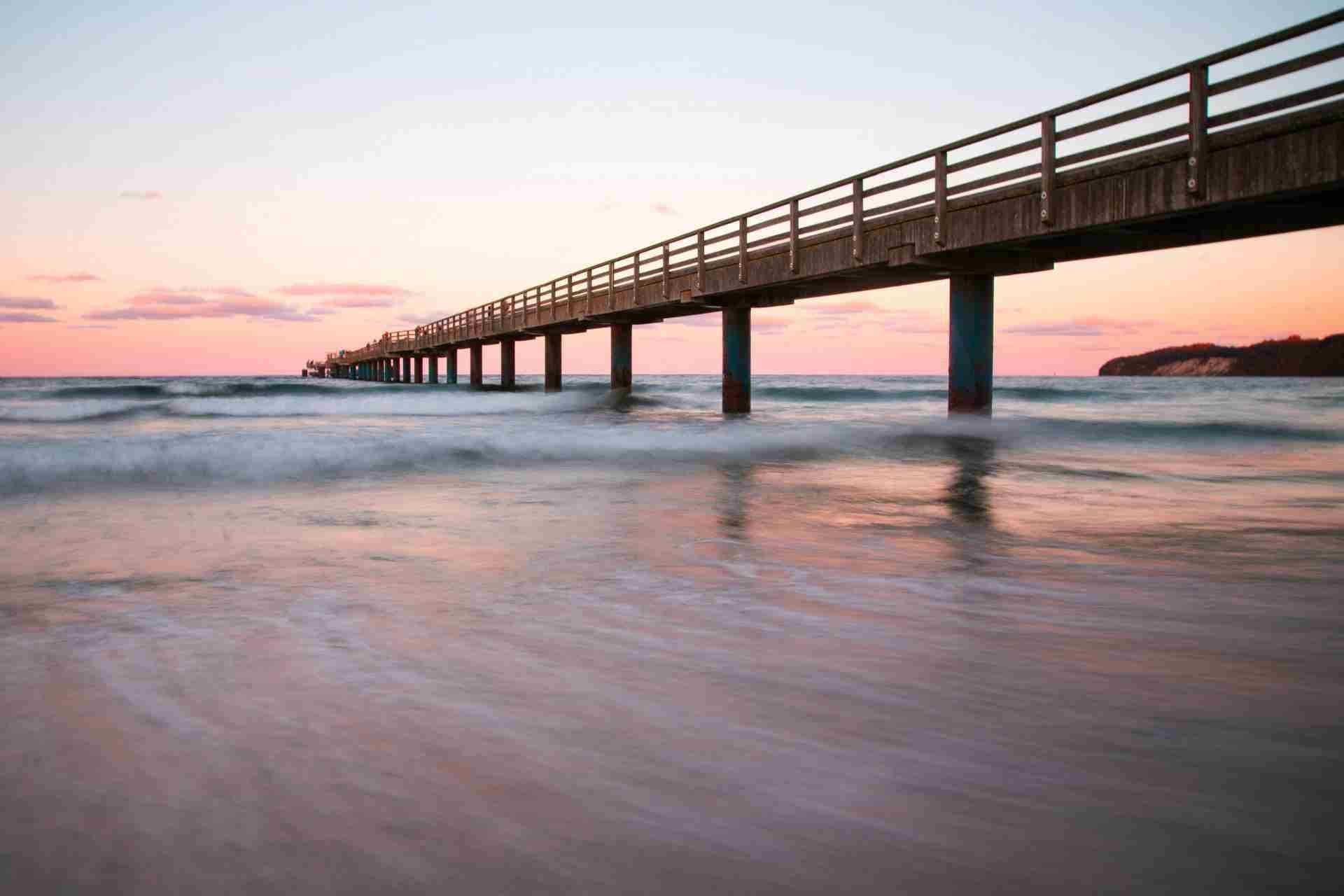
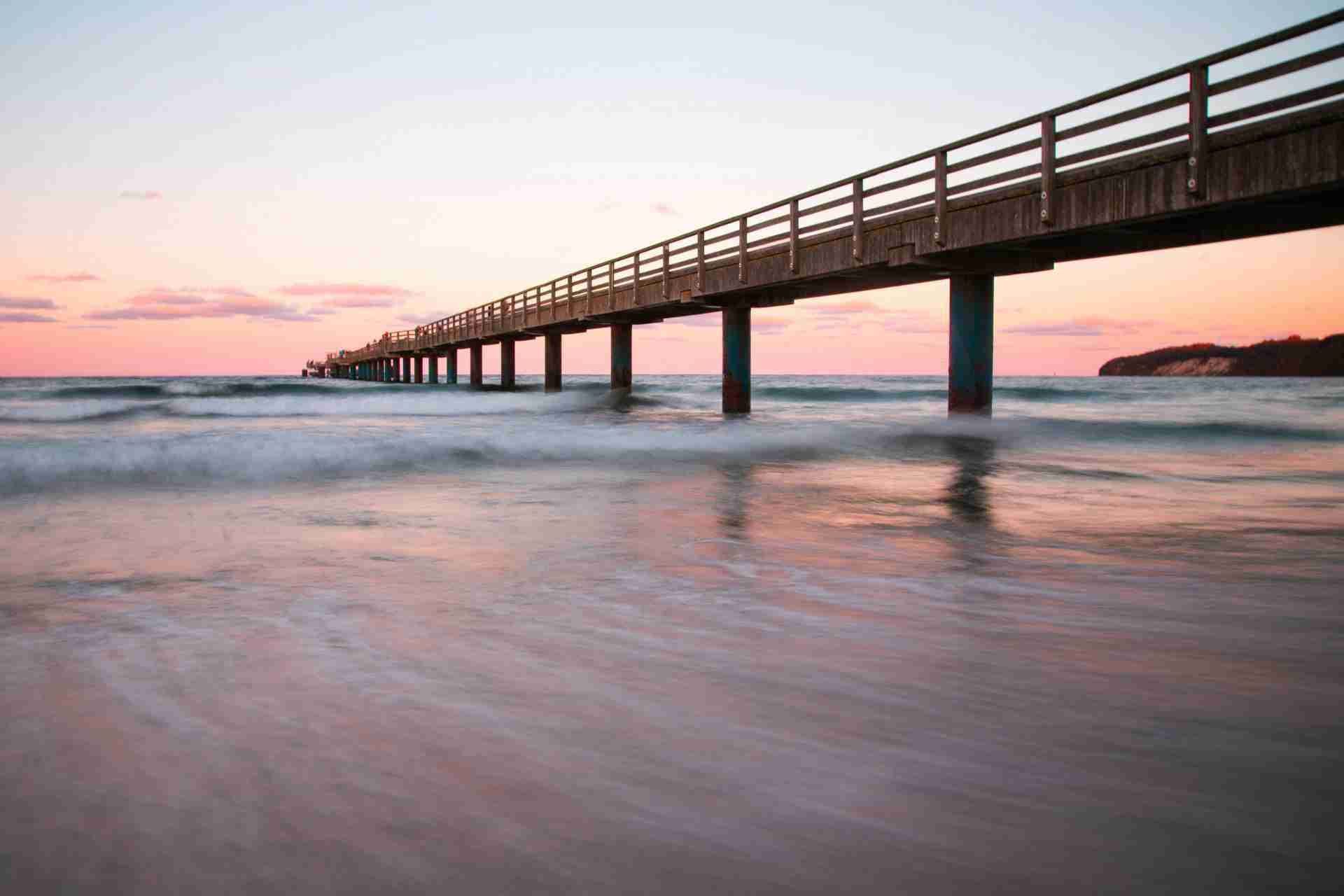
Stretching into the Baltic Sea from the resort town of Binz on Germany's Rügen Island, the Seebrücke Ostseebad Binz offers clean lines, soft horizon views, and a balance of natural and built elements that work well across many styles of photography. This long wooden pier leads out over pale water and soft sand, framed by villas, dunes, and the open curve of the bay. The sea here is often calm, and with subtle weather shifts, it can transform from blue and crisp to gray and minimal in a matter of minutes. The light in this part of the Baltic is especially gentle, often diffused by cloud cover or filtered by mist. For photographers interested in long exposures, architectural framing, or minimalist compositions, the pier and its surroundings offer a flexible and rewarding location.
Best Photography Opportunities
• Seebrücke from the Beach
The pier's clean, symmetrical structure makes it a strong subject when viewed straight on from the beach. A centered composition works well with the repeating supports and railing posts, especially at low tide when more of the base is visible. Overcast skies or early morning mist create a neutral backdrop that emphasizes the lines and soft textures of the sand and water. For more depth, you can include foreground elements like beach grass, groynes, or footprints leading toward the water. Shooting in black and white is also effective here when the color palette is flat, letting you work with form and contrast.
• Underneath the Pier
The view from directly underneath the structure is ideal for leading lines and centered symmetry. The posts draw the eye toward the horizon, especially in calm water when reflections double the pattern. Early morning or evening gives the best balance of light without harsh shadows under the pier. This spot works especially well with a wide angle lens and longer exposures, which blur the water surface while keeping the wood sharp. Be cautious of wet sand and changing tides if setting up close to the edge.
• Pier View Toward the Coastline
Walking out onto the pier and turning back toward the town gives you a sweeping view of the beachfront promenade, lined with early 20th century resort architecture. The buildings are painted in soft white and pastel tones and are best photographed in warm light when the sun rises behind the pier or sets off to the side. Using a longer focal length can help compress the boardwalk and highlight repeating rooflines. Cloudy skies add softness to the scene, while clearer conditions bring out the color in the water and buildings.
• Long Exposures Over the Sea
The open water beyond the pier is a great place for minimalist compositions, especially with longer shutter speeds that smooth the Baltic's surface. On days with moving clouds, a neutral density filter lets you capture streaked skies and softened water that emphasize the quiet tone of the location. A simple horizon line with one subject (like a buoy, boat, or bird) can anchor the frame. This approach works well during overcast weather or in the early evening when light levels are lower and the atmosphere becomes more subtle.
• Evening Light and Blue Hour
After sunset, the pier lights switch on and begin to glow against the cooler colors of dusk. This is a good time to work with reflections in the wet sand and shallow water along the shore. The balance of artificial light and fading natural color makes for clean compositions with a quiet tone. Using a tripod and a slow shutter allows you to smooth out foot traffic on the pier while keeping the structure crisp. Light trails from ferries or small boats can also add interest to longer exposures shot out to sea.
Best Time to Visit
The Seebrücke in Binz can be photographed year round, but spring through early autumn offers the most comfortable conditions. In late spring and early summer, the surrounding trees begin to fill in and the light lasts longer into the evening, giving you more time to work with changing skies. Summer brings busier beaches but also more stable weather, soft golden light at sunrise and sunset, and clear views across the bay. Early mornings are the best time to shoot the pier without people, especially in the peak travel months of July and August. Autumn is excellent for softer tones, changing skies, and fewer visitors. In winter, the beach can be almost empty, and the pier often looks striking against cold blue skies or snow covered dunes, though wind and moisture are more of a challenge.
Because the Baltic light is often soft and directional, you can work throughout the day with fewer problems from harsh contrast. Overcast days offer subtle color and even exposures, while clear sunrises and sunsets create long shadows across the beach and deep glow in the sky. Blue hour lasts longer in this part of Europe, especially in early spring and late autumn, giving you more flexibility to work with low light conditions before full darkness sets in.
How to Get There
Seebrücke Ostseebad Binz is located on the eastern shore of Rügen Island, in the town of Binz, which is one of Germany's most well known Baltic resorts. The town is easy to reach by train, with direct regional connections from major cities like Stralsund and Berlin via Bergen auf Rügen. Once in Binz, the pier is located directly off the main beach promenade and is easy to access on foot. Parking is available in several lots near the promenade, though they can fill quickly in summer. There are no fees to access the pier or beach, and photography is permitted at all hours. The paths and boardwalks are flat and well maintained, and tripods are welcome. Sunrise and sunset times vary throughout the year, but both are easily accessible from the shore with only a short walk from town.
Recommended Photography Gear
A wide angle lens in the 16 to 35 millimeter range is essential for working with the full structure of the pier, especially when composing from underneath or at the beach level. For compressing coastal buildings or pulling in distant details along the shoreline, a 70 to 200 millimeter lens is extremely helpful. If you are planning to shoot long exposures over the water, bring a sturdy tripod and a selection of neutral density filters, especially 6 and 10 stop options. A circular polarizer can also be useful for controlling reflections in the shallow water or wet sand, particularly when working with cloud reflections or during the golden hour.
Nearby Photography Locations
• Schmachter See
Just a short walk inland from the pier, this quiet freshwater lake is lined with reeds, small docks, and walking trails. It is best visited at sunrise, when the water is still and low fog sometimes settles over the surface. The western shore offers wide views and a more peaceful contrast to the main beach.
Perched on a wooded hill southeast of Binz, this 19th century hunting lodge offers panoramic views over the forest and coast. The tower staircase is excellent for architectural detail shots, and the walk through the beech woods can be especially photogenic in spring or autumn with soft, dappled light.
A short drive or train ride from Binz, Sellin Pier is one of the most photographed structures on Rügen. Its central building sits right on the sea, framed by curved stairs and a wide sandy beach. Sunrise is especially good here, with the light coming directly off the water behind the building.
• Prora Beach and Seaside Forest
North of Binz, the long stretch of beach at Prora is backed by pine forest and sand dunes. The area is quieter than the main promenade and has space to work with more open compositions. The forest paths just inland are great for layered woodland photography in soft light or mist.
• Jagdschloss Granitz Forest Trails
The network of trails surrounding Granitz Lodge includes open meadows, stone paths, and tree lined corridors that work well for both color and black and white compositions. These trails are less crowded than the main Binz promenade and offer a different feel just minutes away from the coast.
The Seebrücke in Binz combines the structure of a man made landmark with the soft transitions of sea, sky, and sand, making it a great place for quiet, minimal, and well-planned photography. Whether you're shooting long exposures out over the Baltic or working with evening light along the beach, the area offers a full range of visual options in a calm, coastal setting.
Comments
Loading comments…