
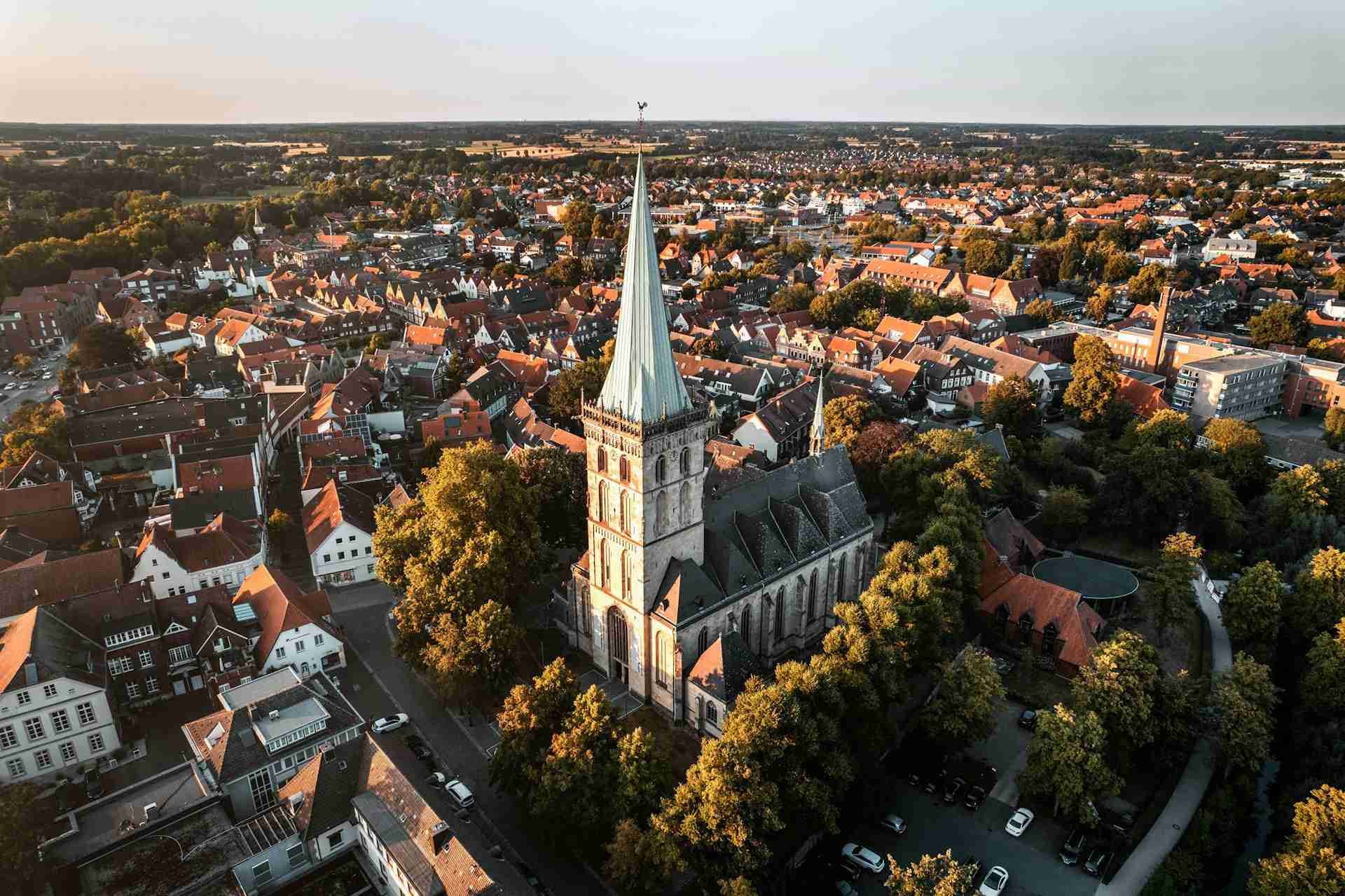
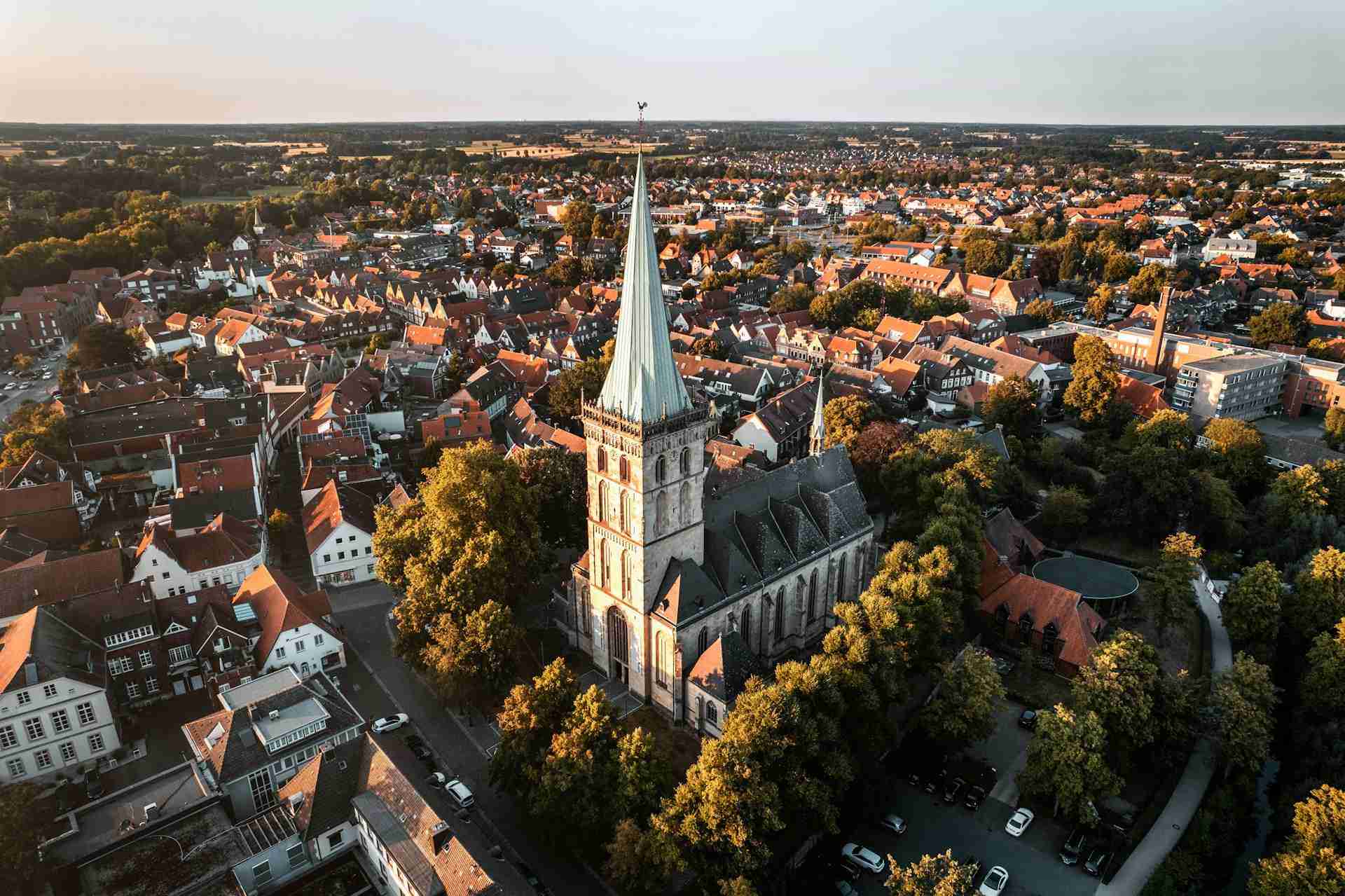
In the town of Lüdinghausen, where canals wind through quiet streets and medieval towers still keep watch, St. Felizitas Catholic Church stands with a quiet sense of permanence. This parish church, with its tall Gothic spire and well-worn sandstone, is more than a local landmark. It is a structural rhythm of arches, lancet windows, and square-cut stone that anchors the town both visually and spiritually. The surrounding plaza, cobbled paths, and flowered walkways invite a slower pace and allow photographers to work with layered compositions that move between human presence, religious architecture, and surrounding civic life. While modest in scale compared to cathedrals of larger cities, St. Felizitas offers photographers something rarer: a site that reveals itself through patience, texture, and changing northern light.
Best Photography Opportunities
• Frontal Elevation from the Church Square
The view from the open square facing the main entrance allows for a centered composition that emphasizes the church's spire, central arch, and symmetrical facade. Shoot in the early morning when soft side light gives volume to the sandstone and avoids hard shadow. A 24–70mm lens is perfect for adjusting between full structure and more intimate framing of the entrance details or nearby figures moving through the plaza. If timed right, the square's paving stones can also reflect warm light after rainfall, adding depth and tonal contrast to the composition. This angle captures both the architecture and the social presence of the space, often including local pedestrians and seasonal decorations.
• North Side View with the Canal and Trees
The side of the church that borders the pedestrian canal path is one of the most naturally framed views, with overhanging branches, soft light through leaves, and reflections in the still water. This setting works well in spring or autumn when color shifts provide a complementary palette to the warm stone. Use a wide-angle lens and low angle to include both tree canopy and church windows, or frame tighter using a longer lens for compressed layers of foliage, water, and stone. The water reflections are strongest in early morning before foot traffic disturbs the surface. This view allows for creative use of negative space and depth.
• Interior Nave and Side Aisles
The interior is quiet and contemplative, with clean verticals, vaulted ceilings, and muted decorative elements. A tripod is essential for low-light work, especially during mid-morning when the stained glass begins to cast subtle color across the stone walls. Shoot from the rear of the nave to capture the repetition of columns and arches, or step to the side for oblique angles that emphasize space and height. A 16–35mm lens will handle full architectural breadth, while a fast prime can isolate smaller devotional details in natural light. Interior compositions benefit from symmetry and precise alignment of vertical lines.
• Detail Studies of Exterior Carvings and Ironwork
Throughout the exterior, there are understated decorative elements worth isolating, including wrought iron window guards, carved stone finials, and weather-aged crests. Use a 70–200mm lens or macro-capable prime for close-up compositions, especially during overcast conditions when shadows are soft and texture comes forward. These images work well during transitions between weather, when damp surfaces deepen the tones of the stone. Isolated detail shots are ideal for showing craftsmanship and subtle color variation in the sandstone.
• Backlit Tower Silhouettes at Dusk
As evening falls, the church spire becomes a strong silhouette against the fading sky, especially when viewed from the south or southeast. Wait until just after sunset, when the last light outlines the tower's geometry. A tripod and low ISO setting allow for clean silhouettes or long exposures that include ambient street light or passing figures. This is a strong moment for black-and-white work or subtle, contrast-based compositions that focus on shape rather than color. Look for moments of stillness when birds pass near the steeple or clouds stretch behind the spire.
Best Time to Visit
Late spring through early autumn offers the most balanced light and the richest environmental color for photographing St. Felizitas. Morning light from the east gently illuminates the church's facade and plaza, providing natural highlights on the stone and clean shadow definition. Midday in summer can be harsh, so plan interior or shaded street-side shots during that window. Autumn brings a shift in tone, with the warm sandstone pairing beautifully against golden leaves and long evening shadows.
Winter brings open skies and bare trees, revealing architectural lines that are hidden in other seasons. Snowfall transforms the setting into a clean contrast of form and texture, particularly effective for minimal compositions. Overcast days are ideal for detail photography and eliminate hard shadows on the church's surfaces. The interior is best visited during mid-morning for the strongest ambient light through stained glass, while avoiding liturgical events.
How to Get There
St. Felizitas Catholic Church is centrally located in the town of Lüdinghausen in the North Rhine–Westphalia region of Germany. The town is accessible by regional train from Münster, with the journey taking about 40 minutes. From the Lüdinghausen train station, it is a short 10-minute walk through the town center to reach the church.
If arriving by car, the town offers public parking areas within walking distance of the church square. The site is open and freely accessible, with no fee for photographing the exterior or visiting the interior outside of scheduled services. Tripods can be used respectfully when the church is not in use for mass. The surrounding area is mostly flat, with well-maintained pedestrian paths and plazas for moving between viewpoints. Drone photography is not recommended due to proximity to residential buildings and the compact layout of the town center.
Recommended Photography Gear
A full-frame camera with strong low-light performance is well suited for this location. A 24–70mm lens offers flexibility for both exterior architecture and casual environmental framing. A wide-angle lens between 16–35mm is ideal for the nave, aisles, and tighter interior spaces where vertical lines and ceiling height are key compositional elements. A 70–200mm lens is helpful for isolating carved details or for compressed compositions involving layered building lines and the surrounding streets.
A lightweight tripod is recommended for dusk and interior shots, especially for bracketed exposures or long exposures in low ambient light. A polarizing filter can help reduce reflections on windows and enhance color contrast on the stone when working in bright daylight. Carry a lens cloth and rain cover in case of weather shifts, as light rain is common in spring and autumn. A small shoulder bag is ideal for keeping gear mobile while walking through the town's historic core.
Nearby Photography Locations
Just a short walk or bike ride from the church, this moated medieval castle offers rich reflections, timbered walls, and stone towers. The bridge and surrounding woodland offer layered compositions that work best in early morning light or overcast conditions.
Another local castle complex, this site features open lawns, tree-lined paths, and textured masonry. Its proximity to the town center makes it an easy secondary location for architectural and landscape combinations in the same afternoon.
• Canal Paths and Stone Bridges
The small canal that winds through town provides quiet waterside scenes framed by weeping trees and old stone bridges. Use longer focal lengths to compress reflections or isolate human figures moving along the paths.
Located a short drive away, this church offers similar Gothic elements with a different spatial layout. It is ideal for comparative studies of local ecclesiastical design.
Often referred to as the "Versailles of Westphalia," this grand palace and garden complex offers long sightlines, ornamental symmetry, and mirror-smooth water features. It makes an excellent day-trip pairing with Lüdinghausen for photographers interested in formal composition and light study.
St. Felizitas does not rely on spectacle. It stands in quiet tension between town and time, offering patient photographers the chance to compose stories not just in light and form but in the rhythm of place. For those who appreciate craft over scale and atmosphere over drama, this small church rewards your attention with scenes that shift gently across the seasons and the hours.
Comments
Loading comments…