
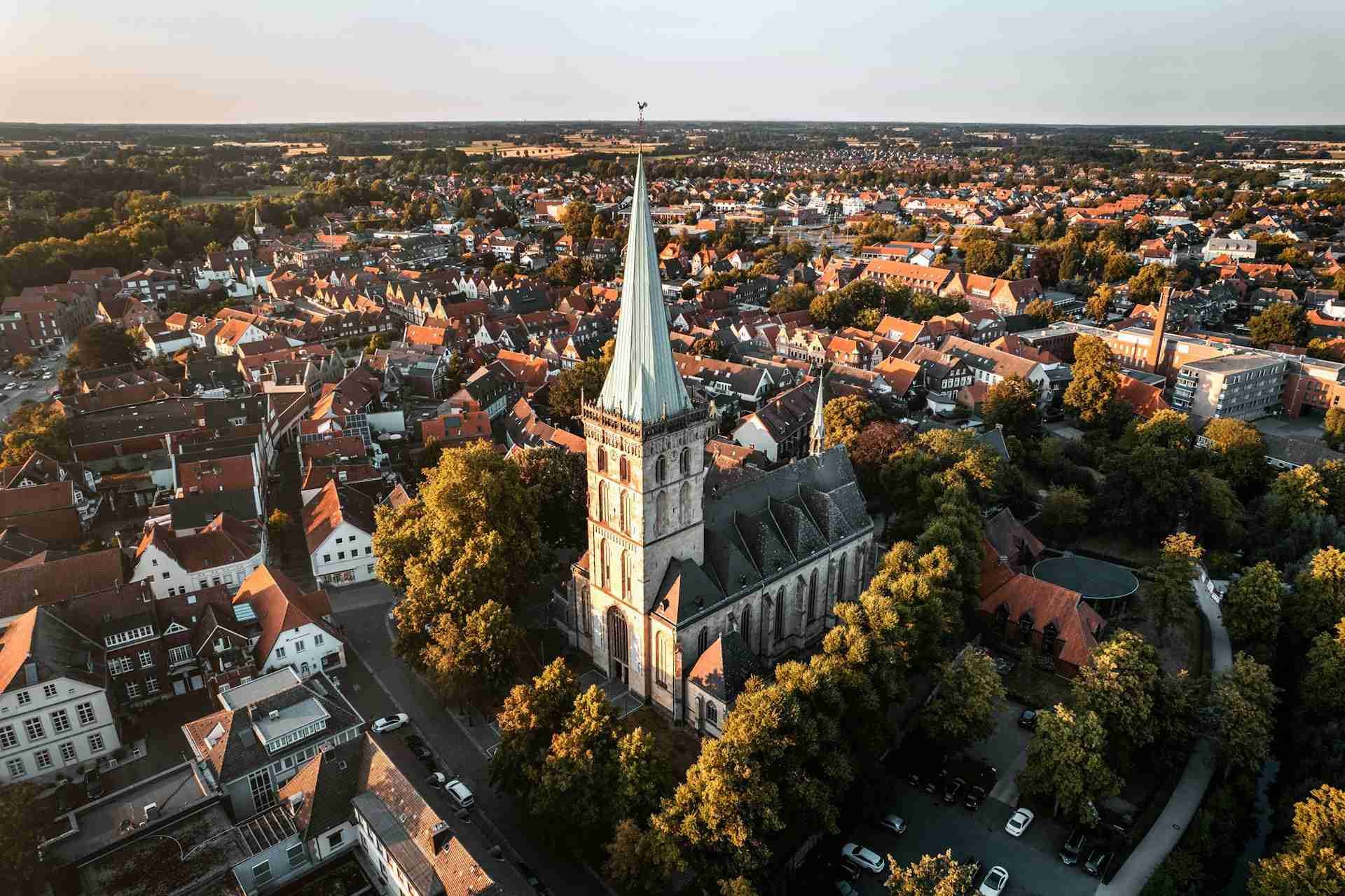
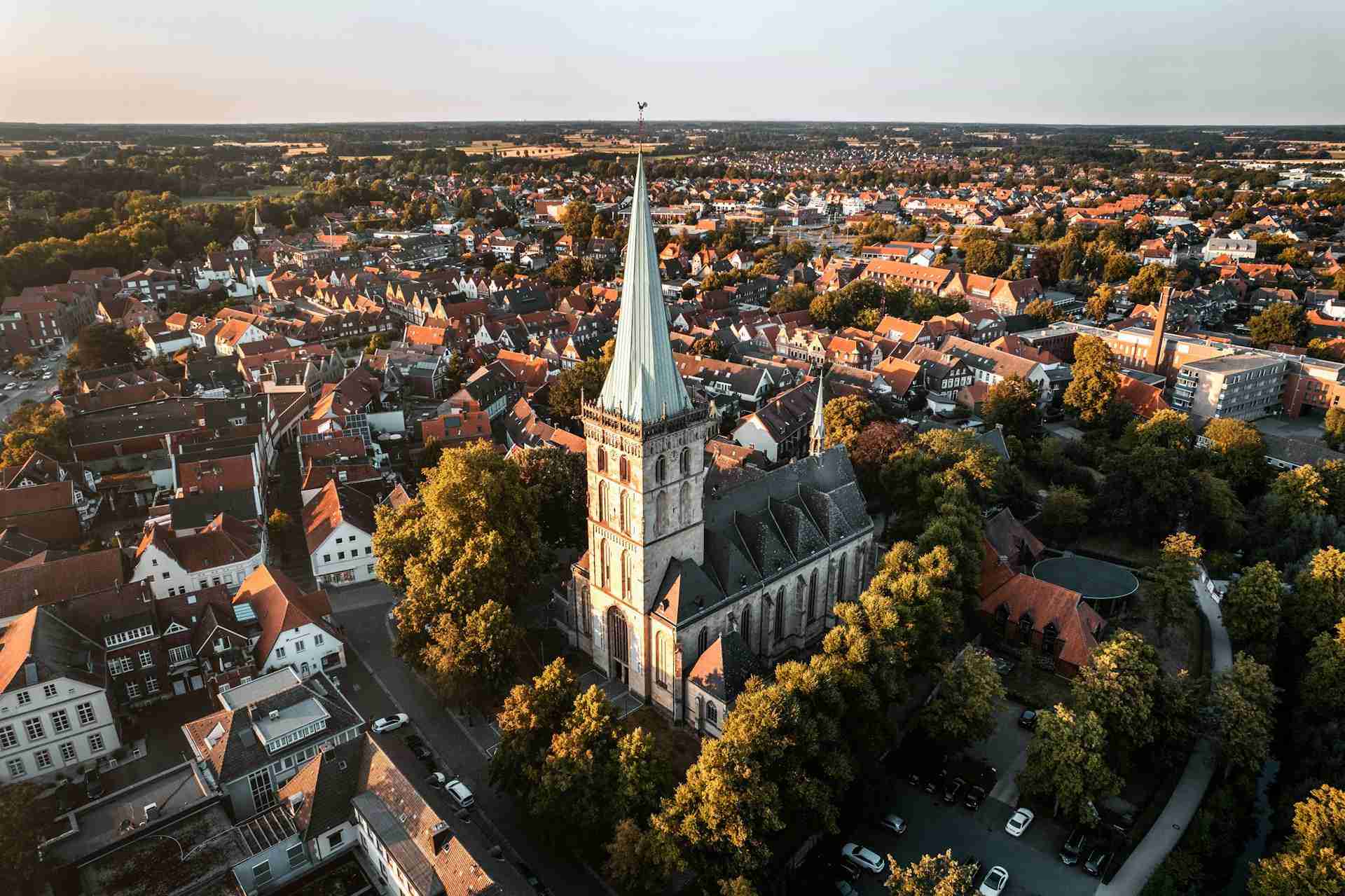
In the small Westphalian town of Lüdinghausen, St. Felizitas offers a straightforward and rewarding setting for architectural photography. This parish church, with its mix of Romanesque and later Gothic elements, stands quietly among brick townhouses and cobbled streets. The tall west tower, clean lines, and light-colored stone give the building a simple but effective presence. There are no dramatic spires or elaborate ornament here. What makes St. Felizitas interesting is how it handles light, shape, and proportion throughout the day. It's the kind of place where a shift in weather or angle brings out new detail, and where you have room to move and experiment without distraction.
Best Photography Opportunities
West Tower in Morning Side Light
The open space in Kirchplatz directly in front of the church provides the clearest view of the west tower. Early in the day, sunlight from the southeast strikes the stone at an angle, pulling out surface texture and warming the pale walls. This is a good time to shoot with a wide or mid-range lens to include both the base of the tower and the neighboring buildings. Backing up into the plaza gives you space to work with leading lines in the cobblestones or benches. You can also frame tighter from the side to focus on the tower's upper openings and roofline, especially when the sky holds a bit of cloud for contrast.
Side Entrance and Arch Details
The southern side of the church includes a series of pointed arches, stonework transitions, and modest sculptural details. These respond well to soft light on overcast days when shadows are reduced and the stone color is more even. A short telephoto lens is helpful here for isolating individual elements, such as the carvings above the side doors or the relationship between windows and buttresses. Look for repeating forms in the masonry that give rhythm to the frame. These quieter details often work well in black and white, especially when the weather is flat but the contrast between surfaces is still visible.
Rear View from the Garden Path
To the east of the church, a narrow garden path runs along a small grassy area and gives a more layered view of the apse and rear windows. This is a productive spot in the late afternoon when warm light catches the upper half of the building and the lower garden falls into shadow. Compositions here benefit from a mid-range focal length, which lets you compress the view slightly and work with the curve of the rear structure. If the trees along the path are in leaf, they can be used to frame the shot or filter light. This spot also works well just after sunset when the last light fades behind the church and the windows pick up faint interior glow.
Stone Texture and Window Patterns
Throughout the exterior, the stonework shows a mix of restoration and original surface. When the light is low and directional, early morning or just before sunset, you can move in close to capture the contrast between rough and smooth sections. Arched window frames and stone joints provide structure for these detail shots. A 70 to 200 millimeter lens is ideal for focusing on the transition between old and new work or for composing around isolated elements like a single window and the surrounding wall. Working from slightly oblique angles will give depth and catch shadow in the edges.
Evening Blue Hour from the Square
When the church lights come on after dark, the tower and front entrance take on a soft, even glow that contrasts with the cool color of the evening sky. Shooting from the Kirchplatz again, you can frame the tower against the last light and include the warm foreground tones from the plaza lights. Long exposures smooth out any passing movement and bring clarity to the structure. A tripod is essential here, and using a two-second timer or remote release will help keep lines sharp. This is also a good time for bracketed exposures if you want to recover both highlight detail in the lamps and shadow depth in the tower stone.
Best Time to Visit
For exterior work, early morning offers the best light along the western and southern faces of the church. From April through October, the angle of the sun allows for strong side light without deep, distracting shadows. These hours are also quieter, with fewer people in the square and better conditions for tripod use. Overcast days work well for shooting side details and close-ups of the stone, especially when you want to reduce harsh contrast and focus on surface texture.
Late afternoon and golden hour are good for working around the rear garden path and eastern windows where warm light starts to catch the upper walls. Blue hour begins early in the colder months, making winter visits a good opportunity for night photography without having to shoot late. Light snow or frost on the plaza adds a clean base to the frame and can help define edges and shadows around the foundation.
The church does not hold heavy foot traffic, so almost any time of year offers quiet conditions for architectural photography. The best days are those with broken clouds or soft sky texture, especially if you plan to work with wide shots that include background sky.
How to Get There
St. Felizitas is located in the center of Lüdinghausen, a small town in North Rhine–Westphalia. If arriving by train, the Lüdinghausen station is about a ten-minute walk to the church. From the station, follow signs toward the town center and continue along Mühlenstraße until you reach Kirchplatz. The church sits at the edge of the pedestrian zone, directly across from local cafés and small shops.
Parking is available nearby in several public lots within a five-minute walk. The plaza in front of the church is fully accessible, and all major viewpoints can be reached without climbing or hiking. There is no fee to visit or photograph the church exterior, and tripods are permitted in the plaza and surrounding streets. If you are interested in interior photography, contact the parish office in advance to inquire about access times and policies.
Recommended Photography Gear
A wide-angle lens between 16 and 35 millimeters is useful for framing the tower and full façade from the plaza, especially when working at close range. A 24 to 70 millimeter zoom gives flexibility for mid-range compositions, including both structure and context. For detail work, such as carvings or window stonework, a 70 to 200 millimeter lens will allow you to frame tightly without distortion.
Bring a tripod for early morning, golden hour, and especially blue hour photography. A remote release or self-timer helps reduce vibration during long exposures. A circular polarizer can be helpful when shooting mid-day in bright conditions, especially if you want to manage reflections in windows or deepen sky tone. For overcast days, filters are not necessary. Focus instead on shape, contrast, and rhythm in the stonework.
A compact shoulder bag or backpack is best for moving around the narrow streets. The plaza is paved and flat, but if you plan to shoot from the garden path behind the church, wear stable shoes in case of wet grass or uneven footing. A microfiber cloth and lens blower are helpful for clearing moisture on colder mornings, and a small ground cloth is useful if you plan to shoot from low positions.
Nearby Photography Locations
Just a short walk from the church, this moated castle offers arched bridges, stone walls, and water reflections in a wooded setting. The castle is best photographed early or late in the day when the moat reflects the soft sky and the stone surface picks up subtle color from the surrounding trees.
A second castle within walking distance, Burg Lüdinghausen has a more open layout with gardens, canals, and brick structures. It is well suited to both architectural work and environmental compositions, especially during spring and early autumn when the grounds are quiet and green.
Stever River Walk
The footpaths along the Stever River include small bridges, open water, and tree-lined views of the town. These paths are especially good for foggy morning compositions or low-light documentary work in winter. Long exposures work well here with clean leading lines along the banks.
Old Town Streets around Kirchplatz
The narrow streets near the church are lined with traditional homes, brick facades, and well-preserved timber framing. Early morning is best here when the light comes in low and traffic is minimal. These streets make a good contrast to the stone of the church and provide variety in texture and scale.
Capuchin Monastery Grounds
Located just east of the town center, the grounds of the former monastery include a chapel, garden paths, and stone markers. This area is quiet and less visited, making it useful for reflective compositions or detail shots in soft light. The garden layout changes through the seasons and adds variety to each visit.
St. Felizitas does not need dramatic light or heavy editing to come across well in photographs. It offers clean structure, consistent texture, and the kind of light that works best when you take your time. For photographers who enjoy straightforward architectural subjects with just enough variation to keep things interesting, this church and its surroundings make for a practical and productive location.
Comments
Loading comments…