
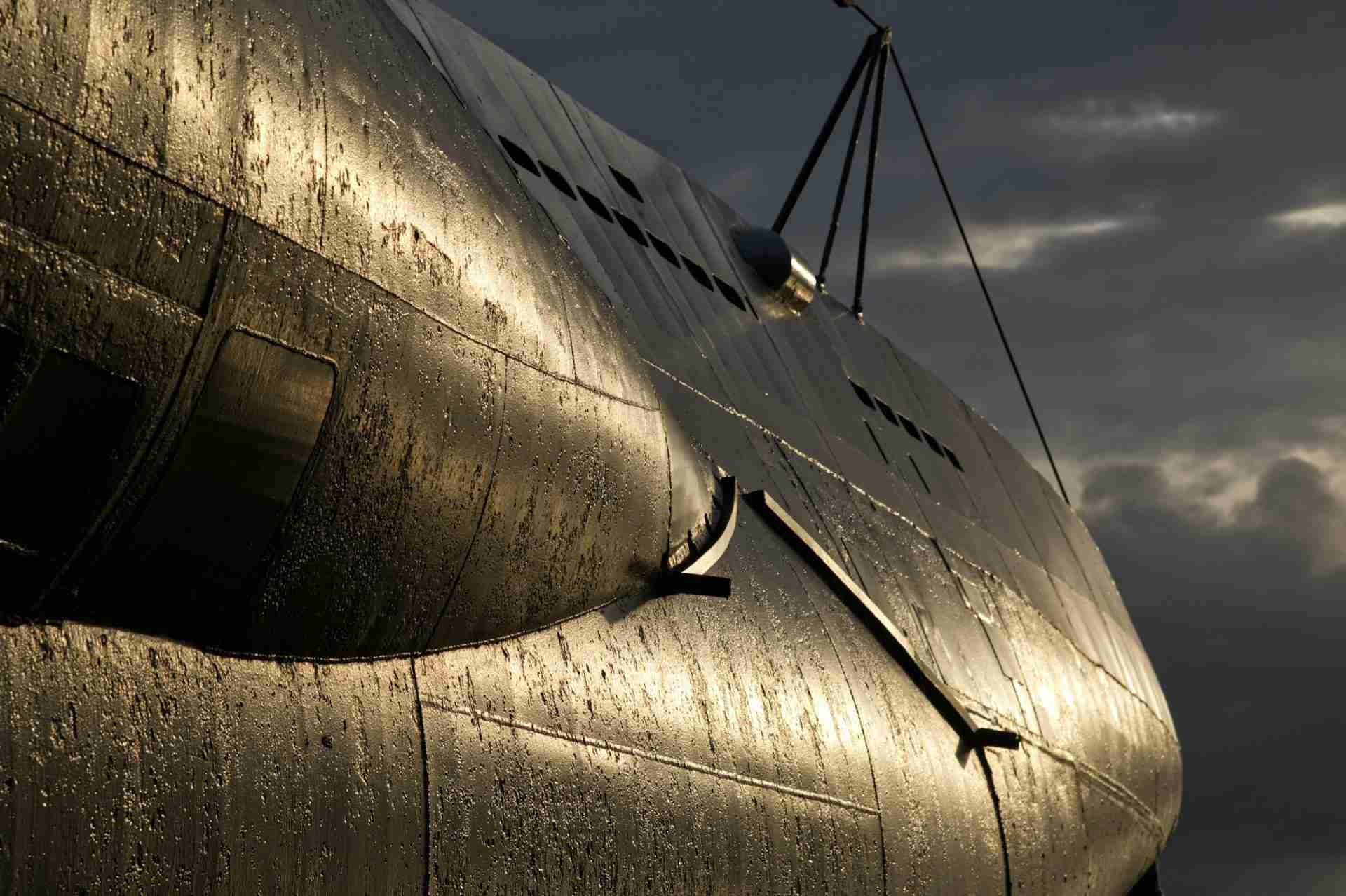
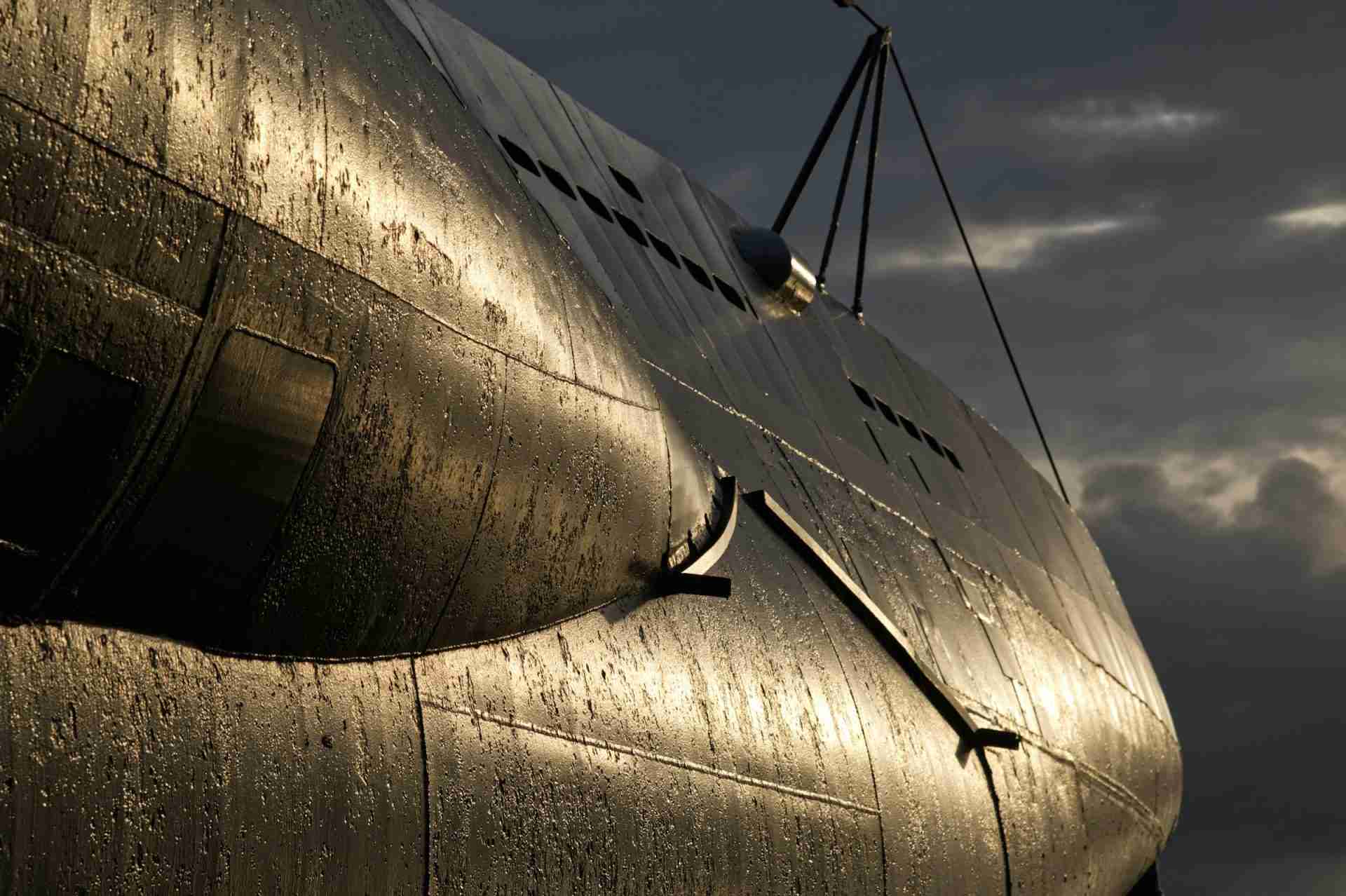
This U 995 rests on display along the Baltic coast in Laboe, Germany, a short distance from Kiel at the entrance to the Kiel Fjord. This historic German Type VII C submarine served during the Second World War and is now preserved as a museum vessel beside the Laboe Naval Memorial. Sitting on land near the shoreline, the long narrow hull of the submarine creates a striking contrast against the open sky and nearby Baltic waters. For photographers, the site combines maritime history with coastal scenery. The dark steel hull, conning tower, and deck details provide strong industrial subjects, while the nearby beach and naval memorial offer wider context. Because the submarine is fully accessible from the outside and positioned in an open area, it is easy to walk around the vessel and experiment with different perspectives.
Best Photography Opportunities
• Full Side Profile –
The most straightforward and powerful composition shows the entire length of U 995 from the side. Standing several meters back allows the submarine's long cylindrical hull to stretch across the frame. A moderate wide lens works well here because it captures the full vessel without excessive distortion. This angle clearly shows the scale of the submarine and its distinctive silhouette. Early morning or late afternoon light can reveal subtle texture along the steel hull and highlight the rivets and panels. Including a small portion of the surrounding grounds or sky can help provide context without distracting from the subject.
• Low Angle Views –
Photographing from a low position near the bow or stern can create a dramatic perspective along the length of the submarine. From this angle, the hull appears to extend deep into the frame while the conning tower rises above it. A wide lens exaggerates the perspective and emphasizes the powerful industrial shape of the vessel. Positioning the camera close to the metal surface allows details such as weld lines and weathered paint to become visible in the foreground. This approach works particularly well when side lighting creates subtle highlights across the steel.
• Conning Tower and Periscope –
The conning tower is one of the most recognizable features of a submarine and makes an excellent subject for tighter compositions. A mid range zoom or telephoto lens allows you to isolate the tower, periscopes, and railings from the rest of the vessel. Shooting from slightly below the tower strengthens the sense of height and mechanical complexity. Cloudy skies can help the dark structure stand out more clearly. These images focus on the engineering details rather than the overall shape of the submarine.
• Submarine with the Baltic Coastline –
Because the submarine sits close to the shoreline, it is possible to include both the vessel and the Baltic Sea in the same frame. From certain angles near the surrounding grounds, the submarine can be photographed with open water and sky behind it. This composition connects the vessel with the environment where submarines once operated. A mid range lens works well to balance the submarine and the coastal background. Calm weather can produce a cleaner horizon, while passing clouds add atmosphere to the scene.
• Evening Light with the Naval Memorial –
The nearby Laboe Naval Memorial rises high above the coastline and can be included in compositions with the submarine. Positioning yourself so the memorial tower appears behind or beside U 995 adds historical context to the photograph. A moderate zoom allows you to balance the two structures without crowding the frame. Late afternoon light often illuminates both the submarine and the memorial with warm tones. This composition works well when you want to show the larger setting of the museum area.
Best Time to Visit
Early morning is often the best time to photograph U 995. The museum area tends to be quieter and the softer light reveals more detail along the submarine's steel hull. Morning light can also create subtle shadows across the conning tower and deck features.
Late afternoon is another productive time because the lower sun angle adds warmth to the metal surface and creates deeper shadows along the structure. Overcast weather can also work well, especially when photographing industrial details. The softer light reduces harsh reflections on the painted metal and helps maintain consistent tones across the submarine.
How to Get There
The Technisches Museum U 995 is located in Laboe along the Baltic coast near Kiel in Schleswig Holstein, Germany. The submarine sits directly beside the Laboe Naval Memorial overlooking the entrance to the Kiel Fjord.
Visitors can reach the site easily by car from Kiel in about twenty minutes. Parking is available near the memorial complex. The museum area is clearly signposted once you arrive in Laboe. Access to the exterior viewing areas around the submarine requires an entrance ticket since the vessel is part of the museum site. Once inside the grounds, visitors can walk around the submarine and explore the surrounding area freely.
Recommended Photography Gear
A wide lens is very useful for photographing the full length of the submarine and capturing dramatic low angle perspectives along the hull. A mid range zoom offers flexibility when framing the conning tower or balancing the submarine with the surrounding landscape. A telephoto lens can isolate details such as periscopes, railings, and surface textures.
A polarizer can help reduce glare on the painted metal surface when sunlight reflects off the hull. A tripod may be helpful for evening photography or when shooting detailed compositions with slower shutter speeds. Because the location is easy to access and involves walking around an open museum site, a compact but versatile kit works well.
Nearby Photography Locations
stands high above the Baltic coast and is one of the most recognizable landmarks in the region. The tall stone tower offers sweeping views across the Baltic Sea and the entrance to the Kiel Fjord. From the observation deck you can photograph ships moving through the busy waterway.
stretches along the Baltic coast near the memorial and provides wide views across the water. The sandy shoreline and gentle waves create simple coastal compositions. Sunrise and evening light can produce soft colors reflecting off the sea.
• Strande Marina
sits along Kiel Bay and features rows of sailboats and calm harbor waters. The repeating lines of masts create strong visual patterns. Early morning reflections in the marina often produce clean maritime scenes.
lies near the entrance to the Kiel Fjord and combines sandy beach landscapes with views of large ships entering and leaving the harbor. The mix of coastal scenery and maritime traffic makes it a unique location for photography.
stands at the mouth of the Kiel Fjord and marks the entrance to the shipping channel. The lighthouse and surrounding shoreline provide strong maritime subjects. Passing cargo ships often add scale and movement to coastal compositions.
Comments
Loading comments…