
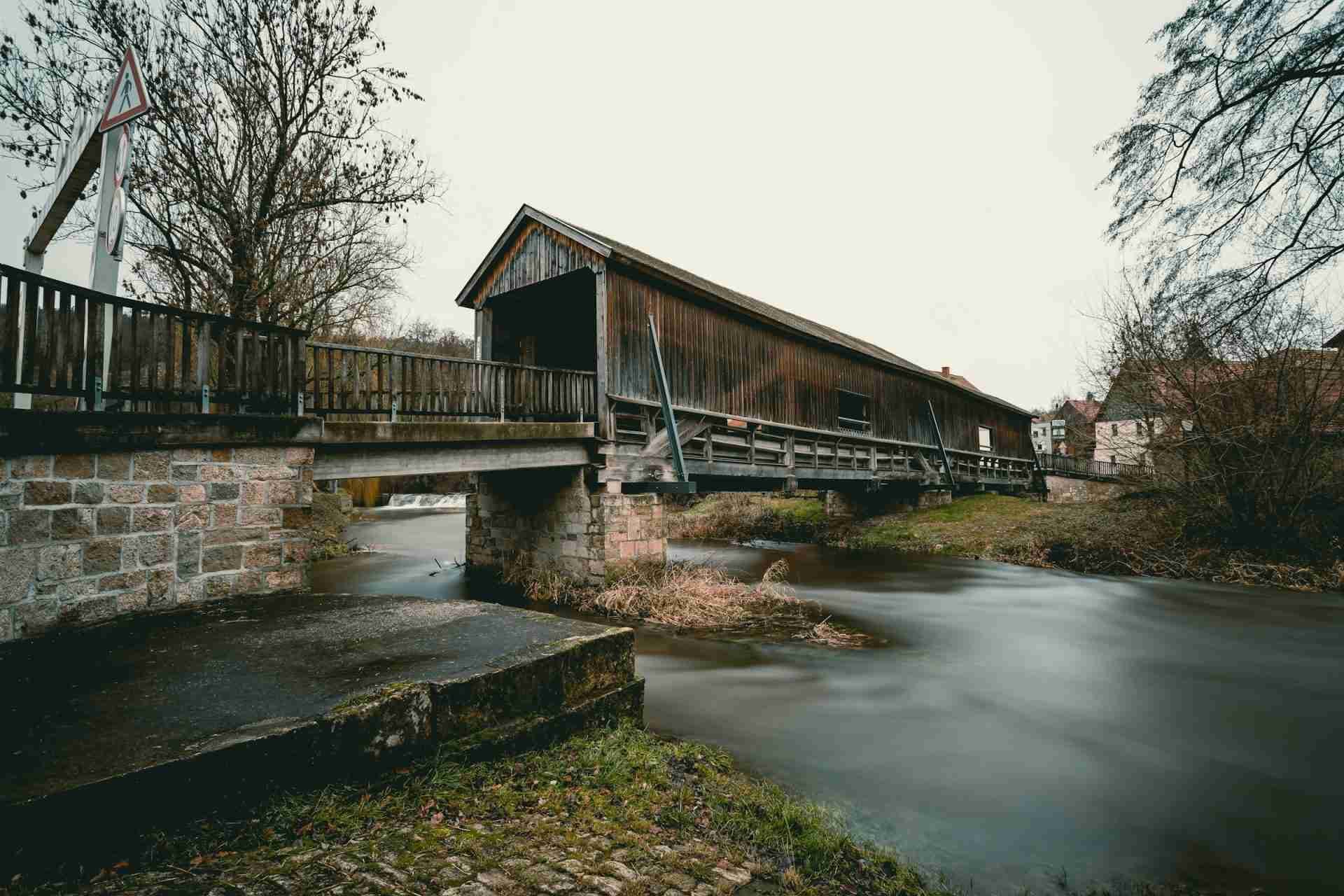
Überdachte Holzbrücke Buchfart sits quietly over the Ilm River in the small village of Buchfart, offering photographers a calm and grounded subject rooted in everyday rural life. Built in the late 18th century, the bridge feels practical rather than monumental, which is part of its appeal. Weathered timber beams, a gently sloping roof, and the slow moving river below create a setting that changes subtly with light, water level, and season. There is very little visual noise here, which makes it an ideal place to focus on composition, texture, and timing rather than spectacle. For photographers who enjoy working slowly and letting a scene reveal itself, this bridge offers steady rewards.
Best Photography Opportunities
• From the Riverbank
One of the strongest compositions comes from stepping back along the riverbank and photographing the bridge in its entirety. From this angle, the covered structure reads clearly as a single shape, with the roofline and wooden sides reflected in the water below. Calm conditions are common here, especially in the morning, which helps create clean reflections without distortion. Including a bit of the riverbank or overhanging branches can help frame the bridge and keep the composition from feeling too centered. This viewpoint works well year round, but it is especially effective in autumn when leaves add subtle color without overpowering the scene.
• Bridge Interior
Walking inside the bridge opens up a completely different set of images. The repeating wooden beams create strong leading lines that pull the eye toward the far opening. Light filtering in from both ends shifts throughout the day, changing the contrast and mood of the interior space. Early and late light tends to be softer and more forgiving, allowing detail to remain in both shadows and highlights. This is a good place to experiment with symmetry or slightly off center compositions that feel more natural. Including a distant figure at the far end can add scale without disrupting the quiet feel of the scene.
• Reflections and Water Level Details
The Ilm River is usually calm at this point, making it ideal for reflection based compositions. Shooting low to the water allows you to capture mirrored shapes of the bridge structure, nearby trees, and sky. After rain, the river level may rise slightly, bringing reflections closer to the wooden beams and changing the balance of the frame. Small ripples can also add texture if you prefer something less pristine. These details are easy to overlook but can result in strong, understated images that feel closely tied to the location.
• Close Details of Wood and Construction
The age of the bridge shows in the surface of the timber, with worn edges, grain patterns, and subtle color changes from decades of exposure. Focusing on joints, beams, and handrails allows you to tell the story of the bridge without showing it in full. Overcast days are ideal for this kind of work, as the light is even and does not create harsh shadows. A short telephoto or standard lens works well for isolating these details. These images pair nicely with wider shots to create a more complete visual narrative of the location.
• Seasonal Changes Around the Bridge
Each season brings a noticeable shift in how the bridge photographs. Spring adds fresh greens along the riverbanks and softer light filtering through new growth. Summer brings fuller foliage and deeper shade, which works well for interior shots and reflections. Autumn is especially popular due to falling leaves and warmer tones in the surrounding trees. In winter, snow or frost simplifies the scene even further, reducing distractions and emphasizing shape and structure. Returning at different times of year can make the same composition feel entirely new.
Best Time to Visit
Morning is generally the best time to photograph the bridge, especially if you are interested in reflections and softer light. Early hours often bring still water and minimal foot traffic, which helps maintain the peaceful feel of the scene. As the sun rises higher, light begins to reach the riverbanks and the sides of the bridge, adding gentle contrast to the wood. Late afternoon can also work well, particularly in autumn and winter when the sun stays lower and light remains directional without being harsh.
Seasonally, autumn offers the most variety in color and texture, while winter provides clean, simplified scenes if snow is present. Spring brings fresh growth and higher water levels, which can improve reflections. Summer tends to be the busiest time, though it is still far quieter than more well known photography locations. Overcast days are excellent here, as they reduce contrast and allow detail to show across the entire frame. Light rain or mist can also add atmosphere without dramatically changing access.
How to Get There
Überdachte Holzbrücke Buchfart is located in the village of Buchfart, a short drive from Weimar. The village is easily reached by car via local roads, and there is informal parking available within Buchfart, usually near the center of the village. From the parking area, the bridge is only a short walk and clearly visible. The area around the bridge is flat and easy to explore on foot, with walking paths along both sides of the Ilm River.
There are no entrance fees or restrictions for visiting or photographing the bridge. It is open to pedestrians at all times, and there are no barriers preventing access to the riverbanks or nearby paths. Public transport options are limited, so driving is the most practical choice for photographers carrying equipment. The location is quiet and generally uncrowded, even on weekends.
Recommended Photography Gear
A standard zoom lens in the 24 to 70mm range is ideal for most compositions here, covering wide river views and tighter interior shots without needing to change lenses often. A wider lens can be useful if you want to exaggerate leading lines inside the bridge or include more of the surrounding landscape. A short telephoto lens works well for detail shots of wood grain, joints, and reflections across the water.
A tripod is helpful for early morning or evening shooting, especially if you are working with reflections or low light inside the bridge. A polarizing filter can help manage glare on the water surface and deepen tones in the wood and sky. In autumn and winter, bring a cloth to wipe moisture from lenses, as fog and condensation are common near the river. Waterproof footwear is also useful after rain, as the riverbanks can become muddy.
Nearby Photography Locations
• Ilm River Walking Paths
The paths along the Ilm River extend beyond the bridge and offer additional viewpoints back toward it. These areas are useful for finding quieter angles or incorporating bends in the river into your compositions. The paths also provide chances to photograph trees, water, and small clearings that complement images of the bridge itself.
Buchfart is a small, traditional village with simple houses, gardens, and narrow streets that photograph well in soft light. Details like fences, doors, and roadside scenes help place the bridge in its wider rural context. Early morning is best for photographing the village without parked cars or people in frame.
• Ilmtal Meadows
Just outside the village, open meadows stretch along the river valley and offer wider landscape views. These areas work well for sunrise or misty morning scenes, especially when fog settles low over the grass. They provide a visual counterpoint to the structured geometry of the bridge.
• Weimar River Sections
A short drive away, the Ilm River flows through Weimar with a more manicured and formal character. Photographing both locations on the same day offers a clear contrast between rural and urban uses of the same river. This can add depth to a longer photography project focused on the region.
Comments
Loading comments…