
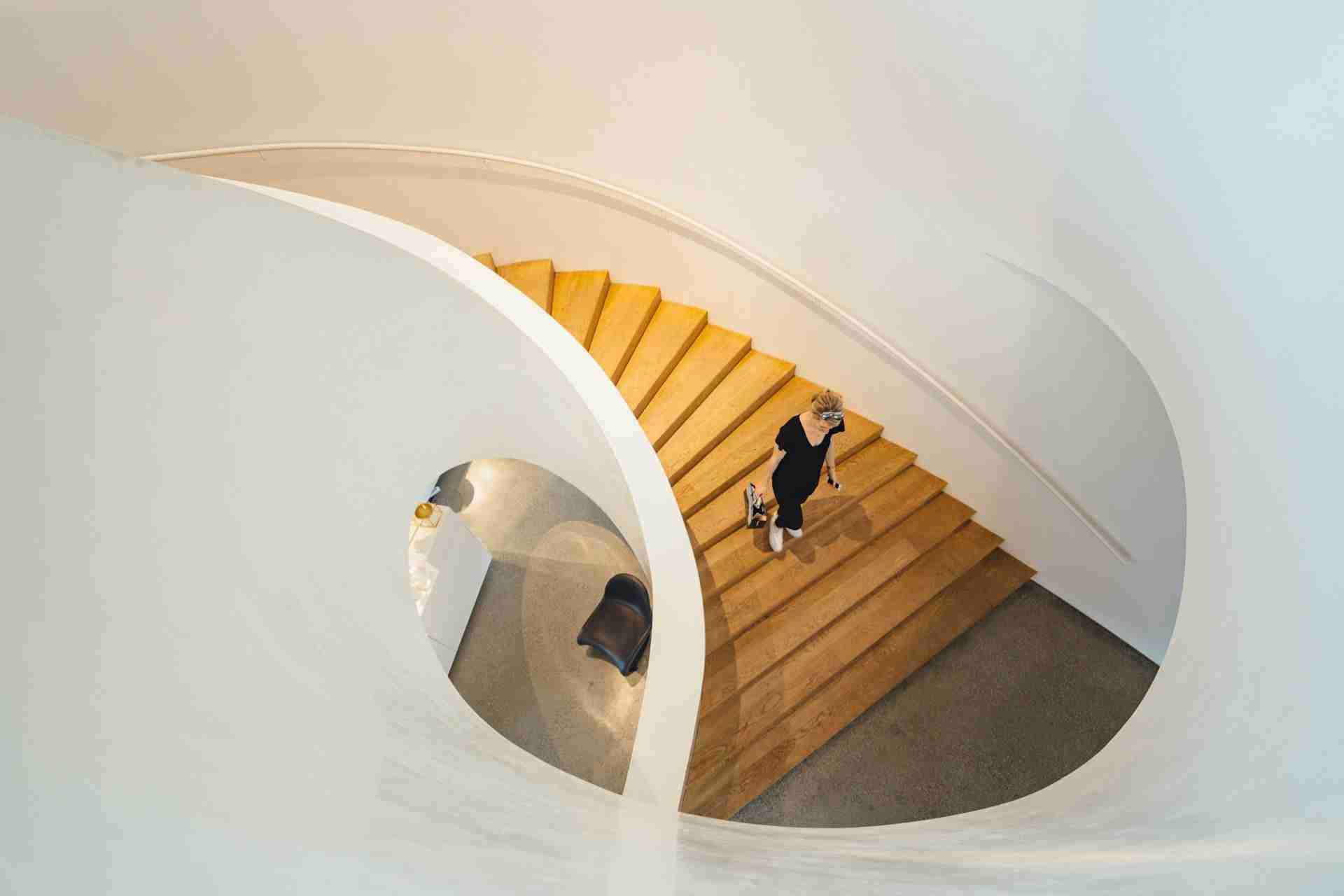
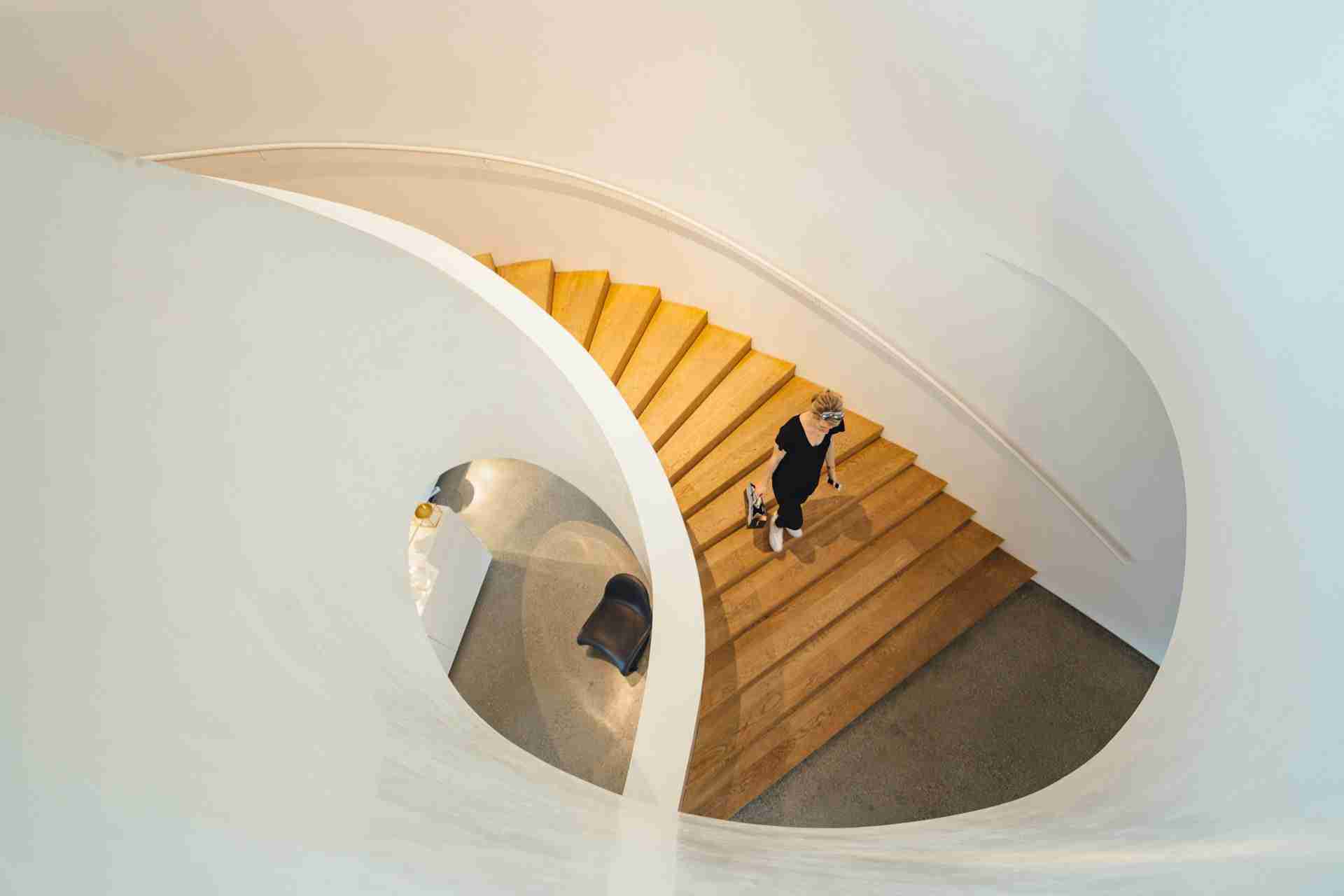
The Vitra Campus in Weil am Rhein is one of the most architecturally concentrated and visually compelling sites in Europe. Nestled just across the German border from Basel, the campus functions as both a furniture production site and a living museum of contemporary architecture. It brings together structures by celebrated architects like Frank Gehry, Herzog & de Meuron, Tadao Ando, Zaha Hadid, and Álvaro Siza in one meticulously designed compound. For photographers, this is a rare chance to explore a landscape where form, material, and spatial tension are not just present—they are the subject. The interplay between light, surface, and geometry changes from building to building, offering endless opportunities for exploration through different focal lengths, times of day, and creative framing techniques.
Best Photography Opportunities
Vitra Design Museum by Frank Gehry
Frank Gehry's sculptural museum was his first project in Europe and remains one of the most photogenic on campus. Its white plastered surfaces and sweeping, asymmetrical curves shift character depending on the angle of the light. In full sun, sharp shadows exaggerate the building's jagged geometry, while overcast conditions soften its interlocking forms and bring out subtle tonal gradients in the walls. Wide-angle lenses are especially useful here, both to capture the full structure from a distance and to explore distortion and line interaction at close range. The rear of the museum is equally rewarding, offering views that highlight how the curved forms taper into straighter architectural gestures. In early morning or late afternoon, the light rakes across its surfaces, revealing texture and contrast without overwhelming highlights.
VitraHaus by Herzog & de Meuron
Stacked like a cluster of intersecting gabled houses, the VitraHaus combines traditional roof silhouettes with a highly contemporary presentation. This building is best approached from multiple angles and elevations. From the path leading toward its front entrance, the overlapping forms create a deep perspective that works well with a medium telephoto lens. The interior, open to the public, is a continuation of the photographic experience: large windows frame views of the campus and surrounding countryside, while the angular interiors provide leading lines and light play for architectural abstracts. As sunlight passes through the glass walls and hits interior surfaces, reflections and shadows often create temporary compositions that reward patience and timing.
Conference Pavilion by Tadao Ando
Minimal, restrained, and meditative, the Conference Pavilion by Tadao Ando contrasts with the expressive geometry elsewhere on campus. Composed of smooth concrete walls, intersecting planes, and a shallow reflecting pool, it's a masterclass in controlling light and space. Photographers should pay close attention to how natural light cuts through openings in the structure, casting long, defined shadows across the floor and walls. A tripod can be helpful here, particularly in low light or when capturing symmetrical compositions that require precision alignment. The building's spatial relationships are best revealed with a mix of wide shots to establish context and tighter frames to focus on intersecting surfaces and tonal gradients. Early morning and late afternoon light bring subtle warmth to the grey surfaces without flattening their depth.
Vitra Fire Station by Zaha Hadid
Zaha Hadid's Fire Station was her first built project and remains one of the most dynamic structures on the campus. Its angular concrete forms slice through the landscape with sharp, deliberate tension. The building photographs best in angled light—early morning or late afternoon—when shadows exaggerate the intersections and reveal the abrupt changes in form. The play between positive and negative space is strong here, and the structure can be shot abstractly or within its environmental context. Long lenses compress the fractured angles effectively, while wide lenses distort them further into more chaotic, energetic compositions. Photographers should also pay attention to how the building appears in relation to its surroundings—open grass, other buildings, and pathways create visual contrast that enhances the starkness of Hadid's design.
Geometric Rhythm of Álvaro Siza's Production Hall
Often overlooked compared to flashier structures, Álvaro Siza's production hall is a study in rhythm, repetition, and understated material. The hall's facade, built of pale brick with clean rectilinear divisions, lends itself well to minimal and abstract compositions. It is particularly effective in flat or diffuse light when the tonal values of the brickwork remain even and reveal fine details. Shooting with a tilt-shift lens or cropping carefully in post can help maintain perspective lines and emphasize the sense of precision. The repetition of windows, columns, and divisions offers strong visual anchors for balanced compositions, particularly when shot head-on. This is also a prime spot for black and white work, where form and contrast can speak without the distraction of color.
Best Time to Visit
The Vitra Campus can be photographed in all seasons, but the experience and resulting images change significantly depending on the light and time of year. From April to October, the longer daylight hours and more predictable weather make it easier to work with both golden hour and mid-morning light. Sunrise begins behind the Tadao Ando and Zaha Hadid buildings, creating strong directional light that gradually moves across the open campus. Early morning is excellent for shooting clean exteriors without pedestrian traffic and for catching long shadows that articulate the buildings' lines.
Midday, though often avoided by landscape photographers, can be highly effective here due to the clean geometry and smooth materials. Harsh sunlight creates powerful contrasts and shadow lines that work well with black and white treatments or architectural abstracts. Photographers who lean into these conditions rather than avoiding them will find striking visual potential in even the most direct sun.
Late afternoon to sunset is ideal for working with the Gehry and Herzog & de Meuron buildings, as their facades receive soft, raking light. Golden hour brings warmth and softness to surfaces, balancing hard edges with gentle gradients. Autumn adds color through tree foliage, particularly in frames that juxtapose nature against concrete or plaster. Winter reduces the color palette and flattens the light, creating more uniform conditions and fewer distractions, especially when photographing the Ando pavilion or Siza's production hall. Snow, when present, provides a clean base layer that simplifies composition and heightens tonal contrast.
How to Get There
The Vitra Campus is located in Weil am Rhein, Germany, just a few kilometers north of Basel, Switzerland. By car, the campus is accessible via the A5 Autobahn, with well-signed exits and free on-site parking for visitors. If arriving by train, Weil am Rhein station is the nearest stop, followed by a short taxi ride or a 25-minute walk. From Basel, public buses also connect directly to the campus area.
The campus itself is open to the public year-round, with pedestrian access to many outdoor structures. Certain buildings, like the Vitra Design Museum and VitraHaus, are free to enter during open hours, while others require guided tours for access. Tripods are allowed outdoors, but some interior areas may have restrictions, particularly during operating hours or tours. Photographers should always check current policies at the visitor center upon arrival. Early entry and late exit times offer the best opportunities to shoot the buildings in clean light with fewer people present, though guided visits can also provide interior access that isn't otherwise available.
Recommended Photography Gear
Photographing the Vitra Campus benefits from a kit that emphasizes clarity, control, and precision. A wide-angle lens, preferably between 16–35mm, is essential for capturing full buildings in tight spaces and for emphasizing the dramatic scale of structures like the Gehry museum or VitraHaus. For photographers who want to maintain architectural lines without distortion, a tilt-shift lens is a strong asset. These lenses allow for correction of perspective and are particularly helpful when shooting tall or layered buildings head-on.
A mid-range zoom (24–70mm) serves well for general framing and working within courtyards or interiors. A longer zoom (70–200mm or more) is valuable for compressing architectural details, isolating sections of facade, or capturing surface interaction in afternoon light. For those who enjoy exploring patterns and minimal compositions, a fast prime lens (35mm or 50mm) can provide sharpness and a natural perspective, especially when shooting handheld in shaded conditions or indoors.
A lightweight tripod is recommended for blue hour, long exposure, or interior work. While much of the campus is accessible and walkable, the distances between buildings make a backpack or rolling case helpful for managing gear throughout the day. A circular polarizer can help manage reflections on glass and metal, though it should be used carefully to avoid uneven sky rendering at wide angles. A microfiber cloth is useful for wiping surfaces when working in the early morning or after rain. Weather is generally mild, but sun protection, water, and a lens hood are advisable for summer visits when shadows are harsh and direct light lasts well into the evening.
Nearby Photography Locations
Just minutes south of the Vitra Campus, Basel's Old Town offers medieval alleys, colorful shopfronts, and classic European architecture. The area is particularly photogenic in the early morning when warm light catches the sandstone buildings and quiet streets provide uninterrupted compositions. It's a worthwhile contrast to the sharp modernism of Vitra.
This Renzo Piano-designed museum in Riehen merges fine art with restrained architecture. The structure's transparency and connection to its garden setting make it ideal for minimalist compositions, light studies, and wide environmental portraits. Reflections on the glass exterior shift with the light, offering subtle photo opportunities throughout the day.
Where Germany, France, and Switzerland meet, this arched pedestrian bridge offers strong graphic lines and long leading perspectives. Photographers will appreciate the tension between industrial elements and soft river curves, especially in early or late light. The area also provides good views of the Rhine River and local cycling culture.
Although access is limited, this private industrial campus contains architecture by SANAA, Diener & Diener, and Frank Gehry. With planning or during events, photographers may gain access to shoot the high-concept structures and landscaped courtyards, making it a good extension for those interested in architectural documentation.
Tüllinger Hill Vineyards
Overlooking Weil am Rhein from the west, the vineyard slopes of Tüllinger Hill offer broad views of the entire Rhine valley and Basel skyline. In late afternoon, this location is ideal for shooting golden hillside textures, long shadows, and distant urban silhouettes. It's a peaceful spot to contrast organic forms with the geometric subject matter of the Vitra Campus.
For photographers drawn to structure, texture, and the expressive qualities of built space, the Vitra Campus provides more than just subject matter—it offers a full-day experience of visual problem-solving and aesthetic interpretation. With every building designed to challenge convention, each angle becomes a new puzzle to compose, and every shift in light reveals fresh detail to explore.
Comments
Loading comments…