
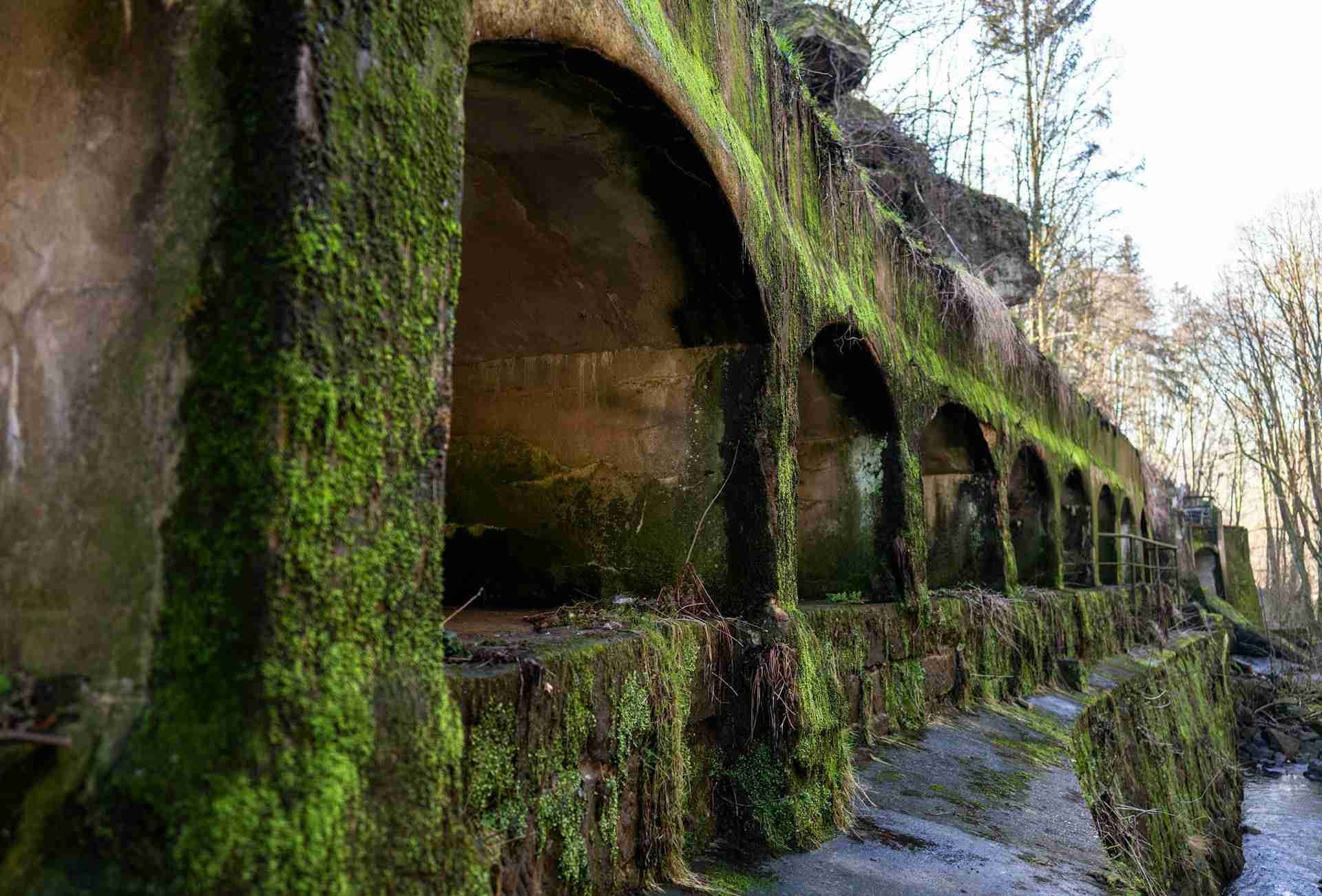
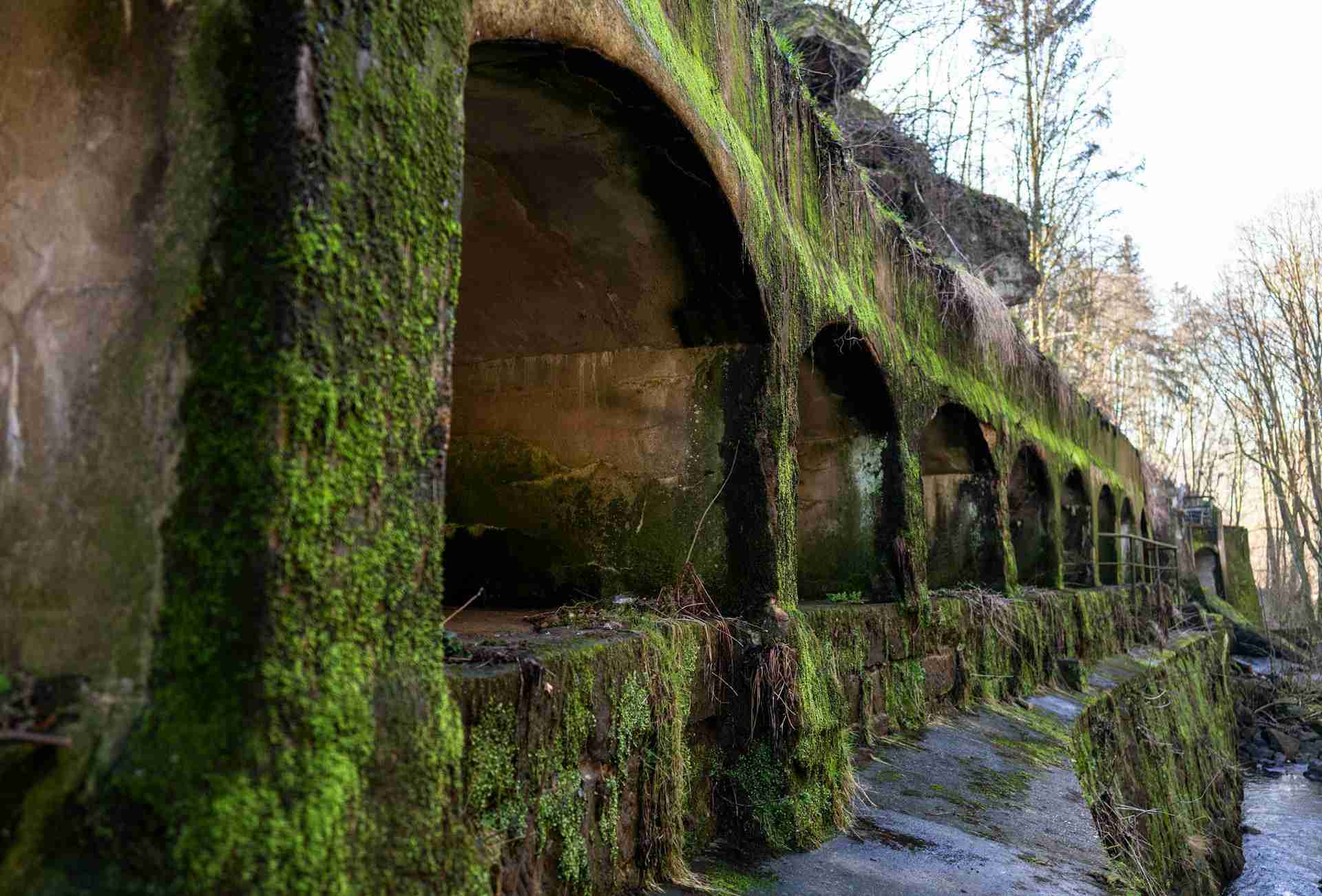
Wasserkraftwerk Niezelgrund is a unique hydroelectric plant nestled in the forest near Lohmen, Germany. Built of heavy stone and weathered wood, the station seems at first glance like a relic left behind by time. Thick moss climbs its walls, rust colors the machinery, and the surrounding trees close in, softening the structure's industrial lines. It looks completely abandoned but is still quietly in use, adding to the sense that this place operates at its own pace, far from the modern world. Photographically, it offers a rare combination of natural textures, slow-moving water, and early 20th century infrastructure in a setting that feels almost untouched. With moody weather, mist, or low light, the location becomes a dream for photographers who enjoy working with subtle contrast, rich detail, and quiet compositions.
Best Photography Opportunities
• Frontal View from the Forest Path
Approaching from the main path through the woods, the hydro plant slowly reveals itself through gaps in the trees. The best spot for a full view is slightly elevated along the footpath just before reaching the footbridge. From here, you can see the moss covered roof, stone walls, and the water channel curving in from the left. A wide lens helps frame the structure against the forest backdrop, while a longer lens allows for tighter shots that show layers of stone and the line of the waterway. This is a strong composition in both morning fog and overcast afternoon light, which flattens contrast and brings out texture.
• Close Range Textures and Machinery
Around the station, older equipment and mechanical elements are still visible and provide strong subjects for close up photography. Worn bolts, aged iron, and wooden beams carry decades of wear, with moss and rust adding depth and color. These scenes are best captured with a mid range lens that lets you frame small vignettes or isolate pattern and form. Overcast conditions help preserve shadow detail, and a shallow depth of field adds intimacy to these slower compositions.
• Reflections and Water Movement from the Footbridge
A small wooden bridge crosses the stream just downstream from the hydro plant. From here, you can work with reflections in the water, particularly when the surface is still in the early morning. If there is light mist or drizzle, the scene gains mood without losing clarity. Long exposures allow you to smooth the water and blur its movement around mossy rocks. For this composition, bring a tripod and consider using a polarizing filter to manage glare and enhance the richness of the greens and browns in the scene.
• Side Angles Framed by Vegetation
Moving around the plant reveals side angles that are framed naturally by trees and undergrowth. These compositions feel more hidden and give the sense of discovery. You can shoot through branches, use foreground vegetation as framing, or find alignment between the natural and industrial elements. These scenes work especially well when the leaves are wet or in early spring before the canopy becomes too dense. A mid range zoom lens provides the flexibility needed to explore these quieter views without switching lenses too often in damp conditions.
• Atmospheric Wide Shots in Fog or Rain
The entire location comes alive during foggy or rainy weather, when the structure blends into its surroundings and the atmosphere deepens. Soft light reveals the texture of the stone and makes the green moss glow slightly against the grey. Shooting wide during these conditions allows you to include more of the forest context while keeping the structure as a focal point. Raindrops on branches, wet surfaces, and soft sky tones all contribute to a more immersive frame. Use manual focus and a lens hood if visibility drops too low due to condensation.
Best Time to Visit
Late autumn through early spring is the most photogenic period for this location. With leaves down or thinned out, the building becomes more visible through the trees, and fog is more common during early morning hours. These seasons also provide richer colors from wet stone, deep green moss, and a softer quality of light that makes it easier to work with exposure across dark surfaces and pale sky.
Mornings are best for low traffic and calm conditions. Fog tends to form in the valleys around Lohmen and often lingers near the forest floor through mid morning. Overcast days are preferred here over direct sun, as contrast can be difficult to manage with bright sky breaking through the trees. The location is also effective in light rain or after recent showers, which bring out color and texture without limiting access.
Summer brings heavier canopy coverage, which can make the structure harder to photograph from distance. However, filtered light through the trees creates opportunities for detail shots and shaded compositions if you are prepared for variable lighting.
How to Get There
Wasserkraftwerk Niezelgrund is located just outside the village of Lohmen in Saxony, Germany. The closest major city is Dresden, which is about a 40-minute drive away. From Lohmen, follow signs for the walking trails into the forest. The hydro station sits along the Wesenitz River, near the trail known as the "Malerweg," which connects several natural and historic points in the region.
There is no direct vehicle access to the hydro plant, but parking is available at trailheads near the village. From there, it is a short walk of around ten to fifteen minutes on well-marked forest paths. The approach is relatively flat and easy to follow, though it can be muddy after rain. The site is not fenced off, and there are no entry restrictions for photographing the exterior or the surrounding area. As it remains a working facility, internal access is not permitted without special arrangement.
There are no fees to access the trail or the viewing areas, and you can use a tripod freely as long as you do not block the path or disturb other visitors. Early arrival is recommended to avoid foot traffic and to have more flexibility in choosing your shooting spots.
Recommended Photography Gear
A wide angle lens in the 16 to 24 millimeter range is essential for capturing the full structure within its forest setting. A 24 to 70 millimeter lens works well for closer shots of machinery, wall textures, and environmental portraits if you are working with a model. A tripod is highly recommended for long exposures near the water and for low light conditions under the canopy.
A polarizing filter helps manage reflections on wet surfaces and deepens the color of the moss and water. A neutral density filter is useful if you want to slow shutter speeds for stream photography during daylight. Because of the damp environment, bring a lens cloth, weather-resistant gear covers, and a dry bag insert to keep equipment safe.
Rubber boots or waterproof hiking shoes are helpful in wet months, and gloves may be useful in colder conditions when handling metal equipment or setting up near stone surfaces. Keeping your gear light and mobile will let you move between angles quickly, especially if weather changes suddenly.
Nearby Photography Locations
Just a few kilometers away, this narrow sandstone gorge offers moss-covered cliffs, winding trails, and a natural stone arch known as the "Felsentor." Soft light filters through the high walls, creating perfect conditions for landscape photography.
• Bastei Bridge and Elbe Sandstone Mountains
The nearby Bastei Bridge offers sweeping views over the Elbe River and surrounding rock formations. Sunrise and early morning are especially good for capturing mist in the valleys and strong silhouettes along the cliffs.
The village of Lohmen itself offers traditional Saxon architecture and a quiet rural atmosphere. The church, built from local stone, pairs well with golden hour light and cloud-dappled skies for architectural detail shots.
This hilltop castle offers dramatic viewpoints and a mix of medieval and natural features. The walls and towers overlook forested valleys and rock formations, making it a strong subject for photographers interested in structure and surrounding context.
• Amselfall and Rathen Valley
Located along the Malerweg trail, the Amselfall is a small waterfall framed by cliffs and forest. It is especially photogenic in spring and early summer when the water flow is strong and the surrounding vegetation fills in.
Wasserkraftwerk Niezelgrund is one of those places where function, history, and environment come together in a way that feels almost staged for photography. It rewards quiet exploration, careful framing, and a willingness to work with whatever the light gives you. For those who enjoy photographing forgotten places that are still quietly alive, this forested hydro station offers something rare and deeply satisfying.
Comments
Loading comments…