
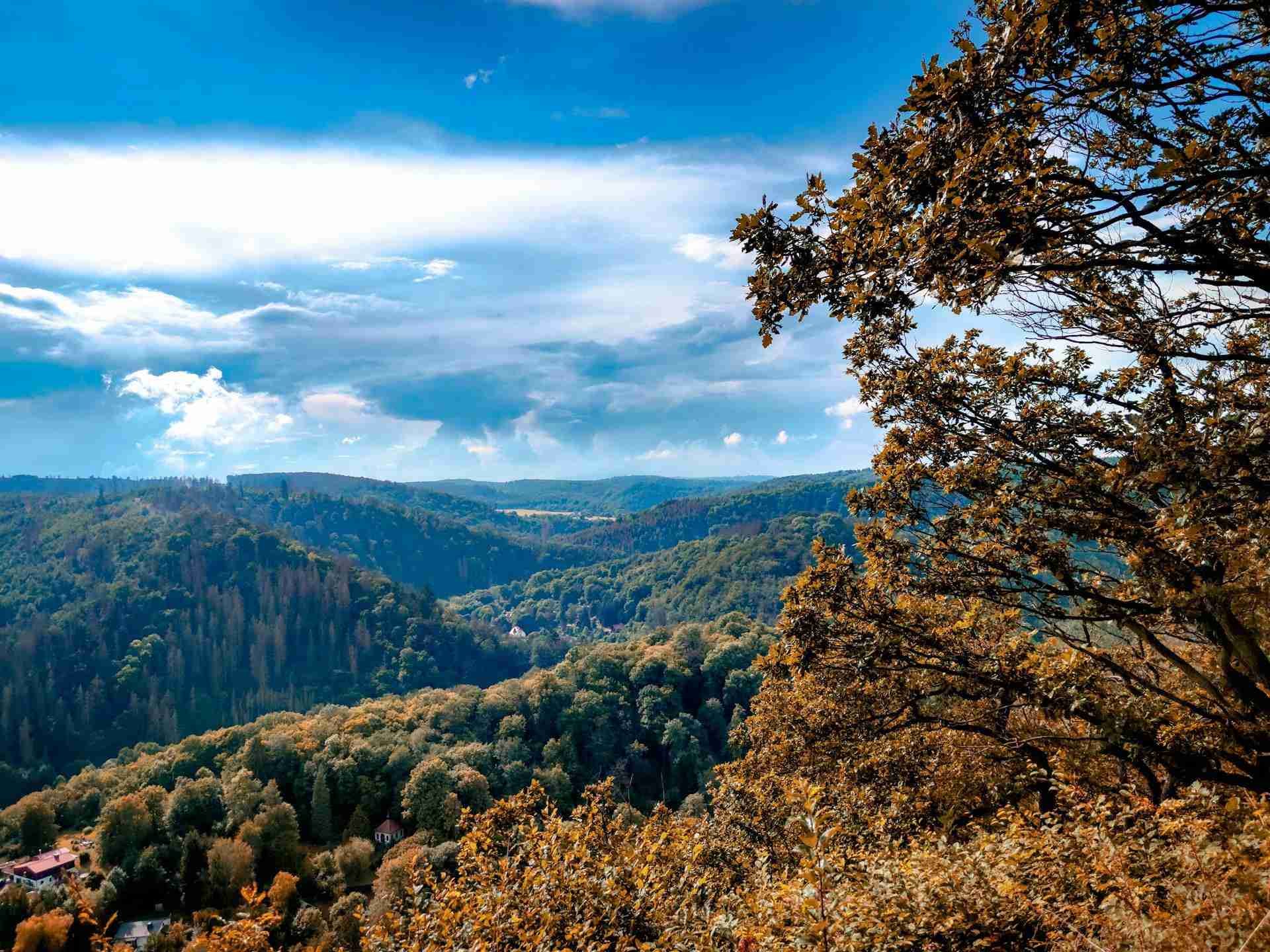
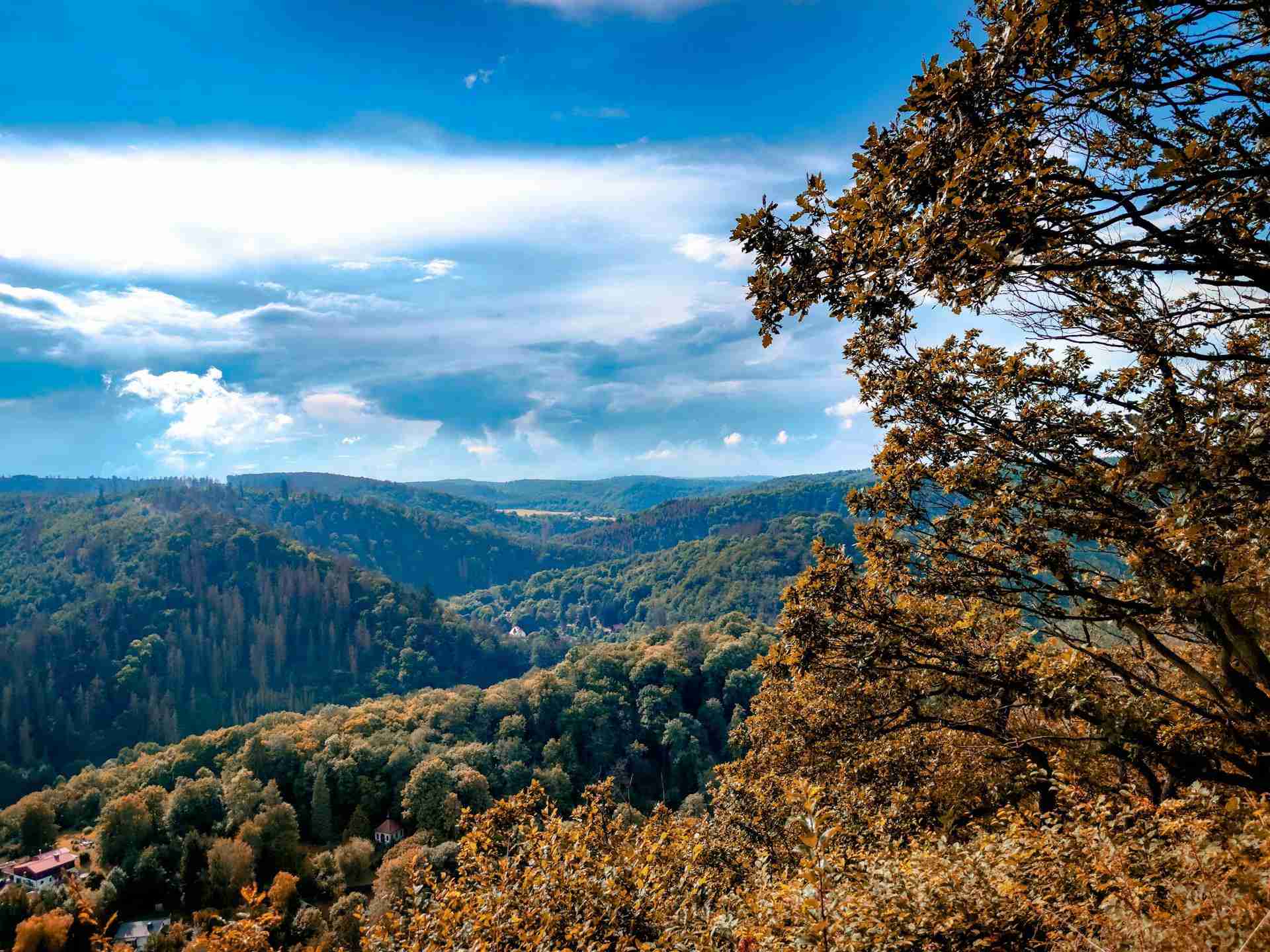
High above the Bode River near Treseburg, the Weisser Hirsch viewpoint offers a dramatic and peaceful perch for photographers looking to explore the Harz Mountains from an elevated, less-trodden angle. This forested lookout provides a sweeping view into the narrow valley below, where cliffs and conifers form layered compositions ideal for landscape photography throughout the year. It is a place to slow down, let the light shift, and work patiently with natural forms that change tone and depth with every hour.
Best Photography Opportunities
• Layered mountain views in morning mist
Early in the day, especially in spring and autumn, mist often clings to the ridgelines of the Bode Gorge. From the Weisser Hirsch lookout, you can capture these layers as they recede into soft gradients of green and blue. Use a telephoto lens to compress the ridges and enhance the sense of scale. A tripod and remote release will help maintain sharpness in the dim morning light.
• Autumn color from the ledge
From mid-October through early November, the hillsides across the gorge turn into a dense mix of warm tones. Standing at the viewpoint, you can shoot directly across or angle slightly down to take in the layered forest. A polarizer helps deepen the colors and reduce glare, while a wide-angle lens lets you anchor the frame with foreground rocks or branches.
• Evening light on the Bode Valley
Afternoon and early evening light enter the valley at a low angle, highlighting ridges and casting long shadows. The warm tones of golden hour stretch across the treetops and cliffs, creating contrast and depth. Compose with the slope of the valley guiding the viewer's eye from foreground trees to distant peaks. Filters can help manage highlights if the sky remains bright.
• Close foreground elements with distant context
Pine branches, mossy rocks, and trunks near the ledge provide opportunities for layering and scale. Including them in your frame gives a grounded feel and a sense of presence in the landscape. Focus stacking or shooting at f/11 to f/16 ensures detail throughout the scene. Soft overcast light works well to balance these textures.
• Long exposures in low light
After sunset or under heavy clouds, the viewpoint still offers moody, balanced scenes. Using a tripod and longer shutter speeds, you can capture soft light on the hills and subtle color in the forest. This is especially effective in late autumn or early spring, when the light shifts quickly and tree shapes remain visible against a darker sky.
Best Time to Visit
Photographically, the most dynamic seasons for the Weisser Hirsch viewpoint are spring and autumn. In spring, light green leaves begin to layer the slopes, and the river below often appears through thinning foliage. In autumn, color transforms the hillsides and misty mornings bring added dimension.
Morning is ideal if you are chasing mist or early side light. Plan to arrive around sunrise and allow time to walk in and set up before the first light hits the trees. Late afternoon to early evening is best for golden tones and richer color across the scene. Overcast days work well too, especially if you're focusing on texture and layered detail without direct sun.
Summer offers full foliage and clearer views into the distance, but harsh midday light can flatten the landscape. Winter, especially after a light snowfall, adds contrast and sharp lines, but access can be more difficult due to icy paths and lower temperatures.
How to Get There
The Weisser Hirsch viewpoint is located above Treseburg in the Harz Mountains, Saxony-Anhalt, Germany. From the village center, follow local hiking signs toward "Aussichtspunkt Weisser Hirsch" along the trail leading out of the village toward the north and east.
The trail is well marked and moderate in difficulty, taking about 20–30 minutes on foot with a gradual ascent through forested paths. Some areas can be muddy or uneven, so sturdy hiking boots are recommended. There is no public transit directly to the viewpoint, so arrival by car to Treseburg is the best option.
Free parking is available near the main road or local guesthouses. From there, the trailhead is easy to locate. There are no fees to access the trail or viewpoint, and it is open year-round. Bring water and be prepared for limited cell reception in some areas.
Recommended Photography Gear
A wide-angle lens (16–35mm) is excellent for capturing the full expanse of the valley and foreground elements. A mid-range zoom (24–70mm) offers flexibility, especially when working with trees or trail details. A telephoto lens (70–200mm or longer) is useful for isolating distant layers of hills, mist, or light across the gorge.
A lightweight but stable tripod is essential for morning and evening light or long exposures in overcast conditions. A polarizing filter helps manage reflections off leaves and deepens sky color. Graduated ND filters are helpful for balancing exposure when bright sky meets dark forest.
Bring extra batteries and a rain cover if the forecast is variable. A backpack with hydration, snacks, and a basic first aid kit is helpful for the short but uphill walk.
Nearby Photography Locations
, which stretches between Treseburg and Thale, offers numerous riverside scenes, rock formations, and forest shots. Low morning light along the river creates a peaceful setting with good conditions for long exposures.
• Rosstrappe Cliff
, accessible by road or trail from Thale, provides high views over the Bode Gorge with dramatic drops and winding trails. It's particularly strong at sunrise, with deep shadows and highlights painting the terrain.
, a plateau above Thale, gives panoramic views of the valley below and the cliffs across from the Weisser Hirsch viewpoint. It's an ideal location for sunset shots and wide compositions.
, near Weddersleben, features rugged sandstone formations stretching across a high ridge. Early or late light casts deep textures and long shadows that emphasize its unique structure.
, with its slate-roofed houses and surrounding woods, makes for charming, small-scale photography. Look for foggy mornings or evening light filtering through narrow lanes for quiet, atmospheric scenes.
Comments
Loading comments…