
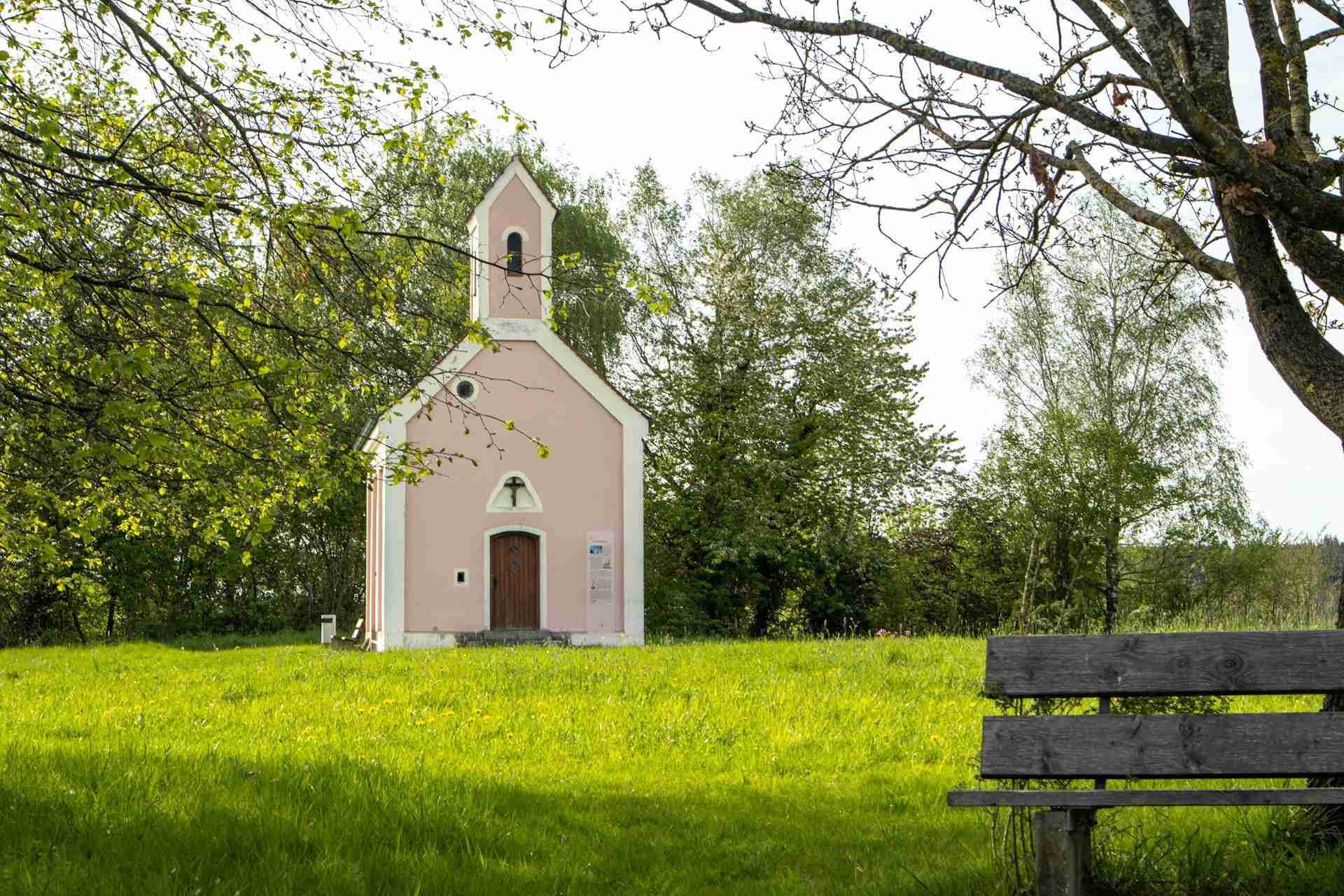
Wieskapelle is a small field chapel tucked into the quiet farmland just outside Hilgertshausen-Tandern in Upper Bavaria. It stands alone at the edge of a country road, surrounded by open fields and low rolling hills. The setting is rural and uncluttered, with wide sky, clean sightlines, and seasonal variation that gives photographers a lot to work with. The chapel itself is a simple structure with a small bell tower, and a few surrounding trees that frame it naturally. Whether you are shooting sunrise mist, long shadows at golden hour, or the chapel under a heavy sky, the location gives you space to slow down and build clean compositions that feel calm and well balanced.
Best Photography Opportunities
• Wide Angle Compositions
One of the strengths of this location is how isolated and open it feels. A wide angle lens allows you to place the chapel in its landscape without distraction. You can work with leading lines from the road or trails, frame it low against the horizon, or include elements like distant farmhouses and tree lines for scale. Early morning or late afternoon is best, when the low sun skims across the fields and adds contrast to the gentle terrain. Even in cloudy conditions, the softness of the light helps bring out the texture in the grass and roof tiles.
• Golden Hour
The orientation of the chapel makes it ideal for golden hour sessions. As the sun rises or sets, it lights up one side of the structure while casting long shadows across the field. This is a good time to shoot from a medium distance and let the warm light shape the contours of the building. Use the surrounding trees or fence posts as framing tools, or shoot through tall grass to add depth in the foreground. A polarizer can help pull more color out of the sky without overdoing the contrast.
• Seasonal Color
Depending on when you visit, the field around Wieskapelle offers very different looks. In spring and early summer, the grass is lush and often dotted with wildflowers. In late summer and autumn, golden tones take over, and by winter the area may be covered in frost or snow. These changes in color and ground texture give you a range of visual tools to work with. Shooting from a lower angle helps emphasize this surface texture and keeps the chapel firmly grounded in its environment.
• Minimalist Compositions
Because of how open the space is around the chapel, it is an ideal subject for minimalist work. You can shoot it off center in a wide frame with plenty of sky, or position it against a clean background with very little else in the frame. This approach works well under soft light, especially when fog or low cloud reduces background clutter. A telephoto lens can also work here, compressing the landscape and letting the building stand alone. Black and white versions of these compositions often hold up well, especially when the light is flat.
• Detail Shots of the Chapel's Features
The chapel may be simple, but it has enough architectural detail to support close up work. The small bell tower, wooden door, and stone base are all worth isolating with a short telephoto or macro lens. These shots work especially well under soft or diffused light when you are not fighting heavy shadows. On clear days, wait until the sun is low so that shadows fall across the textured walls in a way that adds depth. You can also look for weathered surfaces, climbing plants, or small crosses and symbols that add to the visual story.
Best Time to Visit
Wieskapelle can be photographed year round, but each season changes the look and feel of the space. Spring is one of the best times, with fresh greens and wildflowers softening the foreground. Summer brings stronger sun and drier ground, often with bold contrast between the white chapel and deep blue sky. Early autumn is excellent for golden hour shooting, especially in the evenings when the fields turn warm and the light stays low. Fog is more common in the mornings from late September through November and adds a lot of atmosphere when it settles in the hollows around the chapel.
Winter visits are possible and often worthwhile, especially after a light snow. The simplicity of the structure stands out more when the landscape is reduced to just a few tones. Overcast days are useful if you want to shoot without shadows and focus on clean compositions. The chapel is small enough to photograph well in most conditions, but the surrounding space benefits from softer light or some cloud structure to avoid a washed out sky.
How to Get There
Wieskapelle is located just outside the village of Hilgertshausen-Tandern in Upper Bavaria, set in the middle of open farmland between small agricultural roads. The chapel sits a short walk off Andrl Breite, a narrow farm road that connects directly to Obedorfer Straße. Turn right onto Andrl Breite and continue a short distance until you see an informal dirt road on the left. From there, it is a short and flat walk along the field path to the chapel.
There are no signs, designated parking areas, or tourist facilities at the chapel. You can park along the side of Andrl Breite without obstructing traffic or farm access. The path to the chapel is unpaved but easy to walk, even with a full backpack. There are no fences or restrictions around the building, but as always, respect the location and the surrounding farmland. There are no fees, and the chapel is accessible at any time of day. Cell signal is generally available throughout the area for checking light conditions or navigating.
Recommended Photography Gear
A wide angle lens is useful for showing the chapel within its open setting. Something in the 14 to 24 millimeter range works well for environmental compositions and leading lines from the road or field. A standard zoom like a 24 to 70 millimeter lens is flexible enough to cover full building shots and tighter compositions when working with trees or foreground elements. A short telephoto or 70 to 200 millimeter lens is helpful for isolating architectural details or compressing background hills.
Bring a tripod if you plan to shoot during golden hour or in lower light. A polarizer is helpful on clear days to manage sky color and reduce glare from surrounding vegetation. Neutral density filters are not essential here, but can be useful if you want to blur passing clouds or soften movement in nearby trees or grass. A weather resistant bag and cloth for lenses are good to have if you are visiting during colder months or in damp conditions. Waterproof shoes are also useful if the field is wet or soft underfoot.
Nearby Photography Locations
• Tandern Church and Hilltop Views
Just a few minutes away, the small town of Tandern has a classic village church that sits on slightly raised ground with views across the surrounding farmland. It is a good spot for sunrise and for clean rural compositions that include layers of farmland and sky.
• Ilkahöhe Viewpoint
About an hour to the south, Ilkahöhe offers wide views toward the Alps from a grassy hilltop. It is especially strong during late afternoon and in spring or autumn when the sky has more variation and the horizon is clear enough to see the mountain line.
• Amper River Near Haimhausen
The Amper River has several quiet bends and bridges near the town of Haimhausen that photograph well during early morning fog or under soft light. There are walking paths along the banks that offer access to the river without needing a long hike.
• Kaltenberg Woods and Trails
Kaltenberg is known for its castle and summer events, but the surrounding woods and fields are worth visiting on their own. The trails are lined with old trees, wooden fences, and farm buildings that work well in overcast or soft golden hour light.
• Schleissheim Palace Grounds
Closer to Munich, the baroque grounds of Schleissheim Palace offer structured compositions, fountains, and formal gardens. It is a complete contrast to Wieskapelle but a good addition if you are building out a day of architectural photography in the region.
Wieskapelle rewards a patient, careful approach. The scene is quiet and understated, but that is what makes it valuable. It is the kind of location where small changes in light and season shift the entire composition. If you are looking for a peaceful setting that lets you slow down and work deliberately, this little field chapel delivers.
Comments
Loading comments…