
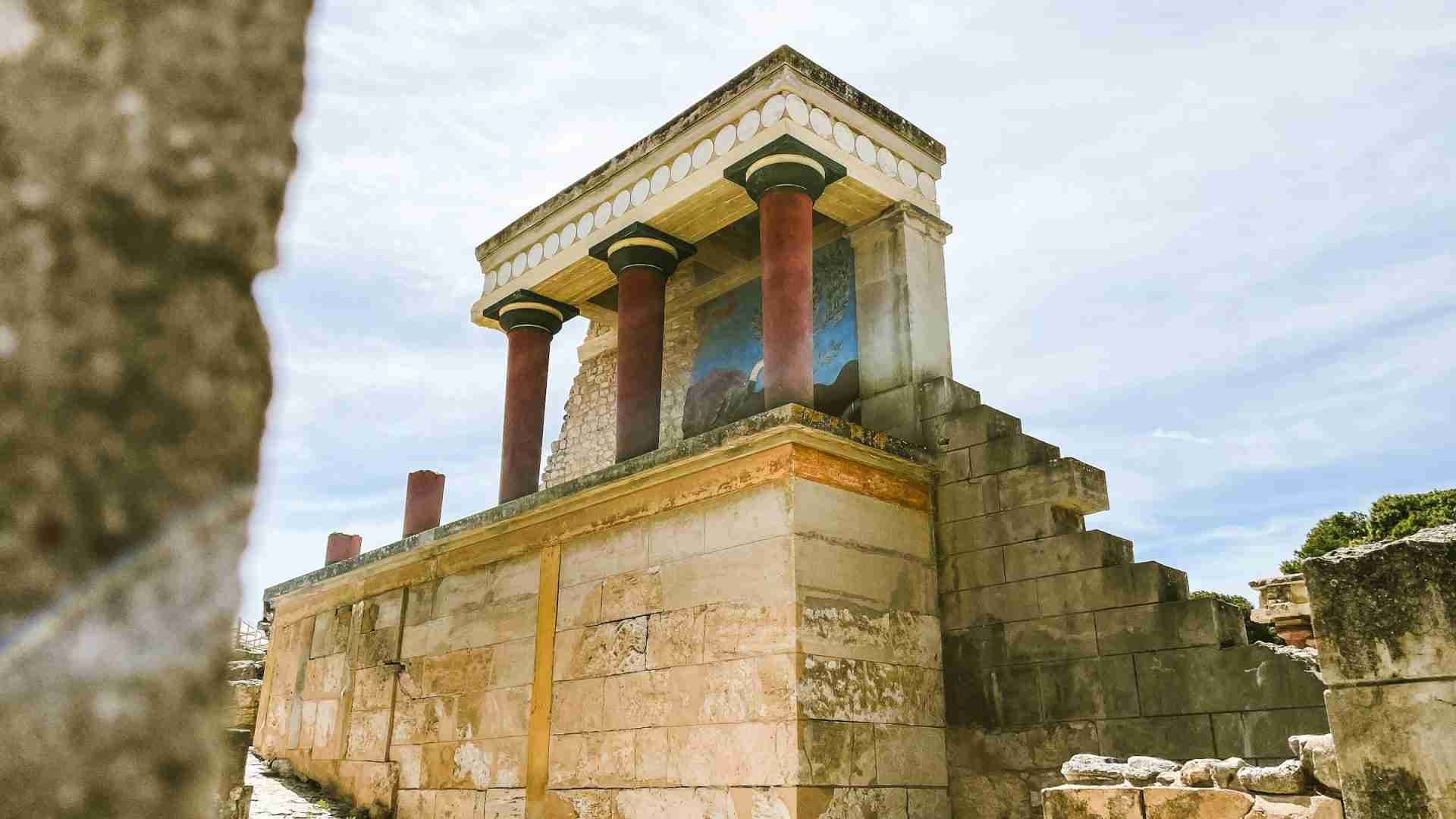
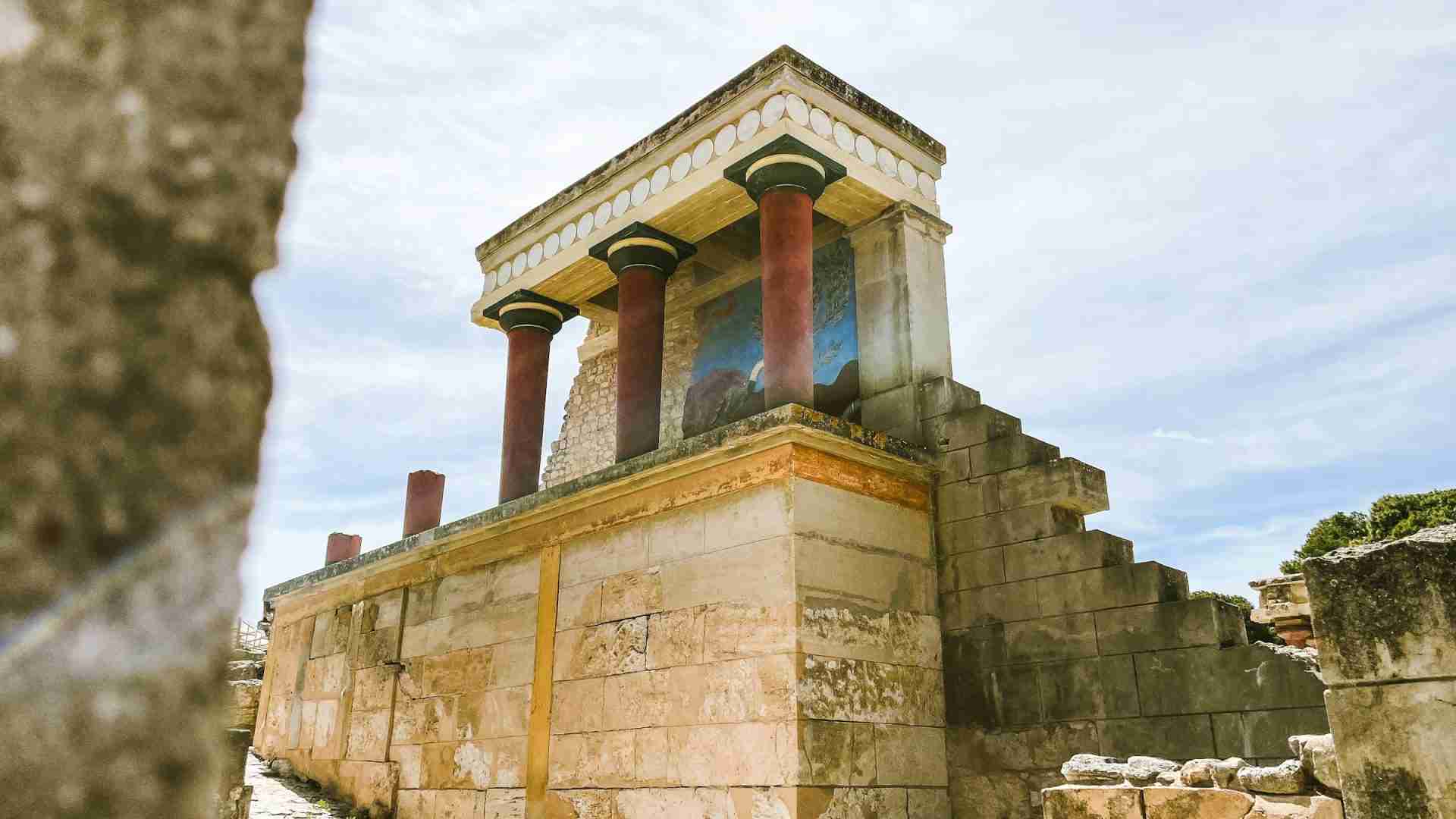
Knossos Palace is one of the most well known archaeological sites in Greece and one of the most interesting places to photograph on Crete. This ancient Minoan settlement features stone ruins, restored buildings, painted columns, and famous frescoes. Some parts of the site have been rebuilt, while others remain as excavated foundations, which gives you a wide range of subjects and styles to work with. It's a place where you can photograph color, texture, shape, and shadow all in the same frame. Whether you're walking through narrow passageways or standing in an open courtyard, Knossos gives you plenty of room to experiment with how you frame and use the light.
Best Photography Opportunities
• Red Columns and Painted Beams
The most recognizable features of Knossos are the vivid red columns and pale painted beams. These elements are part of a controversial reconstruction, but they offer strong visual contrast and clean geometric lines that work well in early morning light. The color palette is bold without being overwhelming, and the surrounding stone creates a neutral frame. Wide compositions show the setting as a whole, while tighter crops let you play with the texture and shape of the columns. Morning sun helps bring out the full depth of the colors before crowds arrive.
• The Grand Staircase
The Grand Staircase offers a rare chance to photograph vertical structure within a mostly flat ruin. Multiple landings and sharp corners give you several shooting angles. From the top, you can look down through columns and shadows. From the bottom, you can look up into repeated forms and shapes framed by natural light. The sun reaches deeper into this section by mid morning, creating harder contrast that works well if you're shooting for shape and form. Return to the same spot an hour later and the light will already feel different.
• Fresco Scenes and Framed Details
Many of the frescoes at Knossos are reconstructions, but they still offer clear subject matter, rich color, and opportunities to compose layered frames. The "Prince of the Lilies" fresco and the "Bull-Leaping" panel are especially photogenic. Try shooting them in context by including parts of the wall, columns, or adjacent shadows. A mid range zoom or short prime lens will give you the control needed to compose cleanly without distortion. The best light for these shots comes when the sun is off-angle, either early or late in the day, avoiding harsh glare.
• Stonework and Shadowed Passageways
The outer parts of the palace are full of exposed foundations, stacked stones, and narrow corridors that filter light in interesting ways. These quieter sections of the site are often overlooked, but they are where you can find strong shadow shapes, rough textures, and quiet compositions. Focus on transitions between open and closed space, or frame shots to include repeating stones or worn edges. These areas are best approached with a slower mindset and work especially well on overcast days when textures take priority over light.
• Perimeter Views and Site Layout
From higher ground near the outer edge of the ruins, you can look back across the palace complex and frame the entire layout. These wider compositions help organize the layers of reconstruction and give context to the site's size. Use longer lenses to compress the view and pull distant features together. These elevated views are strongest in softer light, either early morning or just before sunset, when the shadows give structure to the overlapping stonework.
Best Time to Visit
Morning is the most productive time to photograph Knossos. The sun rises to the east of the site and moves across the open courtyards, reaching the main columns and staircases with soft, angled light. The colors of the reconstructed areas appear richer and more defined at this time, and textures are easier to control without overexposure. Mornings are also the best way to avoid crowds. Tour groups begin arriving shortly after the site opens, so arriving early gives you time to shoot with fewer people in frame.
Late afternoon can also work well, especially during spring or autumn when the sun sits lower in the sky. Light begins to strike the opposite sides of the structures, creating different highlights and shadows than you get in the morning. In summer, midday is challenging. The stonework becomes hot and flat, shadows disappear, and the light can be overwhelming. Overcast conditions soften the light and are ideal for close up work or evenly lit compositions.
Spring and autumn offer the best balance of weather and light quality. Winter has quieter crowds and dramatic skies, though shorter hours and colder temperatures can limit your time on site. Summer provides the longest shooting window, but the light is harsh and crowds are heavier throughout the day.
How to Get There
Knossos is located about 15 minutes south of Heraklion by car. If you're arriving by bus, the local line runs regularly from the city center and stops directly at the entrance. For drivers, a public parking lot is located near the ticket area with ample space outside of peak summer weeks. The approach is flat, and once inside the site, most of the ruins are accessible on foot with well marked paths.
There is an entry fee, which includes access to all parts of the site that are open to the public. Photography is allowed throughout, but tripods are not permitted without special permission. You'll want to travel light and work handheld. The site is open year round, though closing hours shift by season. Visiting on a weekday morning will give you more freedom to shoot without interruption.
Recommended Photography Gear
A two lens kit will handle most shooting needs. A wide angle lens such as 16 to 35mm is ideal for capturing the courtyards, staircases, and reconstructed columns. For frescoes, architectural details, and compressed layers, a mid range zoom like a 24 to 70mm gives you control over framing while staying flexible. If you enjoy shooting from elevated spots or compressing features across the site, a 70 to 200mm lens can also be useful.
A circular polarizer helps manage reflections on stone surfaces and can deepen color in columns or painted walls, especially under strong sun. Keep it subtle to avoid uneven skies. A small cloth or blower is handy for dealing with dust, which builds up on lenses quickly in dry weather. Carry water, sunscreen, and a compact bag; shade is limited, and the walk through the ruins can be long in hot months. Since tripods are not allowed, shoot with faster shutter speeds or use walls and ledges for extra support when needed.
Nearby Photography Locations
Located in the city center, this museum houses the original frescoes and artifacts from Knossos. The lighting is designed for clarity and color, making it easy to photograph the artwork up close. Visiting after Knossos helps you connect the context of what you've just seen with the preserved objects.
A smaller archaeological site just south of Knossos, this Minoan villa features stonework, storage rooms, and a historic wine press. It's quiet, easy to access, and ideal for detail shots and soft countryside compositions. The site is surrounded by olive groves and fields that photograph well in golden hour.
A nearby village filled with narrow alleys, local homes, and traditional Cretan architecture. You'll find color, texture, and daily life that contrasts with the ruins of Knossos. Morning or late afternoon is the best time to explore and shoot without harsh light or busy streets.
From roads near Mount Youchtas, you can photograph wide views across the plains of Heraklion and look back toward the coast and the Knossos area. These high elevation pullouts are ideal for sunrise and golden hour. Use a longer lens to pick out geometric patterns in farmland and archaeological sites below.
Comments
Loading comments…