
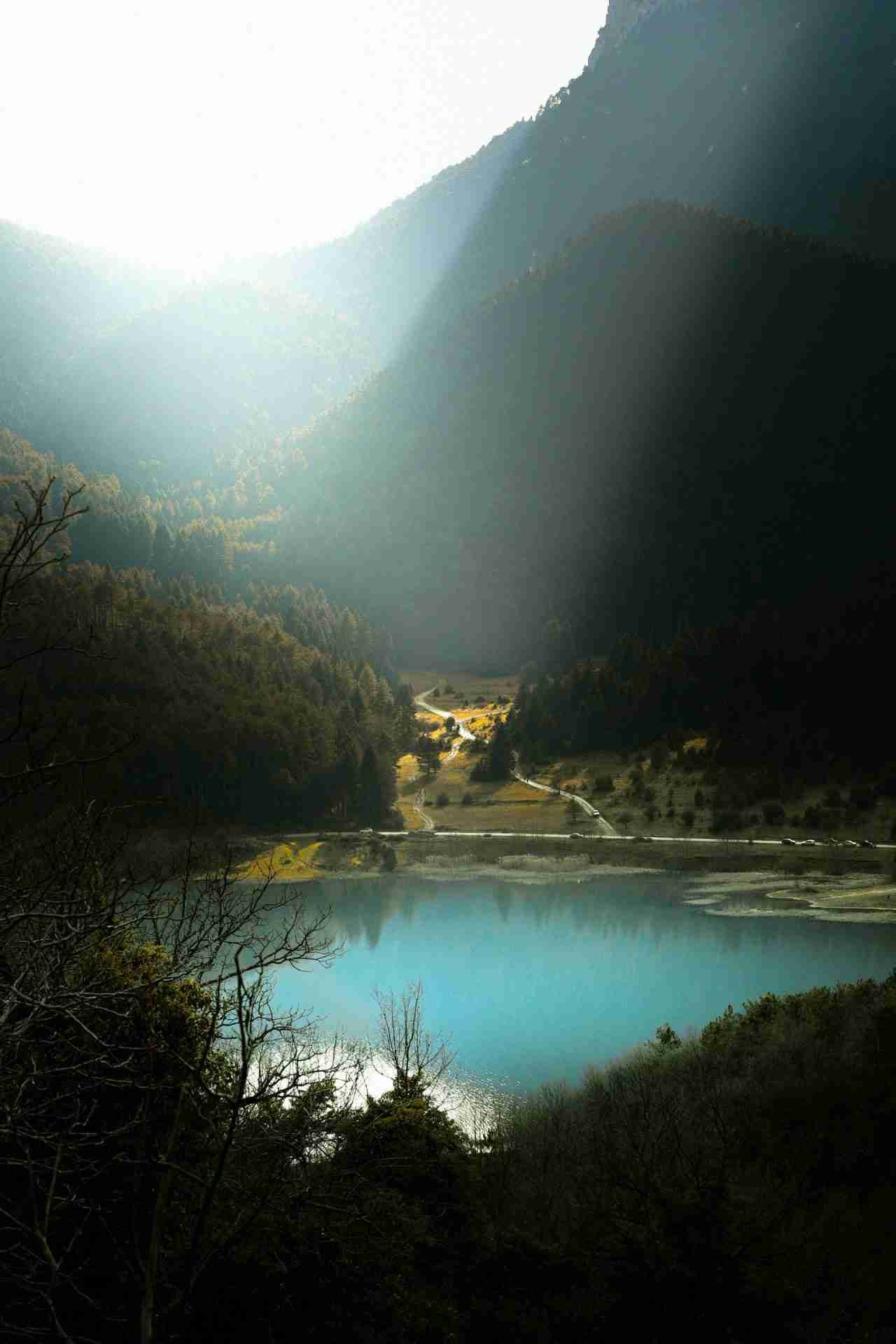
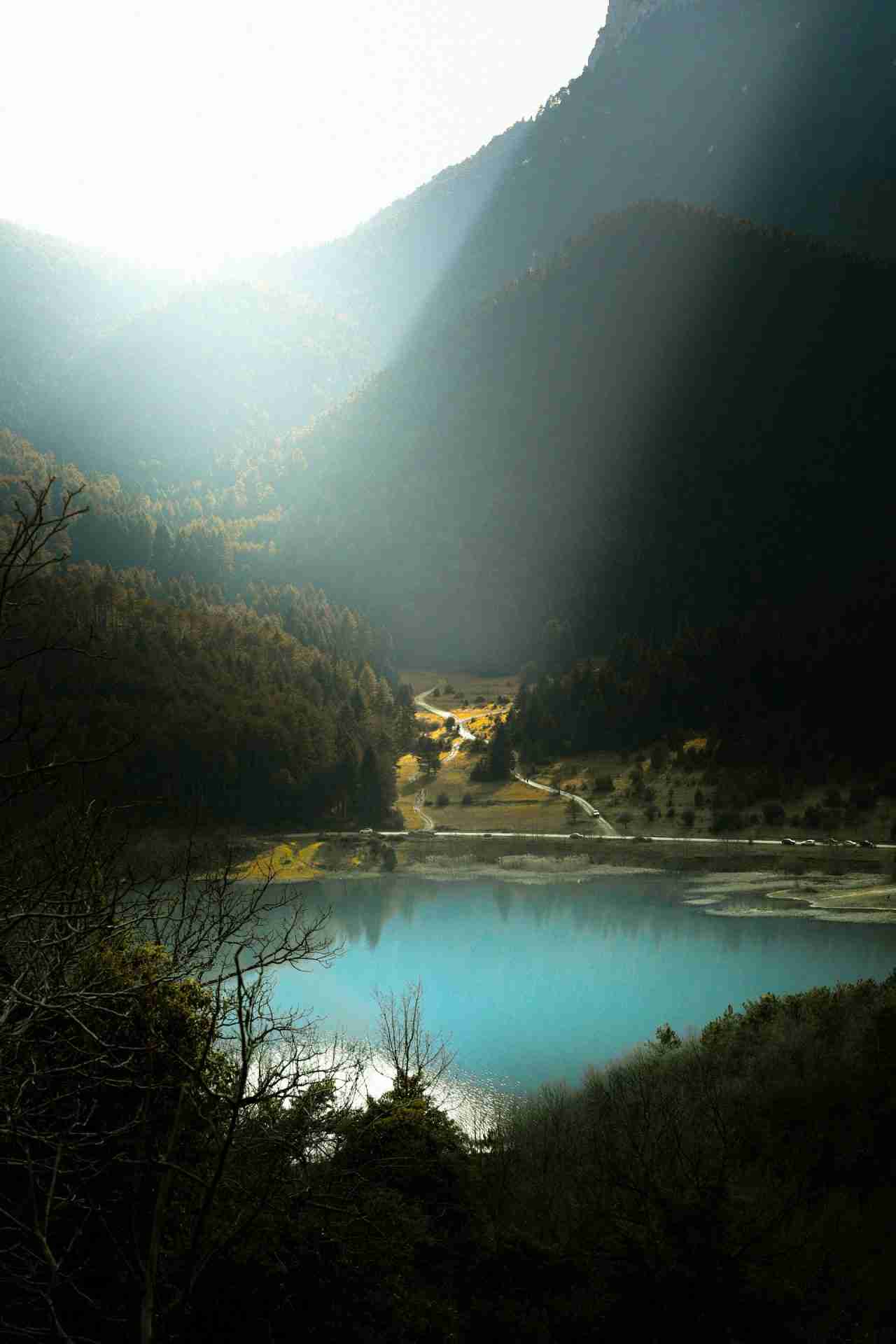
Lake Doxa lies in a wide mountain basin on the Feneos plateau, with open water in the foreground and wooded slopes rising gently on all sides. The lake is easy to move around and easy to understand visually, which makes it a comfortable place to work with a camera. From most points along the shore, the main elements fall into place without much effort, letting you focus on light, timing, and small adjustments rather than searching for viewpoints. The setting feels calm and unhurried, with reflections, clouds, and subtle changes in light doing most of the work. It is a location that rewards staying put, watching conditions change, and refining a few strong compositions instead of chasing constant variety.
Best Photography Opportunities
• Wide Shoreline Views Toward the Mountains
One of the most consistent approaches at Lake Doxa is to work with wide views from the shoreline, placing the lake in the foreground and the surrounding mountains as a backdrop. From many points around the lake, the water forms a clean horizontal base that anchors the image. Small changes in camera height determine how much shoreline versus reflection appears in the frame. Early light often softens contrast between land and sky, helping the scene feel balanced and readable. These compositions benefit from staying in place and letting clouds and light slowly change the background.
• Reflections During Calm Conditions
When wind is minimal, reflections become a defining feature of the lake. The surrounding slopes and sky mirror clearly on the water's surface, creating strong symmetry without feeling forced. Lower shooting positions emphasize reflection and reduce distractions along the far shore. Even when the surface is not perfectly still, broken reflections can add texture and depth. This opportunity is most reliable in the early morning before air movement builds across the basin. Working reflections here rewards careful framing and restraint rather than constant movement.
• Foreground Elements Along the Water's Edge
Rocks, grasses, and subtle shoreline curves provide useful foreground elements that add depth to otherwise simple compositions. These features help guide the viewer's eye into the frame and prevent wide views from feeling flat. Foreground placement matters, as too much detail can compete with the lake itself. Mid range focal lengths often strike the best balance between foreground presence and background scale. This approach works well when light is even and the overall scene is calm.
• Elevated Views Above the Shoreline
Walking slightly uphill from the lake reveals layered views where water, trees, and mountains stack naturally within the frame. From these positions, the lake becomes part of a broader landscape rather than the sole subject. This perspective allows photographers to control how dominant the water feels relative to the surrounding terrain. Longer focal lengths help compress layers and simplify busy areas. These views are especially effective when patches of light move across the slopes while the lake remains evenly lit.
• The Peninsula and Chapel of Agios Fanourios
A small peninsula extending into the lake holds the chapel of Agios Fanourios, which creates a clear and recognizable focal point within the landscape. From many positions along the shore, the chapel gives structure to wide compositions that might otherwise feel too open. The narrow strip of land naturally leads the eye toward the building, making it easy to build balanced foreground to background relationships. Early morning works especially well here, when calm water allows the peninsula and chapel to reflect cleanly. This spot is useful when you want a strong subject that anchors the scene without overpowering the surrounding mountains and water.
Best Time to Visit
Early morning is the most reliable time to photograph Lake Doxa, especially for calm water and clear reflections. During these hours, wind is often minimal and light builds gradually across the basin rather than arriving abruptly. This makes it easier to manage contrast and refine compositions without rushing. As the day progresses, wind tends to increase, breaking reflections and shifting the visual focus toward texture and movement. Late afternoon can be productive when cloud cover softens the light, but direct sun can create strong contrast if skies clear suddenly. Seasonal changes are noticeable. Spring brings higher water levels and fresher greens, while autumn introduces warmer tones in surrounding vegetation. Winter can produce stark, graphic scenes when snow settles on nearby peaks, though access and conditions can be unpredictable. Flexibility and time on site matter more than a fixed schedule here.
How to Get There
Lake Doxa is located in the mountainous interior of Corinthia on the Feneos plateau and is reached by road from nearby towns and villages. The drive involves winding mountain roads, so travel times are longer than distances suggest. Parking is available close to the lake, with easy access to shoreline paths and open viewpoints. There is no general fee to access the lake or walk around its perimeter. Roads are paved, but weather can affect conditions, particularly in colder months. Arriving early helps avoid both traffic and visitors and allows more freedom to explore multiple positions around the lake.
Recommended Photography Gear
A flexible lens range is important at Lake Doxa, as compositions range from wide landscapes to more focused shoreline details. A standard zoom covers most needs, while a longer focal length is useful for isolating mountain slopes, compressing layers, and simplifying backgrounds from elevated positions. A wide lens works well for foreground driven compositions along the shore, provided framing is handled carefully. A tripod is strongly recommended, especially in early morning when light levels are lower and precision matters for reflections. Filters are optional, but a polarizer can help manage glare on the water and deepen sky tones when conditions allow. Weather protection for gear is sensible, as mountain conditions can change quickly.
Nearby Photography Locations
Located a short drive east of Lake Doxa, this archaeological area contains low stone remains spread across open ground. It works well for wide compositions that combine ruins, fields, and distant hills, especially under soft morning or overcast light.
• Kastania
Kastania is a traditional mountain village near the Feneos plateau with stone houses, narrow streets, and open views toward surrounding hills. It is useful for adding human scale and everyday detail to a landscape focused shoot.
• Goura
Situated along the regional road network, Goura offers village scenes, roadside viewpoints, and access toward higher elevations. It works well for transitional images between plateau and mountain terrain.
The access roads and lower trailheads of Mount Ziria provide forested slopes, elevation, and wider views across the region. These locations are useful for context shots that place Lake Doxa within a broader mountain setting.
• Olvios River
Away from the lake, sections of the Olvios River offer smaller scale scenes with flowing water and vegetation. This area provides a strong contrast to the stillness and openness of Lake Doxa.
Comments
Loading comments…