
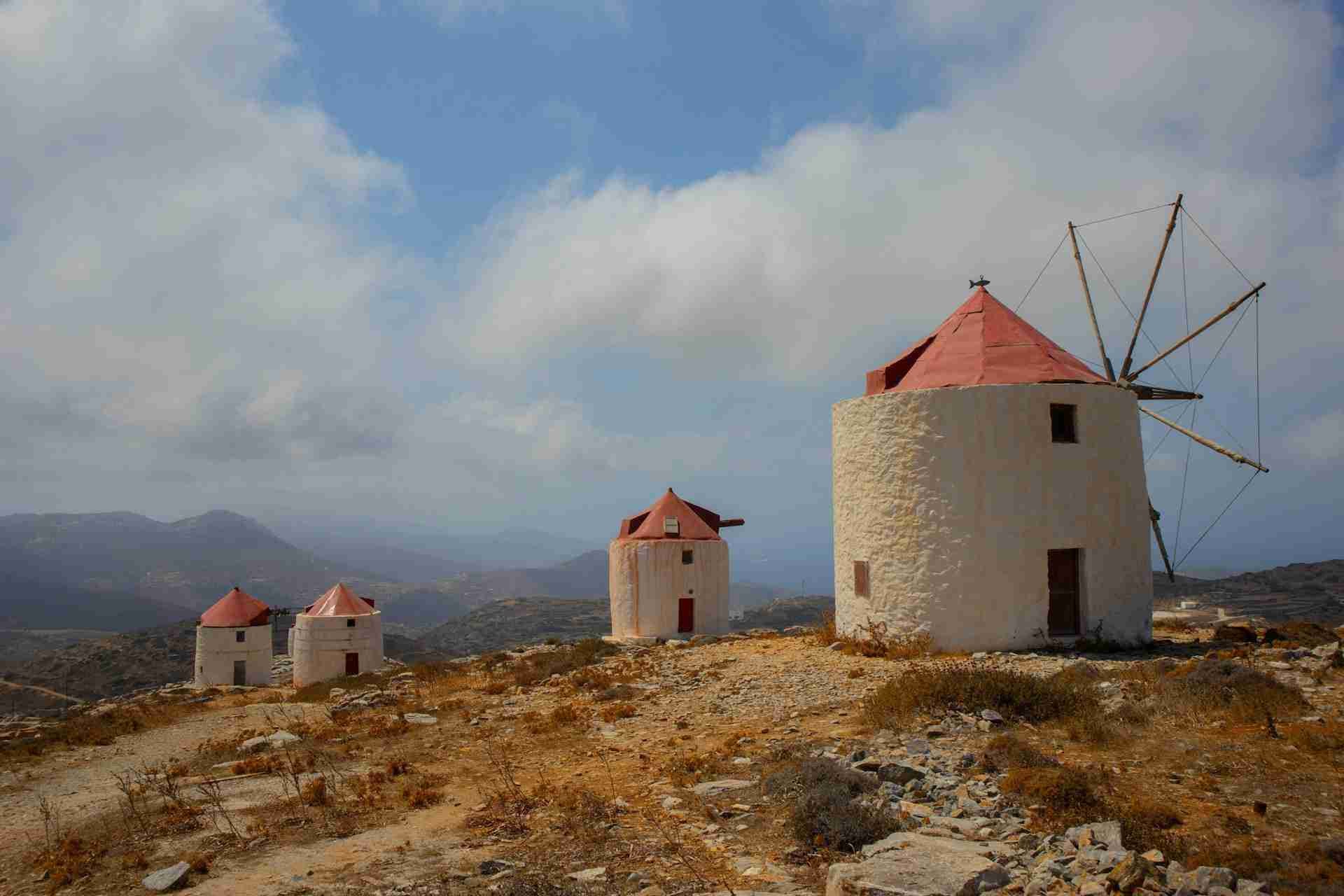
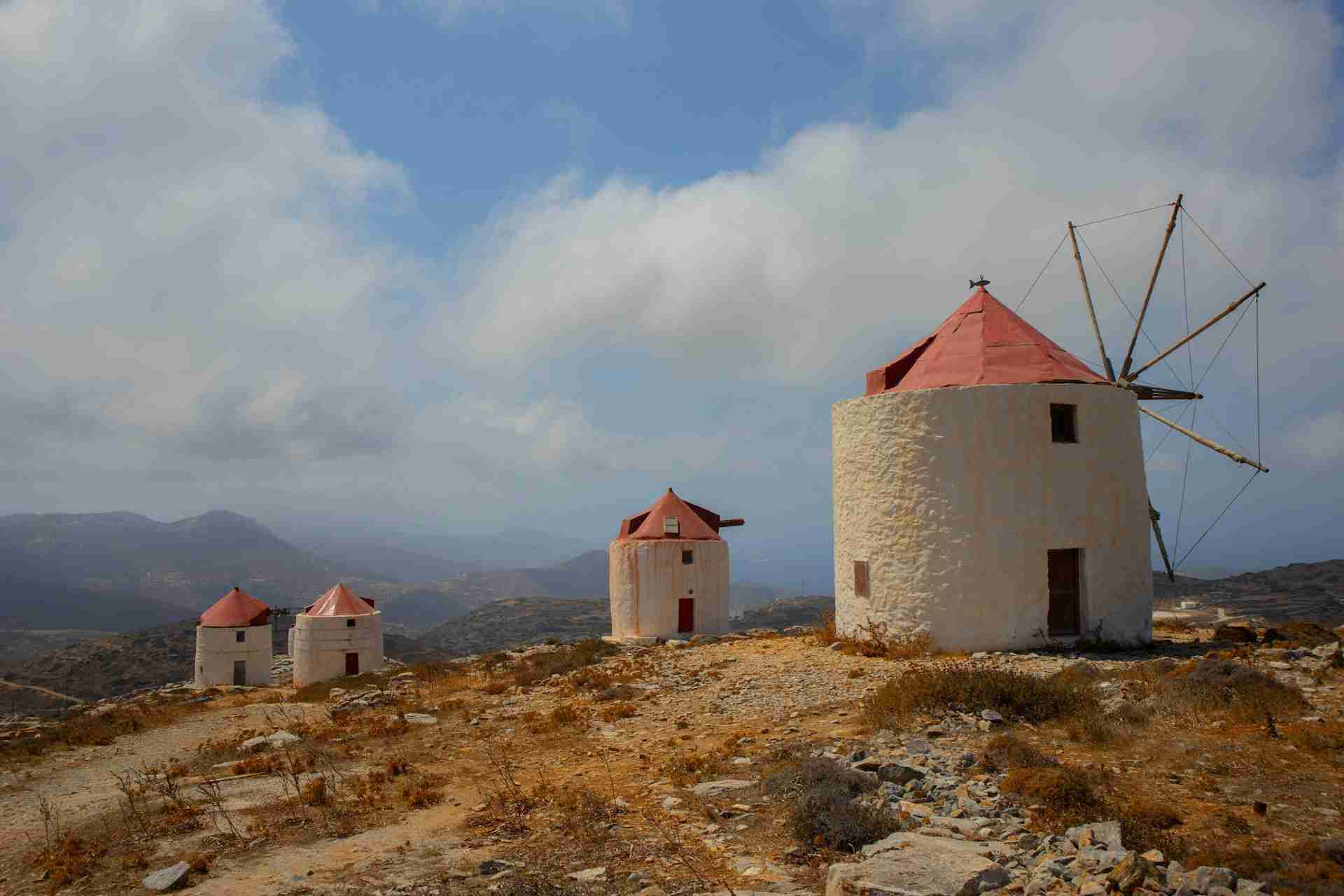
The ridgeline above Chora on the island of Amorgos is crowned by a line of traditional windmills, each standing in varying states of preservation, facing the Aegean with centuries-old purpose. These whitewashed structures form a sculptural sequence along the crest just beyond the old town's narrow alleys, making them one of the most striking highland vantage points in the Cyclades. Their placement above the village offers clean compositions of curved stone and circular form set against a changing sea and sky. While some of the mills are intact, others are broken or partially collapsed, offering contrast between structure and ruin. The scene shifts continuously with wind, light, and cloud movement, rewarding photographers who return at different hours or in changing conditions.
Best Photography Opportunities
• The central windmill row at sunset
offers the most rewarding light of the day. As the sun drops toward the western horizon, the sea behind the mills takes on a deep gradient while the structures catch a final edge of warm light. This is an ideal time for silhouette work as well, especially when clouds are backlit or when the shape of the sails becomes a dominant graphic element. A tripod helps here for maintaining alignment across multiple compositions as the light falls quickly. Composing with a wide lens from slightly downhill allows for leading lines along the ridge while keeping the full shape of each windmill in view.
• Close-up structural studies of individual mills
highlight the craftsmanship and wear of each building. Some retain partial wood frames for the sails, while others have open interiors or crumbling stone. These features photograph well in soft morning light, when shadows are less harsh and textures can be fully explored. A mid-range zoom lets you isolate these details without distortion. Circular stonework, aged plaster, and the interaction between ruin and sky all contribute to strong, standalone frames.
• Views back toward Chora from the ridge
offer layered compositions where the windmills form a midground structure and the white buildings of the town descend behind them. This angle is strongest in morning or late afternoon when the side light helps define the village rooftops and narrow lanes. Framing this scene requires a moderate focal length and careful attention to vertical balance, as the slope can distort perspective. It's especially effective when some passing clouds add complexity to the sky without blocking the direction of light.
• Twilight and blue hour shooting along the ridge
creates a calm and tonal atmosphere. As the town lights below begin to flicker on, the mills remain silhouetted against the fading sky, with outlines that become bolder as contrast increases. Long exposures smooth out the sea and let the last ambient light register in delicate gradients. This is the quietest time at the location, with less wind and foot traffic. A stable tripod and remote release allow for precision in low light, especially when capturing multiple exposures for blending.
• Stormy and wind-swept weather conditions
bring dramatic movement to an otherwise static subject. With strong winds common in the Cyclades, cloud speed and changing light across the Aegean can be used to emphasize mood and dynamic contrast. Neutral density filters and slower shutter speeds can capture streaking cloud or subtle movement in brush and grass. The mills themselves become anchors in a restless frame, and shooting from lower angles exaggerates their presence against the sky. This approach works well in black and white, where tonal range and shape carry the image.
Best Time to Visit
The best time to photograph the windmills of Chora is in the shoulder seasons—spring and autumn—when the light is low and clean, and the wind patterns bring regular motion to the landscape without the intensity of summer storms. April through June offers wildflowers along the path and clearer skies, while September through early November brings softer contrast and golden light that lingers longer in the afternoon.
Sunrise and sunset are equally rewarding here, depending on your intended composition. The ridge receives full western light in the evening, while the eastern horizon at dawn gives a cooler, backlit character with rich gradients over the sea. Wind is frequent year-round and strongest in summer, so early morning is often the calmest time for tripod work. Summer brings clear skies but also the harshest overhead light during midday. Winter can be more unpredictable but provides isolation and strong shadow play, especially under dramatic skies.
How to Get There
Chora, the capital of Amorgos, is easily reached by road from the island's two ports—Katapola and Aegiali. The windmills sit just above the southern edge of town, accessible by a short uphill walk from the last cluster of houses. The path is uneven in places but short, requiring no more than ten minutes on foot. Parking is available on the outskirts of Chora, and it's best to leave your vehicle near the main road, then walk through the pedestrian alleys.
There are no fences or restricted areas at the mill site, and access is open at all hours. However, the ground is rocky and exposed to strong gusts, so take care when setting up gear. There are no fees or services at the site, and it is unlit at night, so bring a headlamp or flashlight if shooting before sunrise or after sunset. Drone use is permitted but should be done with awareness of wind conditions and village proximity, especially during high season when Chora is more active.
Recommended Photography Gear
A sturdy tripod is essential for long exposures, low-light shooting, and for bracketing compositions during changing conditions. Wind can be strong here, even on seemingly calm days, so a hook or weighted bag helps stabilize your setup. A remote shutter release or intervalometer is useful during twilight or for capturing cloud motion.
Lenses in the 16 to 35 millimeter range are ideal for wide environmental shots that include the windmills, sky, and town below. A 24 to 70 millimeter lens offers versatility for midrange and detail work, especially on individual mills or textured surfaces. A polarizer helps cut glare from white stone and enhance contrast in blue skies, especially on clear days. Neutral density filters—six or ten stops—are recommended for slowing shutter speeds during daylight and exaggerating motion in the sky or sea.
Because the site is fully exposed, sun and dust protection for both gear and photographer are essential. Lens cloths, protective filters, and a weather-sealed bag will extend your shooting time in less predictable conditions. Footwear should provide traction on rocky or uneven ground, especially when moving between levels along the ridge.
Nearby Photography Locations
, clinging to the cliffside east of Chora, is one of the most visually arresting buildings in the Cyclades. Best shot from the trail below in morning light, its white silhouette stands out sharply against the darker rock and Aegean below. The dramatic setting and vertical composition make it ideal for wide-angle or compressed perspectives.
offers endless detail in its narrow lanes, rooftop angles, and church domes. Shooting early in the day brings soft, indirect light into the passageways, while golden hour light on the upper terraces makes for warm, geometric compositions. The lack of cars and presence of traditional Cycladic architecture makes it ideal for handheld street and detail photography.
• Agia Anna Beach and the Aegean cliffs below Hozoviotissa
provide an open coastal backdrop with changing light on the water throughout the day. The white chapel above the beach and the curve of coastline are especially striking when photographed in side light. In calmer conditions, reflections and sea texture can be worked into minimalist compositions.
, the island's main arrival point, is an excellent location for twilight reflections and long exposures across the bay. The curve of the harbor and line of boats offer strong composition anchors, especially in blue hour. Evening light on the hills behind the village creates a calm, layered backdrop.
offer elevated views over the bay and rugged outlines of stone foundations. It is best visited in the late afternoon, when the light warms the landscape and casts shadows across the exposed rock. Though small in scale, the site combines history and elevation with a full view of the western coastline.
The mills of Chora are more than just landmarks—they are sculptural elements in constant dialogue with wind, light, and sky. For photographers who value shifting conditions, textured surfaces, and historical presence, this ridge above the whitewashed town offers a rewarding canvas for both patient observation and creative interpretation.
Comments
Loading comments…