
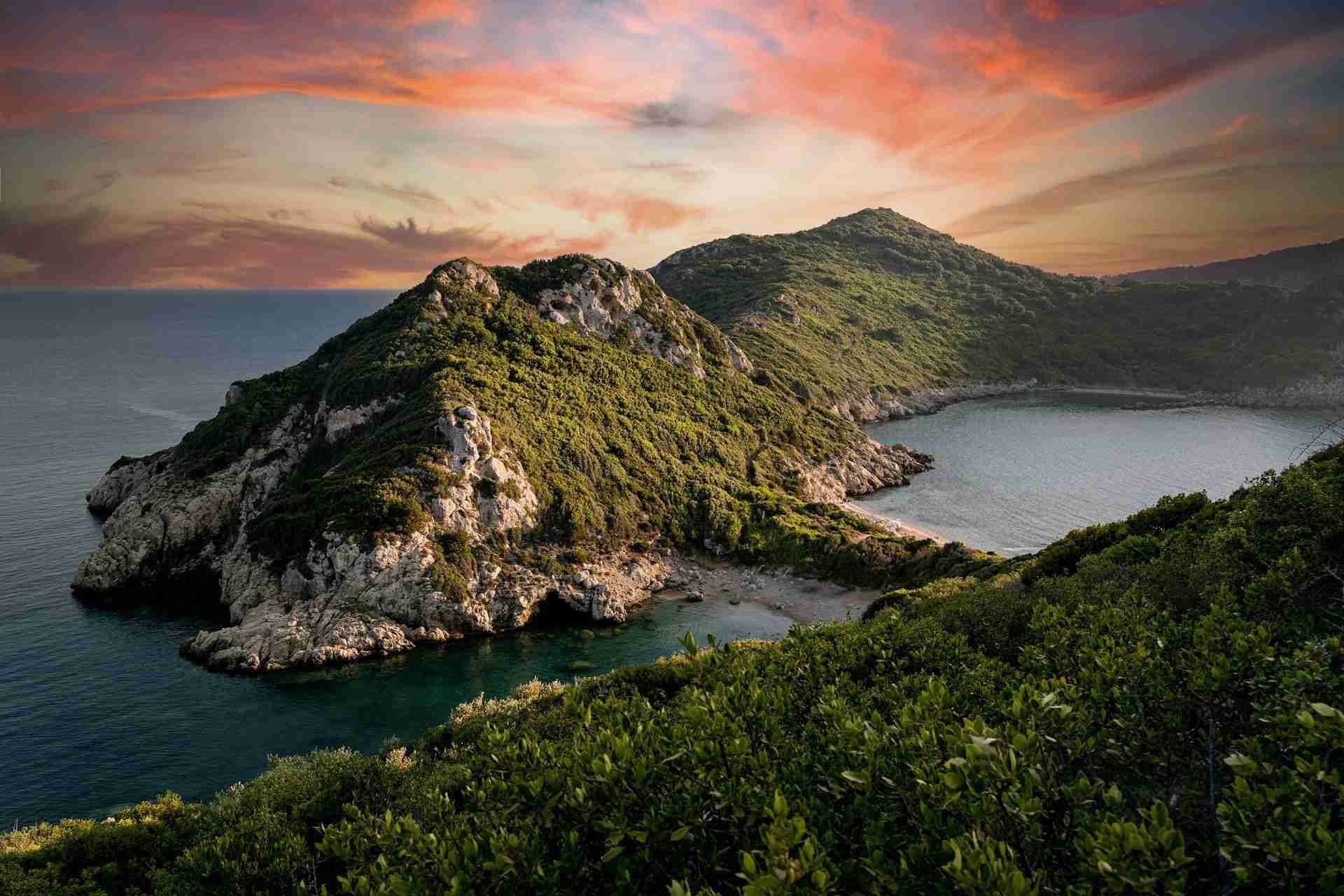
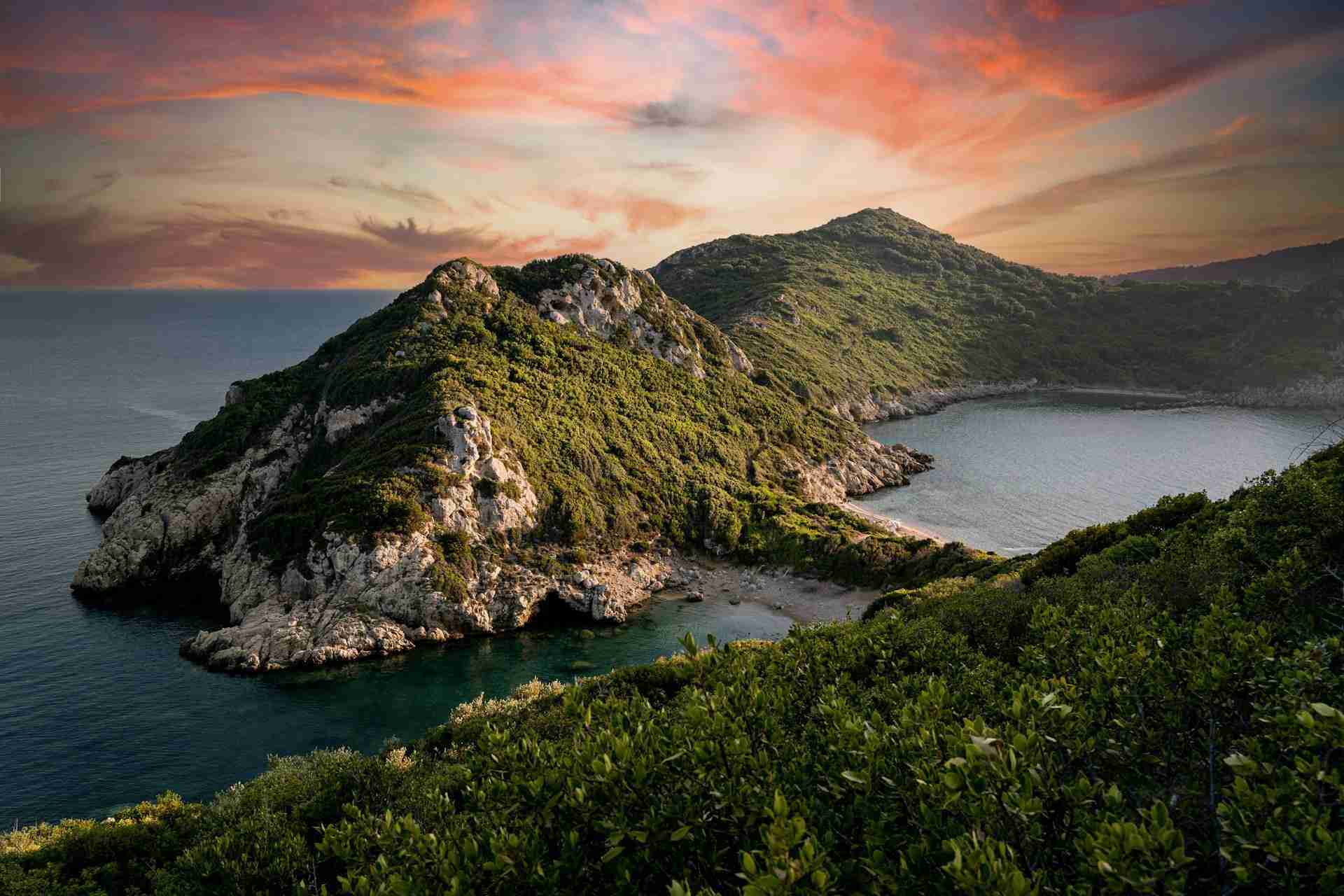
Set high on a rocky headland above the twin beaches of Porto Timoni, this viewpoint offers one of the most rewarding panoramic compositions on the island of Corfu. The two coves curve toward each other in a near-symmetrical shape, forming a slender isthmus of sand that glows under the Ionian light. Framed by steep cliffs and surrounded by vibrant turquoise water, the scene looks almost surreal from above, making it one of the most compelling landscape subjects in the Greek islands.
Best Photography Opportunities
• Overhead panorama of the double beach
The main draw is the twin beach formation itself, best photographed from the high bluff directly above. Use a wide-angle lens to capture the full arc of coastline, both coves, and the surrounding sea. A small aperture helps retain sharpness from the rocks at your feet to the far horizon. Golden hour enhances contrast between the water and the surrounding cliffs.
• Side angles with cliffs and sea layers
Moving slightly east or west along the ridge reveals shifting perspectives on the beaches and gives access to natural framing elements like wild bushes or jagged rocks. A mid-range zoom works well here to compress the space and include subtle light gradations across the water.
• Top-down textures of the sea and sand
Closer to the edge, you can shoot more directly downward to highlight color transitions in the water and the patterns of beachgoers below. These abstract compositions are strongest in midday light, when sunlight penetrates the clear water and outlines the shapes of submerged rocks and coral.
• Sunset silhouettes with island background
As the sun drops toward the western horizon, the hilltop above Porto Timoni becomes a dramatic silhouette spot. Frame a figure or part of the ridge against the setting sun, or use the dimming light to bring out the deeper blues in the sea. A tripod helps balance the exposure and retain detail in the shadows.
• Milky Way and night sky photography
On clear summer nights, this remote headland offers dark skies ideal for astrophotography. With the beaches and sea acting as dark foreground, you can capture the Milky Way rising from the horizon or track stars above the Ionian coast. Use a wide-angle lens with a fast aperture and long exposure.
Best Time to Visit
The most productive seasons for photography at Porto Timoni are late spring through early autumn. In May and June, the hills remain green and the light is already warm, while September and October bring softer skies and fewer crowds. Summer offers the clearest water for underwater textures, but midday sun can be intense.
Golden hour provides the most balanced and dynamic compositions, particularly in the late afternoon when the western sun glows across the headland and lights up the beaches below. Early morning is quieter and more stable in terms of color temperature, with pastel skies and light haze. Midday works best for top-down shots when color separation in the sea is most pronounced.
Avoid visiting on hazy or heavily overcast days, as the clarity of the sea and the outline of the headland are key to this location's visual appeal. Wind can cause haze or sea spray, so calm days are ideal. For night photography, check moon phases and aim for new moon conditions to minimize light pollution.
How to Get There
Porto Timoni is located near the village of Afionas, on the northwest coast of Corfu. To reach the viewpoint, you'll first need to park in or near Afionas and walk through the narrow village paths toward the start of the Porto Timoni trail. From there, follow the marked path down toward the beach, but branch off at a natural clearing near the edge of the ridge.
The viewpoint itself is not officially marked, but worn footpaths and exposed rock slabs lead to the best vantage points. The climb is moderately steep and uneven in places, so good footwear and care with footing are essential. There are no safety barriers, and the drop-offs are significant. Bring plenty of water, especially in summer, and avoid hiking in sandals or during midday heat.
There are no entry fees, opening hours, or facilities at the viewpoint. The trail is accessible year-round, though it becomes slippery after rain. Photography is unrestricted, but tripods and larger gear must be carried manually along the trail. Be prepared to work from uneven or sloped surfaces when setting up a composition.
Recommended Photography Gear
A wide-angle lens (16–35mm) is essential for capturing the full span of both beaches from above. A mid-range zoom (24–70mm) is ideal for framing tighter compositions along the ridge and compressing elements of cliff, sea, and sky. A telephoto (70–200mm) can help isolate beachgoers, boats, or patterns in the landscape.
A lightweight tripod is useful for golden hour and long exposure work. A circular polarizer will bring out water clarity and cut glare, especially when shooting top-down. A graduated ND filter can help manage bright skies and retain detail in darker foregrounds.
Pack light and secure your gear in a padded, close-fitting backpack. Hiking poles can be helpful for the steeper sections. Bring a headlamp or small light source if planning to shoot during blue hour or after dark. Extra batteries and a cleaning cloth are recommended due to humidity and dust.
Nearby Photography Locations
, with its narrow streets, bougainvillea-covered walls, and sea-facing cafes, offers charming details and color during early morning or golden hour.
, located below the cliffs, features a long crescent of sand with calm water ideal for sunrise reflections and drone photography.
• Cape Arillas viewpoint
, a short drive north, provides layered views of sea stacks, cliffs, and distant islands—especially photogenic at sunset.
, a Byzantine-era fortress set on a rock outcrop high above the sea, delivers sweeping panoramic shots and strong silhouettes against the setting sun.
• Loggas Beach and the cliffside platform at Peroulades
, best visited at sunset when golden light skims across the water and the vertical cliffs catch fire with warm tones.
Comments
Loading comments…