
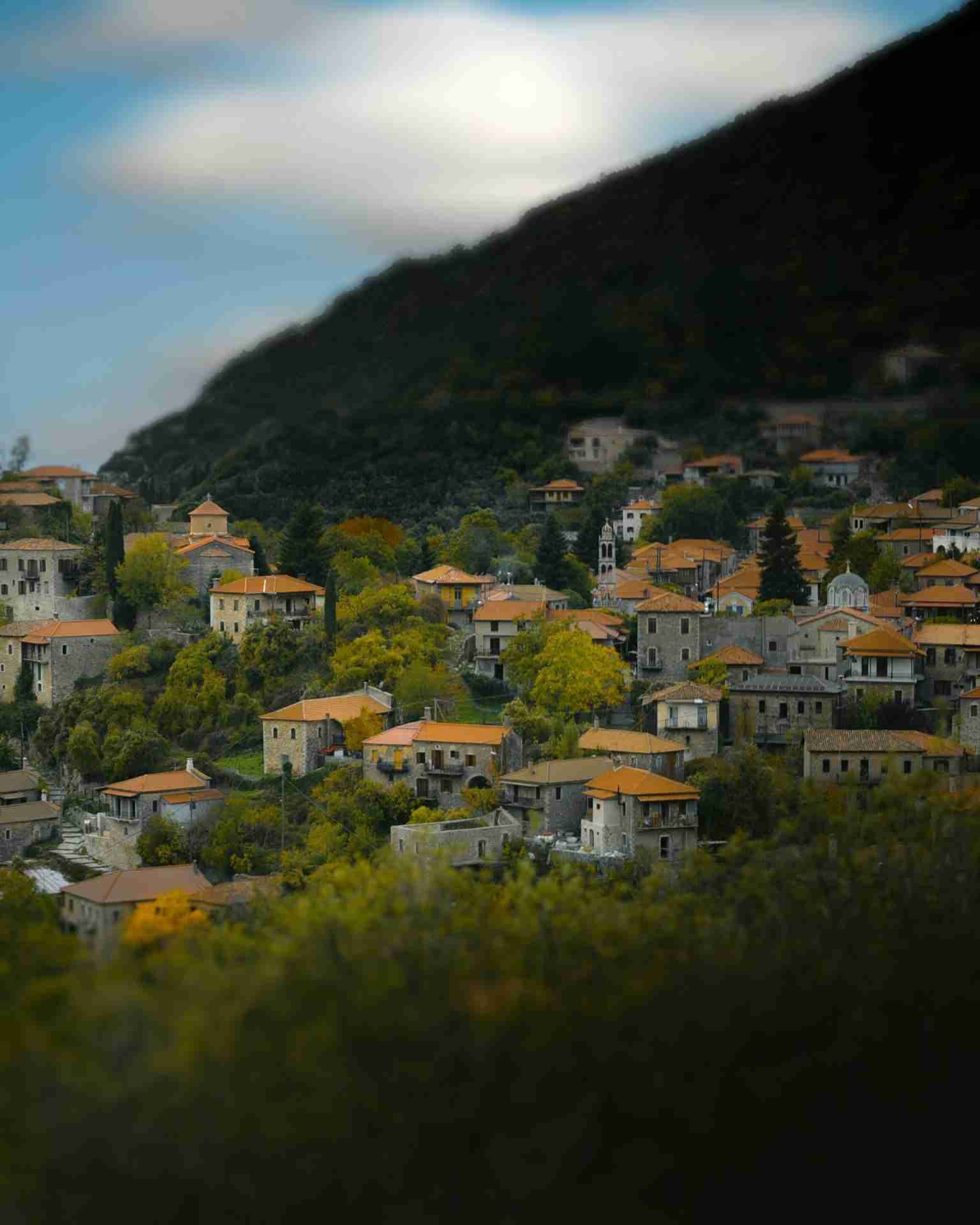
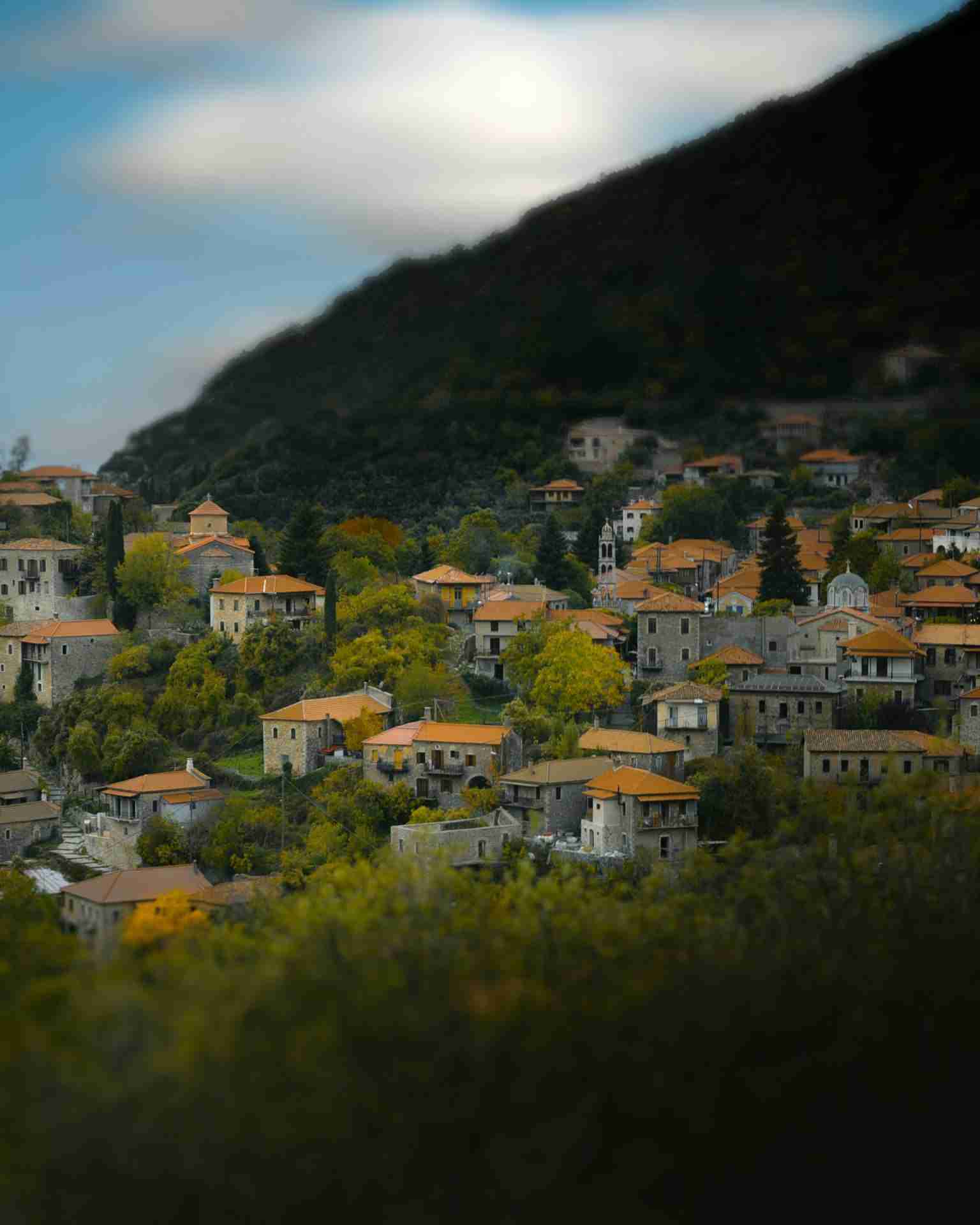
Tucked into the folds of the central Peloponnese, the mountain village of Stemnitsa sits quietly on the steep slopes of Mount Mainalon. This traditional Greek village, built from stone and timber, overlooks deep valleys and forested ridges. Narrow lanes wind past tiled rooftops and small courtyards, while the landscape drops away to reveal sweeping views of cliffs, ravines, and distant peaks. Stemnitsa is well known for its craftsmanship and peaceful rhythm, but for photographers, its true appeal lies in the way it blends texture, structure, and natural beauty.
Photographing in Stemnitsa is an immersive experience. You can walk from sunlit ridgelines down into shaded alleys within minutes. Stone paths reflect warm afternoon light, and carved wooden balconies offer quiet details in the shadowed parts of the village. From above, the rooftops seem to grow right out of the hillside, while at ground level, every turn in the road presents a new composition. The light here is constantly shifting. Early mornings are often calm and cool, while evenings bring soft gold across the rooftops and long shadows in the streets. Whether you are focused on village life or looking to capture wide views of the surrounding mountains, Stemnitsa invites you to slow down and look closely.
Best Photography Opportunities
• Rooftop Views from the Upper Village Trails
From several trails just above the village, you can look down over the tiled roofs and stone buildings nestled into the slope. These high viewpoints give you a strong sense of how Stemnitsa blends into the mountainside. In the early morning or late afternoon, light strikes the upper parts of the village first, creating bright highlights against the darker woods and ridges behind. A 24–70mm lens works well here to include both the village and the natural surroundings, while a longer zoom can help isolate lines of rooftops or pick out details like church towers rising above the trees.
• Stone Streets and Pathways in Golden Hour
Stemnitsa's narrow lanes and walkways are lined with stone houses, iron balconies, and climbing plants. These streets come alive in the soft evening light, which brings out warm tones in the stone and casts long shadows along the paths. This is one of the best times to work with natural light for street scenes, especially if you want to capture quiet corners, doorways, and local activity without harsh contrast. A fast prime lens helps in low light, and the streets often provide natural framing with overhangs, gates, and vine-covered walls.
• Interior Courtyards and Workshop Details
Known for its long tradition of gold and silver smithing, Stemnitsa is home to several small workshops and homes with open courtyards. These spaces offer wonderful close-up opportunities, with wooden doors, metal tools, and stone textures creating a rustic and authentic atmosphere. Focus on small details like hanging lanterns, aged tools, or weathered walls. The light is often shaded in these areas, so a fast lens and careful exposure help preserve the mood and texture without overexposing the highlights.
• Views of Loussios Gorge from the Monastery Paths
A short drive or hike from the village leads to viewpoints overlooking the Loussios Gorge. From these trails and nearby monasteries like Prodromos and Philosophou, you can photograph the gorge walls, forested slopes, and the river far below. This area is ideal for wide landscapes, especially in the early morning when mist sometimes rises from the valley. Use a tripod and a longer lens to capture the depth and scale of the cliffs, or go wide to include monastery buildings perched along the rock face.
• Dusk and Blue Hour from the Village Center
After sunset, Stemnitsa's central square and surrounding streets begin to glow with warm lights from windows, tavernas, and street lamps. The mix of warm artificial light and the cool tones of the fading sky creates a balanced and inviting atmosphere. Shoot during blue hour using a tripod to keep your images sharp as exposure times lengthen. Look for reflections in windows, soft shadows under benches, or figures moving through the light. This is also a good time for handheld detail work with a fast lens, as the lighting becomes softer and more even.
Best Time to Visit
The most rewarding seasons for photography in Stemnitsa are spring and autumn. In spring, from late March through May, the surrounding mountains are green and full of wildflowers. The air is clear, and morning light often has a soft, golden quality that lasts well into mid-morning. This is a great time for landscape shots and quiet village scenes, especially when trees and flowers are in bloom around the courtyards and walkways.
Autumn brings deeper color to the forests and a calmer atmosphere to the village. From late September through November, the hills turn golden, and the stone houses seem to take on warmer tones in the angled light. This is the best time for dramatic mountain views and low light scenes within the village. Sunrise and sunset sessions are particularly strong in autumn due to the long shadows and rich color in the sky.
Summer is dry and clear, but the midday light can be strong and flat. Focus on early morning and late evening sessions to make the most of the contrast and avoid harsh highlights. In winter, Stemnitsa is much quieter, and the light is softer all day. Occasional snow or frost adds texture to the rooftops and hillside trails. If you're comfortable working in the cold, winter offers a quiet, subtle version of the village that many visitors miss.
How to Get There
Stemnitsa is located in Arcadia, in the central Peloponnese. If you're driving from Athens, expect a journey of about three hours, mostly along the A7 highway followed by local mountain roads. The drive becomes especially scenic once you turn inland past Tripoli, as the route climbs into the highlands and follows narrow roads through wooded hills and small villages.
Parking is available just outside the main part of the village. Most visitors park here and explore on foot, since the streets are narrow and not built for heavy traffic. From the main road, it's a short walk uphill into the center of town and the surrounding trails. If you're visiting for sunrise or sunset, be sure to arrive early, as some of the roads and paths are unlit and winding.
There is no entry fee to visit or photograph anywhere in the village. Most shooting spots are public spaces, and the community is generally welcoming to photographers who are respectful and quiet. If you're planning to photograph within a monastery or private workshop, ask permission beforehand. These places often allow photos but appreciate visitors who introduce themselves first.
Recommended Photography Gear
A 24–70mm lens is the most useful choice for capturing the variety of scenes in and around Stemnitsa. It allows you to move from wide street views to mid-range detail without switching lenses. A wide-angle lens, such as a 16–35mm, is helpful for capturing tight alleyways, courtyards, and views from above. For distant mountain shots or to isolate rooftops and ridges, a 70–200mm lens will help compress the scene and pull your subject forward.
A sturdy tripod is important for blue hour and for shooting in shaded corners of the village where light fades quickly. A circular polarizer helps deepen sky tones and manage glare on the stone or water surfaces in the gorge. Consider packing a neutral density filter if you want to experiment with longer exposures in the evening or during changing cloud cover.
Good walking shoes are essential. Many of the village paths are stone and can be slippery after rain. Bring a backpack that balances weight well, especially if you plan to hike to the monasteries or shoot in the hills. Extra batteries, memory cards, and a microfiber cloth for wiping your lens after mist or dust are always good to have. A light jacket is useful for early sessions, even in summer, since mountain air can be cool in the mornings.
Nearby Photography Locations
, just beyond the edge of Stemnitsa, offers dramatic cliffs, dense forest, and long views across the river valley. The monasteries built into the rock walls provide striking subjects, especially in soft morning light.
, a nearby village about twenty minutes by car, shares much of the same stone architecture and hillside layout as Stemnitsa. Its water-powered museum, old homes, and views of the gorge make it a rich subject for photographers looking to explore further.
, part of the Menalon Trail hiking network, connects Stemnitsa to other mountain villages. Along this trail, you'll find views of the hills, small chapels, and peaceful wooded paths ideal for landscape and environmental detail shots.
• Zatouna
, a smaller village not far from Dimitsana, is quieter and less visited but offers peaceful streets, garden views, and a calm, unspoiled feel. It's especially good for low light and late-day shooting with soft color and long shadows.
• Piana and Lagkadia
, two additional mountain towns in the region, offer distant views, older structures, and winding roads through thick pine forests. Their elevation and location provide excellent opportunities for capturing mist, sky color, and wide rural scenes in golden hour.
Photographing Stemnitsa is less about chasing grand monuments and more about connecting with light, texture, and time. Every wall, stairway, and ridge offers something to work with if you are patient and willing to explore. The village rewards photographers who are curious and calm, who return to the same spot twice just to see how it changes. In Stemnitsa, the setting is already in place—you just have to wait for the light to complete it.
Comments
Loading comments…