
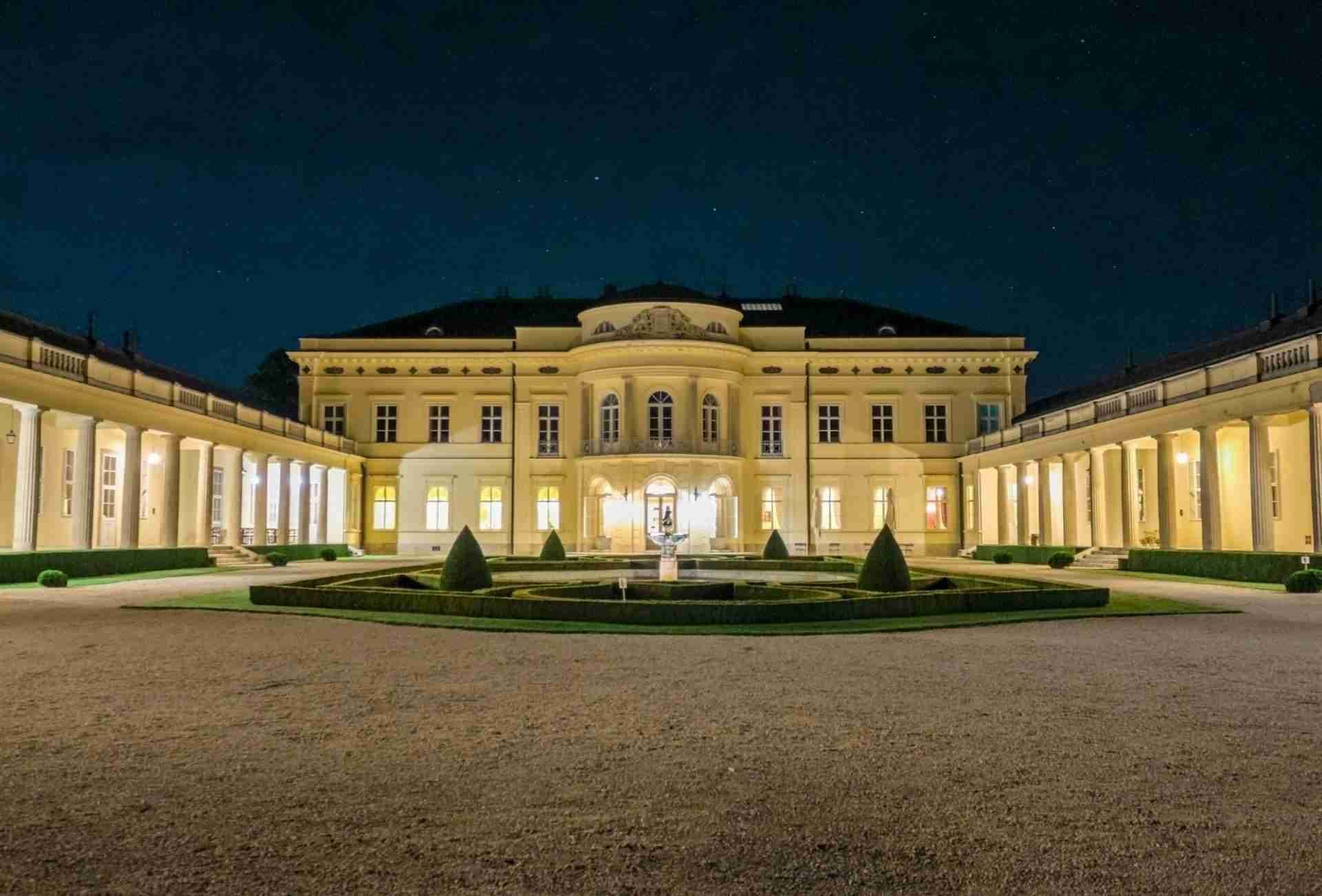
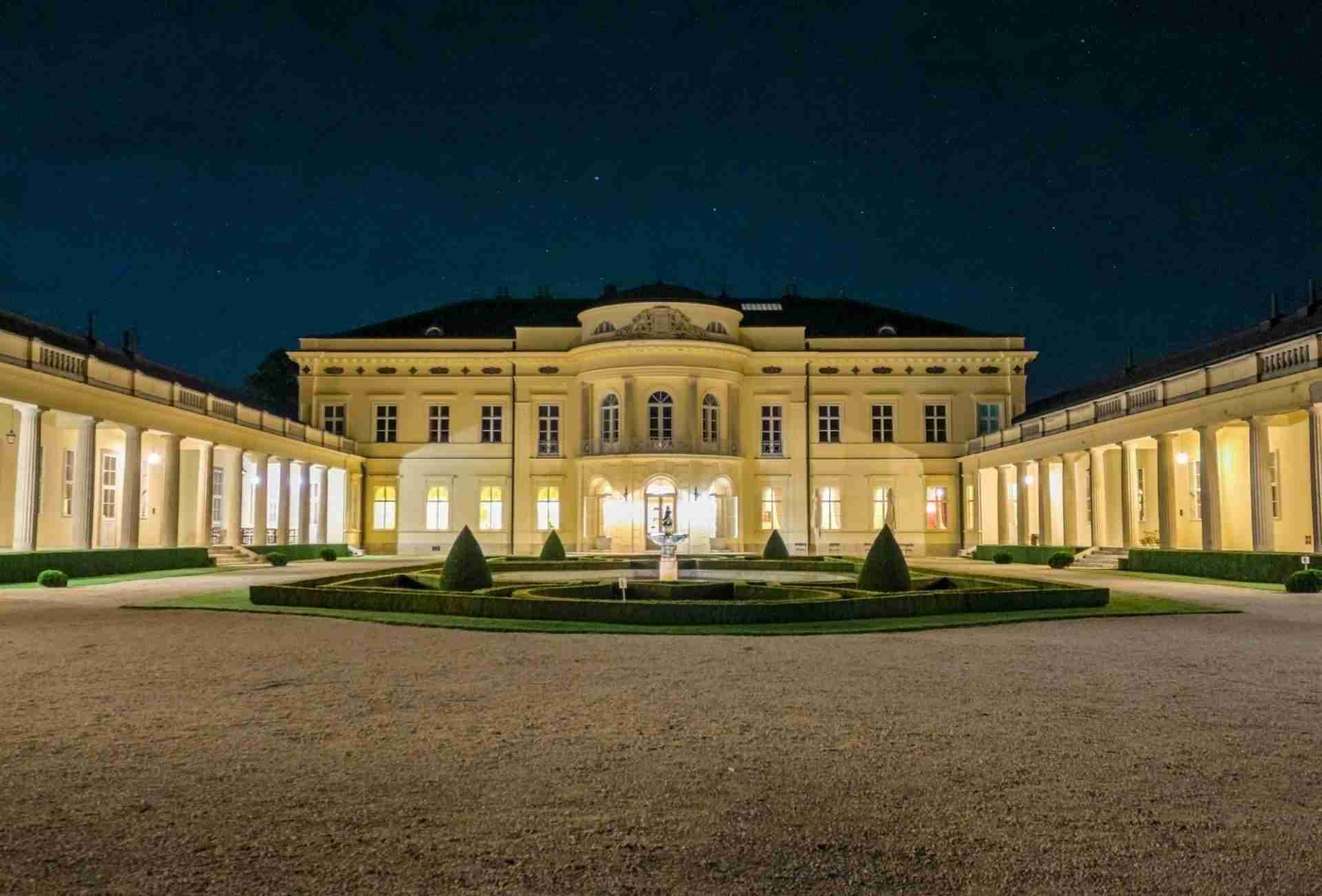
Set in the quiet village of Fehérvárcsurgó in western Hungary, Károlyi Castle offers a stately blend of neoclassical architecture and landscaped parkland that invites thoughtful, carefully composed photography. Built in the mid 1800s and later restored, the castle stands at the edge of a broad lawn bordered by woods and walking paths, with symmetrical wings and a central fountain that reflect the clean lines and restrained design of its era. The setting is peaceful and uncrowded, ideal for photographers looking to work without distractions. Light filters gently across the façade in the morning and late afternoon, while the surrounding grounds add seasonal variety with tree lined paths, ornamental gardens, and a small lake nearby. The balance of open space, architecture, and nature makes this one of Hungary's most rewarding lesser known heritage sites for both architectural and landscape photography.
Best Photography Opportunities
• Full view from the lawn
The most straightforward and balanced composition can be made from the wide lawn that opens directly in front of the castle. From this distance, you can capture the full building, including both wings and the center fountain, all framed by the curved edge of the lawn and bordering trees. Morning light from the east casts a soft, even glow across the façade, bringing out the warm tones of the stone and subtle shadows in the columns and trim. A standard zoom lens or wide angle is ideal here, depending on how much of the grounds you want to include in frame. Waiting until the sun rises just above the trees ensures your light is clean and without strong contrast.
• Side perspectives along the east and west wings
Walking around either side of the castle allows you to work with angled compositions that show the building's depth and structural symmetry. These views are especially good in late afternoon when the sun begins to fall behind the trees to the west, casting long shadows and raking light across the side walls. Including part of the curved gravel path or trimmed hedges in the foreground helps lead the eye toward the structure. This angle also provides opportunities to isolate architectural details like windows, cornices, and stone urns along the terrace. A polarizer can help deepen sky tones and cut glare from the building's light surfaces.
• Architectural details from the terrace and rear
The castle features a number of clean, classical design elements that work well in tighter compositions. The rear terrace, less visited by casual guests, includes symmetrical steps, balustrades, and stone planters that catch angled light in the afternoon. These areas provide strong shadow play and a chance to work with texture and proportion. A mid-range telephoto lens helps compress the elements and separate them from the background, especially if you're focusing on window patterns or sculptural details. Overcast days soften shadows and reduce harsh contrast, allowing for longer shooting sessions with more even exposures.
• Reflections and seasonal color in the park
The landscaped grounds surrounding the castle include open lawns, walking paths, and a small lake set just beyond the main building. In autumn, the trees surrounding the lake take on soft yellows and browns, reflecting into the still water during calm conditions. From certain positions, you can frame the castle in the background with trees and water in the foreground, creating layered compositions that shift with the seasons. Morning or late afternoon is best for this setup, when the low sun reaches over the tree line. A tripod helps with longer exposures if you're working with water reflections or waiting for clean light between passing clouds.
• Twilight photography with exterior lights
After sunset, the castle's exterior is gently lit by installed lighting, creating a warm contrast with the blue tones of the evening sky. This is a good time to work with longer exposures from the front lawn or terrace, especially during the blue hour when light lingers in the sky. The soft lighting on the façade brings out the building's structure without overwhelming the scene. A wide angle lens and sturdy tripod are key here, along with a remote shutter or timer for clean exposures. This approach is particularly effective in autumn and early winter when the air is clear and evenings arrive earlier in the day.
Best Time to Visit
Károlyi Castle is photogenic year round, but spring and autumn provide the best mix of light, color, and weather for extended shooting sessions. In spring, the grounds begin to bloom with fresh green growth, while the morning light is crisp and the air is clear. This season is ideal for photographing both the structure and its surroundings, as the trees begin to fill in and the light reflects off new leaves and trimmed grass.
Autumn brings rich color to the park and surrounding forest, adding warmth to both the background and foreground of your frames. The low angle of the sun in the afternoon helps define architectural lines without creating harsh shadows. Even overcast days can be productive during this season, offering soft, diffused light that works well with the building's pale stone surfaces.
Summer light tends to be more direct and the grounds busier with visitors, particularly on weekends or during events. Midday sun is often too harsh for balanced exposures on the building's façade, but early morning and late afternoon still offer workable conditions. In winter, the castle becomes quieter, and snow can add contrast and texture to wide compositions. Be aware that access to some parts of the grounds may be limited depending on weather and maintenance.
How to Get There
Károlyi Castle is located in the village of Fehérvárcsurgó, about 90 kilometers southwest of Budapest. The most convenient way to reach it is by car, with the drive taking roughly an hour and fifteen minutes via the M7 motorway and Route 81. There is a parking area near the entrance to the castle grounds, with short walking access to the building itself. The site is open to the public, though some parts of the interior or rear grounds may have restricted access depending on events or scheduled tours.
Photographers are allowed to use tripods outdoors, and there are no additional fees for exterior photography on the grounds. If you plan to shoot inside or during special events, it's best to contact the castle in advance to confirm permission and available times. The grounds are generally quiet, especially during weekday mornings or late afternoons, making it easy to set up and shoot without interruption.
Recommended Photography Gear
A standard zoom lens such as a 24 to 70 millimeter is well suited for most compositions around the castle, giving you the flexibility to work wide for full-building shots or tight for architectural detail. A wide angle lens in the 16 to 35 millimeter range is helpful for shooting from the terrace or capturing broader views that include the surrounding landscape. For detail work, a 70 to 200 millimeter telephoto lens helps isolate textures and compress foreground and background layers, particularly when working with tree lines or rear features.
A tripod is essential for twilight and longer exposure work, and it's helpful for framing more deliberate architectural shots, especially when working with symmetry. A polarizing filter can reduce glare from windows and highlight the texture in stone surfaces and foliage. If shooting in overcast or soft light, consider using a neutral density filter to allow for slower shutter speeds that can emphasize calmness in the scene.
Since the area is easy to access with no hiking required, you can comfortably bring a full kit without having to compromise on lenses or support gear. Bring a lens cloth to manage dust or moisture, particularly in colder months, and consider a remote shutter release or two-second timer to avoid shake during long exposures.
Nearby Photography Locations
• Lake Csurgó
Located just a short walk from the castle grounds, this small lake offers reflective views of surrounding trees and open sky. In the early morning, the water is often still, creating clean reflections that pair well with soft seasonal color.
A short drive to the north leads into the edges of the Bakony Hills, where forest paths and quiet roads offer additional opportunities for photographing wooded landscapes, especially in autumn when the forest turns rich gold and rust.
Roughly 20 minutes east of the castle, the historic town center of Székesfehérvár provides narrow streets, baroque churches, and colorful facades that contrast well with the classical symmetry of Károlyi Castle. Early morning is best for light and quiet conditions.
Set on a low hill about 10 minutes from Fehérvárcsurgó, this spot offers elevated views over the surrounding countryside along with a small white chapel that works well in minimalist compositions under wide skies.
This landscaped garden area to the north of the village features seasonal blooms, walking paths, and open lawns with historical structures scattered throughout. It's a good location for spring or early summer photography, especially in diffused light.
Károlyi Castle's appeal lies in its balance of structure and quiet. It's not a place that demands dramatic light or heavy editing to make an image work. Instead, it invites careful observation, slow framing, and a thoughtful approach to composition. Whether you're capturing the soft rise of light across the façade, isolating textures in stone and leaf, or building a series from different seasons, this is a place where subtlety and stillness take the lead.
Comments
Loading comments…