
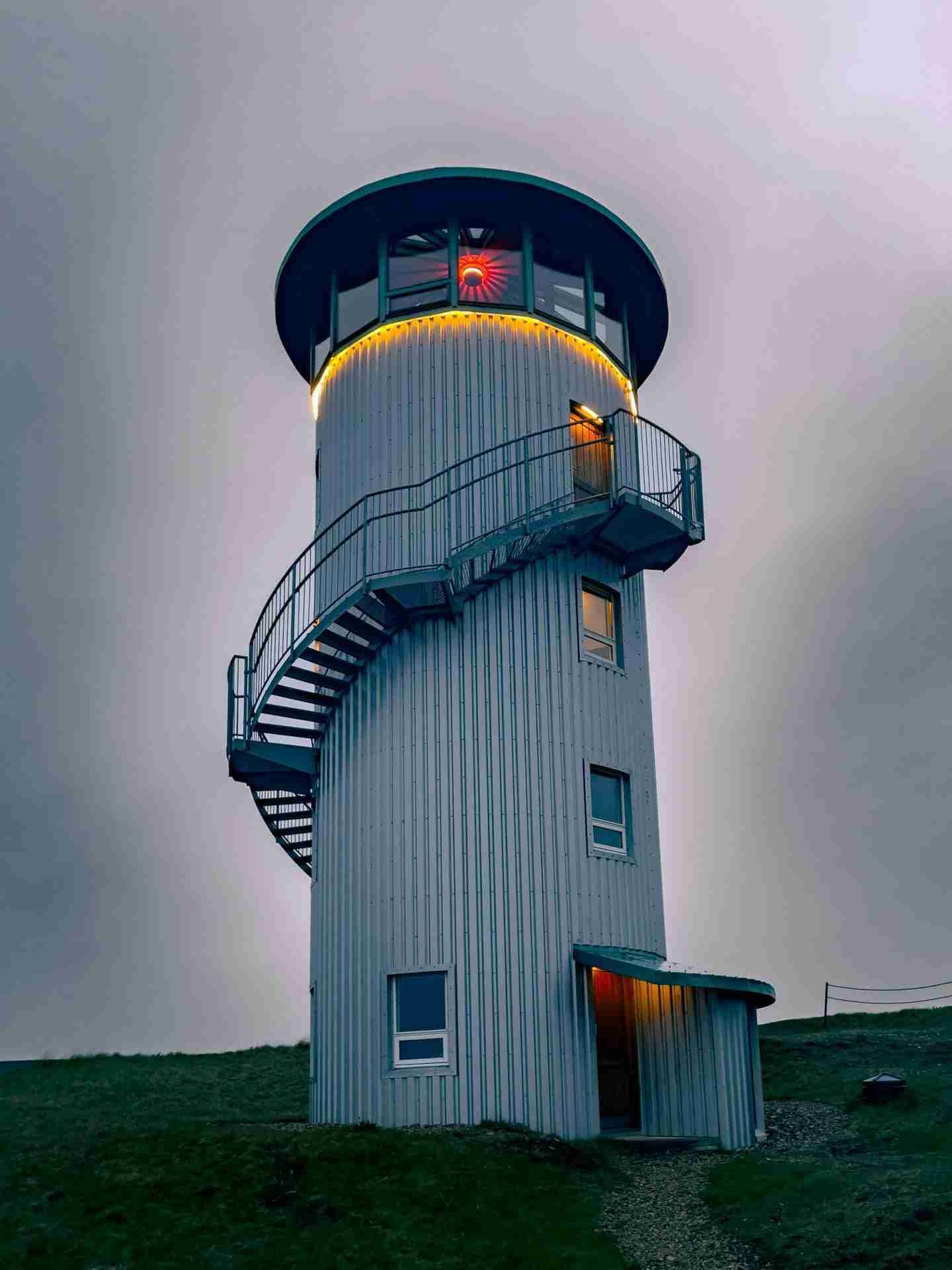
Set amid the rural expanses of Flúðir in southern Iceland, Klettar Tower rises quietly from the flat terrain, offering a contemporary architectural gesture against a backdrop of open sky and volcanic soil. Built as a lookout and small shelter, the tower features raw concrete, vertical lines, and an intentionally minimal profile. Surrounded by grassy meadows, distant mountains, and frequent changing weather, the structure becomes a canvas for light, shadow, and space. For photographers, this site provides an ideal blend of solitary architecture, vast negative space, and the unfiltered drama of Icelandic skies. It is a location suited to those who enjoy patient, structured compositions with subtle shifts in atmosphere.
Best Photography Opportunities
• Wide-Angle Contextual Landscape
Photographing Klettar Tower from a distance allows you to place the structure within its surroundings. The fields around Flúðir are expansive and open, with low vegetation and little vertical interruption. Using a wide-angle lens between 14 and 24 millimeters, frame the tower with a low horizon to emphasize the scale of the sky. Early morning or late evening light adds side shadows that stretch across the fields and deepen the contrast in the concrete textures. When clouds move quickly overhead, use long exposures to create motion in the sky while keeping the tower sharp and still at the center of the composition.
• Geometric Close-Ups and Texture Studies
The bare concrete of Klettar Tower shows subtle variations in tone and texture, which become more visible in diffused light. Use a short telephoto lens to isolate corners, window cutouts, or vertical seams in the walls. Overcast days are especially effective for this type of work, reducing glare and contrast while emphasizing structure. Compositionally, look for repeating lines and how light plays off different planes of the surface. These images work well in black and white, focusing on form and shadow without distraction from color.
• Symmetrical Portraits and Human Scale
Placing a figure in or near the doorway or central frame of the tower helps communicate its scale. The small windows and narrow footprint lend themselves to symmetry, making the structure ideal for environmental portraits or staged self-portraits that emphasize isolation and proportion. Frame your subject straight on from ground level and use a tripod to ensure alignment. Early or late light warms the concrete slightly, while midday sun can create stark contrast between light and shadow across the face of the structure.
• Night Sky and Tower Silhouette
Because the area around Klettar Tower is relatively free of light pollution, it is an excellent location for astrophotography. During autumn and winter, the tower can be silhouetted against a northern lights display or star-filled sky. Use a wide-angle lens with a fast aperture to capture both the structure and sky detail. A low foreground helps retain a clean silhouette without distraction. Make sure to scout during daylight to plan compositions safely, and consider shooting during the new moon phase for maximum sky visibility.
• Fog and Low Cloud Integration
Flúðir often experiences morning fog or low clouds that can partially obscure the landscape while leaving the tower visible. These conditions simplify the scene and highlight the vertical structure in contrast to a muted, horizontal world. Use a mid-range zoom to isolate the tower as it emerges from the fog, creating moody and contemplative images. Meter carefully to avoid blowing out the sky or flattening contrast too far. The effect is strongest when fog begins to lift and the structure appears partially veiled.
Best Time to Visit
Klettar Tower can be photographed year-round, but each season brings different lighting and environmental qualities. Late spring and summer offer long hours of soft, even light with minimal shadows, ideal for extended composition studies and full-day exploration. Grasses in the surrounding fields are vibrant during this time, contrasting with the neutral tones of the tower.
Autumn introduces more texture to the landscape, with shifting weather and golden light during shorter days. Morning fog is more common, and sunsets can be dramatic, especially when clouds break late in the day. Winter offers stark contrasts and the possibility of snow, which isolates the tower further in the frame and provides a clean canvas for minimalistic imagery.
If you are hoping to photograph the northern lights with the tower, plan your visit between September and March, when the sky is dark enough for aurora visibility. Conditions change quickly in Iceland, so cloud cover, wind, and precipitation may all shift within minutes. Check forecasts frequently and plan to wait for favorable light windows.
The best time of day for photography is during golden hour and blue hour, when the low sun casts long shadows that define the tower's vertical shape. Midday can be productive for detail shots or high-contrast studies of light and shadow on concrete, especially during partly cloudy days.
How to Get There
Klettar Tower is located near the village of Flúðir in southern Iceland, about 100 kilometers east of Reykjavik. The drive takes approximately 90 minutes via Route 1 and Route 30, both of which are paved and well-maintained. Once in Flúðir, local signage and GPS directions will guide you toward Klettar. The tower is situated near private fields and low-traffic roads, so park respectfully in designated pullouts or parking areas nearby.
From the road, access to the tower is on foot. The terrain is flat and grassy, and the path is generally walkable year-round, although it may be muddy after rain or snow. There are no fees to visit the site, and it is open to the public with no access restrictions, though visitors should be mindful not to disturb local landowners or nearby agricultural operations.
Tripods are allowed, and there is plenty of room to set up around the tower without obstruction. The area is usually quiet and uncrowded, making it ideal for uninterrupted shooting. Drone photography is permitted, but Icelandic aviation regulations apply, including altitude limits and proximity to people and structures.
Recommended Photography Gear
A wide-angle lens in the 14 to 24 millimeter range is essential for landscape context and compositions that include the tower and expansive sky. A standard zoom lens from 24 to 70 millimeters offers flexibility for framing both wide and mid-range scenes, including portrait work or tower studies. A telephoto lens between 70 and 200 millimeters helps isolate architectural elements or compress the tower against a textured sky.
A sturdy tripod is recommended for long exposures, twilight photography, and any astrophotography sessions. A polarizer can be useful during midday for managing sky contrast and reducing glare on wet surfaces. Neutral density filters are valuable if you want to shoot long exposures of moving clouds or use shallow depth of field in bright light.
Bring multiple batteries and memory cards, as cold conditions and long sessions will drain equipment faster than usual. Weather-resistant gear is helpful, as Icelandic weather can shift quickly from calm to windy or wet. A lens cloth and rain sleeve should be standard kit when working in this region. Comfortable hiking shoes and layered clothing are also essential for moving between viewpoints and staying warm during long outdoor sessions.
Nearby Photography Locations
Just outside Flúðir, this naturally heated geothermal pool offers rising steam, weathered wooden structures, and reflections that pair well with long exposure techniques. It is especially effective in cold weather when fog lifts off the water surface.
This unique tomato greenhouse combines soft interior light, vibrant greenery, and warm tones for an indoor photography session that contrasts with the surrounding landscape. It is a good backup location during rain or strong wind.
• Brúarfoss Waterfall
A short drive north, this compact but striking blue waterfall cuts through dark volcanic rock and can be captured from a footbridge with a tripod. Its vibrant water tone contrasts well with Iceland's muted natural palette.
Roughly 25 minutes from Flúðir, this active geothermal site offers steam vents, boiling pools, and erupting geysers. Fast shutter speeds can freeze eruptions, while wide-angle lenses capture the surreal landscape.
This volcanic crater lake features steep red slopes and still water, providing symmetry and bold color contrast when viewed from above. The crater rim can be walked fully for multiple angles and light conditions.
Klettar Tower rewards those who enjoy slow, thoughtful photography in open space. It offers no spectacle or crowds, only structure, silence, and sky. In a landscape known for drama, it stands out by offering restraint, allowing photographers to shape their compositions from space and subtle light rather than spectacle.
Comments
Loading comments…