
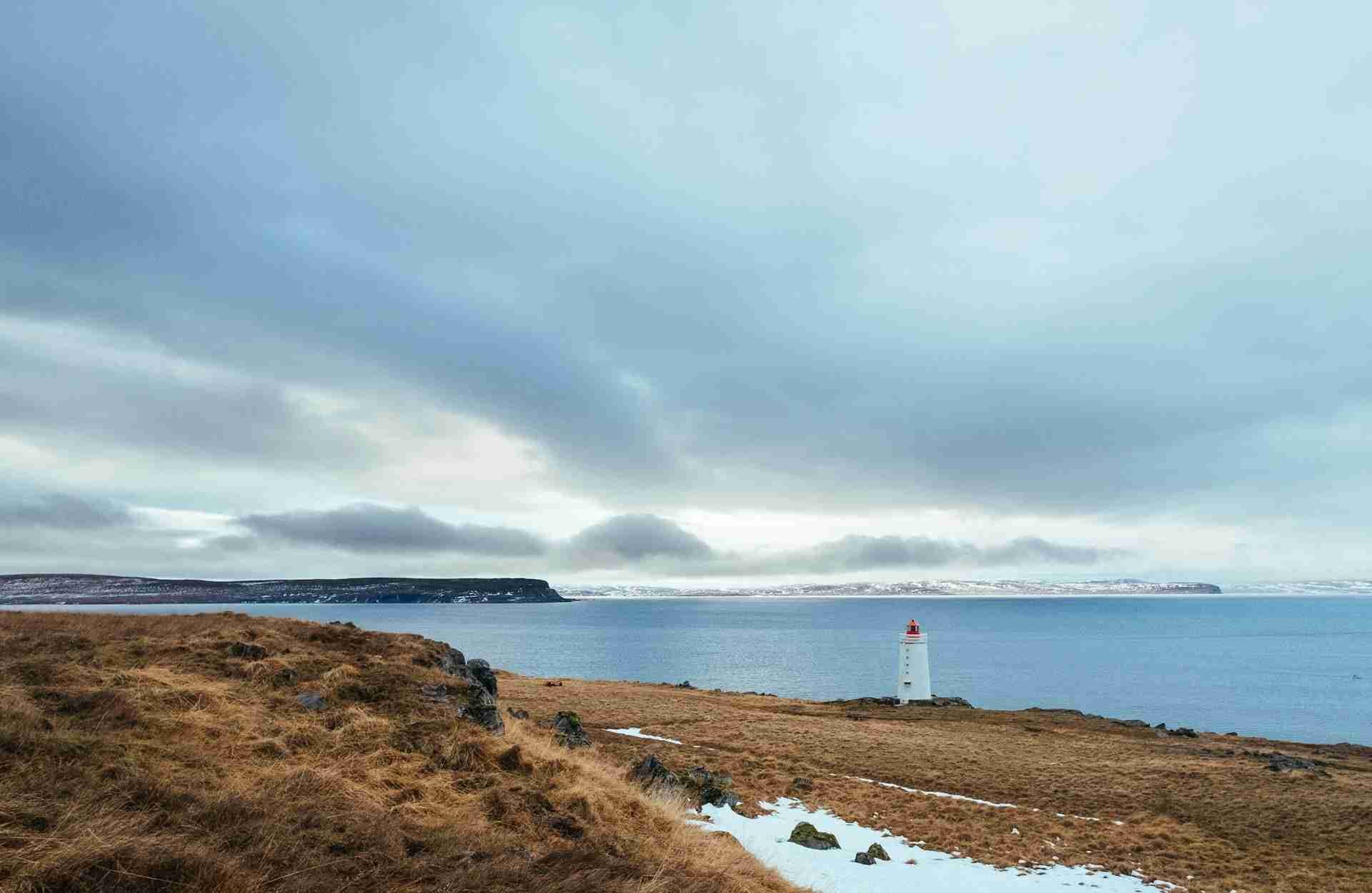
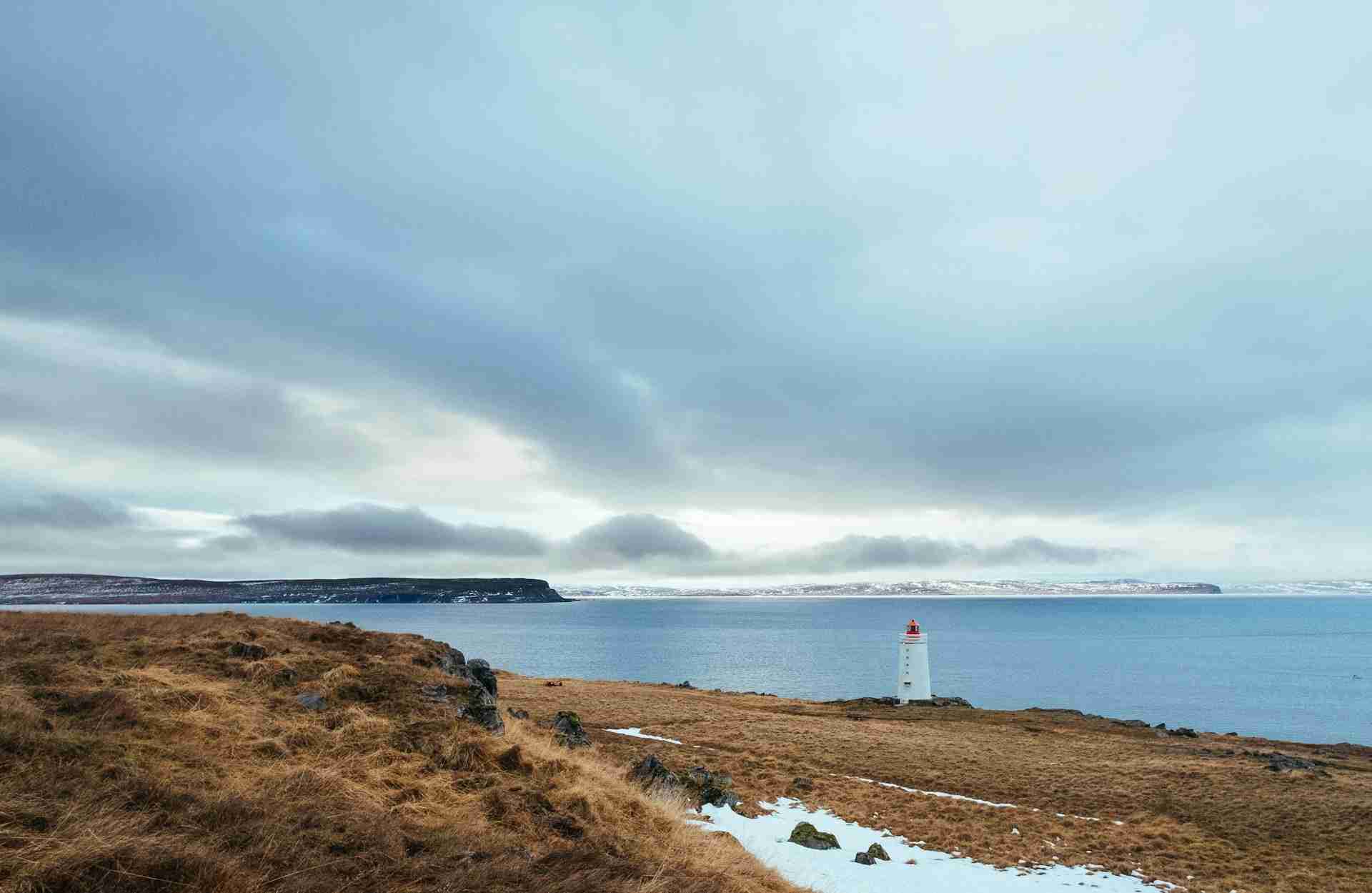
Skardsviti Lighthouse sits quietly along Route 711 on Iceland's Vatnsnes Peninsula, facing out across the waters of Húnaflói Bay. With its white concrete structure and red lantern cap, it stands out clearly against the browns and grays of the surrounding landscape (windswept grass, scattered rock, and the deep blues of the North Atlantic). This part of Iceland doesn't get the same attention as more tourist heavy regions, which makes it a peaceful spot to slow down and photograph without distractions. The area is exposed and raw, with wide views and fast changing skies that bring something different to every visit. Whether you're shooting during soft overcast light or aiming for clean, minimalist compositions under blue skies, this lighthouse delivers.
Best Photography Opportunities
• Lighthouse and Coastal Sky
The simple form of the white lighthouse with its red cap makes it a clean, strong subject. Because the area is so open, you can compose with large amounts of negative space and let the lighthouse act as a visual anchor. It's especially striking when positioned below dramatic clouds, or when a break in the sky sends light directly onto the structure. A wide angle lens helps include the sea and distant cliffs while maintaining a sense of scale. Side lighting in early morning or late evening helps define the shape of the lighthouse and brings out the texture in the land around it.
• Foreground Layers with Rock and Grass
The ground surrounding the lighthouse is rugged but not overwhelming, offering just enough texture to build effective foreground layers. You'll find low rock outcrops, tufts of windswept grass, and in colder months, traces of snow that can add visual contrast. Shooting low to the ground with a wide angle lens lets you pull these elements into the composition while using the lighthouse as the focal point. Even in flat light, these scenes hold up well due to the structure's bold contrast against the landscape. Overcast conditions often work best for this approach, reducing glare and helping the tones stay balanced.
• Long Exposure Seascapes
Looking north from the lighthouse, the coastline opens into a sweeping view of the bay with distant cliffs across the water. This setup works perfectly for long exposure photography, especially when there's movement in the clouds or waves. Use a strong neutral density filter to blur the sea and sky, while keeping the lighthouse sharp and stable in the foreground. This approach adds a calm, timeless feel to a scene that's often shaped by wind. You'll need a sturdy tripod and some patience with the changing weather, but when the conditions line up, the result is worth the wait.
• Minimalist Shots in Harsh or Clear Light
Even in hard midday light, this lighthouse works well as a subject because of its clean color and form. You can isolate it with a telephoto lens and let it stand alone against blue sky or ocean, especially when the background is free of clutter. The white and red contrast strongly with most natural conditions, making the lighthouse easy to spot even from a distance. Try placing it off center in a wide frame, leaving space to highlight the openness of the landscape. This is also a good time to shoot in black and white, letting light and shadow define the structure's shape.
• Shifting Light and Weather Changes
The weather in this part of Iceland moves fast, which is a bonus for photographers willing to wait. Clouds can form and break within minutes, casting different light across the water and hills. One moment the lighthouse might be in full sun, and the next it's silhouetted under heavy shadow. These conditions create variety without needing to move your position much. Bring a flexible setup and keep watching the sky. Some of the best frames come just before or after a storm clears.
Best Time to Visit
Skardsviti Lighthouse is accessible year round, but late spring through early autumn offers the best conditions for both light and travel. During these months, Route 711 is easier to drive, and you'll have extended daylight hours to work with. Summer evenings in particular can stretch golden hour light for long periods, giving you time to experiment without rushing. In autumn, the tones of the grass and hills deepen, adding warmth to compositions, especially during sunset.
Fog, wind, and light rain are common and shouldn't be avoided. They often bring more drama to the scene and add mood to images that might feel too clean in full sun. Sunrise and sunset offer directional light that works especially well across the low, rolling landscape. Winter can bring a unique look with light snow and frost, but road conditions may be difficult and the lighthouse itself can be more isolated depending on storms.
How to Get There
Skardsviti Lighthouse is located off Route 711 on the Vatnsnes Peninsula in northwest Iceland. From Route 1, turn north onto Route 711 near the village of Víðidalstunga. The road is unpaved in sections but usually passable in good weather with a standard vehicle. The lighthouse is marked by a small pull off where you can park safely. From there, it's a short walk across open ground to the lighthouse itself.
There are no fees, permits, or access restrictions at this site. Tripods, drones, and long setups are fine to use. Just be aware of sudden wind shifts and respect any private land signs along the way. There are no services or facilities nearby, so bring water, snacks, and warm layers if you plan to stay through changing weather. Cell signal is usually present but may dip briefly in lower areas.
Recommended Photography Gear
A wide angle lens in the 14 to 24 millimeter range is excellent for including the lighthouse in its environment, especially if you're working with clouds or large sky elements. A midrange zoom like a 24 to 70 gives you room to adjust quickly as light changes. If you're focusing on isolating the lighthouse or compressing the background, a telephoto lens in the 70 to 200 range will serve you well.
A sturdy tripod is essential for long exposure work or steady framing in high winds. Pack neutral density filters if you want to stretch shutter speeds for water and cloud motion. A polarizer helps cut glare off the water, though it may have mixed results with wide lenses depending on sky angle. Always bring lens cloths and a weather cover, conditions here can shift without much warning. If you fly a drone, the open space and clean horizon make for excellent aerial work, but be sure to follow Iceland's drone regulations and check the wind before launch.
Nearby Photography Locations
This distinctive rock formation is located along the same peninsula and is a strong subject at both low and high tide. At low tide, you can walk out on the wet sand and use reflections to double the structure. At high tide, waves often crash around its base, giving you a completely different energy to work with.
A short inland drive takes you to this natural basalt formation with historical significance and panoramic views of the surrounding valleys. The stacked stone columns create strong shapes in side light and are excellent for abstract or pattern focused compositions.
This dramatic canyon features a wide waterfall dropping into a narrow, jagged gorge. It's an easy stop with good access and works well for both long exposures of the falls and wide shots showing the depth of the canyon. It's especially strong in morning light or on overcast days.
• Vatnsnes Peninsula Coastline
The coastline all around Route 711 offers moody, open views across the bay, with scattered rocks, grazing sheep, and chances to shoot seals at low tide. These smaller pull-offs are worth exploring if you have time and enjoy working with quiet scenes or textured landscapes.
If you're coming from the south, Blönduós makes a good base. The estuary here opens into a calm section of the bay, with bridges, riverbanks, and long views that catch nice color at sunrise. The town is quiet and easy to work around with a light kit.
Skardsviti isn't flashy, but that's what makes it such a strong subject. The clean lines, simple color palette, and shifting light all work together to give you more than enough to explore. It's the kind of place that rewards patience and rewards coming back more than once. Whether you're shooting bold contrasts or soft transitions, there's plenty of space here to make something your own.
Comments
Loading comments…