
Tucked along the Ligurian coast just southeast of Genoa, the Camogli Waterfront presents one of Italy's most evocative seaside scenes—a tightly packed ensemble of pastel-colored buildings cascading down to a pebbled beach, backed by steep hills and fronted by the Ligurian Sea. With its historic fishing boats, textured facades, and dramatic light transitions, Camogli is a dreamscape for photographers seeking vivid urban geometry and maritime atmosphere in equal measure.
The town's steep alleys, multicolored stucco walls, and working harbor give it a lived-in authenticity that contrasts with the more polished neighboring villages of Cinque Terre. Camogli is less crowded, equally photogenic, and changes beautifully from one hour to the next. Whether you're chasing golden-hour glow on peeling paint or silky long exposures of breaking surf, this compact village delivers powerful compositions at every turn.
Best Photography Opportunities
• Frontal Symmetry from Piazza della Vittoria
The most direct and graphic view of the Arco is from the lower edge of the square, where symmetrical lawns, fountains, and stone balustrades lead straight to the arch. Shoot with a wide-angle lens (16–35mm) to exaggerate perspective and emphasize the monument's scale. Early morning light backlights the arch subtly, while golden hour light from the west strikes it directly, illuminating sculptural details and casting long, theatrical shadows across the plaza. Return in blue hour for minimal traffic and an ethereal calm, especially in winter when fog adds extra drama. You can also experiment with framing the arch through the columns of the surrounding porticoes, which gives a layered, almost cinematic quality to your shots. On foggy days, the depth created by receding lines and vanishing edges gives the scene a haunting grandeur. Try adding a human figure for scale to emphasize the monumental proportions of the structure.
• Side Reliefs and Carvings
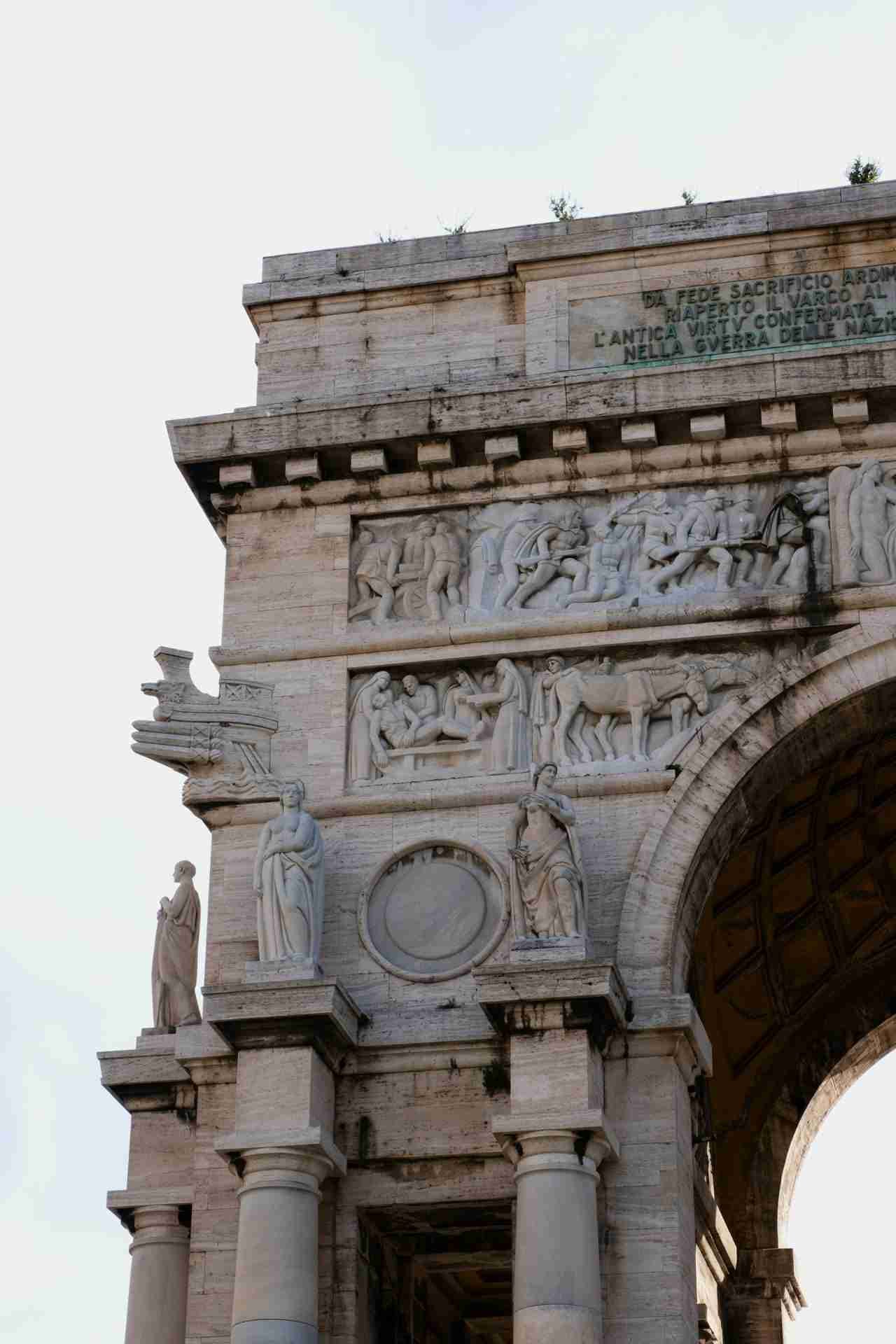
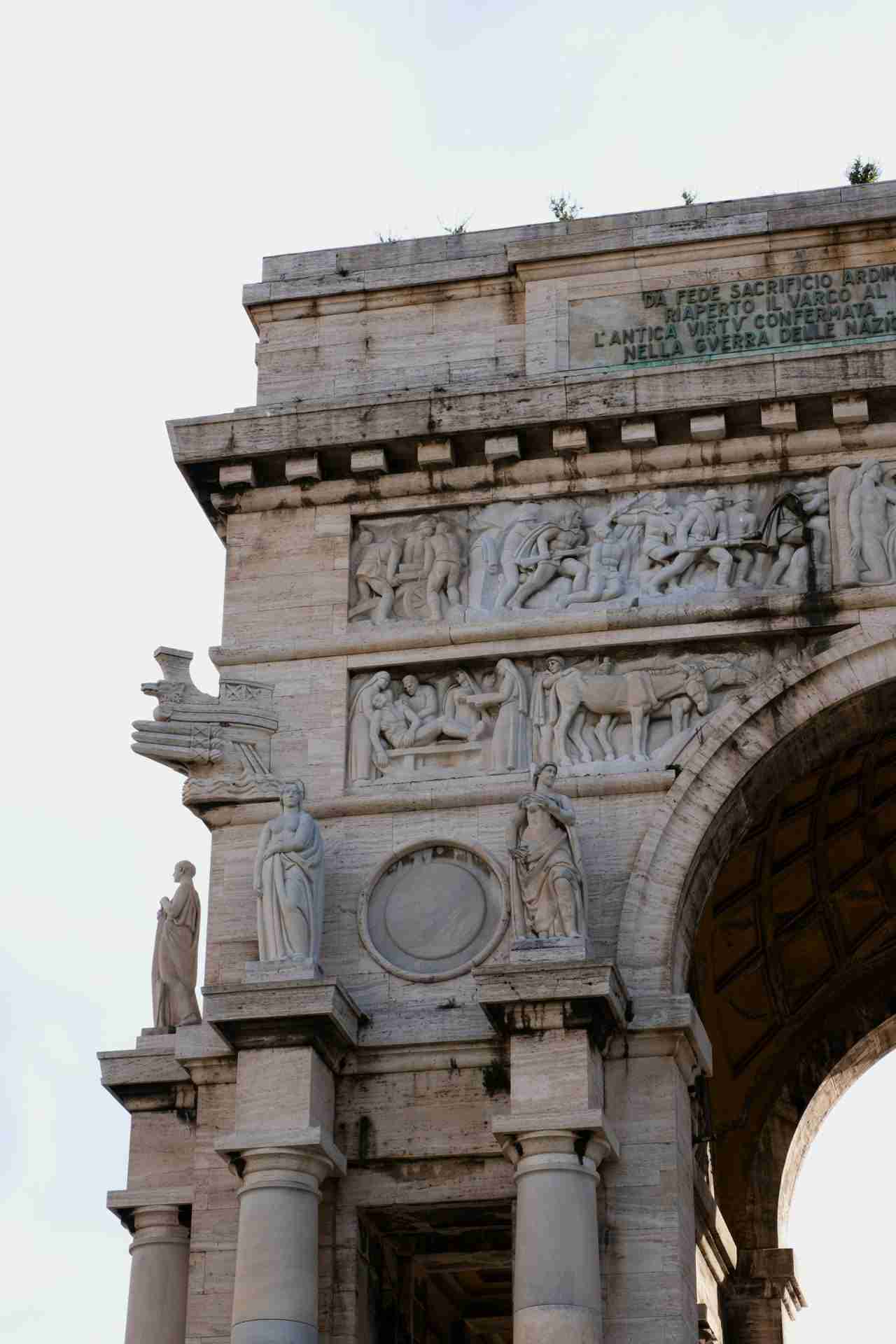
The arch's flanks feature deeply sculpted reliefs commemorating Italy's military efforts and national identity. These intricate works reward close inspection and shallow depth-of-field photography. Use a 50mm or 85mm prime lens to isolate carved figures, inscriptions, or the weathered patina of the stone. Diffuse light—especially on overcast days—helps reveal texture without harsh shadows. Black-and-white conversions can further highlight the historical gravitas of these features. Photographers should look for patterns of erosion and lichen growth that add a time-worn texture, telling a subtle story of age and endurance. For a unique perspective, photograph the carvings during sunrise or sunset to cast diagonal shadows across the stone, which enhance the dimensionality of the figures. Wide apertures here also allow for creative use of bokeh to separate details from background clutter.
• High Ground Overlook from Scalinata delle Caravelle
Behind the arch, the monumental Scalinata delle Caravelle steps rise toward the train station, offering a rare elevated vantage point. From halfway up the stairs, you can frame the arch with its symmetrical parkland and the city's rooftops in the background. Use a longer lens (70–200mm) to compress elements or try a drone, if regulations allow, to capture the axial symmetry and surrounding urban texture. Late afternoon offers golden light streaming directly across the steps, while blue hour delivers moody sky contrast and lit window patterns. You can also look east for distant views toward the Ligurian hills, incorporating skyline silhouettes and roof tiles into wide-angle cityscapes. In fall and winter, this location offers wonderful tonal contrast between stone, sky, and scattered leaves. It's also a quieter area that provides opportunities for longer compositions or layered storytelling without heavy foot traffic.
• Reflections After Rainfall
After Genoa's frequent rain showers, the stone pavers around the arch and plaza become perfect for reflection work. Seek out shallow puddles or wet marble surfaces and shoot low for mirror-like compositions that double the monument's geometry. Combine this with a wide lens for dramatic, abstract results. Reflections work best during twilight, when ambient light softens and warm architectural lighting turns on. Pack a small towel or plastic mat if you're planning to shoot from a low angle. For additional variety, use a telephoto lens to isolate and distort specific parts of the reflection, creating painterly effects that emphasize the texture of ripples or irregularities in the pavement. Reflections also make for strong diptych or mirrored vertical images ideal for social or editorial storytelling.
• Human Scale and Urban Motion
Capture locals and visitors walking, skating, or cycling through the plaza to juxtapose the monument's permanence with urban motion. The wide open space allows for clean compositions with silhouetted figures, especially during backlight scenarios at sunrise or sunset. Use a 35mm lens to work at human height and layer people into your compositions. Alternatively, experiment with slow shutter speeds to blur movement against the stillness of the arch. Early mornings on weekdays offer a slower pace, while weekends bring out more expressive local life. Use shadow play from nearby columns or lampposts to frame your human subjects—turning an ordinary passerby into the focal point of a powerful architectural composition. Including cyclists or skateboarders adds motion and modern energy to an otherwise classical scene.
Best Time to Visit
The Arco della Vittoria can be photographed year-round, but spring and autumn offer the most versatile conditions. In spring, blooming trees in the surrounding gardens create soft color contrasts against the stonework, while the mild temperatures make it comfortable to shoot for extended periods. These months bring gentle morning mists and crisp golden hour light that plays beautifully across the monument's carved surfaces.
Autumn's golden leaves echo the palette of the monument itself, adding warmth and visual harmony. Light is best during golden hour in both the morning and late afternoon—especially from April through October, when the angle of the sun enhances the reliefs and side carvings. Shadows become longer and more directional, ideal for creating depth in architectural compositions.
Summer provides deep blue skies and consistent weather, but midday sun can flatten textures and create harsh shadows. Use this time for high-contrast detail work or shaded compositions. Despite higher foot traffic, the longer daylight hours allow for flexible shooting schedules. In winter, the area is often quieter and the fog rolling in from the coast can soften edges and introduce a mysterious mood. Occasional drizzle or light rain turns the plaza into a reflective canvas for puddle photography. Night photography is especially rewarding year-round, as the plaza is well lit, and the stone surfaces take on a soft, golden glow.
How to Get There
Arco della Vittoria is centrally located in Genoa, making it easily accessible on foot or via public transport. From Genova Brignole train station, it's a 5-minute walk west across the Piazza Giuseppe Verdi. If arriving from the old town or Porto Antico area, a pleasant 20-minute walk up Via XX Settembre will lead you directly to the monument, offering street scenes and shopping arcades along the way.
Buses and taxis are readily available throughout Genoa, and multiple parking garages serve the area for those arriving by car. The monument is free to access and open at all hours, though the area is best photographed in natural light. For sunrise and blue hour shots, arrive early to avoid commuters and position yourself before the plaza becomes busy.
Ideal Gear for Monument and Urban Landscape Photography
To photograph the Arco della Vittoria effectively, bring a wide-angle lens (16–35mm) for establishing shots and grand symmetry. This lens works particularly well when shooting from the plaza's central axis or the surrounding staircases. A fast 50mm or 85mm prime is ideal for detail and relief work, especially under soft lighting or during the transition hours of morning and dusk.
For compression and elevated compositions, a 70–200mm telephoto can isolate people or architectural elements across distance. It also allows you to shoot from behind crowds or above staircases while still focusing precisely on ornamental elements or human subjects in context. If you plan to shoot from the Scalinata delle Caravelle or rooftops, it also provides strong visual compression of the city grid.
A tripod is essential for blue hour and long exposures, particularly if you want to experiment with motion blur or nighttime lighting. A polarizer helps manage glare on wet stones or smooth highlights after rain. ND filters can add creative control when slowing shutter speed for motion studies, particularly when photographing moving people or flowing clouds behind the monument.
Weather protection for both gear and photographer is advisable, especially in Genoa's variable coastal climate. A microfiber cloth, lens blower, and rain sleeve will help keep your optics clear and functional. Street-friendly gear like a cross-body camera sling, compact tripod, and neutral-colored outerwear will help you remain unobtrusive when working around pedestrian traffic. Consider bringing a mini stool for long compositions or time-lapses, and don't forget spare batteries, which can drain quickly during longer twilight or winter sessions.
Nearby Photography Locations
: This busy shopping street offers classic Genoese arcades, richly decorated facades, and a natural leading line toward the arch. The interplay of light and shadow beneath the colonnades makes for striking street photography.
: Just a short walk away, this civic square features a massive circular fountain, historic buildings, and dynamic pedestrian movement. Capture wide compositions at sunset or isolate figures with a telephoto for layered storytelling.
: Bordering Piazza De Ferrari, this ornate building is rich in neoclassical detail and features bold columns and sculptural motifs. A great place to focus on architectural patterns and symmetry.
• Mura delle Cappuccine
: This section of Genoa's old defensive walls lies just uphill from the arch and offers elevated views back over the city. Ideal for wide landscape shots or atmospheric perspectives in morning fog.
: The main train station itself is an excellent subject, with Art Nouveau elements and symmetrical entrances that echo the arch's design. It's especially photogenic when lit at night.
Comments
Loading comments…