
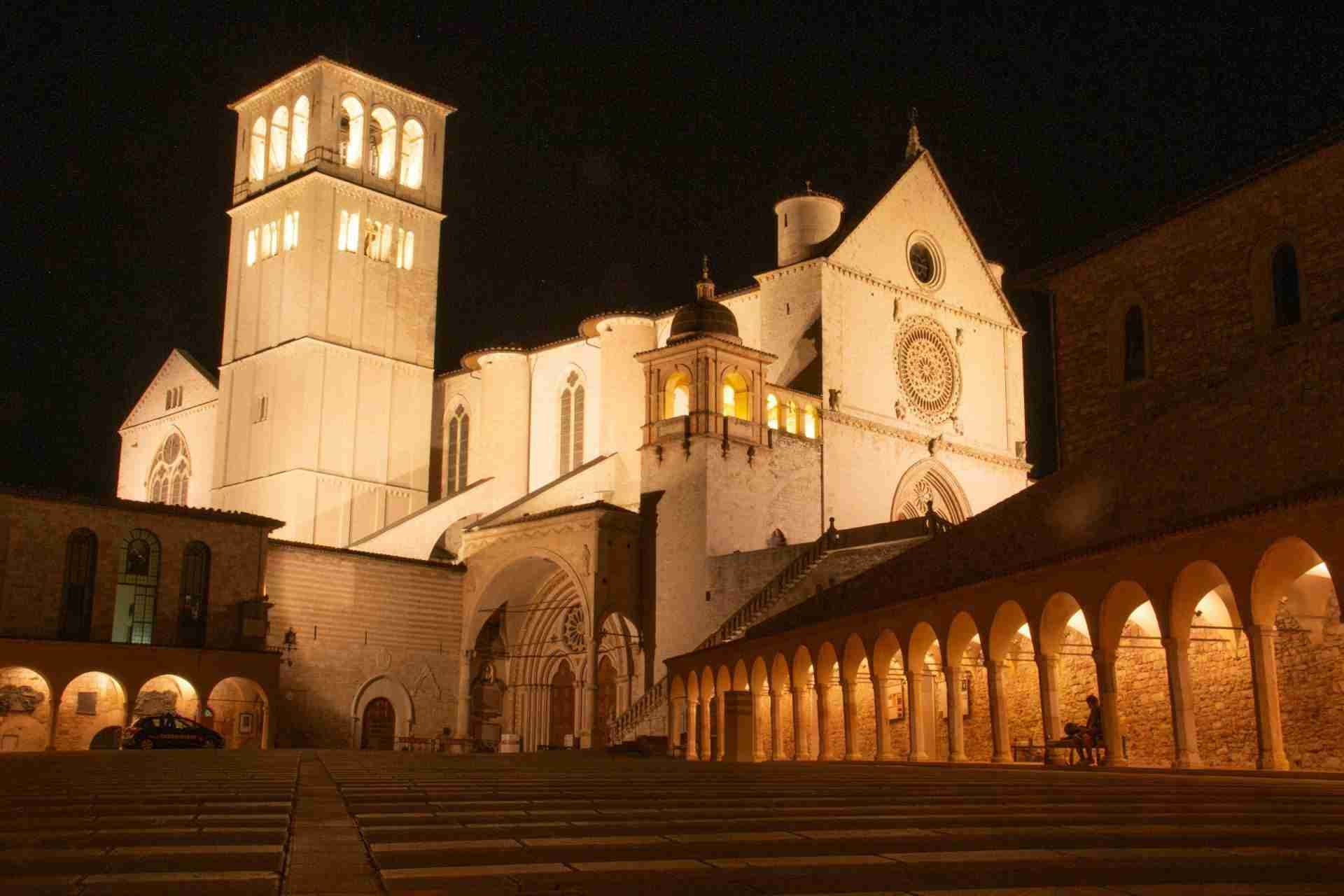
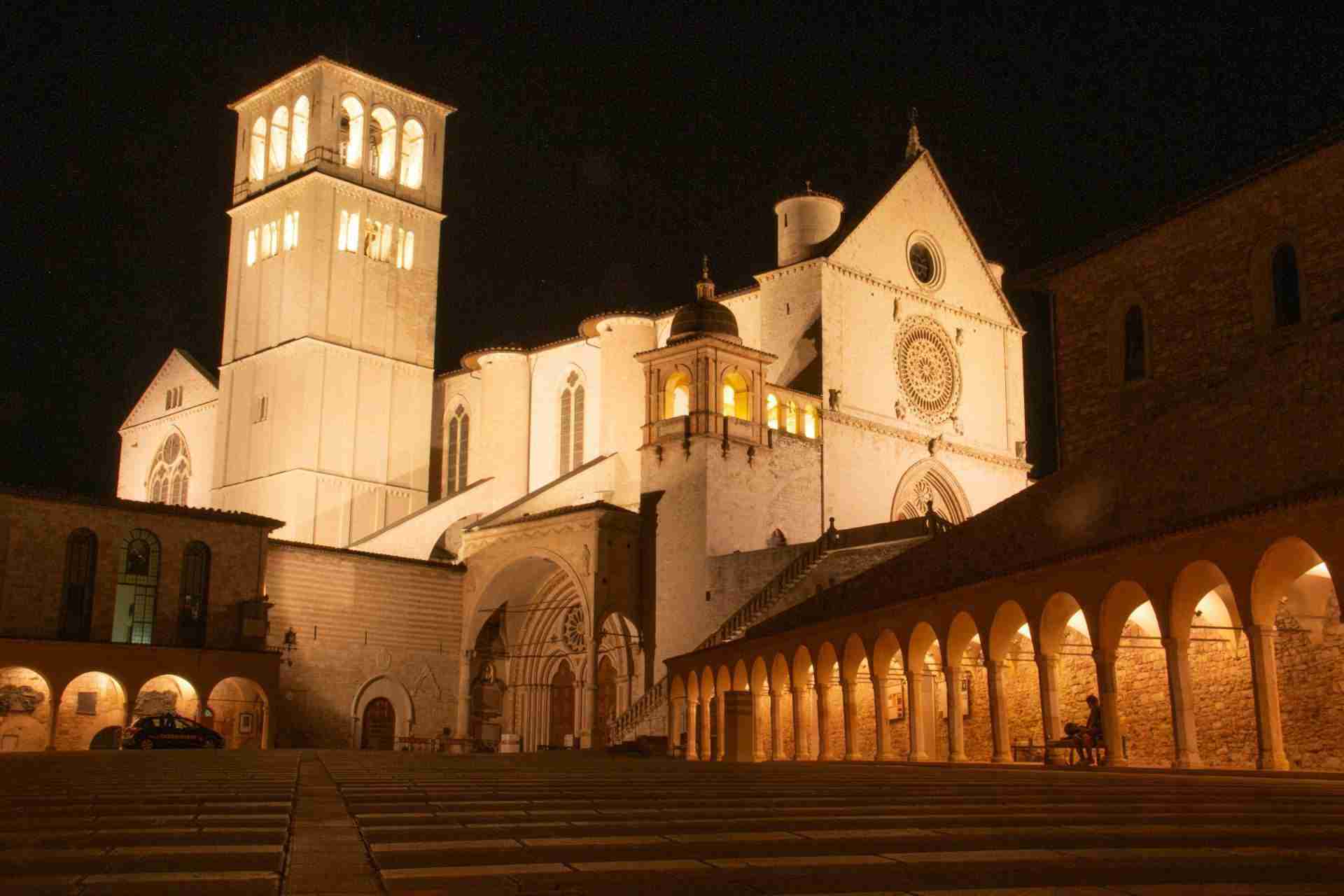
The Papal Basilica and Sacred Convent of Saint Francis in Assisi sits halfway up a slope in the Umbrian hills, where medieval stone meets wide sky and rolling countryside. Built in the 13th century, the basilica is made up of two distinct levels (Upper and Lower) stacked into the hillside and connected by arched buttresses and a long descending portico. The structure is large but not overbearing, balanced by soft light, open air, and distant views over the valley below. For photographers, this is a location that offers depth, detail, and variety. You can work with full architectural scenes, quiet interior light, long lens landscapes, or handheld documentary style shooting in the town's narrow streets. The basilica is active, photogenic in every season, and supported by strong, natural framing from nearly every angle.
Best Photography Opportunities
• Wide Exteriors from the Lower Lawn
One of the most photogenic angles is from the open lawn below the basilica, where you can shoot the Upper Church rising above its arcaded support structure. This is where morning and late afternoon light works best, bringing out the color and form in the stone without flattening detail. A wide lens lets you include the foreground while still framing the bell tower, Upper Church, and arches. Cloudy conditions can also work well here, especially with some texture in the sky to break up large areas of stone and grass. Photographers often return to this viewpoint multiple times in the same day as light shifts across the facade and hillside.
• Interior Light and Shadow in the Lower Basilica
Inside the Lower Basilica, soft light filters in through narrow windows, pooling quietly in side chapels and across stone floors. This is one of the best places to photograph low key scenes with natural contrast and limited color. The frescoes by Giotto and Cimabue are challenging to photograph directly due to the lighting and conservation rules, but wide shots that show the rhythm of the arches or tighter compositions that isolate columns and texture can be very effective. A fast lens and steady hand help here, as tripods are not allowed. Shooting with high ISO and careful exposure allows for clean results without pushing shadows too far.
• Details of Frescoes and Architectural Elements
While flash and tripods are restricted, many parts of the Upper and Lower Basilica offer good handheld conditions for photographing smaller architectural elements and wall details. Capitals, ceiling ribs, carved borders, and stone patterns around windows all hold up well in soft light. Composing tight frames with a standard or short telephoto lens allows you to isolate these features without needing full room views. These shots benefit from accurate exposure and subtle processing to preserve color in the stone and pigment without over brightening the ambient shadows.
• Viewpoints Over the Umbrian Valley
The terrace beside the Upper Basilica faces west and overlooks a wide valley dotted with olive groves, small villages, and soft, layered hills. This is one of the best spots to shoot sunset or late light across the plains below. A longer lens helps compress the valley into layers, especially when haze or low cloud adds separation between ridges. These images work well as wide horizontals or vertical crops, especially when the sky has directional light or color. Morning can also produce strong valley fog, depending on the time of year, which transforms the view into a more abstract landscape.
• Cloisters and Courtyards Inside the Convent
If you have access to the convent area, the interior courtyards and stone cloisters are quieter and more controlled spaces for photography. These offer clean lines, rhythmic arches, and soft reflected light that falls gently on the stone surfaces. These scenes work best in overcast conditions or early morning, when direct sunlight doesn't break up the shadow patterns. A standard zoom lens works well for framing both wide shots and tighter abstracts. These areas are best approached with a light kit and a low profile shooting style, as they are often in active use by the religious community.
Best Time to Visit
Light at the basilica is good all year, but conditions vary by season. Spring and autumn offer the best balance of clear skies and softer light, especially in the morning and late afternoon. Summer brings brighter sun and more contrast, making it harder to photograph the interior frescoes but adding strong shadows and color outside. Winter can be cold and overcast, but the site is less crowded and fog often adds mood to the surrounding valley. Sunrise light comes in from behind the basilica, but the building itself is best lit from mid-morning through early evening, depending on the angle you're shooting. Sunset light on the western facade is particularly good from October through March. The site is busiest during religious festivals and weekends, so weekdays are best if you're trying to avoid crowds.
How to Get There
Assisi is located in the Umbria region of central Italy and is well connected by train and bus from Rome, Florence, and Perugia. From the Assisi train station, a local bus or taxi brings you up to the old town in about 15 minutes. The Papal Basilica and Convent of Saint Francis sit at the western edge of the town, within walking distance from most central accommodations. Public access is free to the exterior areas and lower levels, though donations are encouraged and certain interior spaces may be restricted or require a timed entry, especially during peak periods. Tripods are not allowed inside the church, and photography is limited in some areas to protect artworks, so always check posted signs and staff instructions.
Recommended Photography Gear
A wide angle lens is essential for capturing the full exterior of the basilica and the interior spaces with limited room to step back. A standard zoom is useful for street-level shooting, portraits, and tighter compositions in the cloisters or among architectural details. A fast prime lens helps indoors where lighting is low and tripods are not allowed. A lightweight travel tripod is useful for early morning or night shots outside the building, though it won't be permitted inside. A circular polarizer can help reduce glare on stone exteriors, especially in bright sun, but use it carefully to avoid uneven effects across the sky. Spare batteries, a microfiber cloth, and a compact rain cover are useful additions, especially in spring and autumn when conditions can shift quickly.
Nearby Photography Locations
This medieval fortress sits above the town and offers one of the best views of Assisi and the surrounding countryside. The approach to the fortress is steep but manageable and gives access to wide, elevated scenes with the basilica and town below. Late afternoon light is ideal here.
This pink and white stone church stands at the opposite end of Assisi and offers a quieter alternative to the main basilica. Its facade works well at sunrise, and the interior has good light in the side chapels and nave. The plaza in front also offers opportunities for street photography.
Located just outside the town walls, this small stone complex is surrounded by olive groves and soft hillside paths. It's a good location for working with light and shadow in a more rural setting, with fewer visitors and more open composition options.
• Via San Francesco and the Town Streets
The main road leading from the city center to the basilica is lined with arches, textured stone, and strong shadows in late afternoon. The narrow streets in Assisi make for excellent handheld shooting with detail-focused work, especially in the quieter hours of early morning.
Above the town, this protected area offers open meadows, walking trails, and panoramic views of the Umbrian valley. It's a good choice for photographers interested in more natural landscapes, especially in spring when wildflowers are present and skies are clearer.
Comments
Loading comments…