
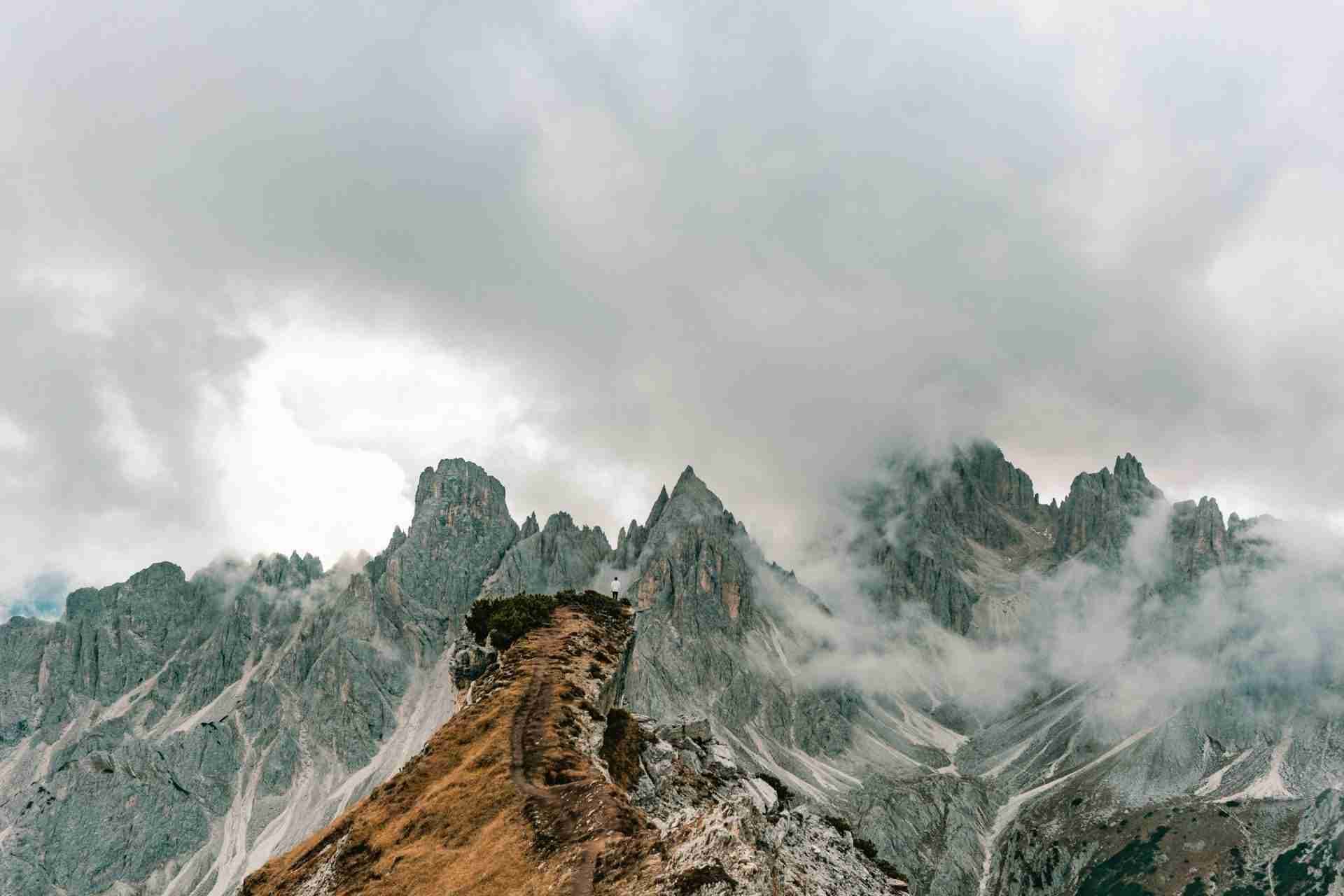
Hidden just beyond the shadow of Tre Cime di Lavaredo, the Cadini di Misurina mountains offer one of the most visually chaotic and intriguing landscapes in the Dolomites. These sharp limestone spires form a complex maze of narrow ridges and deep gullies that feel otherworldly when seen up close. Photographers are drawn here not just for the dramatic shapes but for how the light dances across their fractured forms at different times of day. The terrain is raw and untamed, with vantage points that offer endless opportunities to frame the wildness in both sweeping and intimate compositions. If you're looking for a location that challenges your sense of space and scale, the Cadini delivers a unique blend of isolation and visual complexity.
Best Photography Opportunities
• Trail to Rifugio Fratelli Fonda Savio
begins as a steady climb through pine forest before opening up to vast views of the surrounding peaks. As you gain elevation, the Cadini's serrated edges begin to dominate the skyline, creating a jagged silhouette that becomes more imposing with each step. This is a perfect place for transitional light in the early morning or late afternoon, especially when shadows stretch across the valley below and emphasize the range's vertical drama. During summer, wildflowers line the trail and can be used effectively as foreground layers, adding dimension to your frame. The changing angles along this approach make it a rewarding place to shoot both during ascent and descent.
• Forcella della Neve
is a high pass tucked deeper within the Cadini that offers tight views into the heart of the mountain group. This is a place for long lenses and tight compositions, where overlapping spires create a rhythmic flow of ridgelines and deep shadow pockets. With the right light, you can isolate individual towers and let the shapes carry the composition entirely. Fog rolling through the narrow chutes here can add depth and a sense of movement that brings life to an otherwise still landscape. Photographers willing to explore beyond the main trail will find compositions here that feel abstract and raw.
• Viewpoint from Sentiero Bonacossa
just beyond the rifugio is a rewarding place to set up during golden hour. This location lets you shoot directly into the Cadini massif, with ridgelines that stack in layers toward the horizon. Wide lenses work well here to exaggerate the scale, but tighter crops can also play up the geometric lines etched into the stone. The light changes quickly in this bowl-like terrain, so it's worth staying in one spot for a while to observe how it moves across the peaks. The drama comes not just from the subject matter, but from how the shifting light continuously redraws the scene.
• Drone photography above the Rifugio
allows you to truly understand the complexity of the Cadini range. From the air, you can appreciate the intricate web of crests and valleys that are otherwise impossible to see from ground level. Aerial shots reveal how the peaks interlock like gears in a broken machine, and this overhead view is particularly useful for compositions that show the surrounding Dolomitic plateaus. Low sun creates long shadows that stretch dramatically across the stone, so timing is critical. Make sure to respect all local regulations and wind conditions, as this area can change quickly in the afternoon.
• Textural and detail studies around the Rifugio
are a surprising source of strong images. The limestone here is fractured, layered, and often covered with colorful lichen that stands out beautifully in soft overcast light. This is a great place to focus on tight compositions using a macro or telephoto lens, especially during midday when larger scenes lose contrast. Cracks, weathered surfaces, and fossil impressions offer abstract images that reflect the character of the wider landscape. These detail shots can be used to complement your broader landscapes and build a more complete visual narrative. Be patient and look carefully—these images reward a slower pace.
Best Time to Visit
The Cadini di Misurina are best photographed between late June and early October, when trails are typically snow-free and weather conditions are more stable. This window offers the greatest flexibility for accessing higher elevations, including the trail to Rifugio Fonda Savio and the scenic ridge paths that extend deeper into the range. July and August provide long daylight hours and colorful alpine flora, but also come with heavier trail traffic. To avoid crowds and capture more delicate light, consider planning your trip in late September or early October. During this time, the air tends to be clearer, the sun sits lower in the sky, and the quality of light becomes richer and more directional throughout the day.
Sunrise photography in the Cadini is especially rewarding. The eastern faces of the spires catch the first orange and pink tones of dawn, creating striking contrast against the still-dark valleys. Early morning also brings a better chance of low fog or mist clinging to the lower ridgelines, which adds a sense of depth and motion to your compositions. Sunset offers different but equally compelling conditions, particularly when shooting westward toward the distant peaks near the Cristallo group or back toward Misurina. Photographers interested in astrophotography or moonlit compositions will also find this area ideal on clear nights, thanks to its relative distance from major sources of light pollution. Always check mountain forecasts before committing to a shoot, as sudden changes in weather can quickly limit access to high trails and exposed viewpoints.
How to Get There
To reach the Cadini di Misurina, begin your journey in the town of Cortina d'Ampezzo and drive east on the SR48 road toward Misurina. Shortly after passing the lake, you will arrive at Lago d'Antorno, where parking is available near the trailhead. There are no special permits or entrance fees required to access the trail or rifugio, though parking may be limited during peak season. From the parking lot, take Trail 115, which leads to Rifugio Fratelli Fonda Savio. The trail gains roughly 500 meters in elevation and takes between 90 minutes and two hours depending on pace and gear. It is well-marked, but the terrain can be rocky and steep in sections, so good boots and careful footing are important. The rifugio serves as a perfect base for photographers planning early starts or overnight stays to capture golden and blue hour light.
If you plan to shoot sunrise or want to explore deeper into the Cadini system, consider spending the night at the rifugio to give yourself maximum flexibility. Accommodations are basic but comfortable, with meals available and a warm, communal atmosphere that welcomes mountain travelers. For those with limited mobility or tight schedules, the first section of the trail also offers partial views of the Cadini without requiring a full ascent. However, the most rewarding compositions are higher up, where the spires loom at eye level and the terrain opens up in all directions.
Recommended Photography Gear
Photographing the Cadini di Misurina requires a gear setup that can adapt to constantly changing conditions and a wide range of compositions. A sturdy wide angle lens, such as a 16 to 35 millimeter, is essential for capturing the dramatic foregrounds and the towering spires above. Use it for expansive scenes from the rifugio or along the trail where you want to exaggerate the depth between your foreground and the background peaks. A telephoto lens in the 70 to 200 millimeter range will be just as valuable, allowing you to compress layers of rock and shadow or isolate a single spire catching the light. This is especially useful when photographing from the passes or ridge lines, where the landscape folds in complex, overlapping ways.
For those interested in drone photography, bring a lightweight but wind-resistant drone with strong dynamic range and detail retention. The complexity of the terrain benefits from a higher perspective, especially in the early morning or late afternoon when shadows run long. Always review local flight regulations before operating in this area, and avoid flying in high winds, which are common in the afternoon. A compact tripod is necessary for low light conditions and should be sturdy enough for mountain winds, yet light enough to carry over steep terrain. Circular polarizers can help manage glare from the rock and deepen the sky, particularly during midmorning. Neutral density filters are also helpful if you plan to shoot long exposures in daylight.
In addition to camera gear, pack weather-resistant clothing and quick-access rain protection for your equipment. Mountain weather shifts rapidly, and the temperature can drop suddenly in the evening even during summer. Bring extra batteries and memory cards, as charging options at the rifugio are limited. A lightweight hiking pack with good support will help manage your gear comfortably over uneven ground. If you plan to shoot sunrise or sunset from a high pass, include a headlamp with fresh batteries to navigate the trail safely in the dark.
Nearby Photography Locations
sits just north of the Cadini and offers a completely different photographic experience. These massive limestone towers rise above open alpine terrain and provide a mix of reflective tarns, crumbling scree, and open vistas. The circular trail around the trio of peaks reveals dramatically different perspectives, especially during early morning or late afternoon when side light adds definition to their vertical faces.
is a surreal destination known for its opaque turquoise water and amphitheater-like setting. The lake is reached by a moderate hike from Passo Tre Croci, and while it draws visitors, the visual payoff is significant. Reflections of the surrounding cliffs in the milky water can be especially striking during calm, overcast conditions when surface glare is minimized.
is a high plateau with expansive views across the Misurina valley and toward the Cadini from the opposite direction. Known for its World War I history, the area also provides excellent opportunities to capture sunrise light washing across the surrounding mountains. Its open terrain makes it ideal for layering compositions and experimenting with light and shadow during changing conditions.
offers peaceful morning scenes with mirror-like reflections of the Dolomitic walls. This location is easy to access by car and often overlooked, making it a good option for a quiet session with fewer distractions. Early morning fog is common here, which adds softness and depth to your images, especially when paired with long exposure techniques.
is a high mountain pass that connects Misurina with Cortina and offers quick access to several panoramic pull-offs. These spots provide wide views of the Ampezzo Valley and distant ranges, making them a convenient place for scouting or capturing changing weather patterns. It is also a good starting point for shorter hikes into forested areas with sporadic clearings and distant peaks.
The Cadini di Misurina rewards photographers who enjoy complexity and are willing to work for their compositions. It is not a place for passive shooting. Whether you're chasing light through the spires, flying a drone over the labyrinth of rock, or framing details in quiet moments, this pocket of the Dolomites keeps offering more the longer you look.
Comments
Loading comments…