
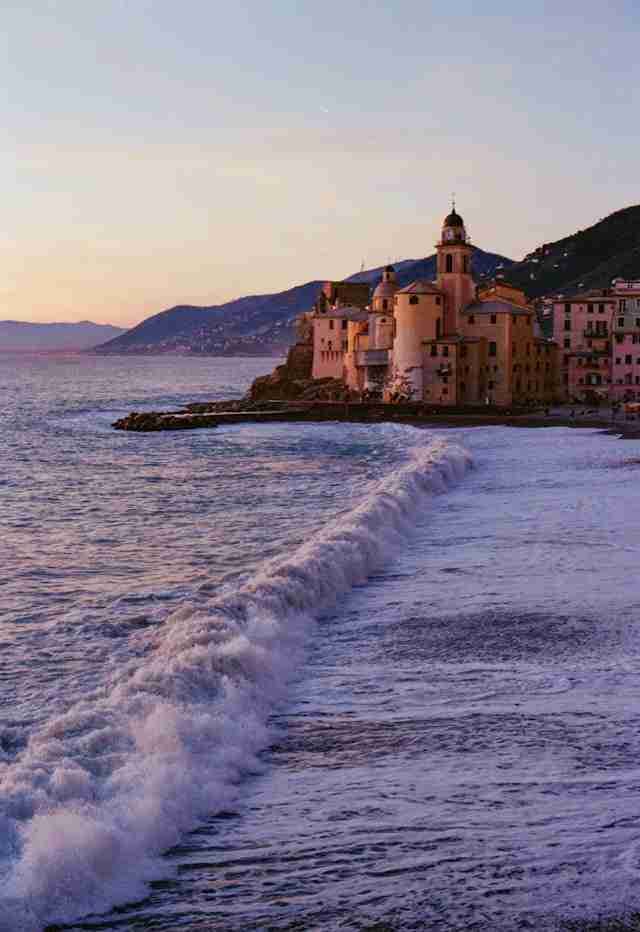
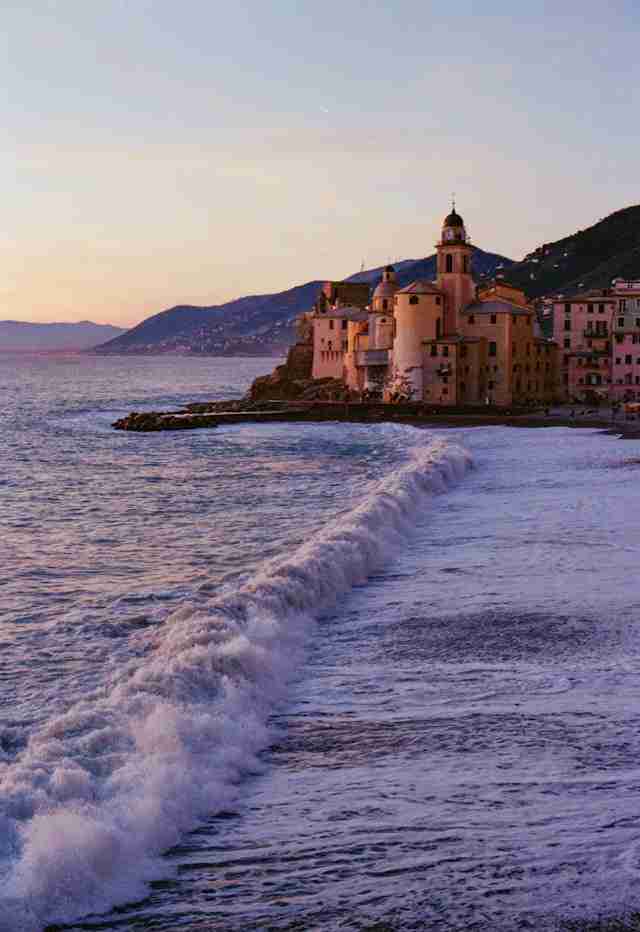
Tucked along the Ligurian coast just southeast of Genoa, the Camogli Waterfront presents one of Italy's most evocative seaside scenes—a tightly packed ensemble of pastel-colored buildings cascading down to a pebbled beach, backed by steep hills and fronted by the Ligurian Sea. With its historic fishing boats, textured facades, and dramatic light transitions, Camogli is a dreamscape for photographers seeking vivid urban geometry and maritime atmosphere in equal measure.
The town's steep alleys, multicolored stucco walls, and working harbor give it a lived-in authenticity that contrasts with the more polished neighboring villages of Cinque Terre. Camogli is less crowded, equally photogenic, and changes beautifully from one hour to the next. Whether you're chasing golden-hour glow on peeling paint or silky long exposures of breaking surf, this compact village delivers powerful compositions at every turn.
Best Photography Opportunities
• The Waterfront Facade from the Beach
The view of Camogli's waterfront from the pebbled beach is the town's defining visual signature. Tall buildings in terracotta, ochre, coral, and faded yellow rise in tight formation directly above the shoreline, forming a vertical mosaic of texture and color. Photographers can work with a wide-angle lens to incorporate the full facade or step back and frame the entire curve of the coastline. During golden hour, warm light enhances the saturation of every surface and adds soft reflections in the wet stones. In the evening, the scene transforms with lit windows casting glows across the beach—ideal for tripod-mounted blue-hour exposures. For a creative twist, shoot low across the wet pebbles for an exaggerated foreground that adds depth to the composition. Consider using a tilt-shift lens for precision perspective control, especially if you're aiming to document the building heights without distortion.
• Church of Santa Maria Assunta and the Rocky Outcrop
Perched defiantly at the edge of the sea, this historic church anchors many classic Camogli compositions. Its light stonework contrasts beautifully with the rugged rocks and rolling sea below. Use a telephoto to capture wave action around the base or step back to include the full promontory and bell tower against the horizon. Sunset and early morning light backlight the dome, especially compelling when clouds catch warm tones. For drama, wait for waves to strike the rocks, freezing the action with a high shutter speed, or go long exposure to turn the water into a dreamy mist. On cloudy days, the church takes on a somber, brooding quality, ideal for monochrome conversion and fine-art interpretation.
• Harbor Boats and Marina Details
Camogli's marina remains an active fishing port, giving photographers a wealth of rich textures—brightly painted wooden boats, rusted chains, nets, and buoys. These elements are perfect for shooting during overcast or diffused light conditions that enhance color and reduce harsh contrast. Focus on abstracts, detail shots, or repeated shapes. Use a fast prime lens to isolate a coiled rope or reflection in calm harbor waters. The layers of boats also offer excellent opportunities for rhythm and repetition, especially when viewed head-on from the dock's edge. Try photographing in the early morning before the water becomes busy to capture still reflections and the soft clatter of harbor life as fishermen prepare for the day.
• The Seaside Promenade (Via Garibaldi)
Via Garibaldi curves alongside the water with classic street lamps, outdoor cafes, and layered terraces that invite both lifestyle and architectural photography. Shoot the promenade's sweep with a 35mm or 50mm lens to compress the scene and feature multiple planes of activity—foreground diners, mid-ground walkers, and background architecture. At night, the warm street lighting and glowing shop interiors make for cinematic street scenes. Overhead, flags and awnings cast patterned shadows that change throughout the day, giving photographers opportunities to play with hard light geometry. Golden hour often creates angular light beams that dance through the arcades and storefronts, ideal for capturing dramatic interplay between shadow and form.
• Alleyways and Staircases
Camogli's network of steep alleys offers a treasure trove of visual surprises. Staircases zigzag up the hillside, passing colorful shutters, chipped facades, and flowering balconies. Light spills down these corridors in the early morning and late afternoon, casting long shadows and highlighting textures. A 35mm lens is perfect for tight framing while still allowing environmental context. Add a figure in silhouette or motion for a storytelling element, or focus on close-up details like mailboxes, door knockers, and laundry lines. For added drama, use a low perspective and shoot upward to exaggerate the height and intimacy of these vertical passages. The visual compression of tight alleyways naturally lends itself to narrative-rich compositions.
Best Time to Visit
Camogli is best visited during the shoulder seasons of late April to early June and September through mid-October. These periods offer mild temperatures, thinner crowds, and more interesting light conditions as the sun remains lower in the sky. Early mornings bring peaceful water and quiet streets, perfect for long-exposure shots or contemplative compositions, while afternoons bathe the village's pastel walls in golden tones.
In late spring, blooming flowers and lush greenery offer additional compositional opportunities, especially along staircases and balconies. September and early October add a slightly nostalgic atmosphere, with more dramatic sunsets and fewer visitors. These months also offer more dynamic skies that can add mood and depth to your coastal compositions.
Summer months provide energetic scenes and bold Mediterranean sunlight, but can be harsh for photography during midday hours. Use this time to explore shaded alleys or harbor details. Stormy winter days, though less common, can bring dynamic skies, rough seas, and brooding moods ideal for dramatic coastal imagery. The sea spray and wind may require extra gear care, but reward the prepared photographer with compelling, emotive scenes. The diversity of seasons in Camogli means photographers can build a rich portfolio by returning during different times of year.
How to Get There
Camogli is located approximately 25 kilometers southeast of Genoa and is easily accessible by regional train via the Genoa-La Spezia line. The Camogli-San Fruttuoso station is just a short five-minute walk from the main waterfront, allowing for seamless day trips. Trains run regularly, making this the most efficient travel option.
By car, visitors should be prepared for narrow roads and limited parking. It's advisable to park in designated areas in the upper parts of the village and walk down to the waterfront. During summer, these lots fill quickly, so early arrival is essential. Seasonal ferry services also operate from neighboring towns like Portofino and Santa Margherita, providing scenic entry and the opportunity to photograph the village from the sea.
There's no cost to access the waterfront, beach, or promenade. Most photographic locations are public and walkable, making Camogli ideal for spontaneous exploration. Some churches or exhibitions may request a small donation or fee for interior photography.
Recommended Gear for Coastal Urban Photography
For Camogli's varied settings, pack a wide-angle zoom like a 16–35mm for sweeping waterfront shots and architectural compression. A 24–70mm offers flexibility when moving between street photography and environmental portraits. A fast 50mm or 85mm prime is excellent for alleyway details, harbor scenes, and low-light work in shadowy courtyards.
A sturdy but lightweight tripod is essential for blue hour, night, and long-exposure seascapes, especially when working from the beach or harbor edge. Bring a circular polarizer to manage reflections on water and enhance sky saturation. Neutral density filters (ND64 or ND1000) help blur motion in the sea, allowing you to create minimalist wave studies or isolate rocky foregrounds. A 3-stop soft graduated ND filter can also help balance exposures when shooting seascapes with bright skies.
Coastal humidity and sea spray can accumulate on lenses, so bring microfiber cloths and lens cleaning wipes. A weather-sealed camera body is ideal, but at minimum, use a protective sleeve or rain cover in unpredictable weather. Comfortable shoes with good grip are vital for navigating steep cobbled stairs and uneven walkways. A crossbody camera harness can help keep gear accessible while climbing or walking long distances.
If you shoot video or audio, a wind muff for your microphone is a good idea—the sea breeze here rarely stays quiet. A lightweight folding stool or cushion can be useful for long sessions on the beach or stone steps, and don't forget spare batteries and cards—this compact village can yield more images than expected. A drone with a wide dynamic range and strong stabilization may also add a new perspective, provided you follow all local flight restrictions.
Nearby Photography Locations
: Reachable by ferry or hiking trail, this remote abbey is tucked into a tiny cove framed by cliffs and dense forest. The interplay of medieval architecture and emerald water is compelling, especially when shot from a boat or from above on nearby trails.
: Famous for good reason, Portofino delivers colorful harborside buildings, luxury boats, and stylish visitors in a postcard setting. Climb to Castello Brown for an elevated view of the bay and experiment with layering boats, buildings, and sea.
: This elegant coastal town offers palm-lined promenades, Liberty-style facades, and marina scenes ideal for both street and landscape photography. The early morning sun rises behind the harbor, creating strong silhouettes and reflections.
• Recco
: A short drive from Camogli, Recco is less photogenic but great for capturing daily Ligurian life. The seafront promenade offers wide-open space for long exposures, and its local food culture (especially focaccia di Recco) makes for interesting lifestyle documentation.
: Hiking trails that connect Camogli to San Rocco and Portofino reward photographers with sweeping views of the Ligurian coast. Shoot during sunrise or golden hour for dramatic side light across the water, cliffs, and forested slopes.
Comments
Loading comments…