
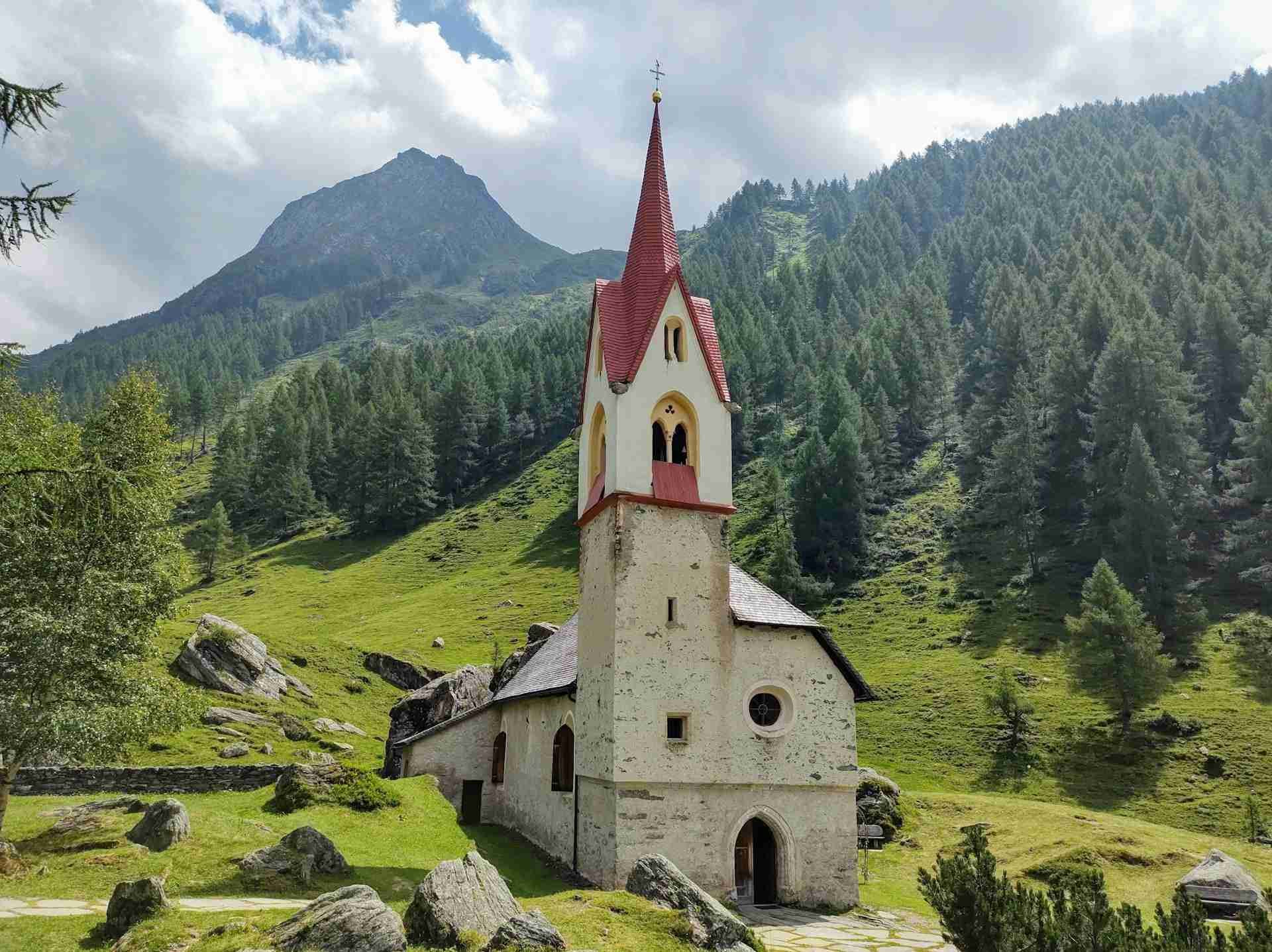
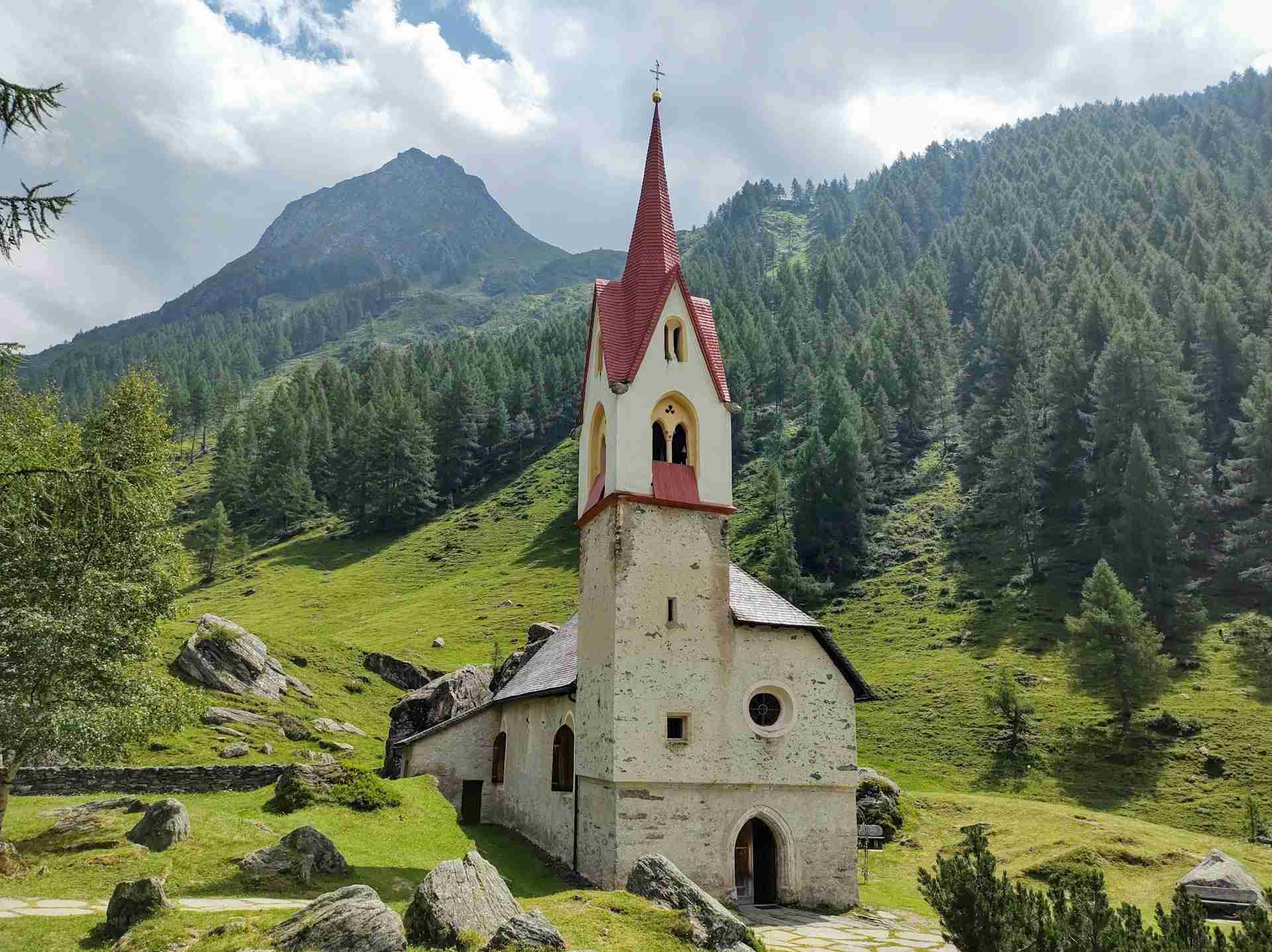
At the very head of the Ahrntal Valley in South Tyrol, nestled against steep forests and alpine slopes, stands the Cappella del Santo Spirito. This small stone chapel, also known as the Heiliggeistkirche, marks both a spiritual destination and a geographical threshold, as it lies just steps from the border with Austria. Surrounded by dramatic peaks and lush alpine meadows, the chapel offers photographers a subject that is as much about atmosphere and solitude as it is about architecture. Its weathered walls and modest size sit in contrast to the vast landscape around it, making it a striking focal point in wide compositions. The ever-changing alpine light, from misty mornings to golden evening glow, transforms the chapel into a timeless photographic subject that embodies both faith and wilderness.
Best Photography Opportunities
• Wide Alpine Context with Chapel Foreground
Capturing the chapel within the surrounding alpine landscape is one of the most rewarding approaches. From slightly elevated ground, photographers can frame the small stone structure against jagged peaks, emphasizing its modest scale compared to the dramatic backdrop. Wide-angle lenses highlight the expansive meadows, ridges, and sky, while the chapel acts as an anchor in the composition. Mornings often provide soft, diffused light that glows across the grasslands, while evenings add golden tones to the chapel walls. Foreground elements such as alpine flowers, rocks, or grazing animals add depth and narrative, guiding the eye into the scene.
• Architectural Details and Weathered Stone
The chapel itself is full of subtle details that reward close inspection. Its rough stone walls, wooden doors, and small window openings provide texture that changes dramatically with lighting conditions. Side light from morning or evening enhances the surface, creating strong contrasts that reveal the age of the structure. Overcast skies, by contrast, give even illumination that allows every detail to be captured without harsh shadow. Photographers working with macro lenses can focus on the grain of the wood or the layering of stone, while mid-range focal lengths allow the doorways and windows to serve as balanced compositions in themselves.
• Seasonal Transformations of the Landscape
Every season alters the visual identity of the chapel, making it a subject worth returning to throughout the year. In spring, the surrounding meadows bloom with alpine flowers, creating bright, colorful foregrounds that contrast with lingering snow on distant peaks. Summer brings lush greenery and long evenings, when the golden hour lingers across the valley. Autumn is one of the most photogenic times, as larches turn golden and fog often rolls through the valley, wrapping the chapel in soft layers of atmosphere. Winter transforms the site completely, covering the landscape in deep snow that isolates the chapel as a lone form against a white expanse. Each season requires a different approach but offers equally rewarding images.
• Atmospheric Conditions and Shifting Light
The Ahrntal Valley is known for rapidly changing weather, which often produces fog, mist, and dramatic clouds. Early mornings are especially rewarding, when the chapel emerges from layers of mist as the sun begins to rise. Shooting into backlit conditions can reveal halos of light around the structure or subtle rainbows in the mist, adding unique effects to the image. Stormy weather brings darker tones, emphasizing the chapel's endurance in a wild setting. At night, the location is exceptionally dark, making it an excellent place for astrophotography, with the Milky Way visible directly above the small building. These atmospheric conditions create variety even during a single visit.
• Human Scale and Pilgrimage Themes
Including people in compositions emphasizes the chapel's role as both a sacred site and a shelter in the alpine landscape. Pilgrims, hikers, and cyclists often appear on the trails leading to the chapel, and their presence adds valuable scale to photographs. Long lenses compress these figures against the chapel and surrounding peaks, while wide compositions show their smallness within the broader environment. Shooting during times of pilgrimage highlights cultural context, while quieter days reveal solitude and the enduring relationship between people and place. These human elements add narrative layers that complement the pure landscape shots.
Best Time to Visit
The Cappella del Santo Spirito offers compelling photography opportunities all year, with each season providing a different palette and mood. Spring is marked by fresh greenery and blooming wildflowers that frame the chapel beautifully, often with snow still visible on the higher peaks for contrast. Summer brings long daylight hours and extended golden hours, making evening sessions especially rewarding, though midday light can be harsh. Autumn is one of the most dramatic times to visit, when valley fog, crisp air, and golden larches create depth and atmosphere, often wrapping the chapel in layers of light and shadow. Winter, while requiring more effort to access, transforms the site into a scene of stillness, with snow softening the landscape and the chapel standing starkly against the white surroundings.
Lighting also plays an important role. Mornings often provide soft side light and occasional mist, ideal for tranquil compositions. Evenings create warm tones and long shadows that emphasize texture and scale. Twilight is particularly rewarding, as the last light fades behind the peaks and the chapel is outlined against a darkening sky. Night photography is best in summer and autumn when skies are clearest, though winter provides crisp air and sharper visibility. Planning around both season and time of day ensures varied and creative results.
How to Get There
The chapel sits at the northern head of the Ahrntal Valley, just beyond the village of Prettau (Predoi) in the Autonomous Province of Bolzano. The nearest access point is the hamlet of Kasern (Casere), where parking is available close to the trail. From there, a well-maintained, flat walking path leads directly to the chapel in about 15 to 20 minutes, making it accessible even with a full photography kit. The walk itself is highly scenic, passing through meadows with views of surrounding peaks.
There is no fee to access the site, as it is part of the larger hiking trail network, including the Via Alpina. Facilities are available in Kasern, including a small restaurant and visitor amenities, but none exist directly at the chapel. In winter, heavy snow may cover the path, requiring snowshoes or skis for access, while in summer and autumn, the walk is straightforward. Drones are technically permitted in the valley but should be flown with discretion, given the cultural and spiritual significance of the chapel. Weather can shift quickly in this alpine environment, so checking local forecasts before heading out is essential.
Recommended Photography Gear
A versatile kit is best suited for the Cappella del Santo Spirito, as the site benefits from both wide landscapes and intimate detail work. A wide-angle lens in the 16 to 35 millimeter range is ideal for placing the chapel within the alpine panorama, capturing the peaks, meadows, and expansive skies. A mid-range zoom, such as a 24 to 70 millimeter, works well for exterior studies and framing the chapel with foreground elements like flowers or stones. A telephoto lens in the 70 to 200 millimeter range is useful for compressing the chapel against the mountain ridges or isolating human figures for scale. Fast prime lenses are particularly effective for astrophotography, where wide apertures allow for sharp captures of the night sky.
Tripods are essential for twilight, night photography, and long exposures of moving clouds or shifting mist. A circular polarizer helps reduce glare on stone and enrich the greens of the surrounding meadows, while neutral density filters are useful for extending exposure times during bright daylight. For macro and close-up work, a dedicated macro lens is valuable for capturing wildflowers or the texture of the chapel's stonework. In winter, weather-sealed gear, extra batteries, and waterproof covers are essential for working in snow and damp conditions. During summer, lighter setups and lens cloths for handling condensation will keep equipment ready for quick changes in light.
Nearby Photography Locations
• Röttal Valley and Röttaljoch
Trails leading beyond the chapel into the Röttal Valley open up views of alpine streams, high pastures, and rugged peaks on the Austrian border. These routes are best in morning light, when fog fills the lower valley while summits glow in clear air. Mid-range and telephoto lenses are useful for compressing the layering ridges.
South of Prettau, Lago di Neves is a turquoise reservoir framed by steep ridges and snowy peaks. Its still waters provide mirror-like reflections that are best captured at sunrise. Elevated trails around the lake also offer wide panoramas that complement the more intimate setting of the chapel.
• Speikboden Mountain Area
Accessible by cable car, Speikboden provides commanding views over the Ahrntal and the Zillertal Alps. In summer, meadows dotted with wildflowers lead into layered alpine ridges, while autumn transforms the area into golden hues. This location is especially good for sunrise, when long shadows create depth across the valleys.
A short drive from Prettau, the Rein in Taufers area offers waterfalls, glacier-fed streams, and rugged valleys within the Rieserferner mountains. Photographers can combine dramatic alpine landscapes with smaller detail studies of streams and cascades. The region is best explored in spring and summer, when snowmelt brings the waterways to life.
• Campo Tures and Tures Castle
Farther down the Ahrntal Valley, the medieval Tures Castle dominates the landscape above Campo Tures. From both inside and outside the castle, strong architectural compositions are possible, especially at twilight when the fortress is illuminated. Its location provides a cultural counterpoint to the natural focus of the chapel.
The Cappella del Santo Spirito is more than just a small alpine church. It is a subject that thrives on light, weather, and context, offering endless possibilities for both broad landscapes and quiet detail work. Its setting at the head of the Ahrntal Valley ensures changing conditions throughout the year, rewarding photographers who return in different seasons. Combining spiritual history with alpine wilderness, it provides a timeless subject that continues to inspire both cultural and landscape photography.
Comments
Loading comments…